






I once visited a gym where the benches looked fine, but half of them wobbled during heavy presses. The owner told me it was the first thing members complained about.
That moment made the issue clear. A bench is not “just a bench” when your gym runs all day.
At YR Fitness, we have been making commercial gym equipment since 1997. We build strength machines, cardio equipment, and accessories for full gym setups. We export to over 100 countries, so we see what bench designs hold up in real facilities.
In this article, you will learn 10 types of weight benches and what each one is made for. When you finish, you will know which benches fit your space, training style, and daily traffic.
If you want fewer repairs and better member comfort, this guide is for you. Your bench choices can affect both safety and gym flow.
So, let’s get started!
Table of Contents
Quick Comparison
I know it helps to see everything in one place. A trusted commercial gym equipment manufacturer can also guide you toward the best choices for your facility. So before the deep dive, here’s a simple comparison to look at them all at a glance before we get into the full details.
Bench Type | Adjustability | Target Muscles | Best For | Space Needs | Weight Capacity |
Flat Weight Bench | None | Chest, shoulders, triceps | Basic presses, stability training | Low | 600–1,000 lbs |
Decline Bench | Decline angles | Lower chest, core, triceps | Core workouts, chest variation | Medium | 600–1,200 lbs |
Incline Bench | Incline angles | Upper chest, shoulders, triceps | Chest shaping, pressing variety | Medium–High | 600–1,200 lbs |
Adjustable Bench | Flat/Incline/Decline | Full upper body + core | Multi-use gyms, small spaces | Medium | 600–1,500 lbs |
Olympic Weight Bench | Some models incline | Chest, shoulders, triceps | Heavy barbell lifts | High | 1,000–1,500+ lbs |
Foldable Weight Bench | Flat/Incline | Chest, shoulders, arms | Home gyms, small spaces | Very low | 400–800 lbs |
Preacher Curl Bench | Fixed or pad height | Biceps, forearms | Arm isolation | Low | 300–600 lbs |
Abdominal Bench | Decline positions | Abs, obliques, hip flexors | Core-focused workouts | Medium | 300–600 lbs |
Roman Chair | Hip pad adjustment | Lower back, glutes, hamstrings | Back extensions, posture work | Medium–Large | 250–600 lbs |
Multi-Station Bench | Multi-angle + extras | Full-body (arms, chest, legs, core) | All-in-one home or compact gyms | High | 600–1,200 lbs |
Now that you’ve seen the lineup, let’s break each bench down.
1. Flat Weight Bench
The flat weight bench is probably the one you’ve seen the most. It’s simple: a straight, padded bench with no incline or decline. Just a solid, flat surface for you to lie on while lifting weights.
It may not look fancy. But sometimes, simple is exactly what you need.
This type of bench is often used for classic lifts like the bench press or dumbbell chest press. It supports your back while keeping your feet flat on the ground, giving you a stable base for heavier lifts.
When I opened my first gym, this was the first bench I bought. It didn’t adjust. It didn’t fold. But it worked—day after day, rep after rep.
Target Muscle Groups
This bench focuses mostly on your upper body. The main muscles worked include:
- Chest (pectorals)
- Shoulders (deltoids)
- Triceps (back of the arms)
You can also use it for seated exercises or even bodyweight moves like step-ups or hip thrusts.
It’s more versatile than it looks.
Key Specs
Here are a few things you’ll want to look at before buying:
- Weight capacity: Usually supports 600–1,000 lbs
- Adjustability: None (fixed flat position)
- Padding: Medium to thick, high-density foam
- Frame materials: Steel tubing or alloy steel
- Type: Non-adjustable bench
- User load: Handles beginner to advanced lifters
- Safety features: Rubber foot caps to prevent sliding
Flat benches are built to stay put. That’s a good thing when you’re pushing heavy weight above your chest.
Space & Storage Needs
Thinking about space?
Here’s what you need to know:
- Floor footprint: Typically 45–50 inches long and 15–20 inches wide
- Foldability: Not foldable
- Mobility features: Some models come with wheels or a handle for easier moving
Because it’s not adjustable, it usually takes up less space than other benches. But you’ll want to find a spot where it can stay out permanently.
Ideal Users & Training Goals
So, who benefits most from a flat weight bench?
Gym owners need it because it covers the basics that every gym member expects. Lifters use it for chest and triceps work because the position is stable and repeatable. It is also a must-have for powerlifting training and for anyone aiming for bigger upper-body size.
But it is not only for advanced lifters. A flat bench is one of the easiest starting points for beginners.
I have seen beginners feel more confident with this bench because it does not feel complicated. There are no knobs, angles, or moving parts. That simplicity helps new lifters focus on form and build better habits.
If you are putting together a gym floor, this bench should be on your list. It is not adjustable, but it is steady and reliable. When someone lifts heavy, that steady base makes a real difference.
Not sure which benches fit your gym plan best? YR Fitness manufactures a full selection of gym benches and accessories built to handle real workouts day after day.
A flat bench may look basic, but it supports a huge portion of strength training in every gym. YR Fitness manufactures flat benches built for durability, steady support, and consistent performance under daily use. This makes them a smart choice for commercial gyms, studios, and even serious home setups. Reach out to us and share your bench requirements and quantity. If you want benches that stay stable, feel professional, and go the distance, our team can guide you..
2. Decline Bench
A decline bench is similar to a flat bench, but it tilts downward. Your head is positioned lower than your hips when you lie on it.
This bench helps you target muscles from a different angle. It’s commonly used for decline presses and decline sit-ups.
At first glance, it can look a little intimidating. I remember the first time I slid down into position. It felt awkward. But once I got used to the angle, I realized how effective it was—especially for lower chest development.
Target Muscle Groups
This bench focuses on:
- Lower chest (pectorals)
- Triceps
- Front shoulders
- Core (when used for sit-ups)
The angle shifts the stress away from the upper chest and onto the lower part. That’s why lifters use it to create better definition or to avoid overworking the shoulders.
Key Specs
- Weight capacity: Around 600–1,200 lbs depending on the frame
- Adjustability: Usually allows multiple decline angles
- Padding: Thicker in some models to support decline angle
- Frame materials: Heavy-duty steel
- Type: Adjustable (decline only)
- User load: Suitable for intermediate to advanced lifters
- Safety features: Ankle rollers to keep your legs in place
The ankle support is important. It helps keep you secure while you lift or crunch.
Space & Storage Needs
- Floor footprint: Slightly longer than flat benches
- Foldability: Some models fold, most don’t
- Mobility features: Some include wheels
Because of the sloped design, you’ll need more vertical space around it. Make sure there’s room for your head and arms to move freely.
Ideal Users & Training Goals
This bench is a great choice if you:
- Want to focus on lower chest development
- Are adding variety to your bench press routine
- Need a strong bench for decline core work
It’s probably not your first bench. But it’s a smart second option once your training gets more serious.
If you’ve hit a plateau with your flat bench, the decline bench might give you a fresh challenge. It did for me.

Changing the bench angle can help lifters train the chest from a different direction and avoid repeating the same movement pattern. YR Fitness manufactures decline benches built for controlled support, solid footing, and long-term durability in busy gym settings. This makes them a practical option for gyms that want to expand pressing variety beyond flat and incline setups.
Reach out to us and share your bench needs and floor plan. If you want decline benches that improve training options and feel stable for all users, our team can guide you.
3. Incline Bench
An incline bench is basically the opposite of a decline bench. It tilts upward, so your head is higher than your hips.
This angle changes everything. It shifts pressure from your lower chest to your upper chest and shoulders.
When I started using an incline bench, I was surprised at how much harder it felt. The bar didn’t move as easily as it did on flat bench. But that’s the point. It’s supposed to be harder.
Target Muscle Groups
You’ll work:
- Upper chest
- Front shoulders
- Triceps
Incline presses are great for rounding out your chest. If you only use a flat bench, you might miss this area entirely.
Key Specs
- Weight capacity: 600–1,200 lbs depending on construction
- Adjustability: Multiple incline angles, sometimes combined with flat and decline
- Padding: Firm, especially around the upper back
- Frame materials: Steel or reinforced alloy
- Type: Adjustable (incline-focused)
- User load: Good for all levels
- Safety features: Back pad locks into place
Make sure the back pad feels stable before you lift. A shaky incline bench isn’t worth the risk.
Space & Storage Needs
- Floor footprint: Larger than flat benches
- Foldability: Rare
- Mobility features: Often includes wheels
The upright angle can make it harder to store. It’s best to leave it set up and ready to use.
Ideal Users & Training Goals
Choose this bench if you:
- Want to build a stronger upper chest
- Are mixing up your pressing routine
- Need a multi-angle bench for presses and curls
It’s one of my most-used benches. If I could only keep two, flat and incline would be my picks.

4. Adjustable Weight Bench
The adjustable weight bench is a gym workhorse. You can shift it to different angles: flat, incline, and sometimes decline.
This makes it one of the most flexible benches around. You can do more workouts with just one bench.
I remember saving up for a good adjustable bench for my home gym. It wasn’t cheap, but it replaced three benches in one. Smart gym equipment selection by size ensures adjustable benches fit well into compact training spaces. That saved space and money in the long run.
Target Muscle Groups
Depending on how you adjust it, you can hit:
- Upper, middle, and lower chest
- Shoulders
- Triceps
- Core
It supports a full range of strength training needs.
Key Specs
- Weight capacity: Usually between 600–1,500 lbs
- Adjustability: Multiple incline and decline angles
- Padding: Wide and adjustable back pad
- Frame materials: Solid steel frame
- Type: Fully adjustable
- User load: Great for all users, especially in mixed-use gyms
- Safety features: Locking adjustment pins
If you’re using this in a commercial space, go for a heavy-duty model.
Space & Storage Needs
- Floor footprint: Medium to large, depending on features
- Foldability: Some fold for storage
- Mobility features: Handle and rear wheels
It takes more space than a flat bench but gives more in return.
Ideal Users & Training Goals
You’ll like this bench if you:
- Need one bench that does it all
- Are short on space or budget
- Want to train multiple muscle angles with fewer machines
If you’re buying just one bench for a garage or small gym, this is probably the one.

Versatile equipment makes a gym more efficient and easier to plan. YR Fitness manufactures adjustable benches that support countless movements and angle settings, so users can train more muscle groups with one piece of equipment. Built for commercial use, these benches hold up under repeated adjustments and daily training traffic.
Contact our team today and tell us how you want to set up your training space. If you want one adjustable bench that does the work of many, our team can recommend the best option for your gym.
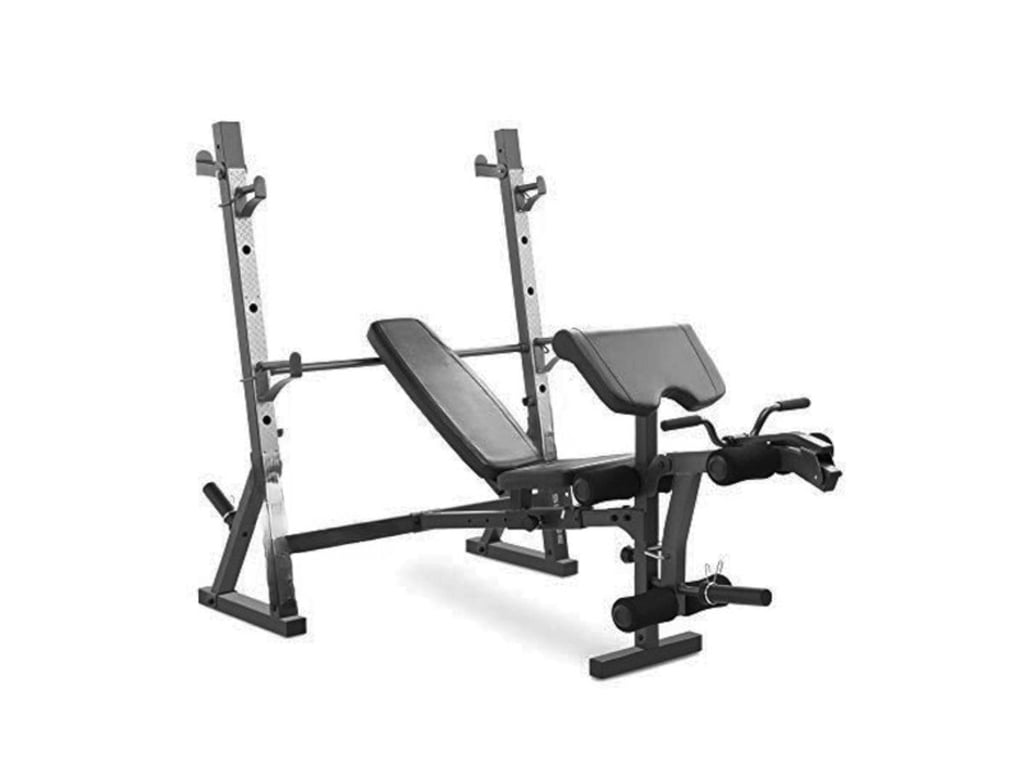
5. Olympic Weight Bench
The Olympic bench is built for serious lifting. It includes a built-in rack to hold an Olympic barbell.
That means you don’t need a separate rack or stand.
I used to train clients who were preparing for strength competitions. This bench became our go-to. It’s strong, wide, and built to handle real weight.
Target Muscle Groups
Main focus areas:
- Chest
- Triceps
- Shoulders
You’ll mostly use this for heavy bench presses and variations.
Key Specs
- Weight capacity: 1,000–1,500 lbs or more
- Adjustability: Some models include incline settings
- Padding: Extra wide for stability
- Frame materials: Thick steel tubing
- Type: Fixed or semi-adjustable with integrated barbell rack
- User load: Best for advanced lifters
- Safety features: Spotter arms, barbell hooks, safety catches
This bench often comes with built-in safeties. That gives peace of mind when lifting heavy.
Space & Storage Needs
- Floor footprint: Large and wide
- Foldability: Not foldable
- Mobility features: None
This isn’t a mobile bench. It stays where it’s placed.
Ideal Users & Training Goals
Go with this bench if you:
- Need to train for powerlifting
- Are setting up a strength-focused gym
- Want built-in safety features for bench press
It’s not the bench for light workouts. But for serious lifting, it’s one of the safest choices.
6. Foldable Weight Bench
A foldable weight bench is exactly what it sounds like: a bench you can fold up when you’re done.
This makes it perfect for small spaces. Think home gyms, apartments, or garages that double as storage.
When I moved into a tiny studio, I didn’t want to give up training. This bench let me slide it under the bed when I wasn’t using it. It gave me freedom without sacrificing my routine.
Target Muscle Groups
Depends on the bench settings, but you can usually hit:
- Chest
- Shoulders
- Arms
- Core
Most foldable benches support flat and incline moves.
Key Specs
- Weight capacity: 400–800 lbs
- Adjustability: Often includes flat and incline
- Padding: Compact with medium-density foam
- Frame materials: Lightweight steel or alloy
- Type: Foldable, sometimes adjustable
- User load: Best for light to moderate training
- Safety features: Lock-in hinges
Choose one with a locking system that feels solid, especially if you’re lifting dumbbells.
Space & Storage Needs
- Floor footprint: Compact footprint when in use
- Foldability: Folds flat for closets or under beds
- Mobility features: Very lightweight
This bench fits just about anywhere. You’ll only need a small corner for it.
Ideal Users & Training Goals
Go with a foldable bench if you:
- Train in small spaces
- Want something lightweight and portable
- Do mostly dumbbell work or bodyweight exercises
It’s not built for heavy lifters. But it’s a smart pick if convenience matters more than max load.

Saving space should not mean giving up stability or training quality. YR Fitness designs foldable benches that store easily while still providing solid support for daily workouts. They are built to stay steady during pressing and dumbbell work, even in smaller training areas. Reach out now and tell us what type of space you are working with.
If you want foldable benches that stay strong while helping you keep your floor organized, our team can help you choose the right model.
7. Preacher Curl Bench
The preacher curl bench is built for one thing: arm training. It has a padded surface that supports your upper arms while you curl a barbell or dumbbells.
This support isolates the biceps and helps prevent you from swinging the weight. That means better control and less risk of injury.
When I first added this bench to my gym, I wasn’t sure it would get much use. Turns out, lifters love it. Everyone from beginners to bodybuilders uses it to fine-tune their arm work.
Target Muscle Groups
This bench focuses mainly on:
- Biceps
- Forearms (secondary)
The angle keeps your shoulders out of the movement. All the tension stays on your arms.
Key Specs
- Weight capacity: 300–600 lbs depending on build
- Adjustability: Some allow pad height adjustments
- Padding: Thick arm pad and seat pad
- Frame materials: Steel frame with rubber feet
- Type: Fixed or semi-adjustable
- User load: Good for all skill levels
- Safety features: Anti-slip feet and curved bar holder
Look for a bench with stable padding. Wobbly support can throw off your curls.
Space & Storage Needs
- Floor footprint: Small to medium
- Foldability: Usually not foldable
- Mobility features: Lightweight enough to move by hand
This bench doesn’t take up much space, so it’s easy to fit into tight gym corners.
Ideal Users & Training Goals
This bench is a good fit if you:
- Want bigger, more defined arms
- Are focusing on bicep isolation
- Need help with strict form and control
You don’t need this bench to build arms, but if arm growth is a goal, it helps a lot.

8. Abdominal Bench
An abdominal bench is built for core training. It looks like a decline bench but is designed specifically for sit-ups, crunches, and twists.
It usually includes leg support rollers to keep you in place.
Back when I was doing crunches on the floor, I didn’t realize how much difference support could make. After switching to an ab bench, I could train longer and with better focus.
Target Muscle Groups
This bench works:
- Abdominals
- Obliques
- Hip flexors (depending on angle and form)
It helps you train your midsection without straining your neck or lower back.
Key Specs
- Weight capacity: Around 300–600 lbs
- Adjustability: Multiple decline levels
- Padding: Long, narrow back pad
- Frame materials: Steel tubing
- Type: Decline-style bench
- User load: Great for all users
- Safety features: Ankle rollers and grippy footrests
Pick a bench with strong rollers. That’s what keeps you anchored during reps.
Space & Storage Needs
- Floor footprint: Medium
- Foldability: Some models fold vertically
- Mobility features: Usually lightweight and movable
You can tuck it away when not in use, but you’ll probably want it nearby.
Ideal Users & Training Goals
Use this bench if you:
- Are focused on building a stronger core
- Want better support during ab workouts
- Need something safer than doing crunches on the floor
It’s simple, but effective. Great core training starts with good support.

9. Roman Chair
A Roman chair isn’t technically a bench, but many gyms treat it like one. It’s a back extension bench that supports your hips and legs while you bend forward at the waist.
This tool builds lower back strength and helps with posture.
I used to ignore this machine. But once I started adding back extensions into my workouts, I noticed fewer aches and better control during deadlifts.
Target Muscle Groups
The Roman chair targets:
- Lower back
- Glutes
- Hamstrings
- Core (stabilizers)
It’s not flashy, but it plays a key role in balanced strength.
Key Specs
- Weight capacity: 250–600 lbs
- Adjustability: Pad height and footplate settings
- Padding: Hip pad and ankle rollers
- Frame materials: Powder-coated steel
- Type: Fixed, non-lifting bench
- User load: All levels
- Safety features: Wide base and anti-slip grips
Always adjust the hip pad so it sits just below your hip bones.
Space & Storage Needs
- Floor footprint: Medium to large
- Foldability: Some compact versions exist
- Mobility features: Usually fixed in place
It needs a bit more space, but it’s worth making room.
Ideal Users & Training Goals
You’ll benefit from a Roman chair if you:
- Want to strengthen your lower back safely
- Need to improve posture or reduce back strain
- Are recovering from injury with doctor guidance
It’s one of the most overlooked benches—but one of the most useful.

A balanced physique starts with a strong back and strong lower-body support muscles. YR Fitness crafts Roman chairs designed for safer back extension training, with stable frames and comfortable support points. They are a practical addition to gyms that want more options for lower back, glute, and hamstring development.
Let’s talk here about adding Roman chairs to your facility. If you want equipment that holds up and supports safe training every day, our team can guide your selection.
10. Multi-Station Weight Bench
A multi-station weight bench is like a mini-gym in one unit. It often includes a bench with attachments like a leg developer, preacher pad, and sometimes a lat tower.
It’s designed to give you a full-body workout in one machine.
I remember helping a friend build his garage gym. He didn’t have room for 5 machines, so we got a multi-station bench. Investing in unique gym equipment like multi-station benches maximizes versatility in limited gym areas. It did the job and then some.
Target Muscle Groups
This bench can train:
- Chest
- Back
- Arms
- Legs
- Core
It depends on what attachments are included.
Key Specs
- Weight capacity: 600–1,200 lbs total system
- Adjustability: Multiple angles and stations
- Padding: Multi-zone padded surfaces
- Frame materials: Steel construction
- Type: Multi-function
- User load: Great for full-body programs
- Safety features: Cable guards, locking pins, stable base
Test each station before loading weight. Stability is key.
Space & Storage Needs
- Floor footprint: Large
- Foldability: Rarely foldable
- Mobility features: Usually stays in place
Make sure you measure your space before buying. It needs room to breathe.
Ideal Users & Training Goals
Choose this bench if you:
- Want an all-in-one solution
- Have limited space but need variety
- Are setting up a small gym for full-body training
It’s not the cheapest option, but it gives back in convenience and function.

Conclusion
That gym owner was right. A wobbly bench becomes a daily problem fast, especially when members press heavy and expect stability.
This guide brought together 10 types of weight benches so you can match the right bench to the right use. Some benches work best for basic training. Others handle heavy loads, spotters, and high traffic.
When you choose well, you cut repairs and improve safety at the same time. The story ends with a better setup. The owner replaced the weak benches, and member complaints dropped within weeks.
If you want benches that stay steady in busy gyms, YR Fitness can help you choose and supply the right models. Contact us today!
Related articles: