


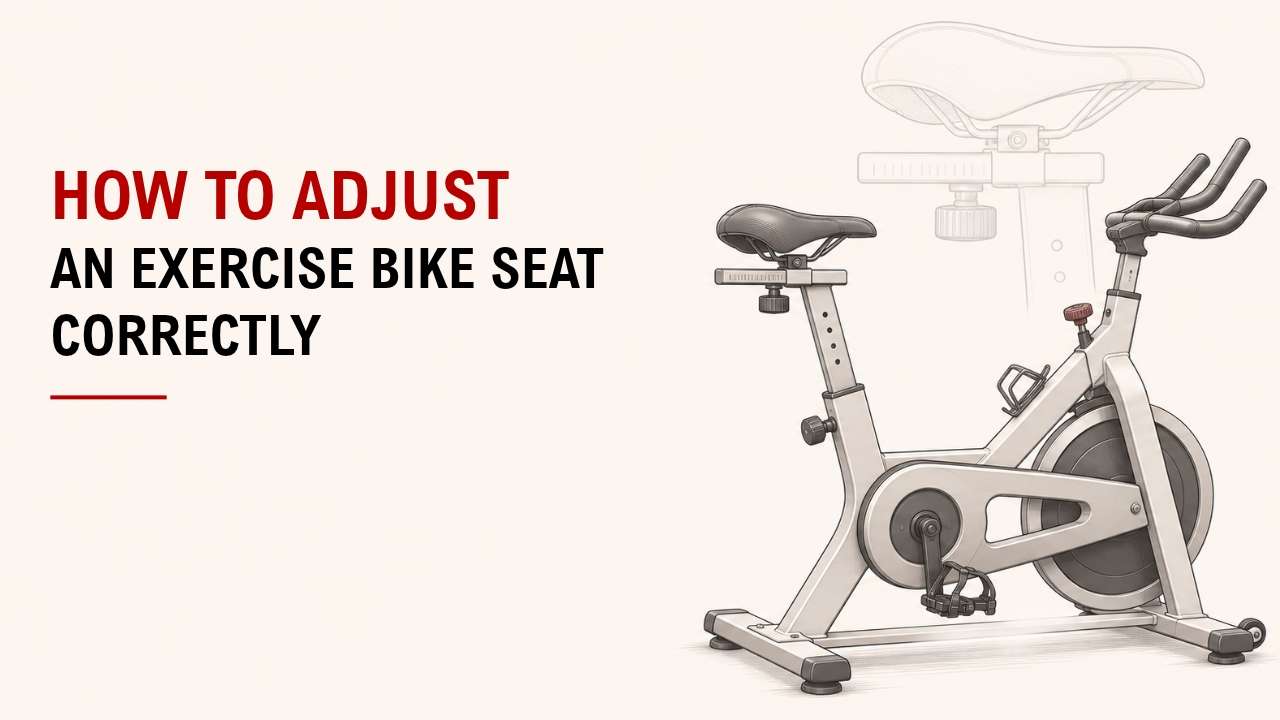

Does your knee hurt or your body feel uncomfortable when riding an exercise bike? Your seat position might be the reason.
To adjust your exercise bike seat correctly, start with the right height, move it forward or backward, and check its angle. These small changes help you pedal comfortably and reduce unnecessary pressure on your knees.
As an Ergonomics Engineer at YR Fitness, I understand how seat position affects posture, comfort, and movement. I’ve seen how even a small adjustment can make cycling feel much easier.
In this guide, I’ll show you five simple steps to adjust your exercise bike seat correctly. Follow along to find a comfortable position before your next ride.
1. Set the Correct Seat Height
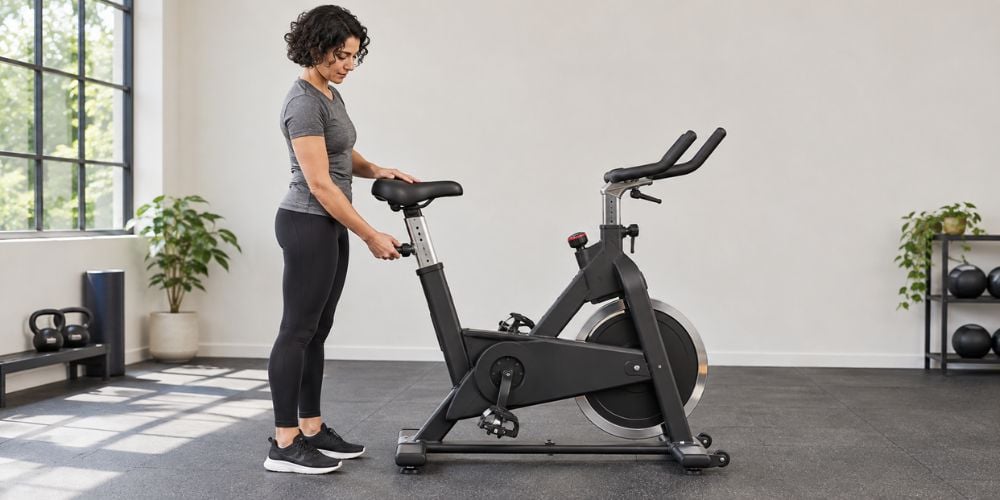
Seat height is the first thing to check. If it’s too high or too low, your knees and hips may feel strained.
Here’s how to adjust it:
- Stand beside your exercise bike.
- Adjust the seat until it’s roughly level with your hip bone.
- Sit on the bike and place your heel on one pedal.
- Move that pedal to its lowest position.
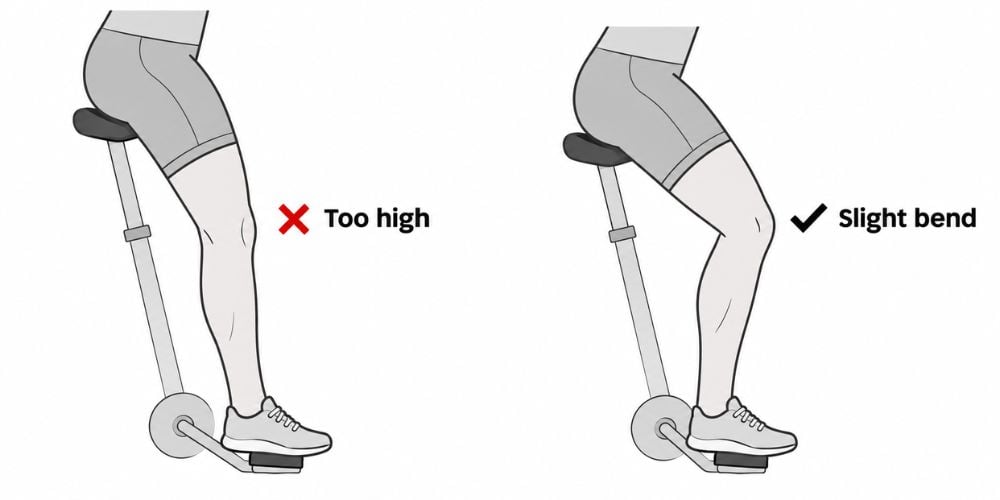
- Your leg should be almost straight without locking your knee or tilting your hips.
Now, place the ball of your foot on the pedal. Your knee should have a slight bend at the bottom of the stroke.
According to Hospital for Special Surgery’s exercise bike setup guide, hip-bone height is a good starting point, but your final seat position should match your body.
Quick Tip: Are your hips rocking from side to side? Your seat may be too high. Lower it slightly and test again.
For bikes with different adjustment mechanisms, this commercial spin bike adjustment guide explains how adjustable seats and handlebars work.
2. Adjust the Seat Forward or Backward
Once the height feels right, check how far your seat is from the handlebars and pedals.
Follow these steps:
- Sit on the bike with both feet on the pedals.
- Rotate the pedals until they’re horizontal.
- Check that your front knee is roughly above the center of the pedal.
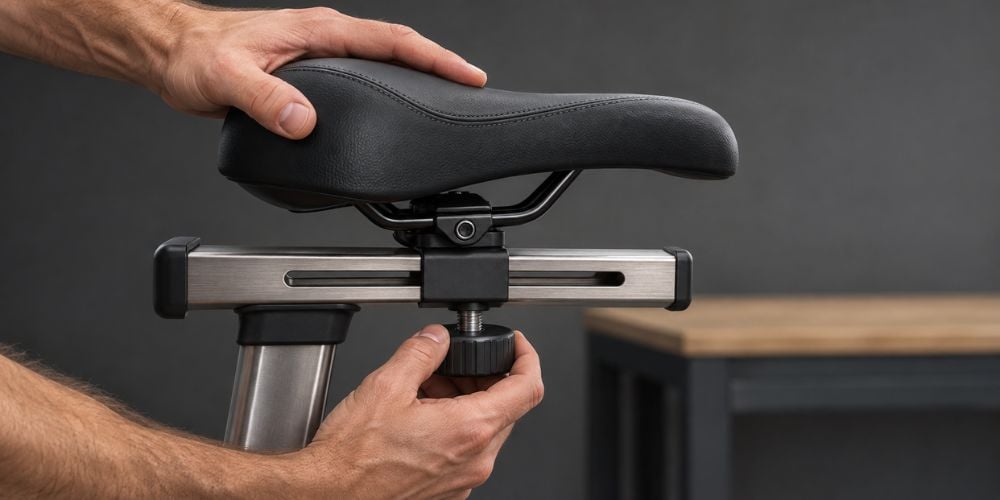
- Move the seat forward or backward in small steps.
- Tighten the adjustment knob before riding.
Your arms should feel relaxed, with a slight bend in your elbows.
Still feeling cramped? Try moving the seat backward slightly. If you’re reaching too far, check your seat position again.
Different commercial exercise bike designs offer different seat and handlebar adjustments. Some bikes allow both vertical and horizontal movement, while others have fewer settings.
3. Check Your Seat Angle
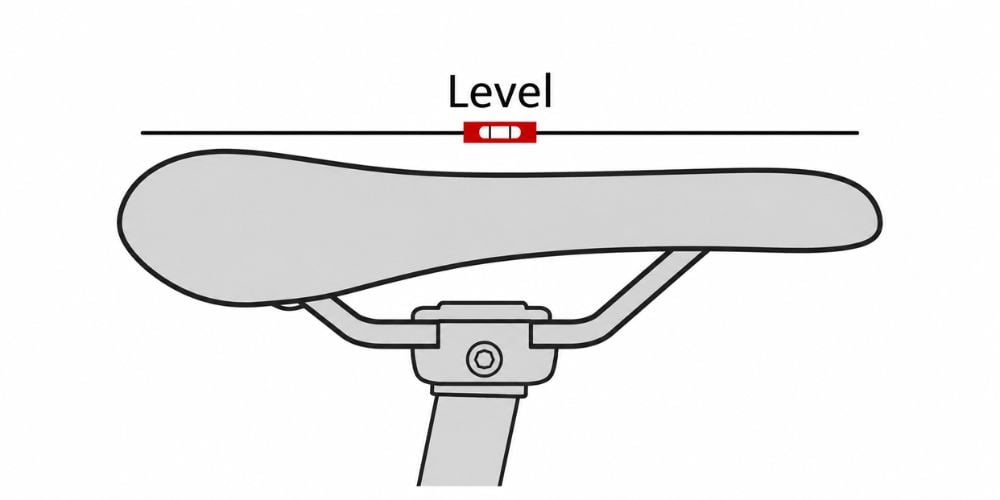
Your seat should generally be level. Too much tilt can make riding uncomfortable.
Seat Position | What Happens | What to Do |
Tilted too far forward | You may slide toward the handlebars | Raise the front slightly |
Tilted too far backward | Extra pressure on your lower back or sitting bones | Lower the front slightly |
Level | Usually provides balanced support | Keep it if comfortable |
Start with a flat seat and make small changes if needed.
I often recommend adjusting the angle only after getting the height and forward-backward position right. This makes it easier to find what feels comfortable.
Not every exercise bike has an adjustable seat angle. If yours doesn’t, focus on height and horizontal positioning.
For more details about seat designs, check this stationary bike guide.
Why Seat Adjustability Matters
A good exercise bike should be easy to adjust and comfortable to use. The right settings help different people find a suitable riding position.
At YR Fitness, we design our commercial exercise bikes with adjustable seats and handlebars to help users find a comfortable riding position. We focus on smooth movement, stable construction, and practical adjustments for everyday workouts.
If you’re comparing bikes, explore our exercise bike designs and adjustment features to see what fits your training needs.
4. Test Your Seat Position Before Riding
Before starting your workout, pedal slowly for 1–2 minutes.
Check these five things:
- Knees: Keep a slight bend at the bottom of each stroke.
- Hips: Stay steady without rocking.
- Feet: Rest comfortably on the pedals.
- Back: Maintain a relaxed, natural posture.
- Arms: Keep your elbows slightly bent and shoulders relaxed.
How do you know your seat is correct?
You should pedal smoothly without stretching your legs too far, sliding on the seat, or feeling unnecessary pressure on your knees.
If something feels uncomfortable, stop and adjust the seat.
The Cleveland Clinic’s guide to cycling pain also explains how incorrect seat height and positioning can contribute to knee discomfort.
My advice: Change one setting at a time. This makes it easier to figure out what works best for your body.
If you experience sharp pain or ongoing discomfort, stop riding rather than pushing through it.
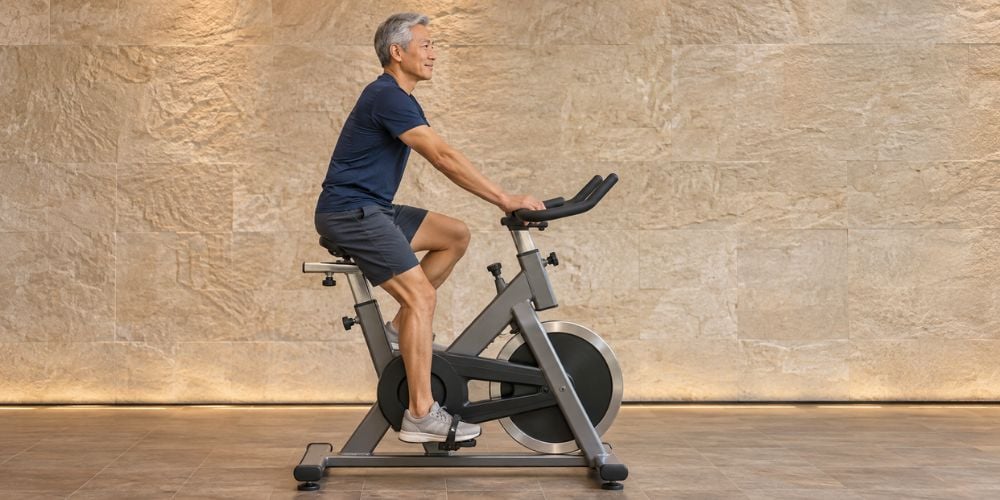
5. Common Exercise Bike Seat Adjustment Mistakes
Even a small seat-position mistake can affect your comfort.
Here’s how to spot and fix the most common problems.
Common Mistake | What Happens | How to Fix It |
Seat too high | Hips rock while pedaling | Lower the seat slightly |
Seat too low | Knees stay too bent | Raise the seat slightly |
Seat too far forward | Riding position feels cramped | Move the seat backward |
Seat too far backward | You overreach while pedaling | Move the seat forward |
Seat tilted too much | You slide or feel uneven pressure | Return the seat to a level position |
Still uncomfortable after adjusting everything?
Check whether your bike suits your body size. Some bikes have limited adjustment ranges, making it difficult to find the right position.
You can also compare different cardio equipment types to understand how upright, recumbent, and indoor cycling bikes differ.
Remember, everyone’s body is different. Your ideal seat position depends on your leg length, body proportions, and comfort.
One more thing: These steps mainly apply to upright and indoor cycling bikes. For recumbent exercise bikes, you’ll usually adjust the seat distance from the pedals instead of the seat height.
Conclusion
Adjusting your exercise bike seat is simple. Start with the right height, check the forward-backward position, and keep the seat level.
Take a minute to test your position before riding. A few small adjustments can make your workout much more comfortable.
At YR Fitness, we believe comfortable training starts with equipment that fits the user. Whether you’re cycling for fitness or endurance, the right setup helps you enjoy every ride.
Looking for an exercise bike with practical adjustment features? Explore our commercial stationary bike collection to find equipment designed for comfortable daily training.
Related articles:



