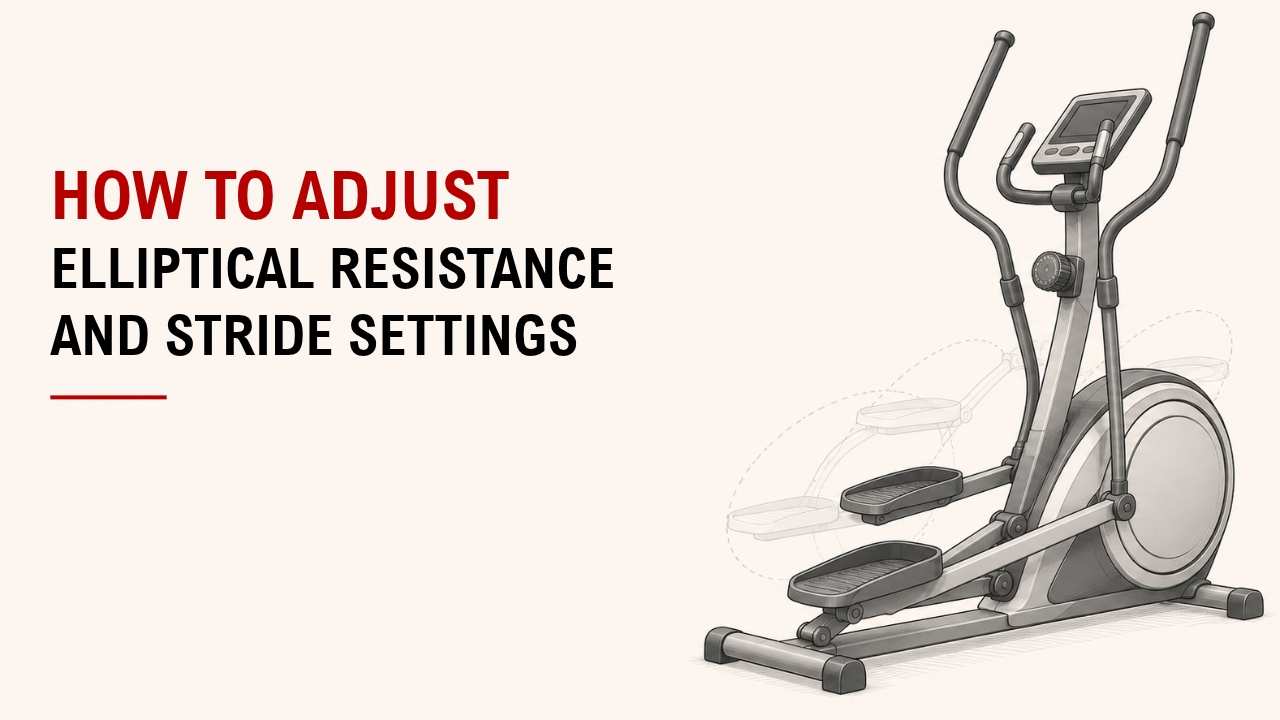

Does your elliptical feel too hard to pedal or uncomfortable when you move? You may need to adjust the resistance or stride length.
The fix is simple: adjust resistance to match your fitness level and stride length to fit your natural movement. Small changes can make your workout smoother and more comfortable.
As an Exercise Physiology & Biomechanics Expert at YR Fitness, I understand how elliptical settings affect body movement and workout performance. I often see how the right adjustments help people exercise more comfortably.
In this guide, I’ll show you how to adjust both settings and choose the right levels for your workout. Follow these simple steps to make your next elliptical session feel better.
1. How to Adjust Elliptical Resistance
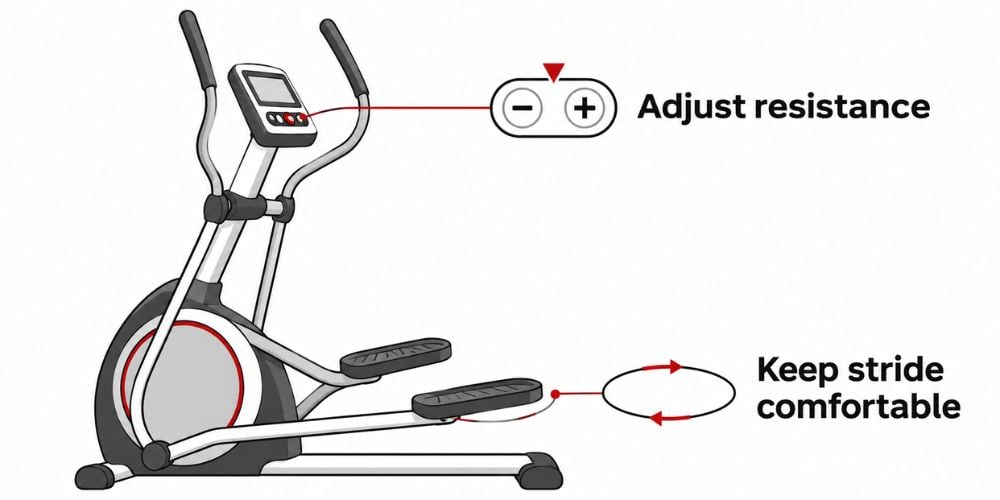
Resistance controls how hard you need to push the pedals. Higher resistance makes pedaling harder, while lower resistance makes it easier.
Step-by-Step Resistance Adjustment
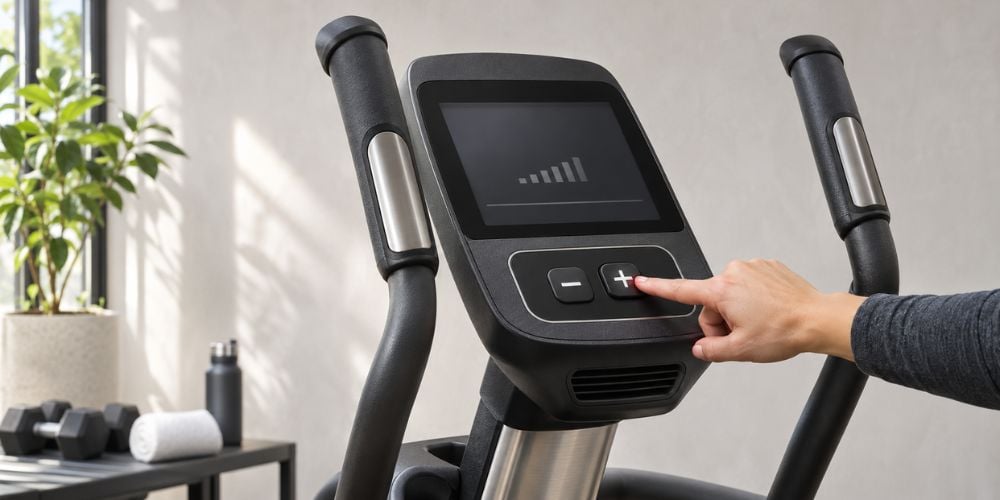
- Start pedaling slowly. Move at a comfortable pace to activate the console.
- Find the resistance buttons. Look for the + and − controls on the console or handles.
- Start at a low level. Try levels 1–3 if your machine has a 1–20 resistance scale.
- Increase gradually. Raise the resistance one or two levels at a time.
- Test for 30–60 seconds. Check whether you can maintain a smooth, steady pace.
- Lower if needed. Reduce resistance if your legs feel too heavy or your movement becomes jerky.
I always recommend starting with light resistance. It is easier to increase the difficulty once your legs are warmed up.
Quick Tip: If you cannot maintain smooth pedaling, the resistance may be too high.
What Resistance Level Should You Use?
Fitness Level | Resistance (1–20 Scale) | Workout Feel |
Beginner | 1–5 | Light and comfortable |
Intermediate | 6–12 | Moderate effort |
Advanced | 13–20 | Challenging effort |
These are general starting points. Resistance levels vary between machines, so adjust based on how your body feels.
For example, the Generator Elliptical 705D offers 40 resistance levels, allowing smaller adjustments between workout intensities.
Not sure if your resistance is too high?
Try the talk test. According to the CDC’s physical activity intensity guide, you should still be able to talk during moderate exercise, even if singing feels difficult.
If you can barely speak, your workout may have reached vigorous intensity.
2. How to Adjust Elliptical Stride Length
Stride length is the distance your feet travel forward and backward during each movement.
A comfortable stride allows your legs to move naturally without stretching too far or feeling cramped.
Important: Not every elliptical has adjustable stride length. Some models use a fixed stride, while others offer manual or electronic adjustments.
Step-by-Step Stride Adjustment
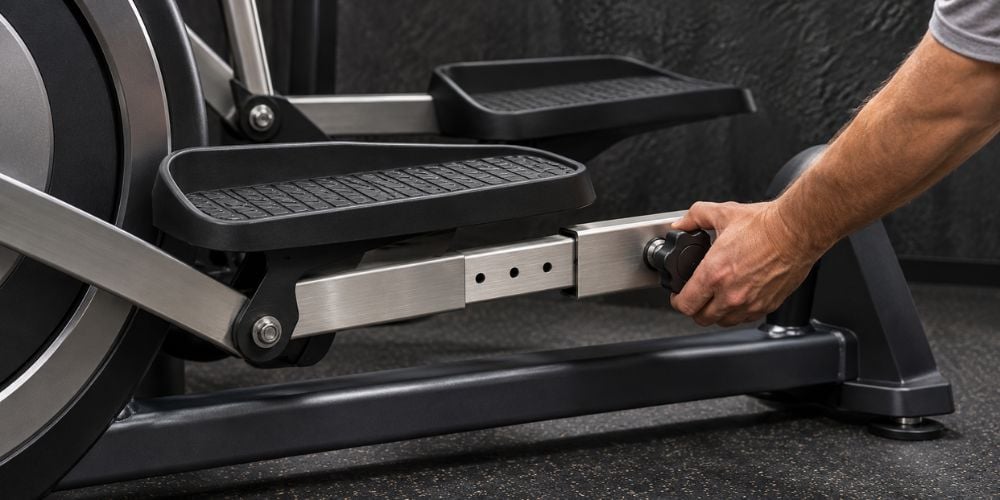
- Check your machine. Look for a stride adjustment button, knob, or lever.
- Stop pedaling. For manual adjustments, wait until the pedals stop completely.
- Adjust the stride.
- Electronic models: Use the stride adjustment buttons according to the machine’s instructions.
- Manual models: Use the adjustment knob or lever and lock it securely.
- Check both sides. If the machine has separate controls, make sure they match.
- Test the setting. Pedal slowly and check whether your legs move comfortably.
- Fine-tune if needed. Shorten the stride if you feel overstretched or lengthen it if your movement feels cramped.
Some ellipticals have an adjustable ramp that changes the pedal path. However, changing the incline does not always change the actual stride length.
For more details on machine features and controls, see this commercial elliptical machine guide.
What Stride Length Should You Choose?
Use these measurements as a starting guide.
Your Height | Suggested Starting Stride |
Under 5’3″ (160 cm) | 14–16 inches |
5’3″–5’7″ (160–170 cm) | 16–18 inches |
5’7″–6’0″ (170–183 cm) | 18–20 inches |
Over 6’0″ (183 cm) | 20–22 inches |
Your leg length, movement style, and elliptical design also affect which stride feels comfortable.
Quick Tip: A longer stride is not always better. Choose a length that keeps your hips and knees comfortable.
3. Recommended Resistance and Stride Settings
Your settings should match your workout goal. You do not need high resistance or a long stride for every session.
Here is a simple guide:
- Warm-up: Low resistance with a natural, comfortable stride.
- Beginner cardio: Low to moderate resistance with a comfortable stride.
- Endurance training: Moderate resistance with natural stride.
- High-intensity intervals: Moderate to high resistance while keeping your stride comfortable.
- Cool-down: Low resistance with a relaxed, natural stride.
Try This 15-Minute Elliptical Workout
Not sure where to start? Try this simple routine:
- Minutes 1–3: Use low resistance to warm up.
- Minutes 4–7: Increase to moderate resistance.
- Minutes 8–12: Alternate between higher and lower resistance every minute.
- Minutes 13–15: Reduce resistance to cool down.
Keep your stride natural throughout the workout.
In my experience, increasing resistance is often enough to make a workout more challenging. You do not need to lengthen your stride just to increase difficulty.
For a longer-term fitness goal, the U.S. Physical Activity Guidelines recommend building regular aerobic activity into your weekly routine. Start at a manageable effort and increase gradually as your fitness improves.
Choose an Elliptical With Easy Adjustment Controls
Clear resistance buttons and a readable display make workouts easier to manage. Smooth pedal movement also helps you maintain a steady rhythm.
Looking for easier workout adjustments?
At YR Fitness, we design commercial cardio machines with simple controls and adjustable workout intensity. Our 705D-T Generator Elliptical features a 15.6-inch touchscreen and 40 resistance levels, making it easier to change intensity and follow your workout progress.
Explore the machine’s features to see whether its controls and training programs suit your needs.
4. How to Know Your Settings Are Correct
Once you adjust your elliptical, pay attention to how your body moves.
Signs Your Settings Are Correct
- Smooth pedaling: Your legs move without jerking.
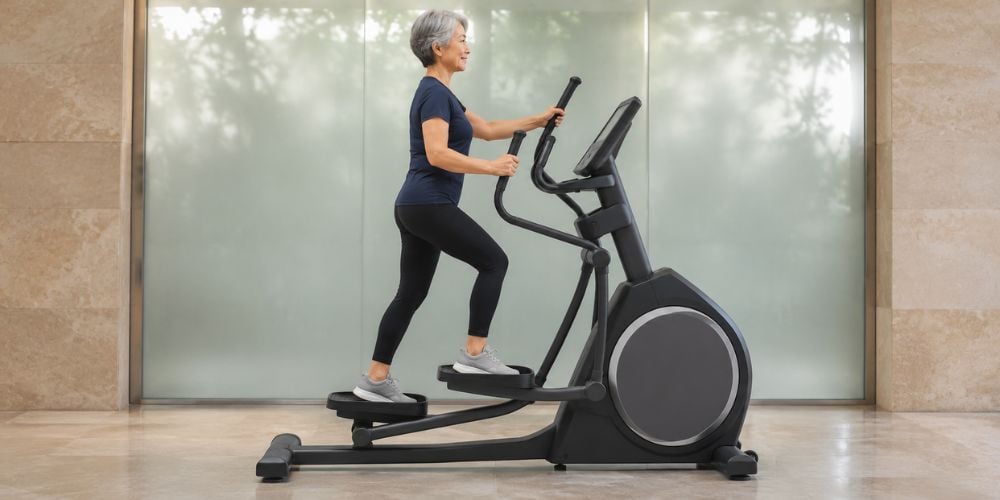
- Comfortable stride: Your hips and knees do not feel overstretched.
- Good posture: You can stand upright without leaning heavily on the handles.
- Stable feet: Your feet stay comfortably positioned on the pedals.
- Manageable effort: You feel challenged but can maintain control.
Signs You Need to Readjust
Pedaling feels too difficult? Lower the resistance until your movement becomes smoother.
Workout feels too easy? Increase resistance one or two levels at a time.
Legs feel overstretched? Shorten the stride if your machine allows it.
Movement feels cramped? Try a slightly longer stride, if adjustable.
Pedaling feels uneven? Reduce resistance and check your stride comfort.
I often suggest checking your posture before increasing resistance. Sometimes, a small adjustment makes the workout feel much better.
Quick Tip: If you experience joint pain, stop exercising and check your settings rather than pushing through it.
Conclusion
Adjusting elliptical resistance and stride settings is easy once you know what to look for. Start with low resistance, choose a comfortable stride, and increase the difficulty gradually as your fitness improves.
If you are comparing machines, YR Fitness offers commercial-grade ellipticals designed for regular workouts. Explore the available models to compare resistance options, display features, and training programs.
Related articles: