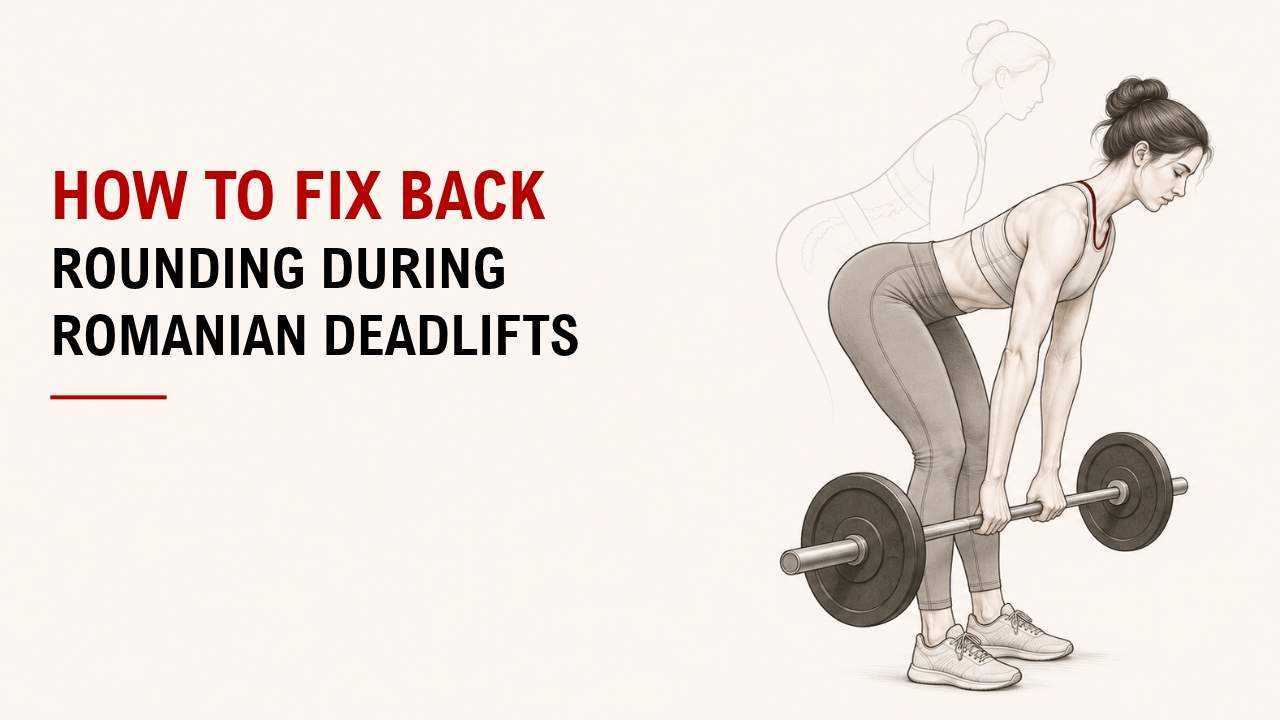

Does your back round when you lower the weight during Romanian deadlifts? This often happens when the weight is too heavy, your hip movement is incorrect, or you’re lowering farther than you can control.
The fix is simple: reduce the weight, push your hips back, brace your core, and stop before your back starts rounding. These adjustments can help you lift with better control and avoid unnecessary back strain.
As an Exercise Physiology and Biomechanics Expert at YR Fitness, I’ve seen how small technique mistakes can affect lifting performance. Understanding how your hips, spine, and muscles work together can make Romanian deadlifts much easier.
In this guide, I’ll show you five practical ways to correct back rounding. Follow these steps to improve your technique and feel more confident during your next workout.
1. Reduce the Weight First
Lifting too heavy is one of the most common reasons your back rounds during Romanian deadlifts.
When the weight becomes difficult to control, maintaining a neutral spine gets harder. You may also start rushing your repetitions.
Here’s how to fix it:
- Reduce the weight until you can keep your spine neutral.
- Keep the barbell or dumbbells close to your legs.
- Lower the weight slowly instead of letting it drop.
- Complete each repetition without losing your balance.
I often recommend starting with an empty barbell or light dumbbells. It’s much easier to learn the movement before adding heavier weights.
The ACSM resistance training guidelines also emphasize matching your training to your goals and abilities rather than making every workout as heavy as possible.
Quick question: Does your back round halfway down?
If yes, reduce the weight and shorten your lowering distance.
For more help with weight selection and technique, read this Romanian deadlift form guide.
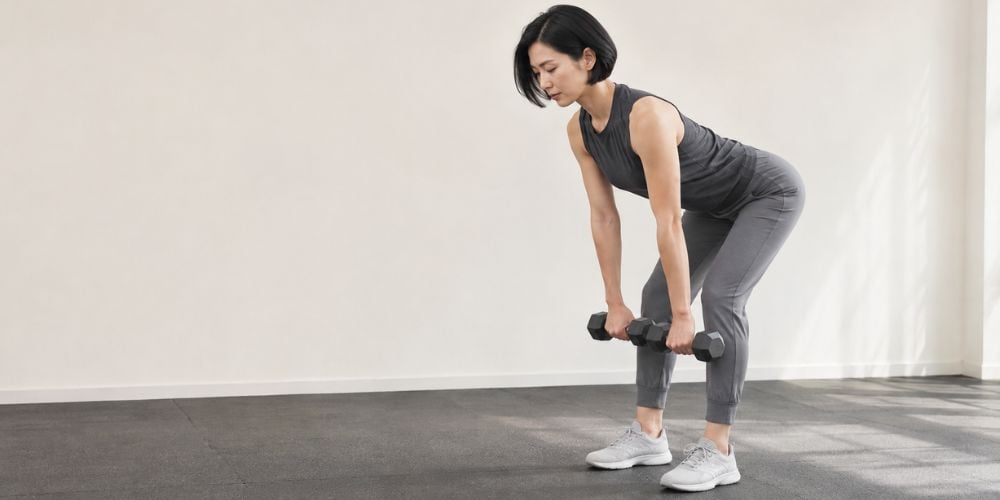
2. Push Your Hips Back, Not Down
Romanian deadlifts are hip-hinge exercises, not squats.
If you bend your knees too much or lower your hips straight down, you may lose the correct movement pattern.
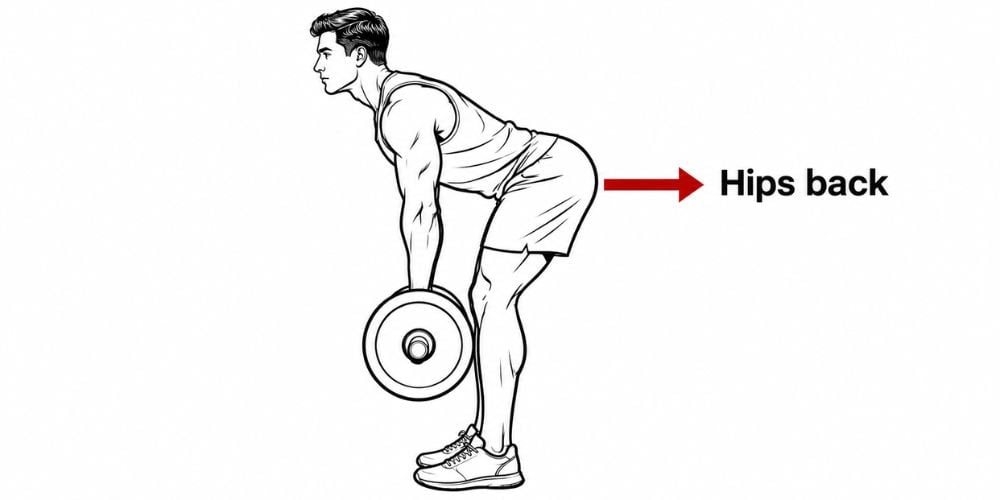
Instead, focus on pushing your hips backward.
Follow these steps:
- Stand with your feet hip-width apart.
- Hold the weight in front of your thighs.
- Keep your knees slightly bent.
- Push your hips backward as you lower the weight.
- Drive your hips forward to return to standing.
Keep your knees slightly bent throughout the movement. Avoid turning the exercise into a deep squat.
The American Council on Exercise’s Romanian deadlift guide recommends the same basic movement: maintain a slight knee bend, push your hips backward, and keep the weight close to your body.
Quick tip: Imagine closing a door behind you with your hips. This helps you understand the correct hip-hinge movement.
Want to do another hip-hinge exercise? This guide to rack pulls and common mistakes explains a related lifting movement.
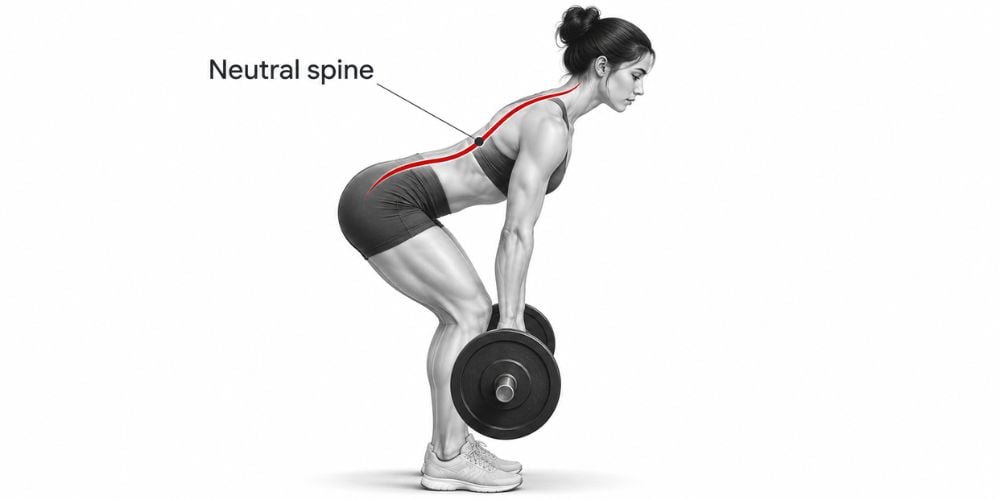
3. Keep Your Spine Neutral
Your spine should maintain its natural curves during Romanian deadlifts.
If your core isn’t properly braced, your back may start rounding as you lower the weight.
You don’t need to force your back completely straight. The goal is to keep your spine stable without excessive rounding or arching.
Here’s what to do:
- Brace your abdominal muscles before lowering.
- Keep your chest in a natural position.
- Maintain your head and neck in line with your spine.
- Keep your shoulders controlled without forcing them backward.
- Keep the barbell close to your thighs and shins.
I suggest taking a breath and tightening your core before every repetition. This simple habit can help you maintain a more stable lifting position.
Why keep the weight close?
When the weight moves too far forward, your back muscles must work harder to control it. Keeping the bar close makes the movement easier to manage.
If you also struggle with spinal positioning on other lower-body exercises, this guide explains how to fix lower-back rounding on the leg press.
Good technique comes first, but reliable equipment can help you train more consistently.
At YR Fitness, we design commercial strength equipment and training accessories with durable materials and practical movement mechanics in mind. Whether you’re practicing lighter lifts or building strength, we focus on equipment that supports regular training.
Explore your options: Browse our gym accessories and free-weight guide to compare dumbbells, barbells, and other tools for your strength-training routine.
4. Stop Lowering Before Your Back Rounds
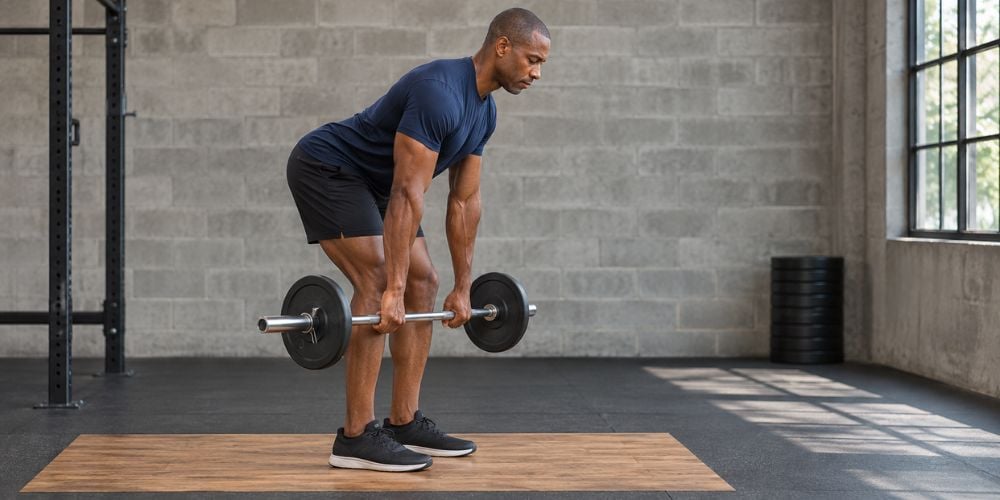
You don’t need to touch the floor during Romanian deadlifts.
Lowering too far may cause your pelvis and lower back to move out of position. Your ideal stopping point depends on your mobility and how well you control the weight.
Follow these steps:
- Start with the weight in front of your thighs.
- Push your hips back while keeping your knees slightly bent.
- Lower until you feel a comfortable hamstring stretch.
- Stop before your lower back starts rounding.
- Drive your hips forward to stand again.
Some people can lower the weight just below their knees. Others can comfortably reach farther down their shins.
Both are fine if you maintain good form.
How do you know when to stop?
Use this simple guide:
What You Notice | What It Means | What to Do |
Back stays neutral | Your position is controlled | Continue within your comfortable range |
Hamstrings feel stretched | You’re reaching your available range | Stop before losing spinal position |
Lower back starts rounding | You’ve gone too far or lost control | Shorten your range |
Weight moves away from legs | You’re losing your bar path | Keep the weight closer |
You need to jerk the weight upward | The load may be too heavy | Reduce the weight |
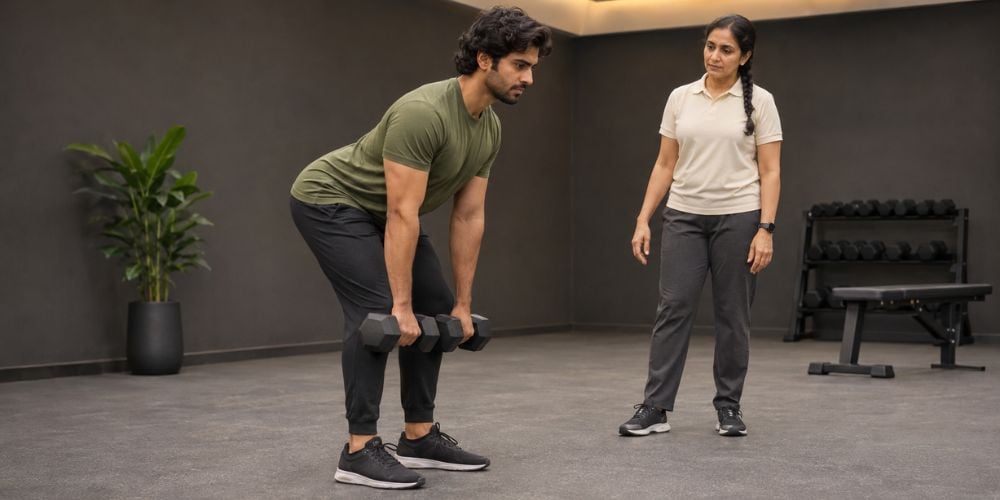
Quick tip: Record yourself from the side. Check whether your back starts rounding near the bottom of each repetition.
A slightly shorter, controlled rep is better than forcing the weight lower.
5. Improve Hamstring Mobility and Hip Control
Tight hamstrings can limit how far you lower the weight while maintaining a neutral spine.
Poor hip-hinge control can also make your lower back compensate during the movement.
The good news? You can improve both with simple exercises.
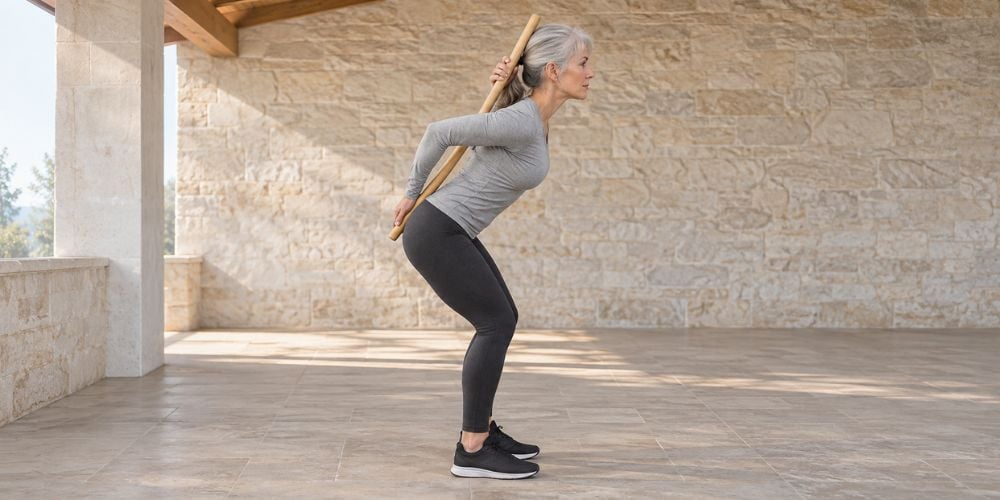
Try these exercises before or alongside your regular training:
Exercise | How It Helps | Suggested Practice |
Bodyweight hip hinge | Improves hip movement control | 10–12 repetitions |
Dowel hip hinge | Helps practice spinal alignment | 8–10 repetitions |
Gentle hamstring stretch | Improves hamstring flexibility | 20–30 seconds |
Glute bridge | Strengthens hip extension muscles | 10–15 repetitions |
These are starting suggestions. Adjust them to your comfort level and avoid forcing a deeper stretch.
From my experience, practicing the hip hinge without weights helps people understand the movement much faster.
Once you can control your position, gradually increase your resistance.
Quick Checklist: Are You Doing Romanian Deadlifts Correctly?
Before your next set, check these common mistakes:
- Lower back rounds? Shorten your range of motion.
- Weight feels too heavy? Reduce the load.
- Knees bend too much? Maintain a slight knee bend.
- Bar moves away from your legs? Keep it close.
- Neck bends upward? Keep your neck aligned with your spine.
- Lowering too fast? Slow down each repetition.
Still rounding your back?
Stop the set and reset your position. Don’t force another repetition if you cannot maintain control.
If you experience sharp or persistent back pain, stop the exercise and seek advice from a qualified healthcare professional.
Conclusion
Fixing back rounding during Romanian deadlifts starts with five simple adjustments: reduce the weight, push your hips back, keep your spine neutral, control your lowering distance, and improve your hamstring mobility.
You don’t need to lift heavier or reach the floor to get results. Focus on proper technique first, then gradually build your strength.
Reliable training equipment can also make your workouts more consistent. Since 1997, YR Fitness has manufactured commercial strength equipment and fitness accessories designed for regular use.
If you’re looking to expand your strength-training options, explore our gym equipment packages and free-weight setups to see how different equipment can support your training goals.
Related articles: