


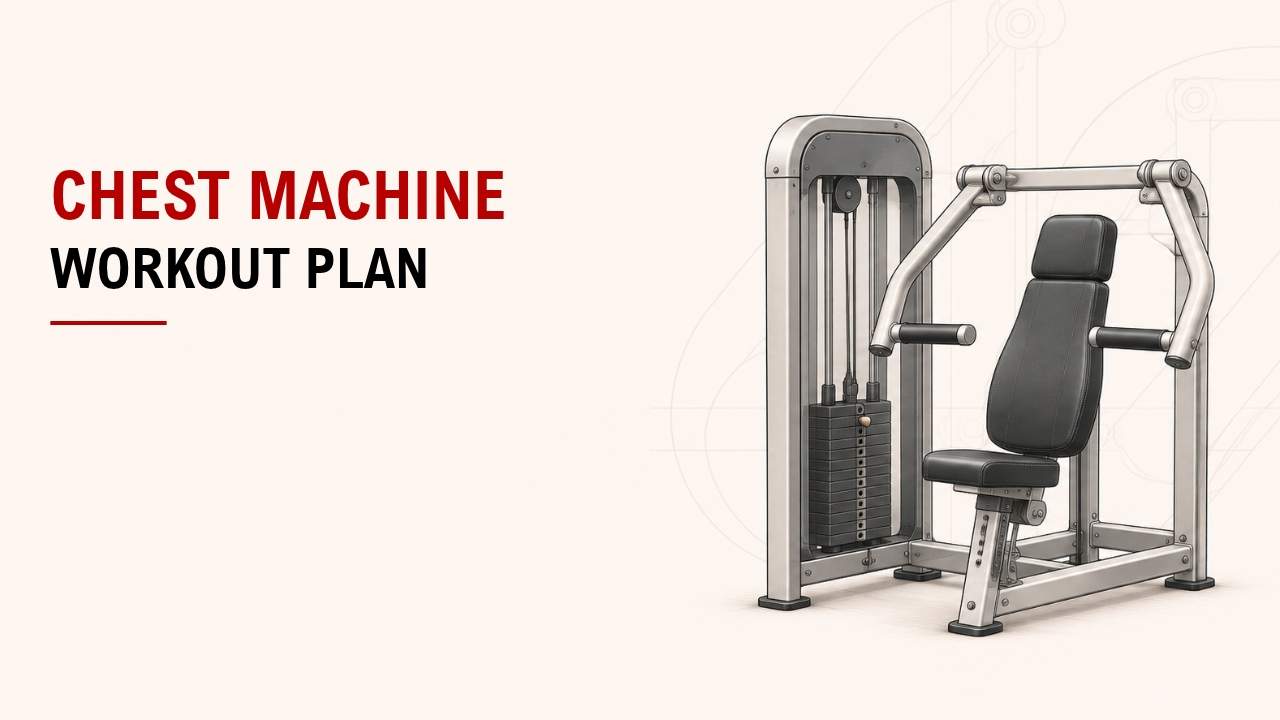

Want a simple chest workout using machines without wasting time on too many exercises? A few well-chosen movements are enough to train your chest effectively.
The short answer is simple: start with pressing exercises, use different chest angles, then finish with fly movements. Keep the weight controlled and focus on clean reps.
As an Exercise Physiology & Biomechanics Expert at YR Fitness, I pay close attention to movement angles, machine setup, and exercise control. I often see chest workouts improve quickly once people stop chasing heavy weight and focus on better positioning.
Below, I’ll show you the full workout, sets, reps, rest times, and simple form cues. Follow the exercises in order and adjust the volume to match your experience level.
Chest Machine Workout at a Glance
Here is the full workout before we break down each exercise.
Exercise | Sets | Reps | Rest |
Machine Chest Press | 3–4 | 8–12 | 60–90 sec |
Incline Chest Press | 3 | 8–12 | 60–90 sec |
Decline Chest Press | 3 | 10–12 | 60 sec |
Pec Deck Fly | 3 | 10–15 | 45–60 sec |
Cable Chest Fly | 3 | 12–15 | 45–60 sec |
New to chest training? Start with three or four exercises. Add more only when you can recover comfortably.
1. Machine Chest Press
Start with the machine chest press while your chest is fresh. This is usually the best place to use your heaviest working weight.
How to Do It
- Adjust the seat so the handles are around mid-chest level.
- Keep your back and head against the pad.
- Place your feet firmly on the floor.
- Keep your wrists straight.
- Press forward until your arms are almost straight.
- Return slowly.
Do 3–4 sets of 8–12 reps.
Need a quick setup check? The American Council on Exercise seated chest press guide also recommends setting the handles around mid-chest height, keeping the feet stable, and maintaining a neutral wrist position.
I usually suggest stopping just before your elbows lock. Keep your shoulders against the pad instead of letting them roll forward.
Should you add more weight? Only if you can still control the full repetition.
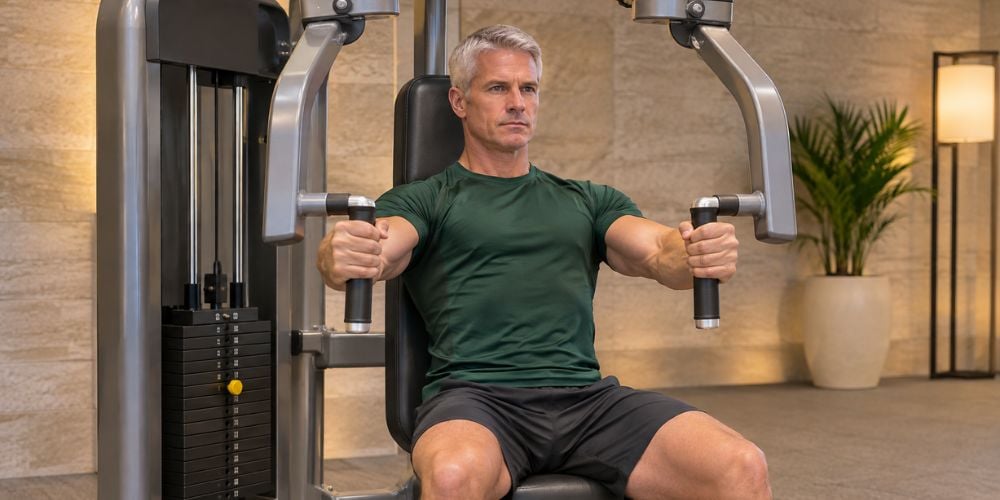
2. Incline Chest Press
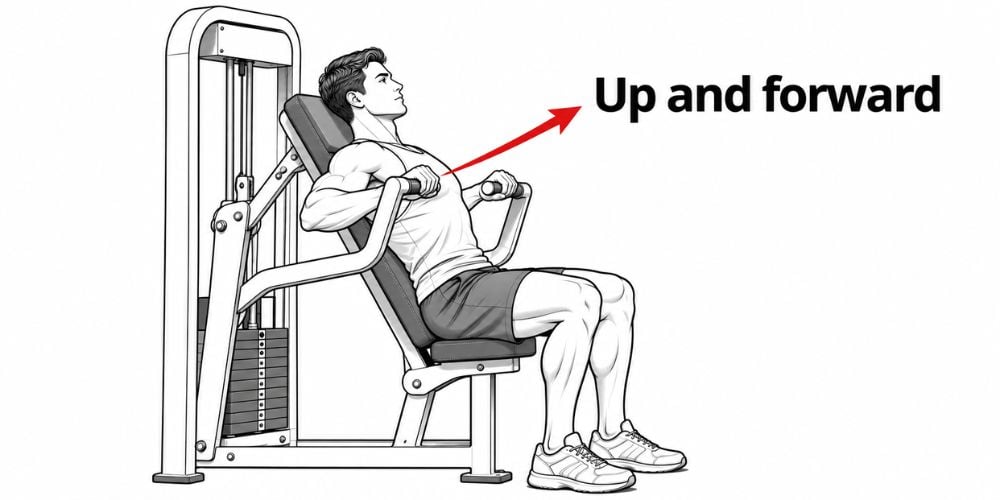
Next, move to the incline chest press. The higher pressing angle changes movement and puts more attention on the upper portion of your chest while your shoulders and triceps still help.
How to Do It
- Adjust the seat so the handles begin near your upper chest.
- Keep your shoulders down and against the backrest.
- Press upward and forward.
- Keep your lower back against the pad.
- Lower the handles slowly.
Do 3 sets of 8–12 reps.
I often see people setting their seats too low. When that happens, the movement can start feeling more like a shoulder press.
Take a few seconds to find a comfortable position before your working sets. Small setup changes can make a big difference.
3. Decline Chest Press
The decline chest press gives you another pressing angle. It places more emphasis on the lower portion of the chest.
You do not need extremely heavy resistance here. Smooth, controlled reps matter more.
How to Do It
- Sit firmly against the backrest.
- Position the handles around the lower chest.
- Keep your chest up.
- Press the handles forward.
- Pause briefly near the end.
- Return slowly.
Do 3 sets of 10–12 reps.
Keep your elbows controlled, and don’t let them flare too far out to the sides.
No decline machine in your gym? Just skip it. You do not need to force another exercise into the workout.
A chest machine should feel stable, adjustable, and smooth through the pressing path. At YR Fitness, we design commercial strength equipment with our own movement angles and adjustment systems so users can find a comfortable training position more easily. If you want to compare chest and strength machine designs, browse our equipment range to see which setups suit your training space.
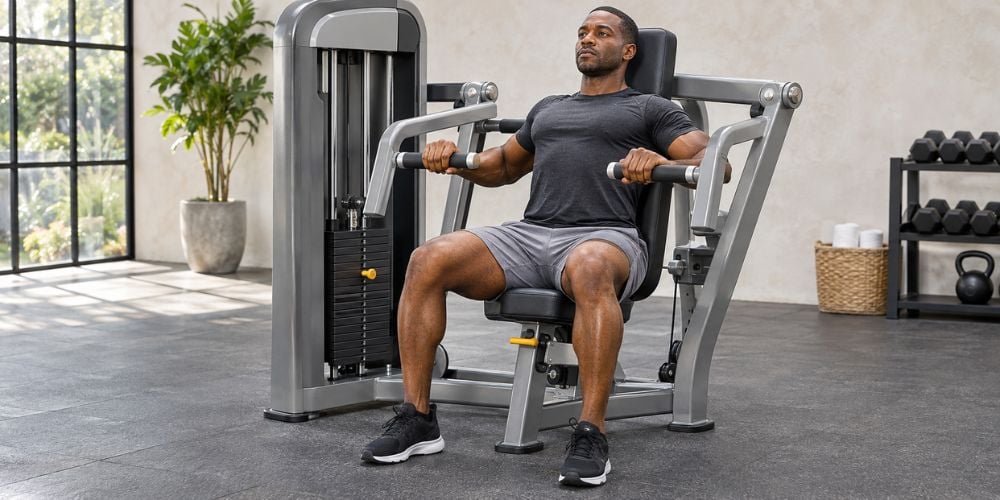
4. Pec Deck Fly
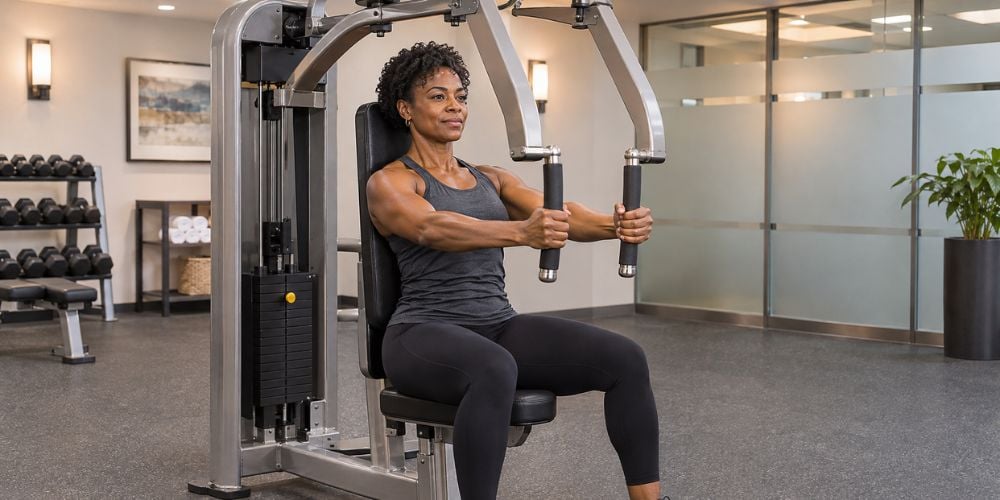
After your pressing exercises, move to the pec deck. This lets you focus on bringing your arms together without needing the same heavy loads used on pressing movements.
How to Do It
- Adjust the seat so your arms are around chest height.
- Keep your back against the pad.
- Maintain a slight bend in your elbows.
- Bring your arms together smoothly.
- Squeeze your chest briefly.
- Return under control.
Do 3 sets of 10–15 reps.
I prefer a slightly lighter weight here. You should feel that you are controlling the machine instead of letting the weight stack control you.
Do not let your arms travel too far behind your body. Use a comfortable range that does not irritate your shoulders.
The pec deck is also more than just a convenient finishing exercise. ACE includes the pec deck among the chest exercises highlighted in its evidence-based chest training overview.
5. Cable Chest Fly
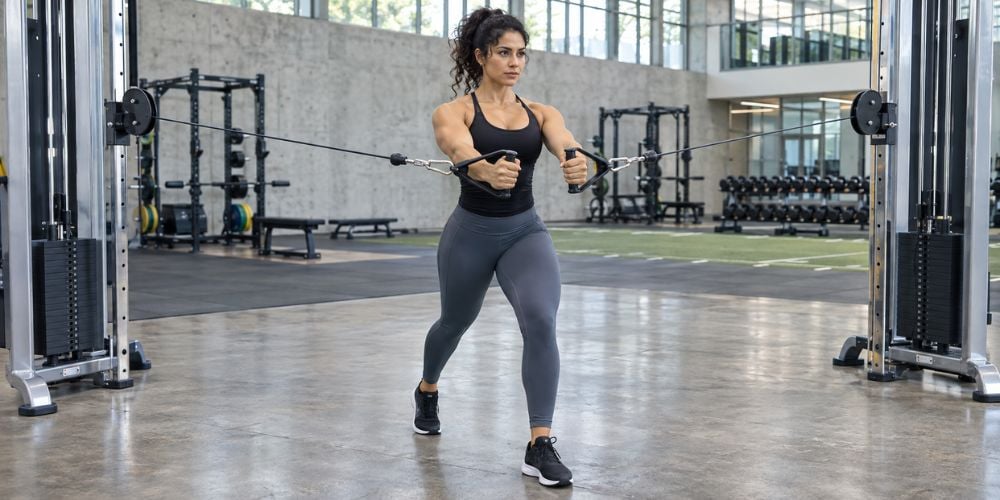
Finish with cable chest flies. Cables let you adjust your arm path easily while maintaining resistance through much of the movement.
How to Do It
- Set both pulleys around chest height.
- Hold one handle in each hand.
- Step slightly forward.
- Keep a soft bend in your elbows.
- Bring your hands together in front of your chest.
- Slowly open your arms again.
Do 3 sets of 12–15 reps.
Rocking forward and backward? The weight is probably too heavy.
Reduce resistance and keep your body stable. Your chest should do the work instead of momentum.
You can also move the pulleys slightly higher or lower over time to change the training angle. Just avoid changing several things at once, or it becomes harder to track your progress.
6. How Often Should You Do This Workout?
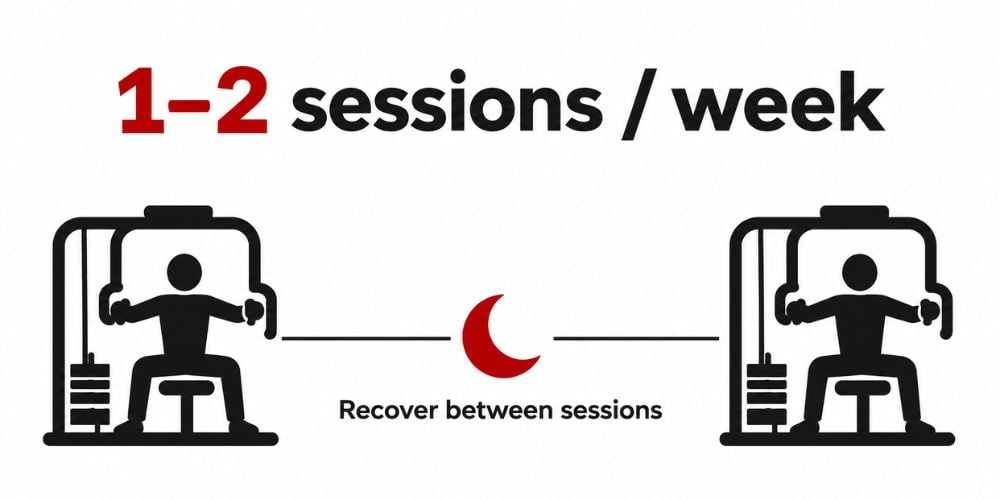
For most fitness lovers, 1–2 chest workouts per week is a practical starting point.
Beginners can begin with one chest session each week. Once that volume feels manageable, you can add a second session.
Current ACSM resistance-training guidance emphasizes that resistance-training volume should match your goal and that consistency matters more than making a program unnecessarily complicated.
If you train chest twice per week, you do not have to complete all five exercises both times.
Simple 2-Day Chest Split
Workout | Exercises | Main Focus |
Chest Day 1 | Chest Press, Incline Press, Pec Deck | Main pressing + upper chest |
Chest Day 2 | Chest Press, Decline Press, Cable Fly | Different press angle + controlled fly |
This approach keeps your weekly training simple while still giving your chest some variety of exercise.
The U.S. Physical Activity Guidelines also recommend muscle-strengthening activity at least 2 days per week for adults as part of an overall activity program, although that recommendation applies to strengthening the major muscle groups rather than training only the chest.
Still sore from your last session? Give yourself more recovery time.
If your chest, shoulders, or triceps still feel heavily fatigued, wait before training them hard again. Recovery needs will vary from person to person.
Increase resistance gradually as well. When you can complete the top end of your rep range with clean form, add a small amount of weight.
Conclusion
A good chest machine workout does not need ten different exercises. Start with presses, use different angles, finish with fly movements, and keep every rep controlled.
Stay consistent and increase resistance only when your form remains clean. Good technique and gradual progress will usually take you further than simply adding more exercises.
If you want to compare commercial chest, cable, and strength machines with stable frames and practical adjustment options, explore the equipment at YR Fitness.
Related articles:



