








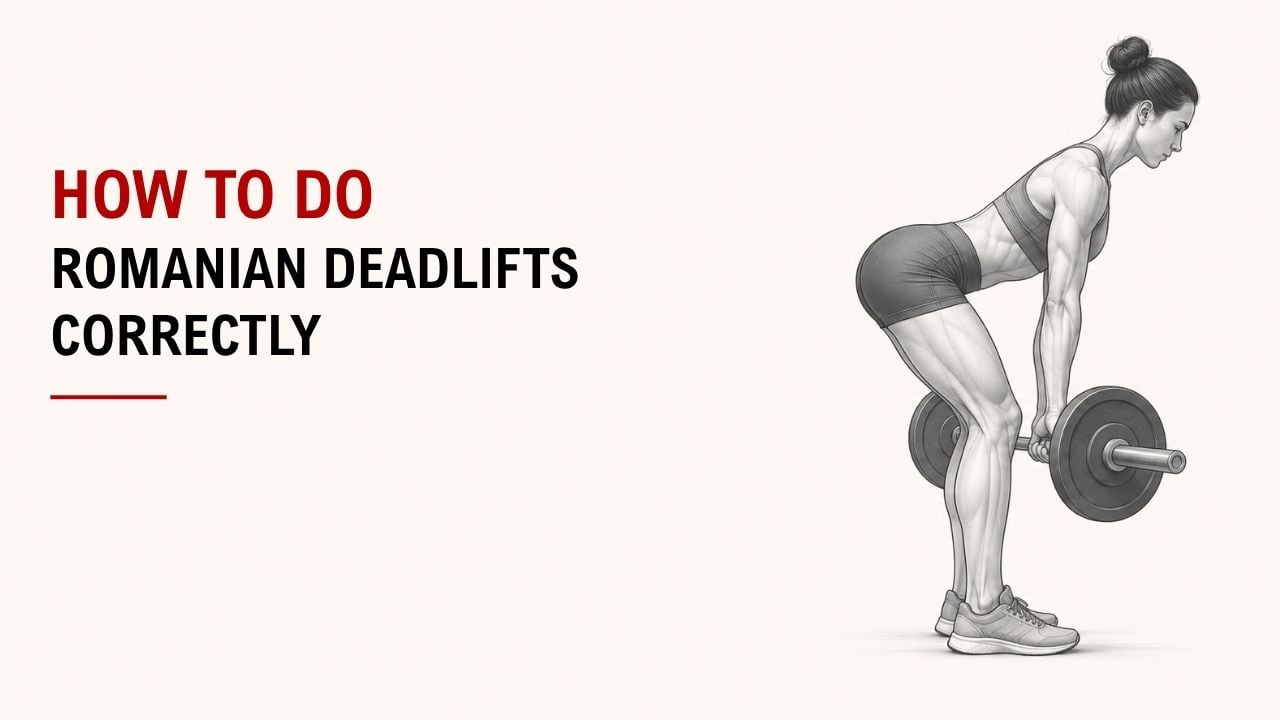

Want to do Romanian deadlifts but are not sure if your form is right? Small mistakes can quickly move tension away from your hamstrings and toward your lower back.
The short answer is: keep a slight bend in your knees, push your hips back, keep the weight close to your legs, and drive your hips forward to stand. You do not need to lower the weight all the way to the floor.
As an Exercise Physiology & Biomechanics Expert at YR Fitness, I study how joint position, resistance, and movement affect exercise technique. I often see Romanian deadlifts improve as soon as people understand that the movement is a hip hinge, not a squat.
Below, I’ll show you how to do the Romanian deadlift correctly in six simple steps. Follow them in order, and you can make each rep easier to control.
1. Choose a Manageable Weight
Start with a weight you can control comfortably.
You can use a barbell, two dumbbells, or kettlebells. If you are still learning, start lighter than you think you need.
Your first goal is to feel your hamstrings working without rounding your back.
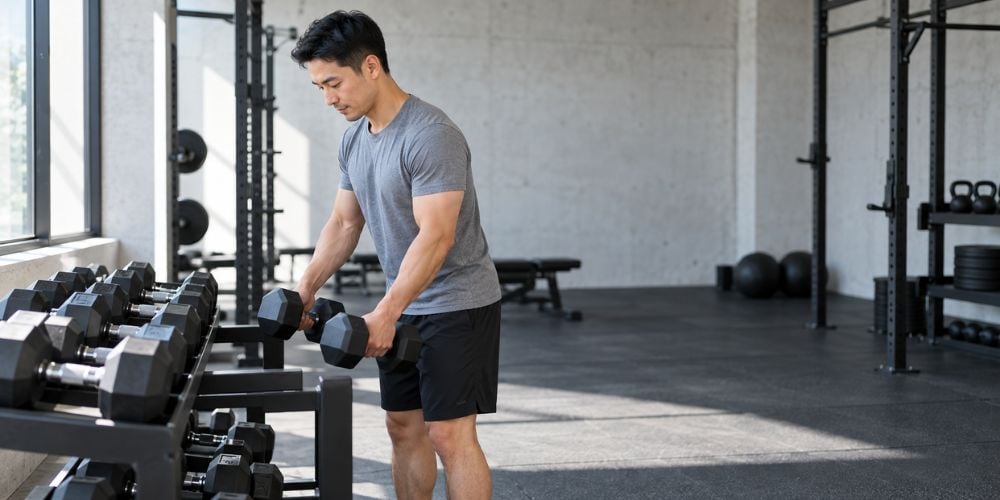
How heavy should you go?
Choose a weight that lets you finish every rep without jerking, losing balance, or changing your form.
I usually tell beginners to learn the hip hinge first. A clean light rep is more useful than a heavy rep with poor control.
The latest ACSM resistance-training guidance also emphasizes matching resistance training to your goals instead of treating heavier weight as the only way to progress.
Weight Choice | What You Should Notice |
Too light | Little hamstring tension or challenge |
About right | Controlled reps with good hamstring tension |
Too heavy | Back rounds, balance changes, or reps become jerky |
2. Set Your Starting Position
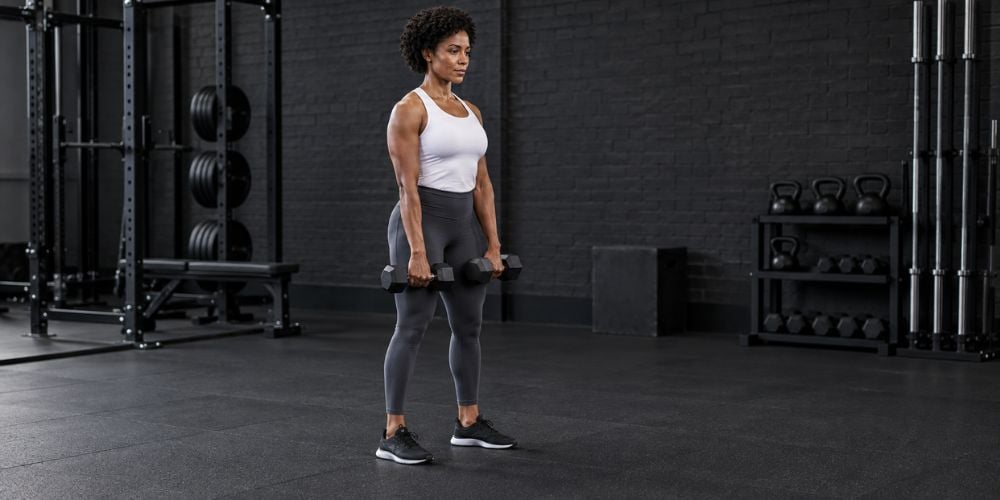
Stand with your feet about hip-width apart.
Hold the weight in front of your thighs with your arms straight. Keep a slight bend in your knees.
Before you move, brace your core, relax your shoulders, keep your spine neutral, and look slightly forward and down.
Avoid forcing your lower back into a large arch.
This setup is also consistent with ACE’s Romanian deadlift technique guide, which recommends a hip-width stance, slight knee bend, and stable spine before beginning the hinge.
3. Push Your Hips Back
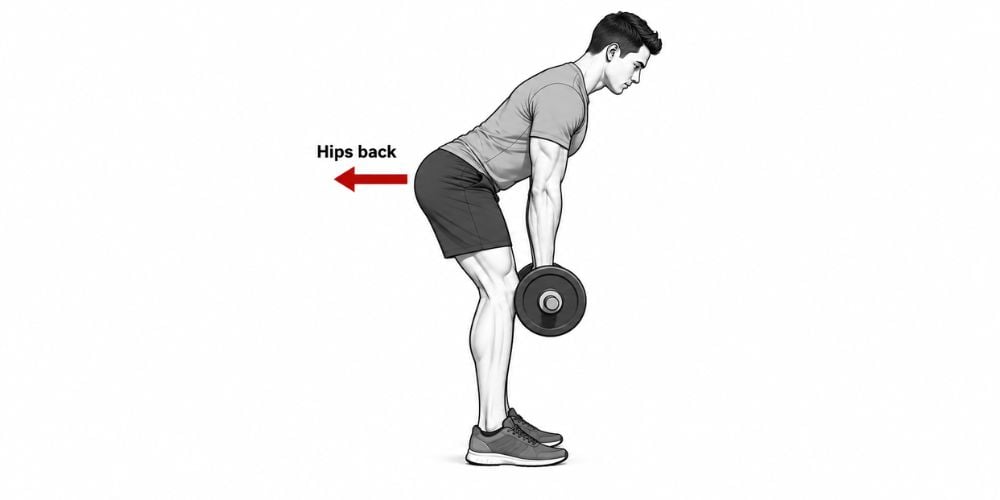
Now comes the most important part: push your hips backward.
Think about reaching your hips toward the wall behind you. Your torso will naturally lean forward as the hips move back.
Keep your knees slightly bent, but do not keep bending them as you lower.
Quick check: Are your knees moving far forward?
If yes, you may be turning the movement into more of a squat.
You should gradually feel more tension through your hamstrings as your hips move backward. That hamstring stretch is a good sign that the hip hinge is working.
4. Keep the Weight Close to Your Legs
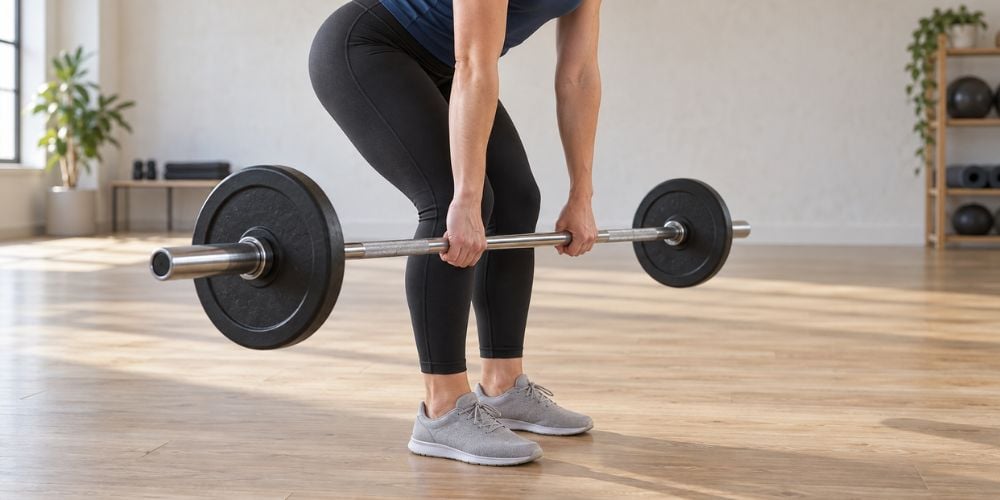
Keep the barbell or dumbbells close to your thighs and shins as you lower.
Why does this matter? Letting the weight drift forward creates a longer lever between the load and your body, making it harder to maintain your position.
I often tell people to think about “sliding” the weight down their legs. It is a simple cue, but it can make the movement much easier to control.
If exercises like Romanian deadlifts are part of your strength routine, explore YR Fitness strength equipment. We design our commercial strength equipment around stable movement, practical biomechanics, and the demands of regular training.
5. Stop When Your Hamstrings Feel Fully Stretched
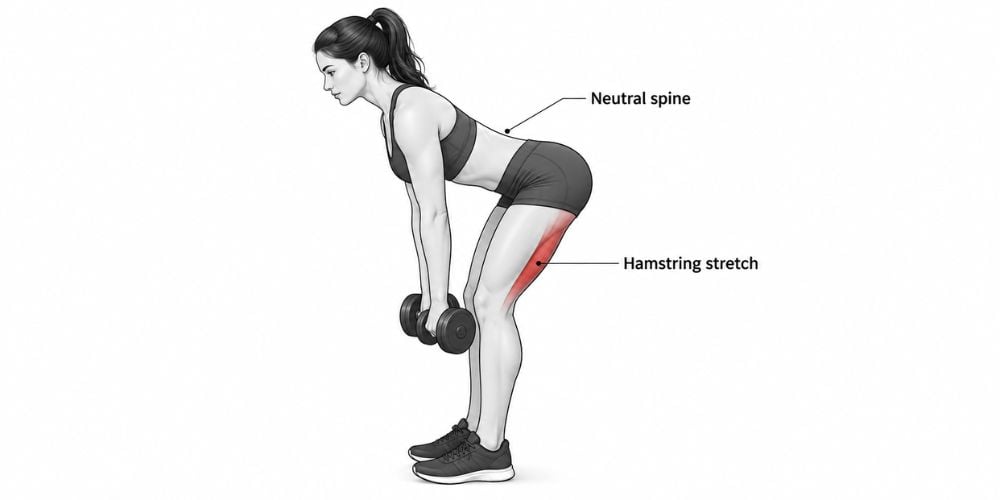
You do not need to touch the floor.
For many people, the bottom position will be around the knees or mid-shin. Your own stopping point depends on your mobility, limb proportions, and control.
Stop when your hamstrings feel strongly stretched, your hips cannot comfortably move farther back, and your back is still neutral.
NASM’s barbell Romanian deadlift guide uses the same basic cue: hinge with slightly bent knees and descend until you feel an adequate hamstring stretch, often around mid-shin.
Should you feel it in your lower back?
Your back muscles help stabilize your torso, but the main movement should come from your hips. You should usually feel strong tension through your hamstrings and glutes.
Do not force extra depth by rounding your lower back. Someone else may lower the weight farther than you, but that does not automatically mean their form is better.
6. Drive Your Hips Forward
Once you reach your comfortable bottom position, reverse the movement.
Push your feet onto the floor and drive your hips forward while keeping the weight close.
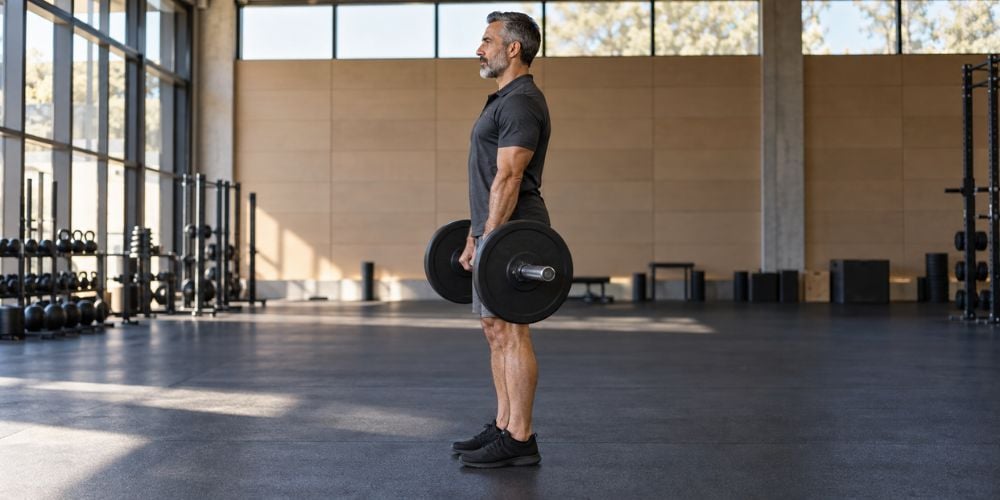
Stand tall at the top and squeeze your glutes. Avoid leaning backward or pushing your hips past a normal standing position.
I prefer slow, controlled reps because they make it easier to notice whether the hips and hamstrings are actually doing the work.
Romanian Deadlift Form Checklist
Check | What to Do |
Feet | About hip-width apart |
Knees | Keep a slight bend |
Back | Maintain a neutral position |
Hips | Push backward |
Weight | Keep it close to your legs |
Bottom | Stop at a controlled hamstring stretch |
Return | Drive your hips forward |
One last check: Does each rep look roughly the same?
If your back starts rounding, the weight moves forward, or your knees keep bending more, stop the set and reset your position.
Conclusion
A good Romanian deadlift is simple: use a manageable weight, keep a slight knee bend, push your hips back, keep the load close, and stop when your hamstrings reach a strong but controlled stretch.
Focus on getting the hip hinge right before adding more weight.
If you want more options for building a complete strength-training setup, explore YR Fitness and compare the available equipment for your training needs.
Related articles:



