



Why do some exercise bikes feel smoother than others? The weight of the flywheel is one reason.
Flywheel weight affects pedaling smoothness, momentum, resistance feel, starting and stopping, and riding comfort. A heavier flywheel often feels steadier, but it isn’t always better.
As a Machinery & Structural Engineer at YR Fitness, I focus on how exercise bike components affect performance. I’ve seen how flywheel design can change the way a bike feels during a workout.
Below, I’ll explain five reasons flywheel weight matters. You’ll learn how it affects your ride and what to consider when choosing a bike.
1. Makes Pedaling Feel Smoother
Does your exercise bike feel jerky when you pedal? Flywheel weight could be one reason.
A heavier flywheel helps maintain steady rotation, reducing uneven movement between pedal strokes.
Here’s how different flywheels affect pedaling:
- Heavier flywheel: Usually provides smoother, more continuous pedaling.
- Lighter flywheel: May feel less consistent, especially at slower speeds.
- Balanced flywheel: Helps reduce unwanted vibration during cycling.
As explained in this commercial spin bike guide, flywheel weight and a smooth resistance system help create a steady, road-like cycling experience.
Quick tip: Pedal slowly when testing an exercise bike. If every rotation feels smooth, that’s a good sign.
2. Helps Maintain Pedaling Momentum
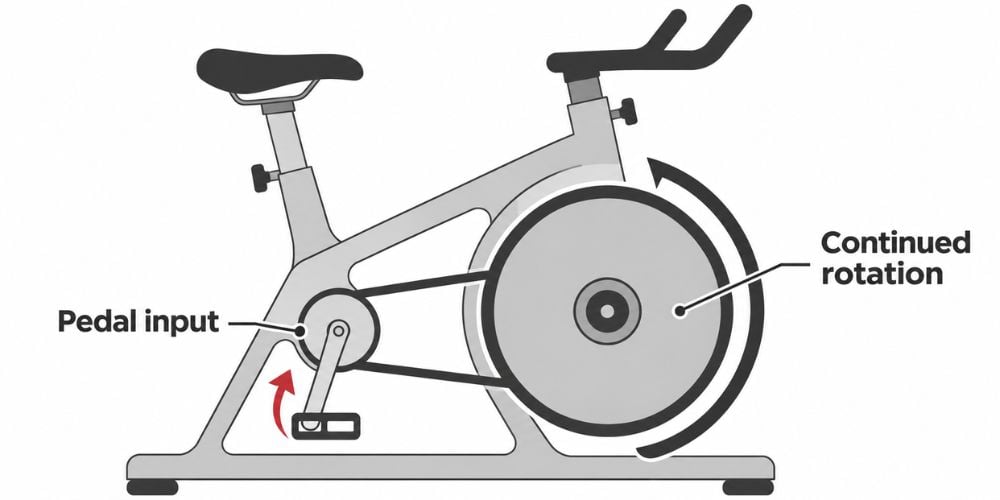
A heavier flywheel stores more rotational energy when its size, shape, and speed are equal to those of a lighter one. This helps keep the pedals moving steadily between strokes.
Why does this matter?
Your legs don’t apply equal force throughout every pedal stroke. The flywheel helps maintain movement when your legs apply less force.
A heavier flywheel can:
- Maintain momentum between pedal strokes.
- Reduce sudden changes in pedaling speed.
- Create a more continuous cycling motion.
- Make indoor cycling feel closer to outdoor riding.
I’ve noticed that many riders prefer steady pedaling during longer workouts. However, flywheel size, shape, and rotational speed also affect how much momentum it maintains.
3. Changes How Resistance Feels
Does a heavier flywheel mean harder resistance? Not necessarily.
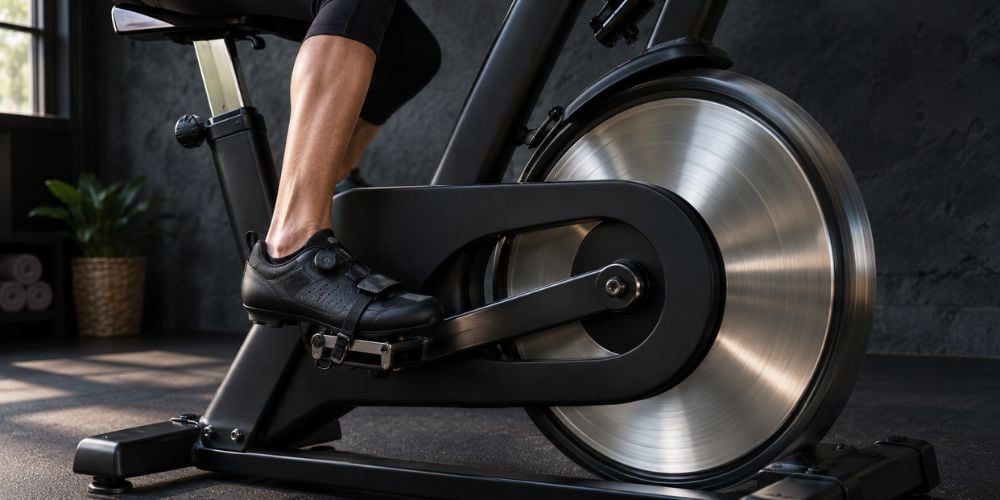
Flywheel weight affects how pedaling feels, but the bike’s magnetic or friction resistance system mainly controls how hard you work.
Here’s a quick comparison:
Flywheel Type | Resistance Feel |
Heavier flywheel | Often feels steadier during resistance changes |
Lighter flywheel | May respond faster to changes in effort |
Bike with good magnetic resistance | Can feel smooth even with a lighter flywheel |
Different commercial stationary bike designs use different resistance systems and flywheel setups. That’s why two bikes with similar flywheel weights can still feel different.
What should you check?
Try increasing and decreasing resistance while pedaling. The bike should respond smoothly without sudden jumps or uneven movement.
Choosing an Exercise Bike? Look Beyond Flywheel Weight
At YR Fitness, we focus on how flywheel design, resistance systems, and solid construction work together to create a reliable cycling experience. We believe a good exercise bike should feel smooth, stable, and comfortable throughout your workout.
Want to compare your options? Explore our exercise bike range and look for features that match your cycling needs.
4. Affects Starting and Stopping
Flywheel weight also changes how easily you can start or slow down the pedals.
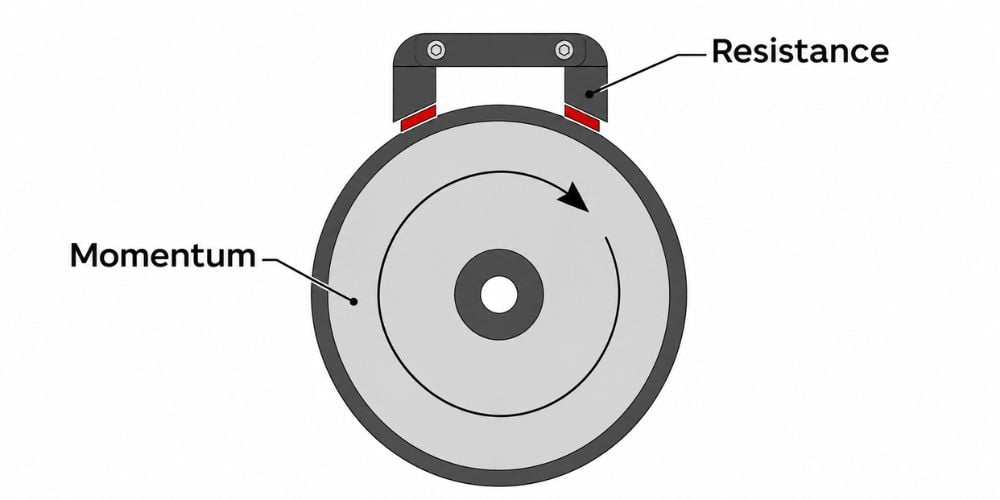
A heavier flywheel generally requires more effort to start moving. Once spinning, it also maintains momentum longer.
Here’s how they compare:
Feature | Heavier Flywheel | Lighter Flywheel |
Starting | Requires more effort | Usually easier |
Acceleration | More gradual | Usually quicker |
Slowing down | Maintains momentum longer | Usually slows more easily |
Pedaling feel | More continuous | More responsive |
Which feels better?
- Heavier flywheel: Good if you prefer steady, continuous cycling.
- Lighter flywheel: Good if you prefer quicker changes in pedaling speed.
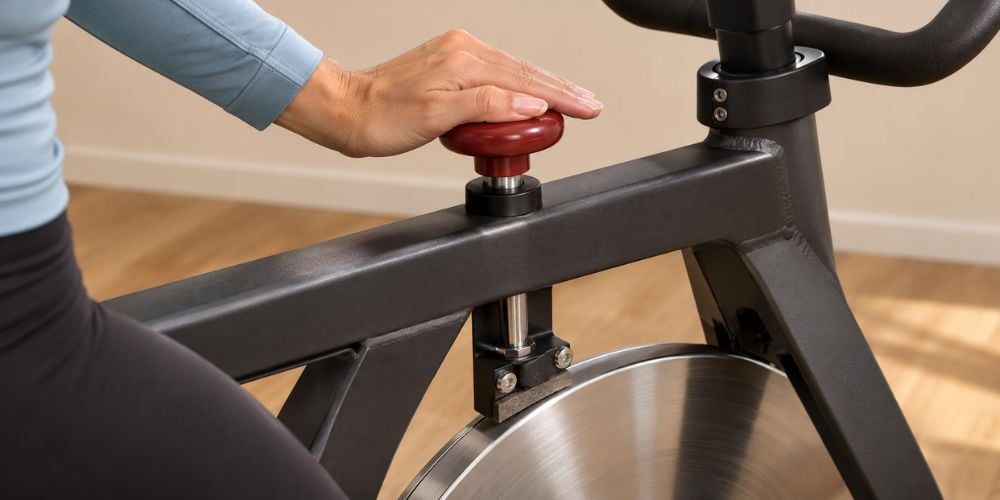
Safety tip: Some indoor cycling bikes have pedals directly linked to the flywheel. Use the resistance control or emergency stop as instructed instead of forcing the pedals to stop suddenly.
5. Changes Riding Comfort
Flywheel weight can affect how comfortable your exercise bike feels, especially during longer workouts.
A well-designed heavier flywheel helps maintain a steady pedaling rhythm. This can reduce uneven movement and make cycling feel more natural.
Here’s what to look for:
- Smooth rotation: Keeps pedal strokes consistent.
- Steady momentum: Reduces sudden changes in movement.
- Balanced construction: Helps prevent unwanted vibrations.
- Good bearings: Allow the flywheel to rotate smoothly.
- Proper bike setup: Supports a comfortable riding position.
I always recommend testing a bike instead of choosing one based only on flywheel weight. A lighter flywheel with a good resistance system can still provide a smooth and comfortable ride.
Conclusion
Flywheel weight affects pedaling smoothness, momentum, resistance feel, starting and stopping, and riding comfort. Heavier flywheels often feel steadier, while lighter ones can feel more responsive.
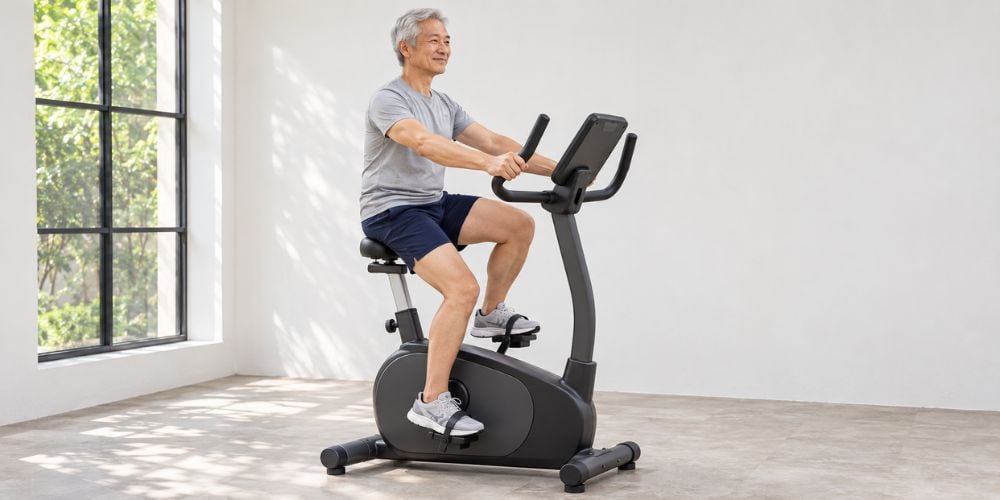
At YR Fitness, we focus on equipment that supports smooth, comfortable, and reliable workouts. Explore our upright exercise bikes to compare cardio equipment designed for consistent daily use.
Related articles:



