




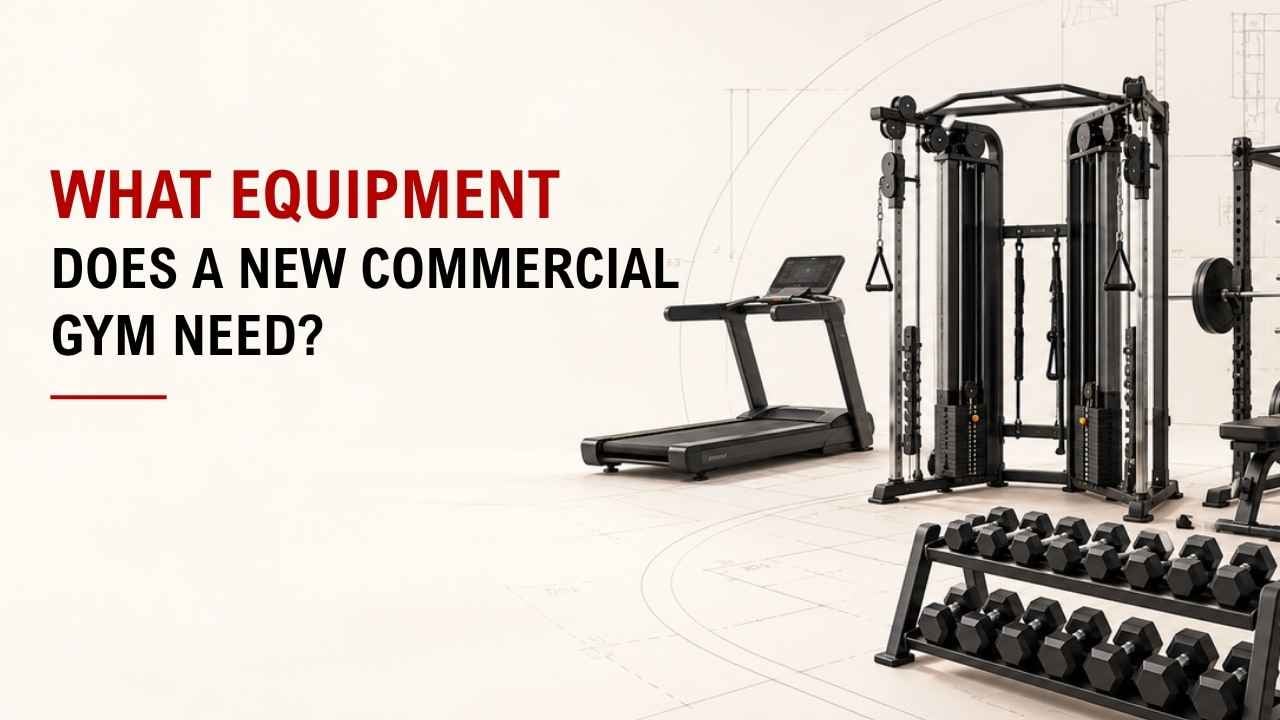

Are you opening a commercial gym and unsure what equipment you really need? It is easy to buy too much or miss important basics.
Start with strength machines, free weights, cardio equipment, functional training tools, plate-loaded machines, and small accessories. Cover the essentials first, then expand later.
As a Founder and Chief Designer of YR Fitness, with decades of experience designing commercial gym equipment. I have seen firsthand which machines get used every day and which ones often take up space without adding much value.
This guide gives you a clear equipment checklist for each main training area. Use it to plan your gym faster and avoid unnecessary purchases.
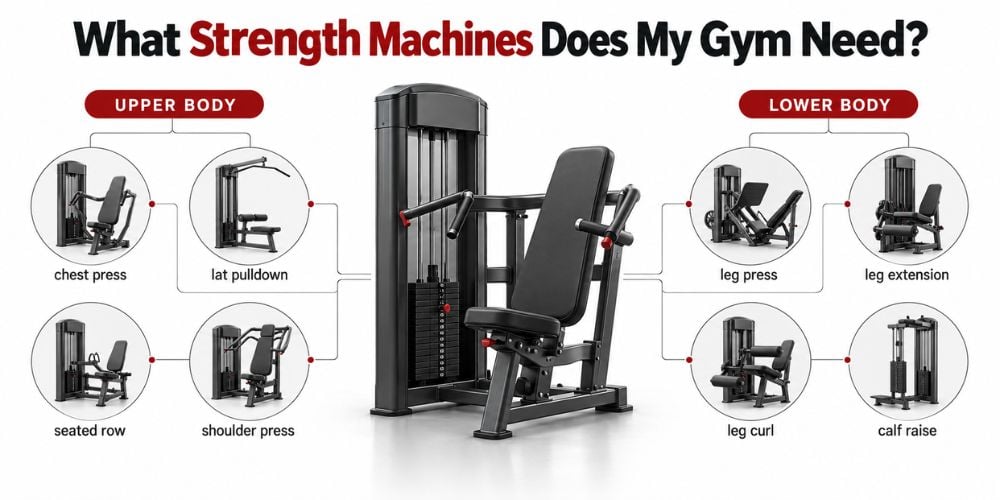
1. What Strength Machines Does My Gym Need?
Start with machines that cover the major muscle groups.
Upper-body machines
- Chest press
- Pec fly and rear delt machine
- Shoulder press
- Lat pulldown
- Seated row
- Biceps curl
- Triceps extension
- Assisted pull-up and dip machine
Lower-body machines
- Leg press
- Leg extension
- Leg curl
- Hack squat
- Calf raise
- Hip abductor and adductor
Do you need several versions of every movement?
Usually, no.
One good machine for each major movement gives a new gym a solid starting point. I often recommend covering the chest, back, shoulders, arms, and legs first before thinking about specialty machines.
Machines also give users a guided movement path. The American Council on Exercise explains some of the practical benefits of weight machines, including their controlled resistance and usefulness for people with different experience levels.
For commercial use, also look at:
- Frame stability
- Movement angles
- Seat and pad adjustment
- Upholstery
- Cables
- Pulleys
- Weight-stack adjustment
These details matter because commercial equipment may be used repeatedly throughout the day.
2. What Free Weight Equipment Should I Buy?
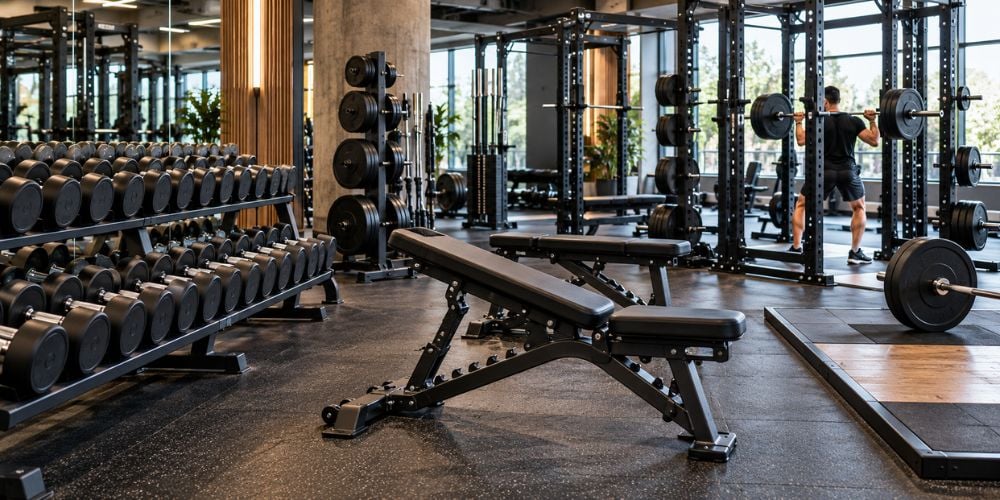
A commercial gym also needs a good free-weight section.
Start with:
- Dumbbells
- Dumbbell racks
- Olympic barbells
- Weight plates
- Power racks
- Squat racks
- Flat benches
- Adjustable benches
- Smith machine
How wide should the dumbbell range be?
Wide enough for both beginners and experienced lifters.
Someone doing lateral raises may need relatively light dumbbells. Someone doing heavy presses or rows may need much more weight.
Benches matter just as much.
A large dumbbell collection becomes frustrating if several people are waiting for the same adjustable bench. Match the number of benches and racks to the amount of free-weight equipment available.
Your barbells and plates should also support common exercises such as:
- Squats
- Deadlifts
- Bench presses
- Rows
- Overhead presses
If space is tight, I would prioritize dumbbells, adjustable benches, barbells, plates, and racks. You can add more specialized stations after the core free-weight area is working well.
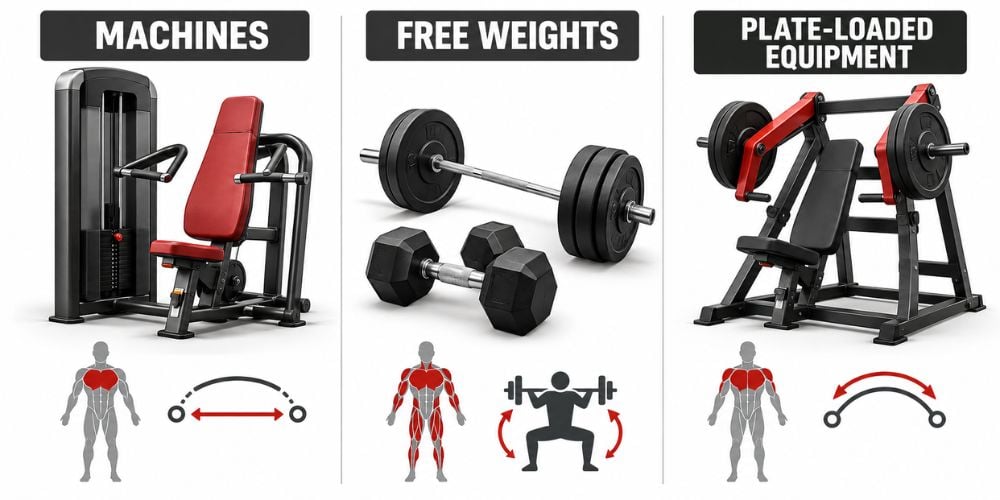
Machines vs. Free Weights vs. Plate-Loaded Equipment
Type | Good For | Main Advantage |
Selectorized machine | Beginners and general strength training | Fast weight adjustment and guided movement |
Free weights | General and advanced strength training | Large exercise variety |
Plate-loaded machine | Heavier machine-based training | Combines external plates with a guided path |
You do not have to choose one type.
A balanced gym normally uses all three because they support different training preferences.
3. What Cardio Machines Does a Commercial Gym Need?
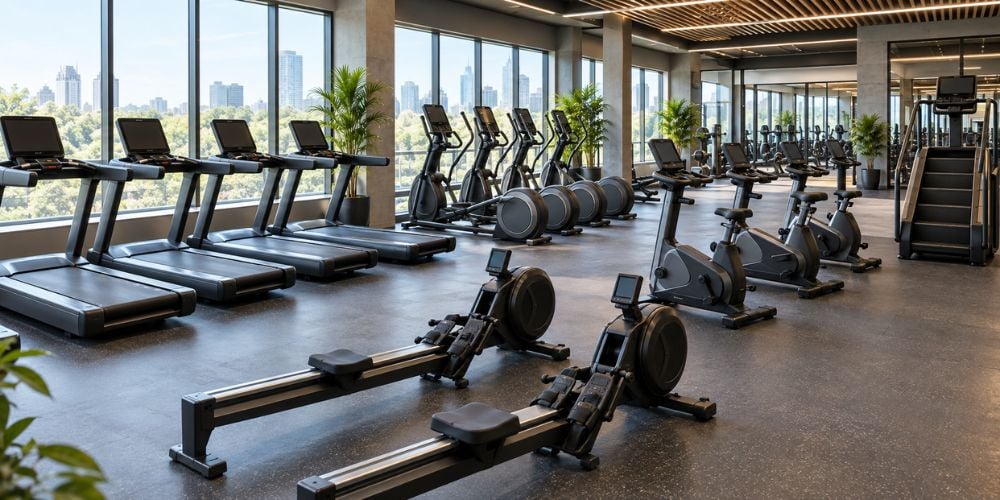
Most commercial gyms should offer more than one type of cardio machine.
Start with:
- Treadmills
- Ellipticals
- Upright bikes
- Recumbent bikes
- Rowing machines
- Stair climbers
Treadmills are one of the basic choices for walking and running. Bikes and ellipticals offer other ways to perform aerobic exercise, while rowers and stair climbers add more variety.
How many cardio machines do I need?
There is no universal number.
A smaller fitness space may only need a few machines. A larger commercial facility may need several treadmills, bikes, and ellipticals to handle busy periods.
This is where planning matters.
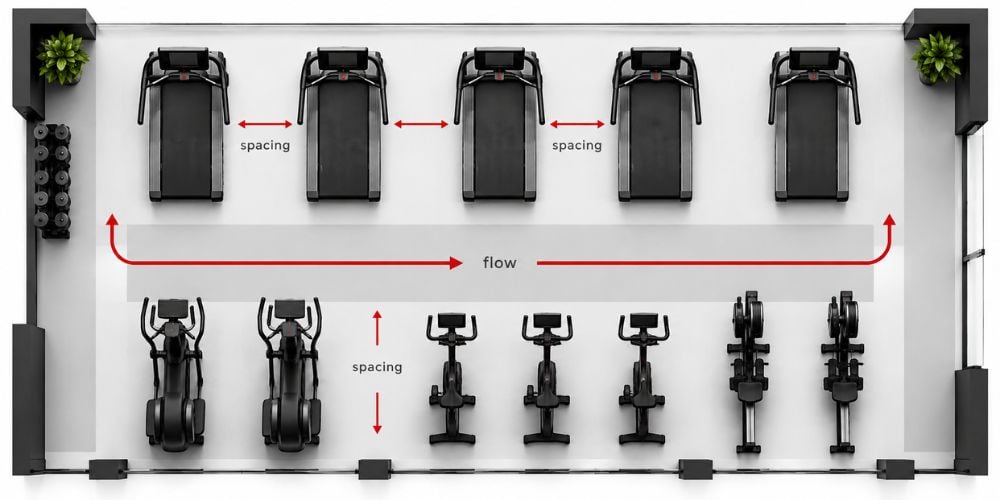
I often see people focus on how many machines can physically fit in a room. A better question is: Can people actually move around and use them comfortably?
The Health & Fitness Association’s fitness facility layout guidelines recommend following manufacturer spacing requirements, securing fitness equipment properly, and providing defined storage for loose equipment.
So do not fill every open space with another treadmill.
Good spacing is part of a good equipment plan.
4. What Functional Training Equipment Should I Include?
Functional training does not require a huge equipment list.
A useful starting setup includes:
- Functional trainer
- Cable crossover
- Kettlebells
- Medicine balls
- Resistance bands
- Battle ropes
- Plyometric boxes
- Suspension trainers
- Exercise mats
A functional trainer is particularly useful because one station can support many upper-body, lower-body, and core exercises.
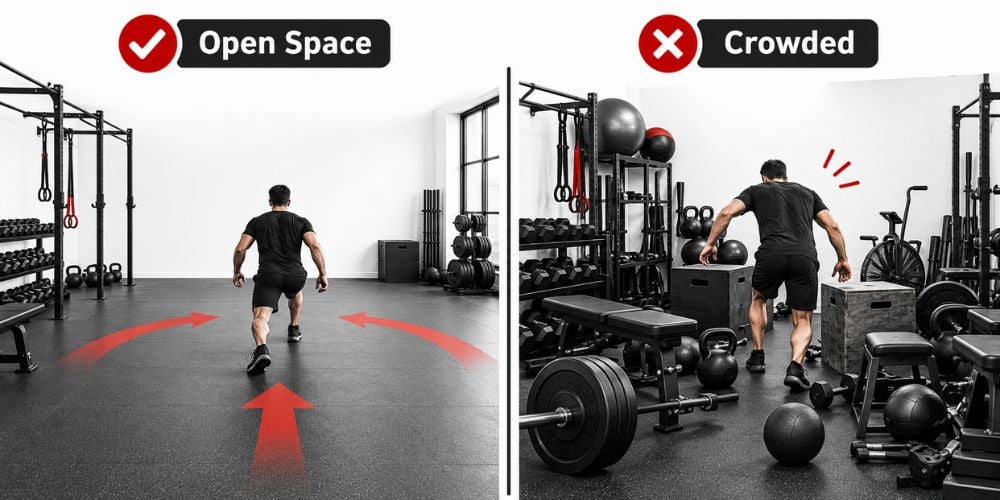
You should also leave open floor space.
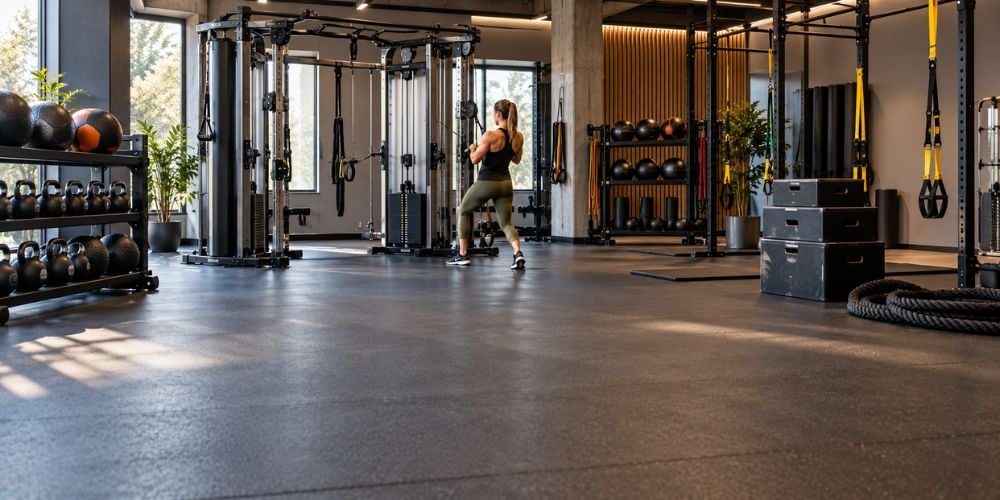
Why leave empty space?
Because not every exercise needs a machine.
People may use the area for:
- Stretching
- Mobility work
- Lunges
- Kettlebell exercises
- Bodyweight movements
- Circuit training
- Personal training sessions
In my design experience, I have seen functional zones become less useful when every bit of floor space is filled. Sometimes the best thing you can add is room to move.
Planning several equipment zones at once can make equipment selection much harder. At YR Fitness, we manufacture commercial strength, cardio, and fitness equipment, so we can help you compare machines across one complete facility instead of treating every section separately.
Explore our commercial gym equipment options and use them to build a practical equipment list for your available space and training needs.
5. Do I Need Plate-Loaded Machines?
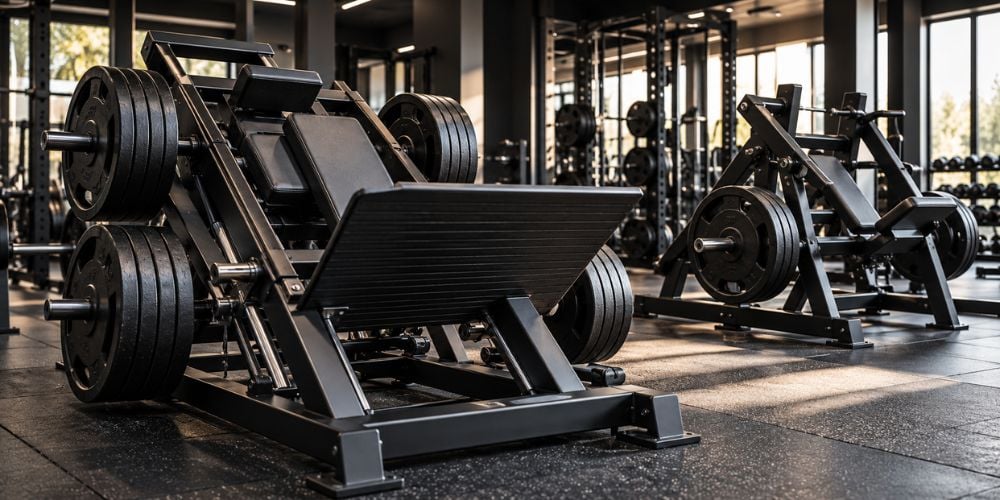
You do not absolutely need plate-loaded machines.
But they make sense if you want a stronger resistance-training section.
Common options include:
- Plate-loaded chest press
- Plate-loaded shoulder press
- Plate-loaded row
- Plate-loaded leg press
- Hack squat
- Hip thrust machine
These machines give people another way to perform heavier strength training. They are also useful when free-weight stations or selectorized machines are already busy.
What should I buy first?
If your starting budget or floor space is limited, prioritize:
- Basic selectorized machines
- Free weights and racks
- Plate-loaded equipment
Then watch what gets used.
If people are regularly waiting for presses, rows, leg machines, or squat stations, that gives you a much clearer idea of which plate-loaded machines to add next.
This is an approach I prefer because equipment purchasing should respond to actual training needs, not just the size of a product catalog.
6. What Small Equipment Should I Not Forget?
Small equipment is easy to miss during planning.
People use it every day, though.
Make sure you have:
- Barbell collars
- Cable handles
- Lat pulldown bars
- Triceps ropes
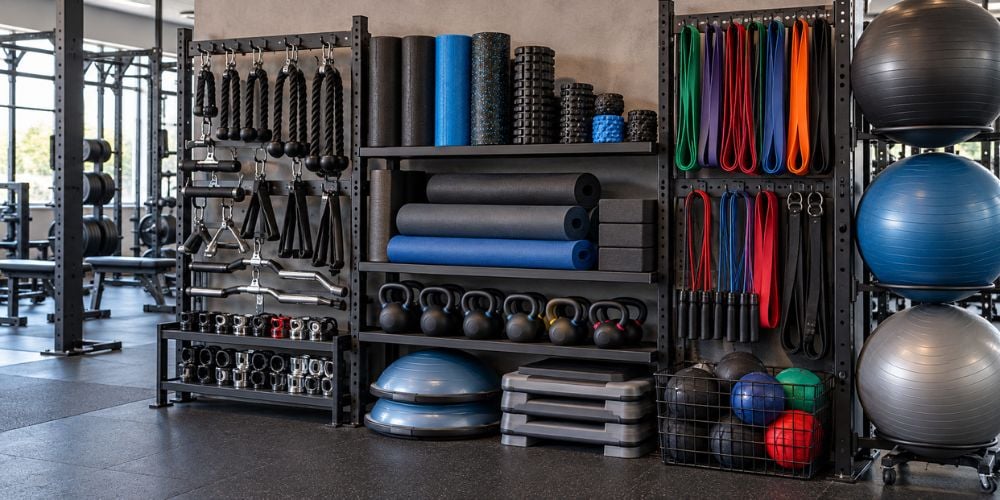
- Weight storage
- Barbell storage
- Foam rollers
- Exercise mats
- Jump ropes
- Resistance bands
- Stability balls
- Step platforms
What gets forgotten most often?
Storage.
Dumbbells, plates, kettlebells, barbells, cable attachments, bands, and other accessories quickly create clutter without dedicated storage.
Give each item a clear home.
Maintenance belongs in the plan as well.
The American Council on Exercise recommends following equipment manufacturers’ maintenance schedules and removing or repairing damaged equipment rather than leaving it available for use.
A few storage racks and a simple inspection routine may sound less exciting than a new machine.
They can make the whole training floor easier to use.
Conclusion
Start with the basics: strength machines, free weights, cardio equipment, functional training tools, plate-loaded machines, and small accessories.
Focus on equipment people will use often, then add more as your needs grow. If you are planning your setup, explore YR Fitness commercial gym equipment to compare practical options for your space and budget.
Related articles: