




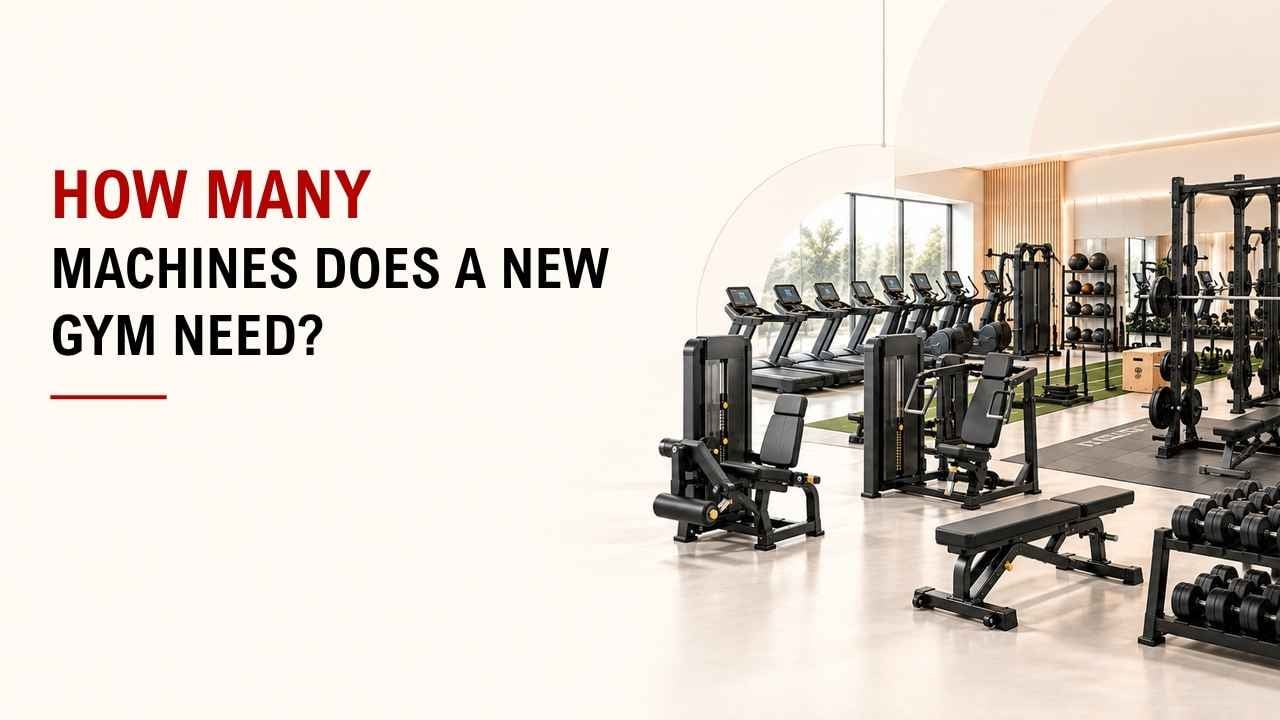

Not sure how many machines your new gym needs? The right number depends on your space, training focus, and how many people will use it.
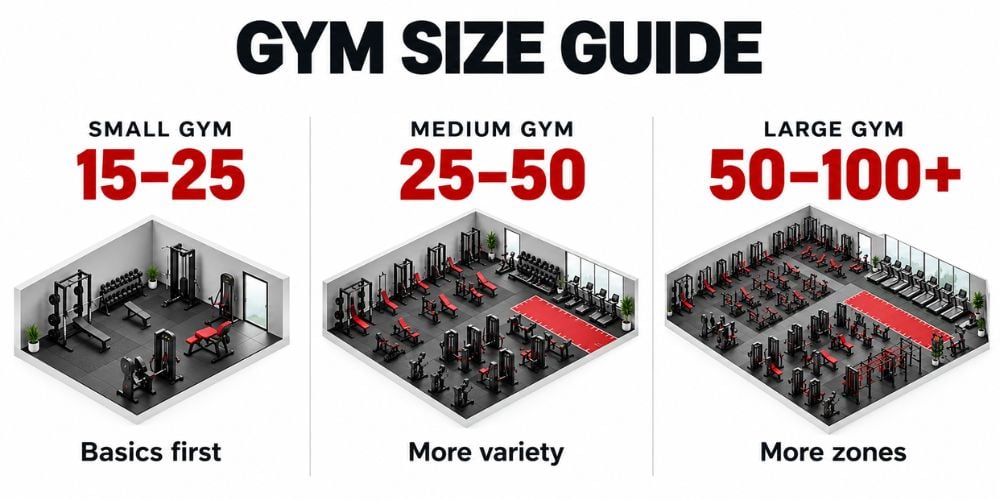
For most new gyms, 20 to 50 machines is a practical starting range. Small gyms may need 15 to 25, while larger gyms may need 50 to 100 or more.
As the founder and chief designer of YR Fitness, I’ve spent decades designing commercial gym equipment and planning practical gym setups.
This guide shows you how to choose the right machine count and equipment mix. You will also see a simple starter setup you can use as a reference.
1. How Many Machines Do I Need Based on My Gym Size?
Your usable floor area is the easiest place to start.
Gym Size | Suggested Machine Count | Best Approach |
Small gym | 15 to 25 | Cover the basics first |
Medium gym | 25 to 50 | Add variety and useful duplicates |
Large gym | 50 to 100+ | Build several complete training areas |
Are these fixed numbers? No. Treat them as a starting point and adjust them based on available space and how people will train.
Small Gym: 15 to 25 Machines
A small gym does not need a separate machine for every exercise. Focus on equipment that covers the main muscle groups and can handle several training needs.
A cable station, power rack, adjustable benches, and dumbbells can support many exercises without taking up the space of several single-purpose machines.
Medium Gym: 25 to 50 Machines
With more room, you can add isolation machines, extra cardio equipment, and duplicates of popular stations.
I often see people add another specialized machine before adding a second bench, rack, or cable station. In practice, another high-use station may be far more useful.
Large Gym: 50 to 100+ Machines
A larger gym usually needs more equipment because more people may train at the same time. That does not mean you need 100 different types of machines.
Many units will be duplicates, especially:
- Treadmills
- Benches
- Power racks
- Cable stations
- Popular lower-body machines
Here is why this matters: a large equipment count means very little if everyone is still waiting for the same three stations.
2. What Types of Machines Should Be Included?
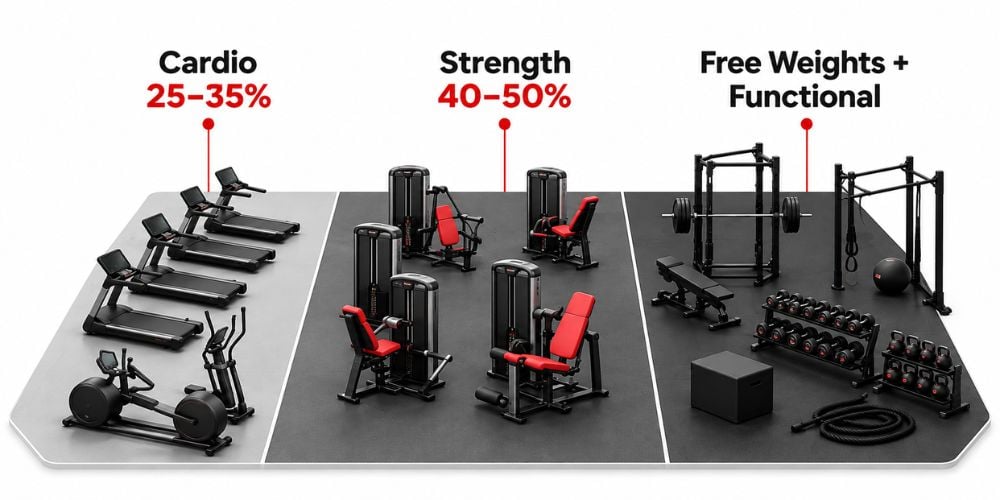
Once you know your rough total, split the floor between the main training categories.
Equipment Area | Suggested Starting Share |
Cardio equipment | 25% to 35% |
Strength machines | 40% to 50% |
Racks, benches, free weights and functional equipment | Remaining space |
This is a planning guide, not an industry rule. Your training style should decide the final split.
A bodybuilding-focused setup may need more strength machines and free weights. A general fitness center may use more treadmills, bikes, and ellipticals, while a strength-focused space may need more racks and benches.
What are people actually using?
Recent Health & Fitness Association data on gym equipment use gives some useful context. Among U.S. fitness facility members surveyed for 2024, treadmills and free weights remained heavily used.
Equipment Type | Members Using It in 2024 |
Treadmills | 43.40% |
Dumbbells / free weights | 32.10% |
Resistance machines | 26.60% |
Ellipticals | 18.80% |
The lesson is simple: do not divide your budget equally between every equipment category.
In my experience, I would rather see 25 well-chosen stations than 40 machines that repeat the same movements.
3. What Machines Should I Buy First?
Budget tight? Buy the essentials first.
You can add specialized equipment later once you know what gets used.
Cardio Equipment
A basic cardio area can include:
- Treadmills
- Exercise bikes
- Ellipticals
- Rowing machines
You do not need the same number of each.
For example, if you have space for six cardio machines:
Cardio Machine | Quantity |
Treadmill | 3 |
Exercise bike | 1 |
Elliptical | 1 |
Rowing machine | 1 |
Total | 6 |
This keeps some variety while giving more space to equipment likely to see regular use.
Strength Machines
Start by covering the major muscle groups.
Area | Starter Machine |
Chest | Chest press |
Shoulders | Shoulder press |
Back | Lat pulldown |
Back | Seated row |
Legs | Leg press |
Legs | Leg extension |
Legs | Leg curl |
Once those movements are covered, you can add more specialized machines.
Free Weight Equipment
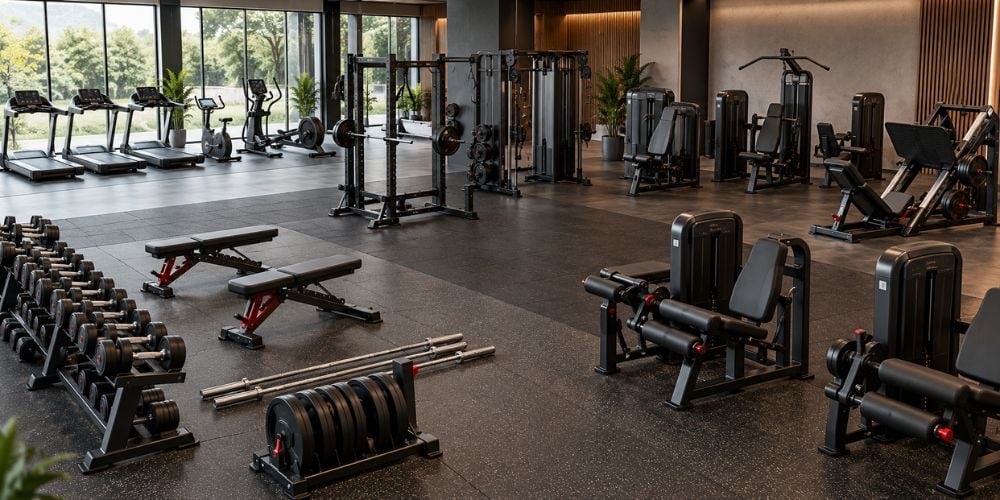
Machines are only part of a useful training floor.
Include:
- Power racks
- Adjustable benches
- Dumbbells
- Barbells
- Weight plates
- Cable stations
A rack, bench, and barbell can support many exercises. That gives you more training options without buying several separate machines.
I normally recommend covering the main movement patterns before adding extras. It keeps the floor useful without making it crowded.
4. How Do I Calculate the Right Number for My Gym?
So, how do you move from “20 to 50 machines” to an actual number?
Use these five steps.
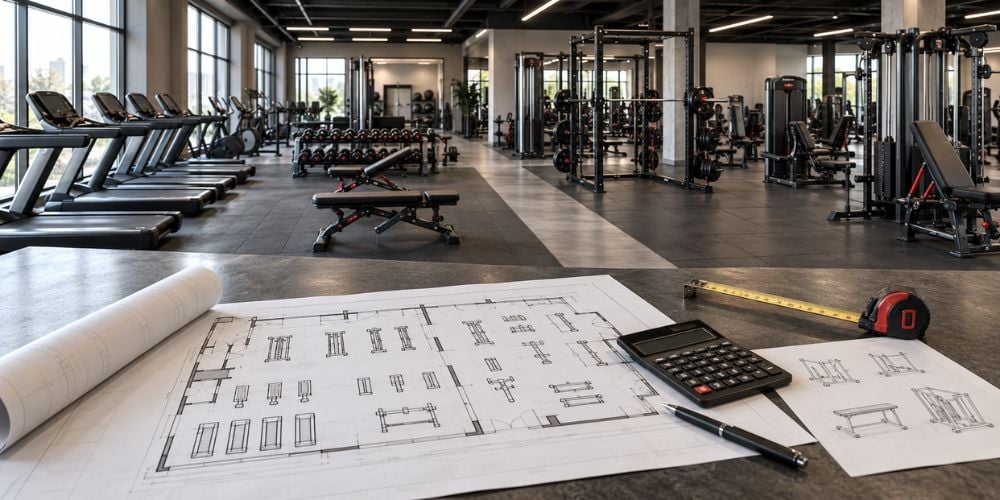
Measure the Usable Training Area
Count only space that can actually hold training equipment.
Leave out:
- Reception areas
- Changing rooms
- Storage rooms
- Offices
- Other non-training spaces
Also remember that a machine’s footprint is not the only space it needs.
People need room to enter, adjust, load, and move around equipment. Life Fitness facility design guidance also points to traffic flow, equipment choice, and real-world use as important parts of floor planning.
If you are planning a public or commercial facility in the United States, accessibility must also be part of the layout. The U.S. Department of Justice’s 2010 ADA Standards for Accessible Design set accessibility requirements for covered facilities, so do not pack equipment together simply to increase the machine count.
For broader facility safety and operating guidance, the American College of Sports Medicine’s Health/Fitness Facility Standards and Guidelines covers areas including facility design, construction, equipment, emergency planning, and operating procedures.
Decide What Type of Training You Want to Support
Different training styles need different equipment mixes.
Training Focus | Equipment Priority |
General fitness | Balanced cardio and strength |
Bodybuilding | More strength machines and free weights |
Strength training | Racks, benches, barbells and free weights |
Weight loss | Cardio plus basic resistance equipment |
Functional training | More open space and multi-use equipment |
Mixed training | Balanced combination |
A bodybuilding space and a general fitness facility should not use the same equipment list.
Build the Essential Equipment List
List the must-have equipment before thinking about optional machines.
Start with:
- Core cardio machines
- Major strength movements
- Power racks
- Benches
- Cable stations
- Free weights
That gives you your base number.
Add Duplicates Where Waiting Is Most Likely
Some stations deserve a second unit before you add another machine type.
Common examples are:
- Treadmills
- Adjustable benches
- Power racks
- Cable stations
- Lat pulldowns
- Leg presses
Think about it this way: if ten people want one bench while three other machines sit empty, you do not have a machine-count problem. You have an equipment-mix problem.
Already know your floor size but still unsure whether you need 20, 30, or 50 stations? At YR Fitness, we can help turn your available space and training priorities into a practical equipment mix, so you can compare what fits before committing to a full order.
Leave Space for Future Additions
You do not need to fill every free area before opening.
Start with equipment people are most likely to use. Then watch which stations become busy and add duplicates or new machine types based on real demand.
Leaving some open space also makes future changes much easier.
5. Example Equipment List for a New Gym
Need something more concrete? Here is a simple starter setup.
Starter Equipment Breakdown
Category | Equipment | Quantity |
Cardio | Treadmills | 3 |
Cardio | Exercise bike | 1 |
Cardio | Elliptical | 1 |
Cardio | Rowing machine | 1 |
Cardio Total | 6 | |
Strength | Chest press | 1 |
Strength | Shoulder press | 1 |
Strength | Lat pulldown | 1 |
Strength | Seated row | 1 |
Strength | Leg press | 1 |
Strength | Leg extension | 1 |
Strength | Leg curl | 1 |
Strength | Additional lower-body machine | 1 |
Strength Total | 8 | |
Free weight | Power racks | 2 |
Free weight | Cable station | 1 |
Free weight | Adjustable benches | 3 |
Free weight | Dumbbell area | 1 area |
Free weight | Barbells and weight plates | 1 area |
Depending on how you count the free-weight area, this gives you around 20 major training stations.
For a medium gym, build from the same base. Add more cardio machines, more strength options, and duplicates of the stations that get busy.
For a large gym, use the same logic on a bigger scale. Do not simply add machines because there is empty floor space.
The Bottom Line
For most new gyms, 20 to 50 machines is a solid starting range. A smaller setup may need 15 to 25, while a larger commercial gym may need 50 to 100 or more.
But do not chase the highest machine count.
Cover the main training movements first. Add enough cardio, include racks and free weights, duplicate popular stations, and keep some room for future additions.
If you are ready to turn your target number into an actual equipment list, YR Fitness can help you compare commercial equipment by training need and build a setup around the space you really have.
Related articles: