





Are you setting up a workout space and not sure which gym equipment to buy first? With so many options, it is easy to spend money on the wrong pieces.
The short answer is simple: start with versatile strength equipment. A rack, adjustable bench, dumbbells, and a basic barbell setup can cover most workouts.
As the founder and chief designer of YR Fitness, I have spent decades working with strength and fitness equipment. In my experience, the best first purchases are the pieces you can use again and again.
This guide shows you what to buy first, what to add next, and what can wait. Keep reading for a simple buying order.
1. Buy a Power Rack or Squat Rack First
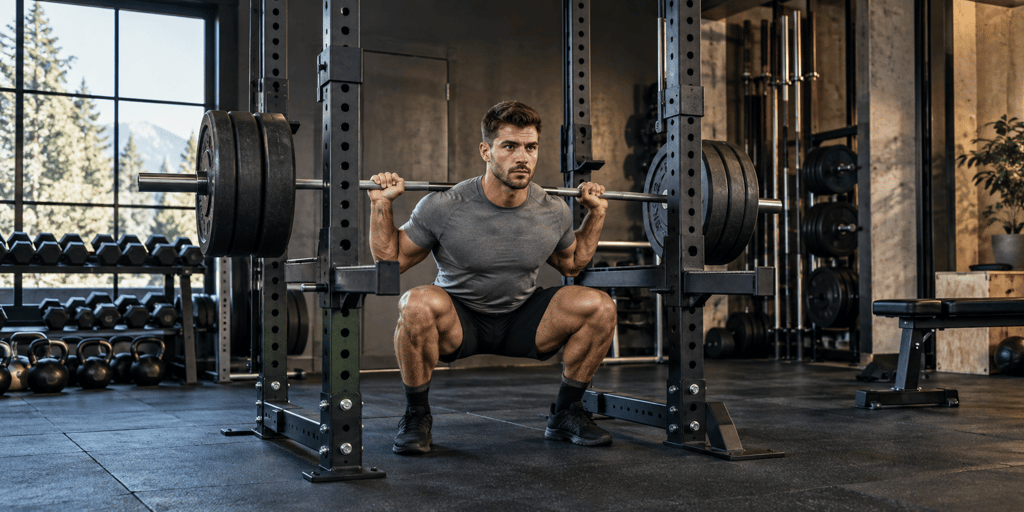
If strength training is your main goal, start with a power rack or squat rack.
Why first? One rack can support several major exercises:
- Squats
- Bench presses
- Overhead presses
- Rack pulls
- Pull-ups
That gives you a lot of training options from one piece of equipment.
The ACE exercise library, for example, lists barbell movements for the legs, back, chest, shoulders, and arms. That is why a rack-and-barbell setup can cover so much of your strength training.
When choosing a rack, look for solid construction, adjustable J-hooks, and dependable safety arms. I always pay close attention to stability, especially if you plan to train alone.
Buy first if: You mainly train with barbells and want maximum exercise variety.
2. Add Adjustable Benches
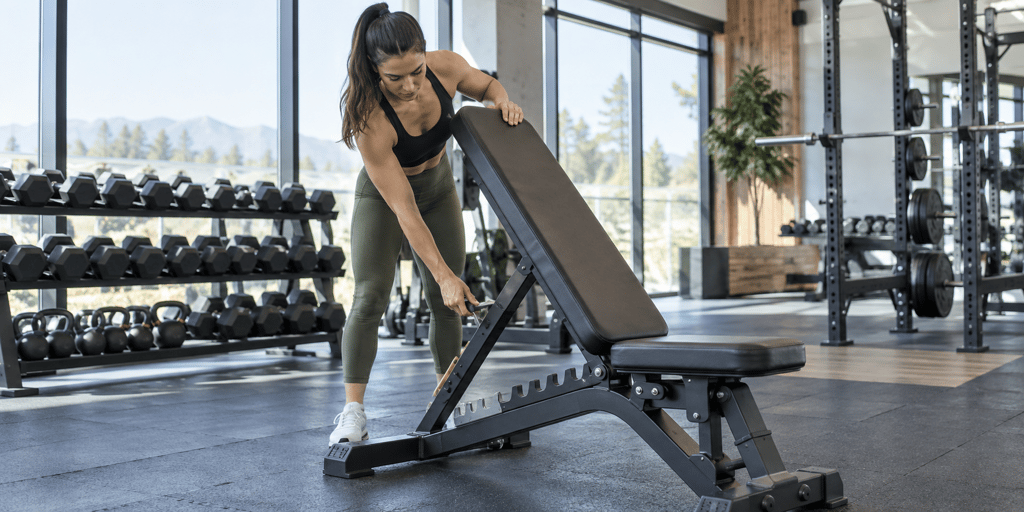
Your next purchase should usually be an adjustable bench.
A bench works with your rack, dumbbells, and bodyweight exercises. Changing the backrest angle also gives you more options without adding another large machine.
You can use it for:
- Flat bench presses
- Incline presses
- Dumbbell rows
- Shoulder presses
- Seated curls
- Bulgarian split squats
ACE’s bench exercise library includes movements using barbells, dumbbells, and bodyweight-style setups, which shows how versatile one bench can be.
Look for a bench that stays stable when you sit or lie on it. The adjustment system should also be quick and easy to use.
Buy early because: It makes almost all your other strength equipment more useful.
3. Build Your Dumbbell Area
Dumbbells are one of the easiest ways to add more exercises to your setup.
You do not need any weight from day one. Start with the weights you use most, then expand as you become stronger.
Dumbbell Range | Good For | Priority |
Light | Raises, curls, rehab-style movements | High |
Medium | Presses, rows, lunges | High |
Heavy | Squats, rows, heavier presses | Add as needed |
Dumbbells are especially useful because you can train several muscle groups without changing machines. ACE’s exercise database currently lists dozens of dumbbell-based exercises across different body areas and experience levels.
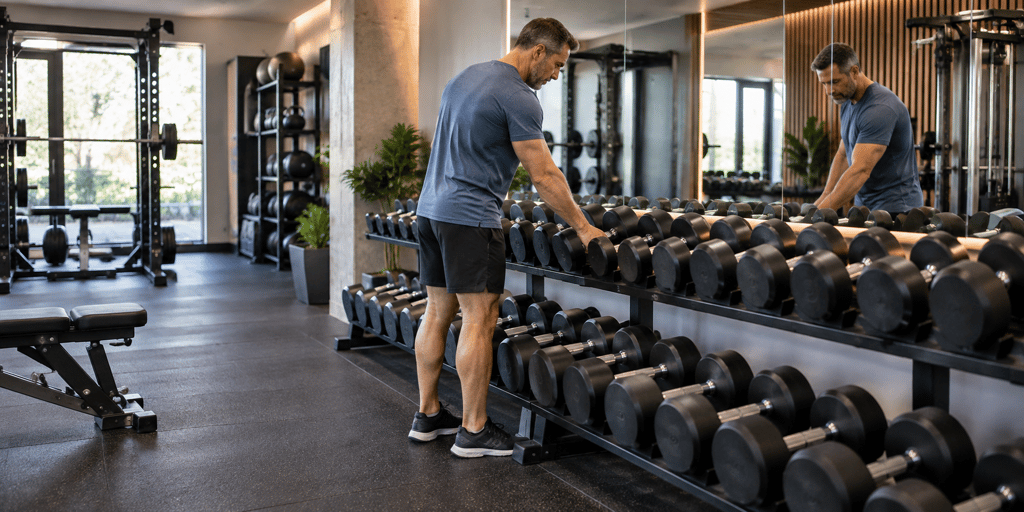
Add a dumbbell rack too. It keeps the floor clear and makes each weight easier to find.
A simple question to ask: Will I actually use all these weights? If not, buy fewer now and expand later.
4. Buy Barbells, Plates, and Storage
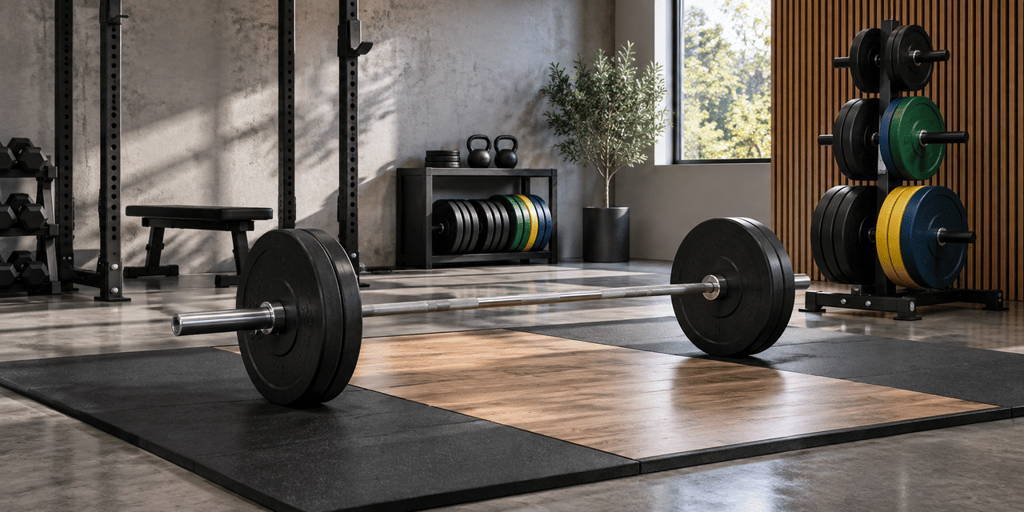
Once you have a rack and bench, add a barbell and weight plates.
For most people, one good Olympic barbell is enough to start.
Add enough plates for:
- Squats
- Deadlifts
- Bench presses
- Rows
- Overhead presses
Do not overlook storage. Plates scattered across the floor waste space and make your workout area harder to use.
I usually suggest buying a plate tree or storage rack at the same time as your plates. It is a small purchase, but it makes the whole setup much easier to manage.
If you are building a serious training space and want equipment made for repeated use, we at YR Fitness offer racks, benches, dumbbell storage, and other commercial strength equipment in one range. Comparing the full setup before buying can also help you avoid ending up with pieces that do not work well together.
Buy next if: Barbell training is an important part of your routine.
5. Add the Most Useful Strength Machines
Strength machines should normally come after your basic free-weight setup.
Here is why this matters: a rack, bench, barbell, and dumbbells already cover a large number of movements. Most strength machines focus on one or two movements.
Once you have the basics, consider:
Machine | Main Use | Buying Priority |
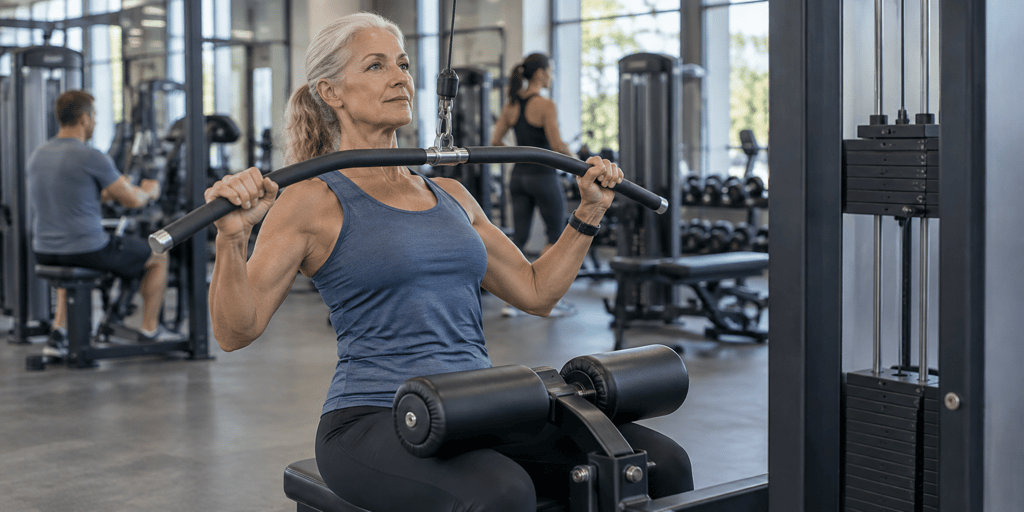
Lat Pulldown | Back | High |
Seated Row | Back | High |
Chest Press | Chest, shoulders, triceps | High |
Leg Press | Lower body | High |
Leg Extension | Quadriceps | Medium |
Leg Curl | Hamstrings | Medium |
Choose based on exercises you actually perform.
I often see people get excited about a specialized machine, then realize a few months later that it hardly fits their normal routine. If you train your back several times per week, for example, a lat pulldown or seated row probably deserves your money before a machine you use once in a while.
Buy later if: You already have your basic setup and want more guided movements.
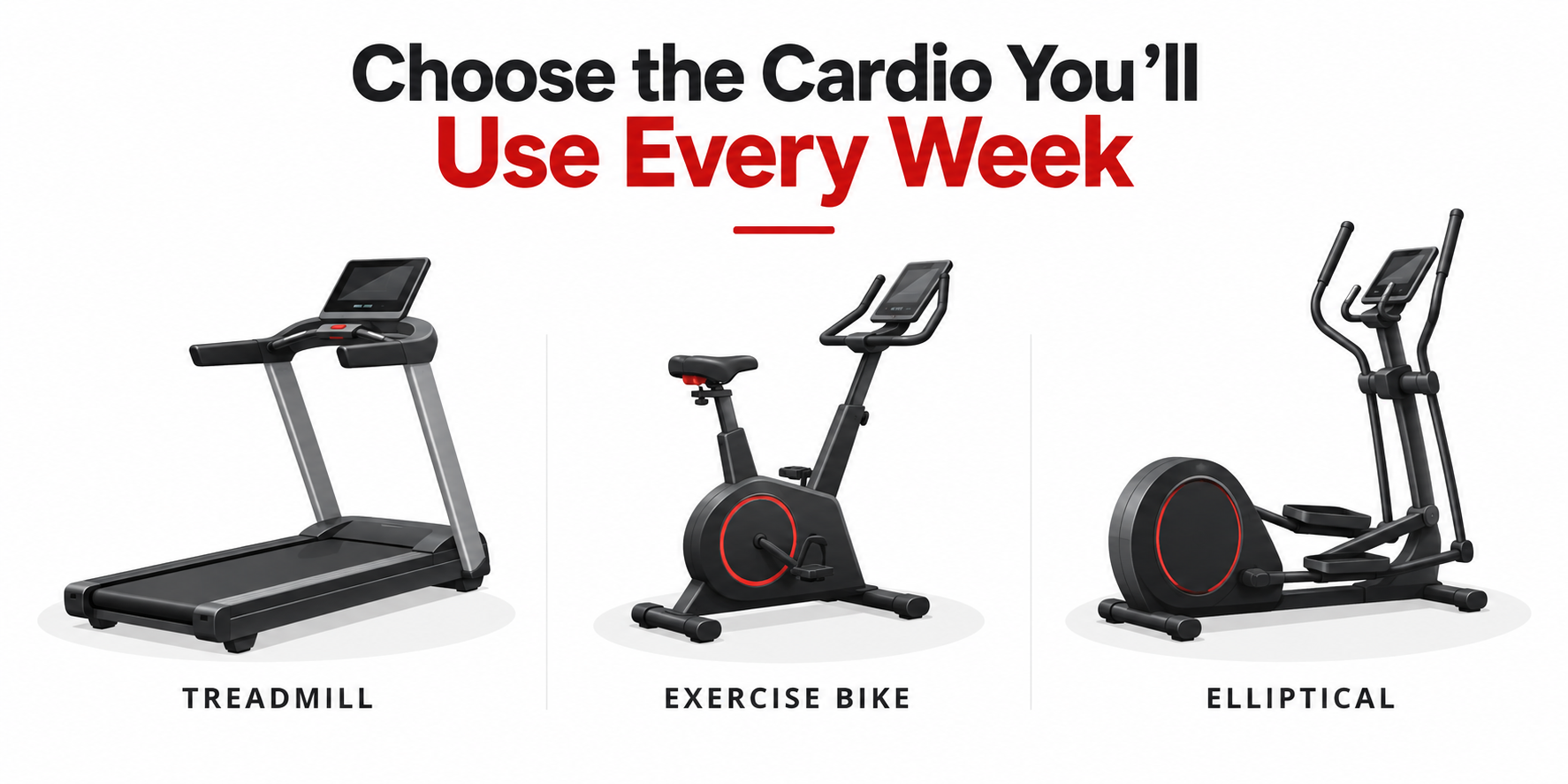
6. Buy Essential Cardio Equipment
Cardio equipment is useful, but you do not need several machines at the beginning.
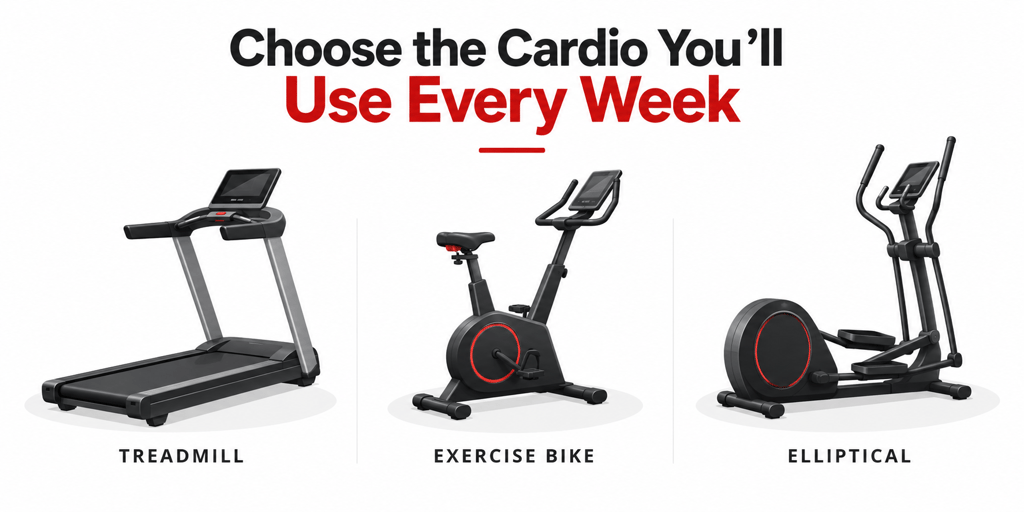
Start with the type of cardio you are most likely to use consistently.
Equipment | Priority | Best For |
Treadmill | High | Walking, jogging, running |
Exercise Bike | High | Low-impact cardio |
Rowing Machine | Medium | Full-body conditioning |
Elliptical | Medium | Low-impact steady cardio |
Stair Climber | Later | High-intensity lower-body cardio |
If you enjoy running, start with a treadmill. If you prefer something lower impact, an exercise bike or elliptical may suit you better.
There is a good reason to keep some cardio in your setup. The U.S. Physical Activity Guidelines recommend 150 to 300 minutes of moderate-intensity aerobic activity each week, plus muscle-strengthening activity on at least 2 days per week.
But that does not mean you need five cardio machines.
Ask yourself: Which one will I actually use every week? Start there.
Conclusion
You do not need to buy everything at once. Start with versatile equipment you will use often, then add strength machines and cardio equipment as your training needs become clearer.
If you want to build a more complete workout space without wasting money on equipment you may rarely use, at YR Fitness, we can help you choose practical strength, cardio, and accessory equipment that fits your space, training goals, and budget.
Related articles: