




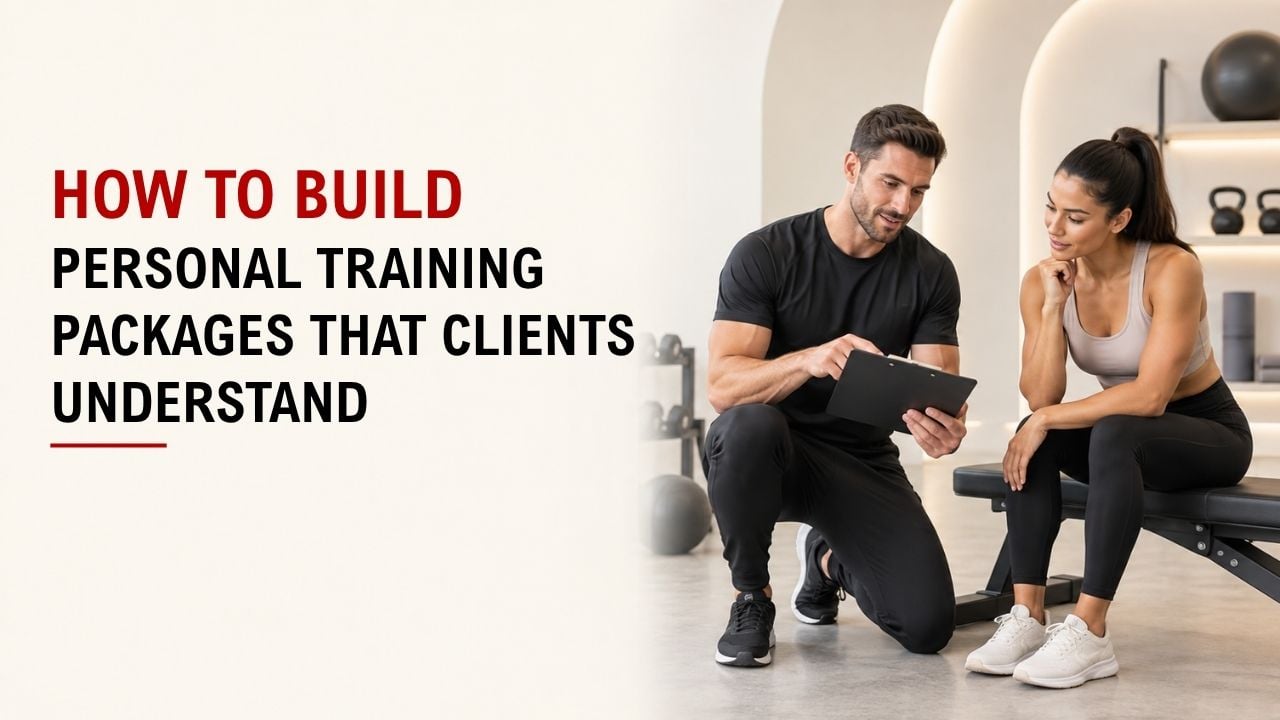

Have you ever looked at a personal training package and felt unsure about what you were paying for? Too many options can make a simple choice confusing.
The best packages are easy to understand. Give each one a clear goal, session count, schedule, inclusions, price, and basic rules.
As the founder and chief designer of YR Fitness, I have spent decades working around trainers, gyms, and commercial fitness equipment. I have seen how much easier it is for clients to commit when the offer is clear from the start.
Below, I will show you how to build simple personal training packages step by step. Keep reading and you will have a format you can use right away.
- 1. Start With One Clear Training Goal
- 2. Decide How Many Sessions Are Included
- 3. Set a Clear Training Frequency
- 4. Clearly List What the Client Gets
- 5. Set One Easy-to-Understand Price
- 6. Create 2–3 Packages, Not Too Many
- 7. Explain the Difference Between Each Package
- 8. Set Simple Rules Before You Sell
- Conclusion
1. Start With One Clear Training Goal
Start with one question:
What should this package help the client achieve?
The answer might be:
- Build basic strength
- Lose weight
- Improve general fitness
- Learn proper exercise technique
- Return to regular training
- Build muscle
Do not promise one package everything.
A beginner learning basic exercises needs something different from an experienced lifter following a structured strength program. ACSM’s personal trainer guidance also treats client assessment and exercise program development as core parts of personal training, which is another reason to start with the client’s actual needs.
For example:
Beginner Strength Package
For people who want to learn basic strength exercises and feel more comfortable training.
That is enough. The client immediately knows who it is for.

2. Decide How Many Sessions Are Included
Next, choose a simple number of sessions.
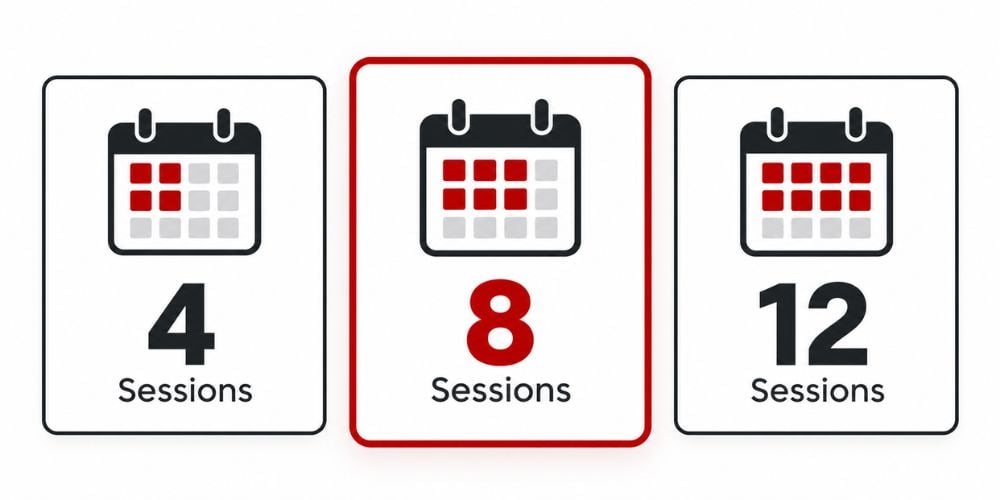
Common options are:
- 4 sessions
- 8 sessions
- 12 sessions
Avoid unusual numbers such as 7, 11, or 17 unless there is a clear reason for them.
A simple way to think about it is:
Sessions | Simple Purpose |
4 | Introduction and basic guidance |
8 | Regular coaching and progress |
12 | More consistent, longer-term support |
Four sessions may work well as an introduction. Eight or twelve give more time for coaching, progress tracking, and adjustments.
I often see packages become harder to explain simply because too many choices have been added. If the client needs a calculator or a long conversation to understand the package, simplify it.
3. Set a Clear Training Frequency
Do not only say how many sessions the client gets.
Tell them how often they are expected to train.
Instead of:
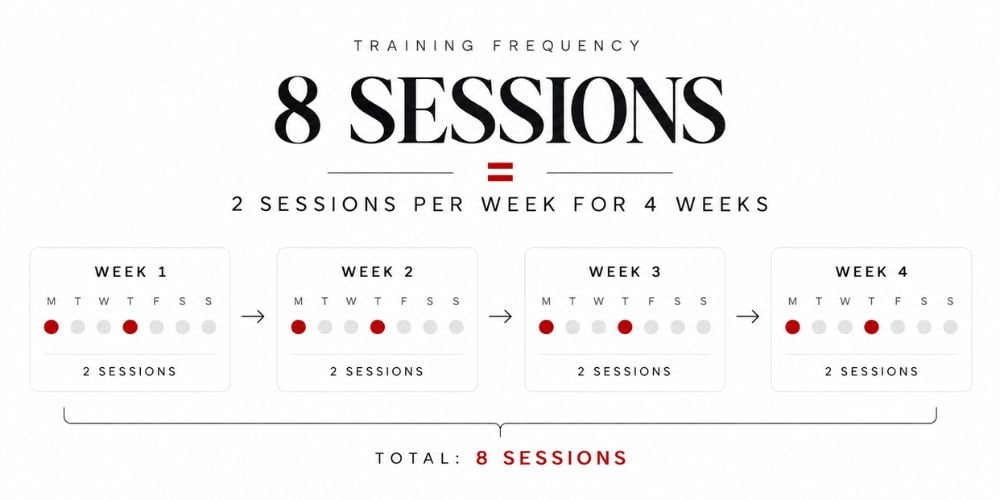
8 personal training sessions
say:
8 sessions — 2 sessions per week for 4 weeks
That immediately gives the package a timeline.
The CDC’s adult physical activity guidance recommends muscle-strengthening activity on at least two days each week for adults, alongside aerobic activity. That does not mean every client needs two personal training appointments, but it gives useful context when you are building a strength-focused schedule.
Simple Frequency Example
Package | Sessions | Suggested Frequency | Approx. Timeline |
Starter | 4 | 1 per week | 4 weeks |
Progress | 8 | 2 per week | 4 weeks |
Commitment | 12 | 3 per week | 4 weeks |
Does every client need three sessions per week? No.
The schedule should match the person’s goals, experience, recovery, availability, and training outside your sessions.
4. Clearly List What the Client Gets
Clients should know exactly what they are paying for.
Keep the list short and specific.
A package might include:
- Personal training sessions
- Initial fitness assessment
- Exercise program
- Progress tracking
- Basic nutrition guidance
- Regular check-ins
Here is a cleaner way to present it:
Included | What It Means |
8 training sessions | One-on-one coached workouts |
Initial assessment | Starting point and goal review |
Workout plan | Exercises to follow between sessions |
Progress review | Check results after four weeks |
One important point: be careful with nutrition guidance.
ACE states that fitness professionals can educate clients about general healthy nutrition, but individualized meal plans and specific nutrition prescriptions may fall outside a trainer’s scope unless they have the appropriate qualifications.
If your personal training packages include regular strength work, the equipment needs to support those sessions day after day. At YR Fitness, we design our commercial strength equipment for repeated daily training, so trainers can build consistent sessions around machines, benches, racks, and free-weight exercises.

5. Set One Easy-to-Understand Price
Pricing should answer one question immediately:
How much do I pay?
Show the total package price first.
For example:
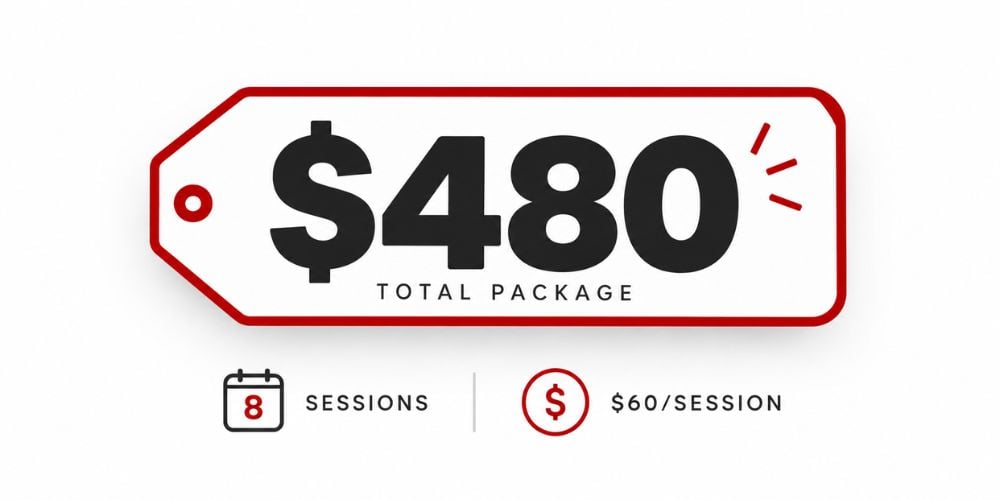
8 sessions — $480 total
Then, if useful, add:
$60 per session
Keep the Pricing Simple
Format | Example | Easy to Understand? |
Total price | 8 sessions — $480 | Yes |
Total + per-session price | $480 total / $60 per session | Yes |
Multiple discounts and fees | $560 value, 15% off + assessment fee | Harder |
These prices are examples, not market benchmarks.
Instead of:
$560 value, 15% promotional discount, plus assessment fee
you could simply show:
8 sessions + assessment — $480 total
I prefer discounts that have an obvious reason behind them. A larger package can reward a bigger commitment, but the client should not have to work through several calculations to find the real price.
6. Create 2–3 Packages, Not Too Many
How many choices do clients really need?
Usually, not many.
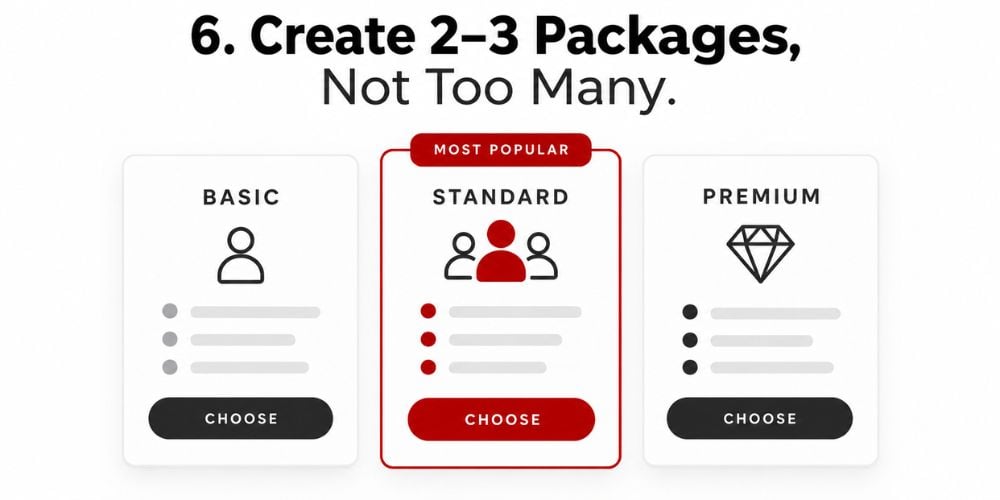
Two or three options are much easier to compare than a long menu of slightly different packages.
For example:
Package | Sessions | Best For |
Starter | 4 | Trying personal training |
Progress | 8 | Building a regular routine |
Commitment | 12 | More consistent coaching |
Then recommend the option that best matches the client’s goal and schedule.
That creates more decisions without necessarily creating more value.
Three clearly different choices are easier to understand than six similar ones.
7. Explain the Difference Between Each Package
Do not make the only difference the number of sessions.
Explain who each package is for.
Starter
4 sessions for someone who wants guidance getting started.
Progress
8 sessions for someone who wants regular coaching and progress tracking.
Commitment
12 sessions for someone who wants more frequent training and ongoing support.
Now the client is not simply comparing 4 versus 8 versus 12 sessions.
They are asking:
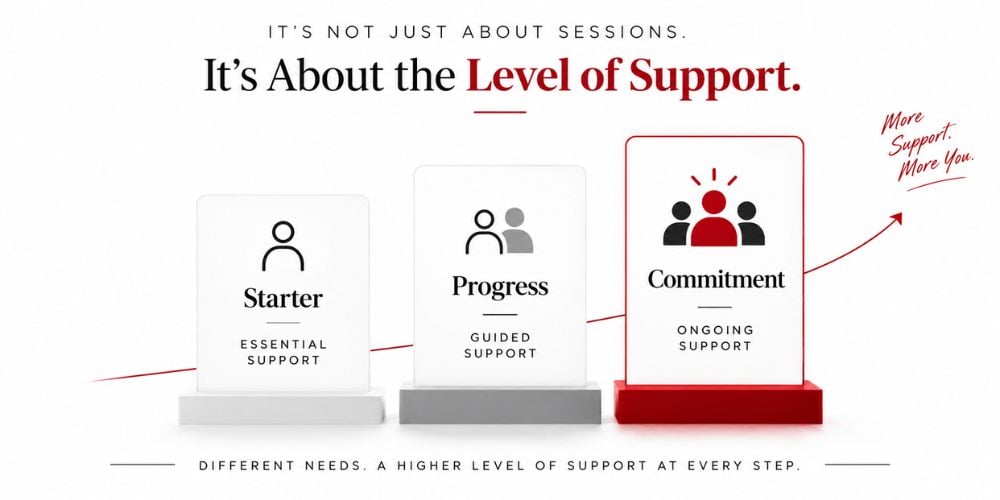
Which level of support fits me?
That is a much easier decision.
You can also put everything into one simple comparison:
Package | Sessions | Frequency | Support Level |
Starter | 4 | 1x/week | Basic guidance |
Progress | 8 | 2x/week | Regular coaching + tracking |
Commitment | 12 | 3x/week | More frequent ongoing support |
8. Set Simple Rules Before You Sell
Finally, explain the basic rules before the package starts.
Clients should know:
- When the package expires
- How cancellations work
- How much notice is required
- Whether sessions can be rescheduled
- Whether packages are refundable
- Whether sessions can be transferred
For example:
Sessions must be used within eight weeks. Cancellations require 24 hours’ notice. Late cancellations count as a completed session.
A 24-hour policy is also a common example in personal training. ACE’s guide to cancellation policies for fitness professionals recommends setting expectations and communicating those boundaries before a cancellation happens.
ISSA similarly recommends putting cancellation terms in writing and clearly covering notice periods, rescheduling, missed sessions, and unused sessions.
Quick Rules Checklist
Rule | What to State |
Expiration | How long clients have to use sessions |
Cancellation | Required notice period |
Late cancellation | Whether the session is charged |
Rescheduling | When a session can be moved |
Refunds | Whether unused sessions are refundable |
Transfers | Whether another person can use them |
I have found that expectations are much easier to manage when they are explained before payment, not after a missed appointment.
Keep the rules visible, short, and consistent.

Conclusion
A good personal training package should be easy to understand at a glance. Give it one goal, a clear session count, a realistic schedule, specific inclusions, straightforward pricing, and simple rules.
Before publishing your packages, ask yourself three questions: Which package fits the client, what do they get, and exactly what will it cost? If those answers are obvious, you are on the right track.
If you want your training packages supported by a reliable strength-training setup, YR Fitness can help you build it with commercial equipment designed for regular daily use.
Related articles: