





Have you ever used a gym machine that made a strange sound or felt a little loose? Those small signs can tell you when something is not right.
The simple rule is: check the equipment, test the movement, and stop if anything feels unsafe. It only takes a few seconds.
As the founder of YR Fitness, I have spent decades designing and working with commercial gym equipment. I know how small issues like worn cables, loose parts, and unstable seats can affect safe use.
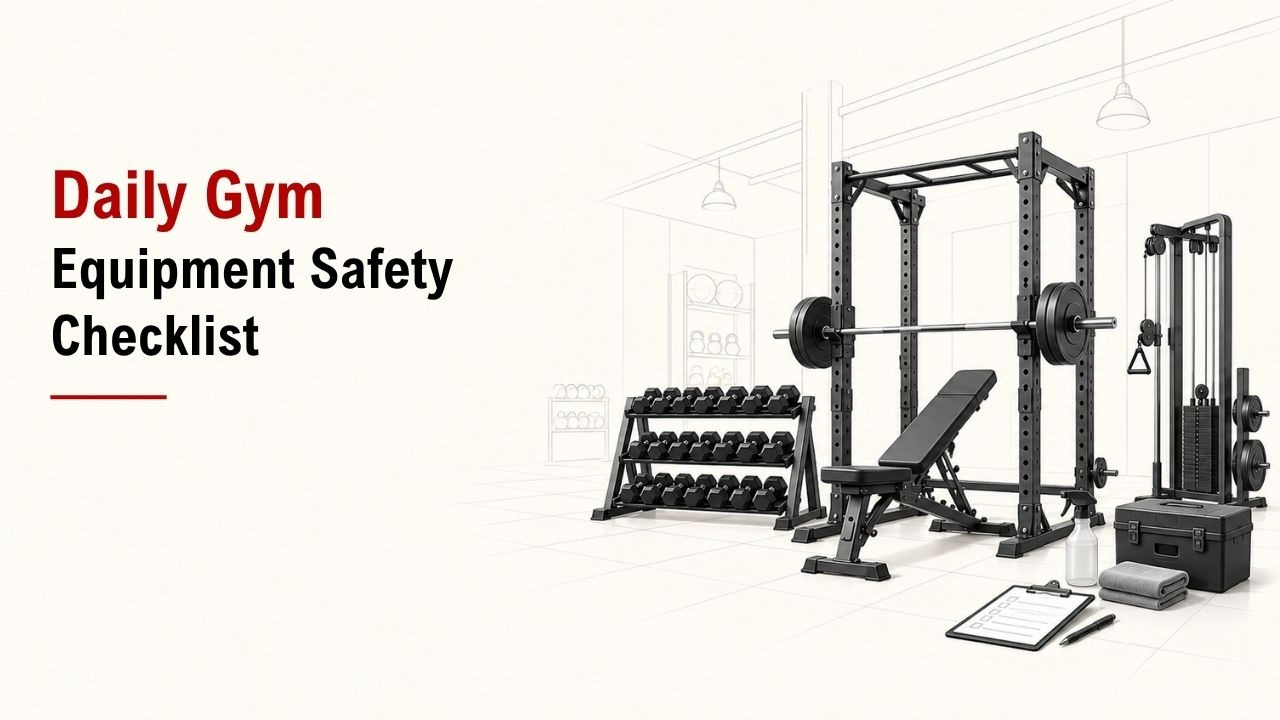
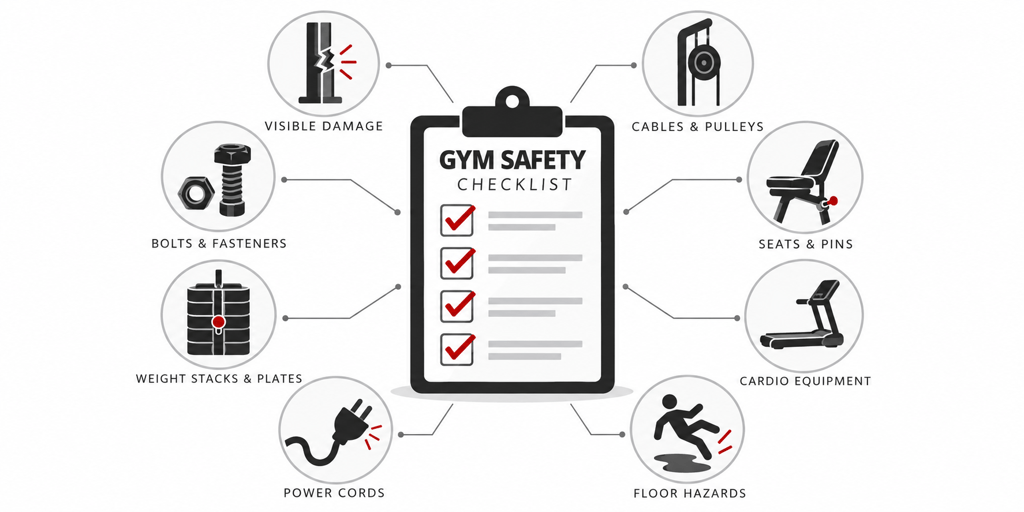
This guide covers eight quick checks you can make before training. Use them as a simple daily habit before you start your workout.
- Your Gym Safety Checklist at a Glance
- 1. Check Equipment for Visible Damage
- 2. Inspect Cables, Belts, and Pulleys
- 3. Check Bolts, Screws, and Fasteners
- 4. Test Seats, Benches, and Adjustment Pins
- 5. Inspect Weight Stacks and Plates
- 6. Test Cardio Equipment
- 7. Check Power Cords and Electrical Connections
- 8. Inspect Flooring Around Equipment
- Final Thoughts
Your Gym Safety Checklist at a Glance
Before you start your workout, run through these quick checks. This table gives you the main things to look at and what to do if something seems wrong.
Check | What to Look For | What to Do |
Visible damage | Cracks, bent parts, damaged grips | Stop and report it |
Cables and pulleys | Fraying, kinks, slack | Do not use if damaged |
Fasteners | Loose or missing bolts | Tell gym staff |
Seats and pins | Slipping or poor locking | Test before sitting |
Weight systems | Damaged plates, sticking stacks | Stop if movement is abnormal |
Cardio equipment | Belt, pedals, emergency stop | Test at low speed |
Electrical parts | Damaged cords, exposed wires | Do not touch |
Flooring | Water, weights, loose mats | Clear or report the hazard |
The American College of Sports Medicine’s facility standards treat inspection and equipment maintenance as part of maintaining a safer fitness environment.
1. Check Equipment for Visible Damage
First, look over the machine.
Check for:
- Cracked or bent frames
- Broken handles
- Torn padding
- Damaged grips
- Loose covers
- Rusted or damaged metal parts
- Anything that looks different from normal
Pay close attention to anything you will sit on, hold, push, or pull.
I often see people ignore small damage because the machine still seems to work. My rule is simple: if the damage makes you question the machine, skip it and tell gym staff.
You can also check the CPSC exercise equipment recall database if you are concerned about a particular type of machine or known product issue.
2. Inspect Cables, Belts, and Pulleys
Using a cable machine?
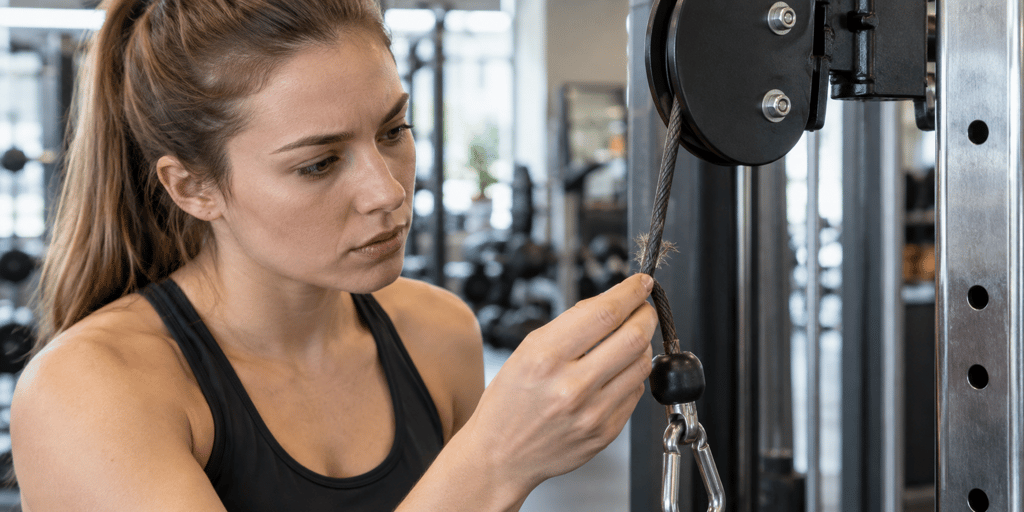
Give the visible cable a quick check before your first set.
Look for:
- Fraying
- Broken strands
- Kinks
- Flattened sections
- Unusual slack
- Damage near attachment points
The cable should sit correctly inside the pulley and move smoothly. Check visible belts in the same way.
See something damaged? Do not test it under heavy resistance. Let gym staff take a look.
3. Check Bolts, Screws, and Fasteners
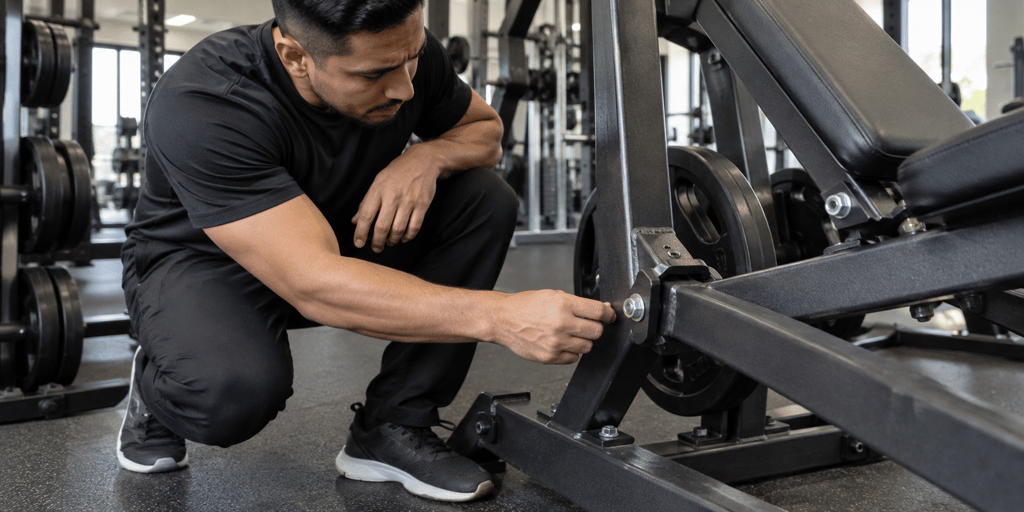
Look at the main connection points on benches, racks, plate-loaded machines, and adjustable equipment.
Watch for:
- Missing bolts
- Bolts sticking unusually far out
- Loose-looking nuts
- Gaps between connected parts
- Parts moving when they should stay fixed
Do not try to tighten or repair gym equipment yourself.
If something looks loose, stop using the machine and tell a staff member. The proper repair may require specific tools, parts, or manufacturer instructions.
4. Test Seats, Benches, and Adjustment Pins
Would you put your full body weight on a bench without checking whether it is locked?
Take a few seconds first.
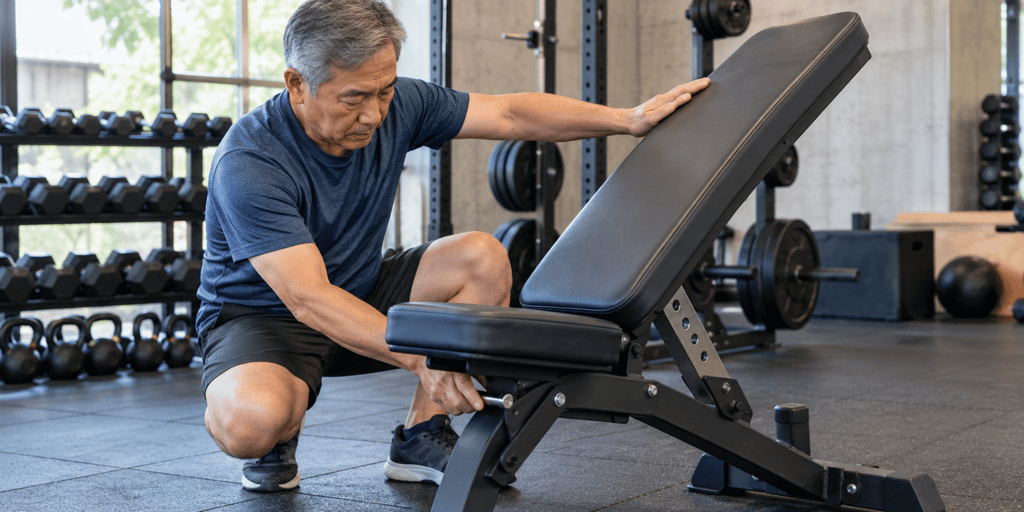
Make sure:
- The seat locks firmly
- The backrest does not slip
- Adjustment pins fit fully into position
- The bench feels stable
- Moving sections stop where they should
For an adjustable bench, gently press against the backrest before lying down.
For a selectorized machine, make sure the adjustment pin is completely engaged. In my design experience, these simple adjustment points are easy to overlook when someone is rushing between sets.
Training in a facility with worn, unstable equipment gets frustrating fast. At YR Fitness, we design our commercial strength and cardio equipment around repeated daily gym use, with attention to movement design, materials, and practical operation.
If you are setting up a training space or replacing older machines, you can explore our commercial gym equipment and compare the available options.
5. Inspect Weight Stacks and Plates
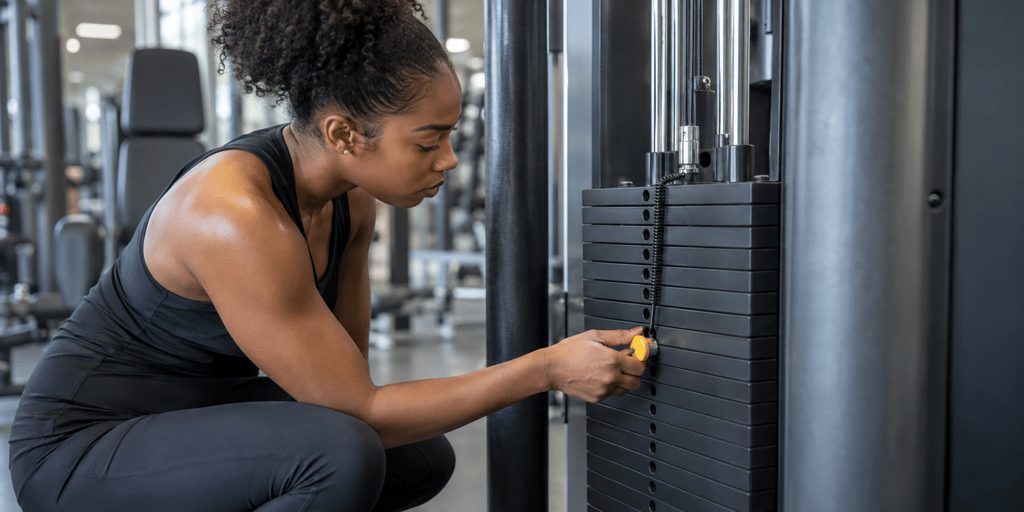
Before using a selectorized machine, look at the weight stack.
Check that:
- The selector pin is fully inserted
- Plates sit evenly
- Nothing blocks the stack
- Guide rods appear straight
- The stack moves without sticking
For free weights and plate-loaded machines, check for cracked or badly damaged plates.
Also, look at how the weights are loaded. Both sides of a barbell or machine should be loaded correctly for the exercise you are performing.
What if the stack sticks?
Do not force it. Stop using the machine and report the issue.
6. Test Cardio Equipment
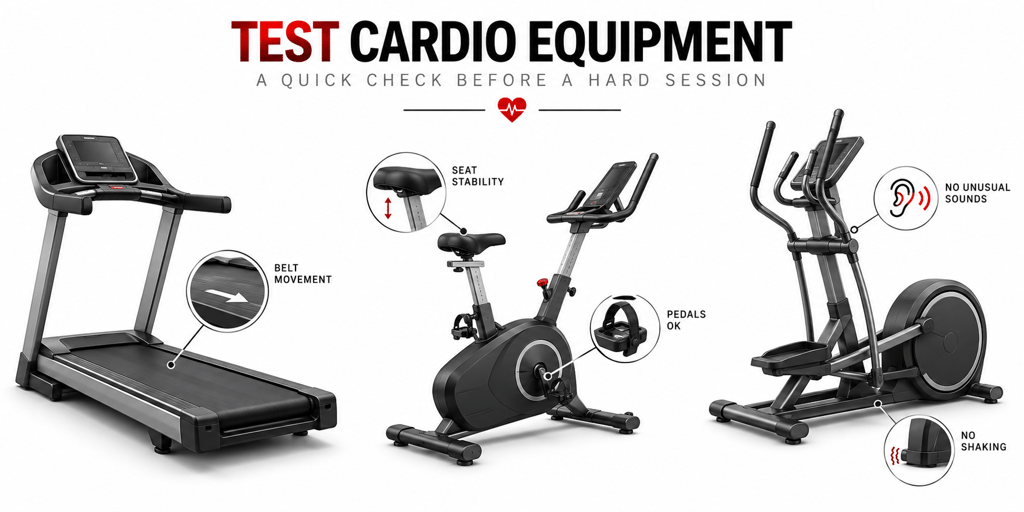
Do a short test before going straight into a hard cardio session.
The U.S. Consumer Product Safety Commission maintains fitness equipment safety and recall information, including treadmill-related hazards.
Treadmills
Check:
- Running belt
- Emergency stop system
- Handrails
- Belt movement at low speed
- Unusual sounds
- Sudden or uneven movement
Start slowly. Increase your speed only after the treadmill feels normal.
Exercise Bikes
Check:
- Pedals
- Seat adjustment
- Handlebars
- Foot straps or pedal security
Make sure everything feels stable before increasing resistance.
Ellipticals and Similar Machines
Check:
- Pedals
- Handle movement
- Starting resistance
- Grinding or clicking sounds
- Unusual shaking
If the machine shakes badly, suddenly stops, or makes an unusual sound, step off and report it.
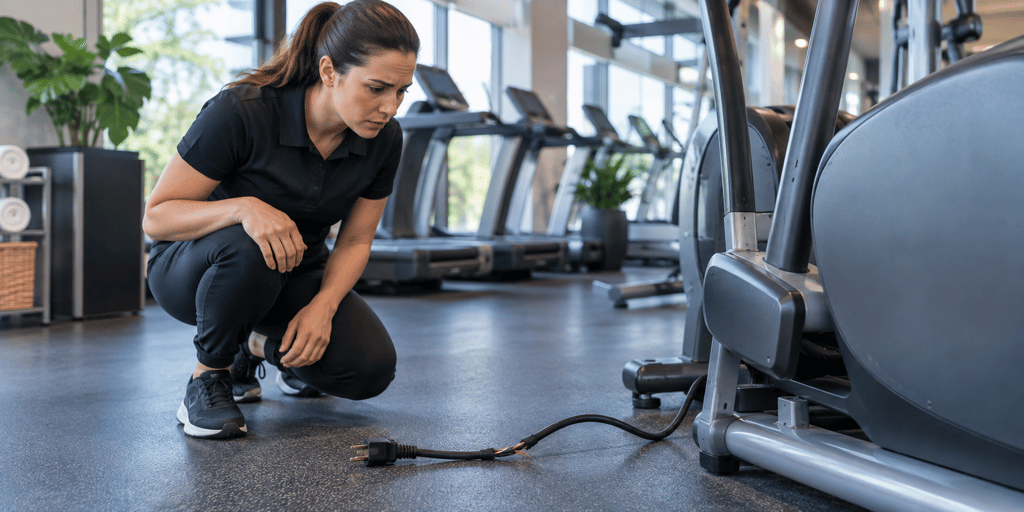
7. Check Power Cords and Electrical Connections
You do not need to inspect the internal electronics.
Just check what you can safely see:
- Damaged power cords
- Exposed wires
- Loose plugs
- Crushed cables
- Cords across walkways
- Electrical connections near water
See exposed wiring? Do not touch it.
OSHA’s electrical safety guidance identifies damaged electrical equipment and improper cord use as electrical hazards. Its workplace standards also call for visual inspection of cord-and-plug equipment for external defects such as insulation damage.
Move away from damaged equipment and tell gym staff. Do not open or repair electrical parts unless you are qualified and authorized to do so.
8. Inspect Flooring Around Equipment
Sometimes the machine is fine.
The problem is right next to it.
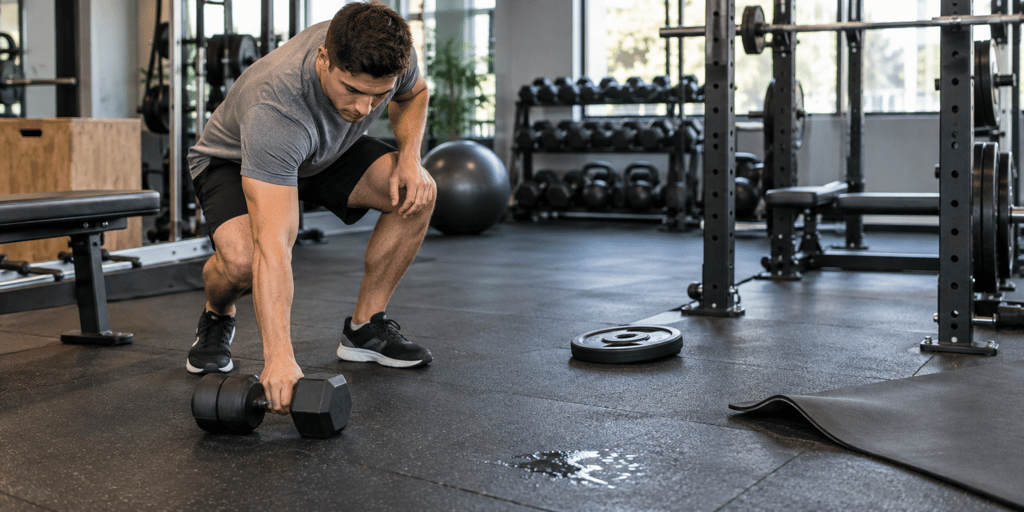
Check for:
- Water
- Sweat
- Loose weight plates
- Dumbbells in walkways
- Resistance bands
- Bags or bottles
- Raised flooring
- Damaged mats
- Mats that have moved out of position
This matters because loose objects, spills, and damaged surfaces can create trip or slip hazards. OSHA’s walking-working surface requirements similarly call for workplace surfaces to be kept clean and free from hazards such as leaks and spills.
Move your own belongings away from the training area and return weights after use.
I often see people carefully inspect the machine but completely forget about the floor. Check both before you start.
Final Thoughts
Gym equipment safety does not need to slow down your workout.
A few quick checks for damage, loose parts, unstable adjustments, electrical issues, and floor hazards can help you train with more confidence.
If you want commercial gym equipment built for regular daily use, YR Fitness can help you choose strength machines and fitness accessories that fit your training space. Explore our equipment range and find practical options for building or upgrading your gym.
Related articles: