




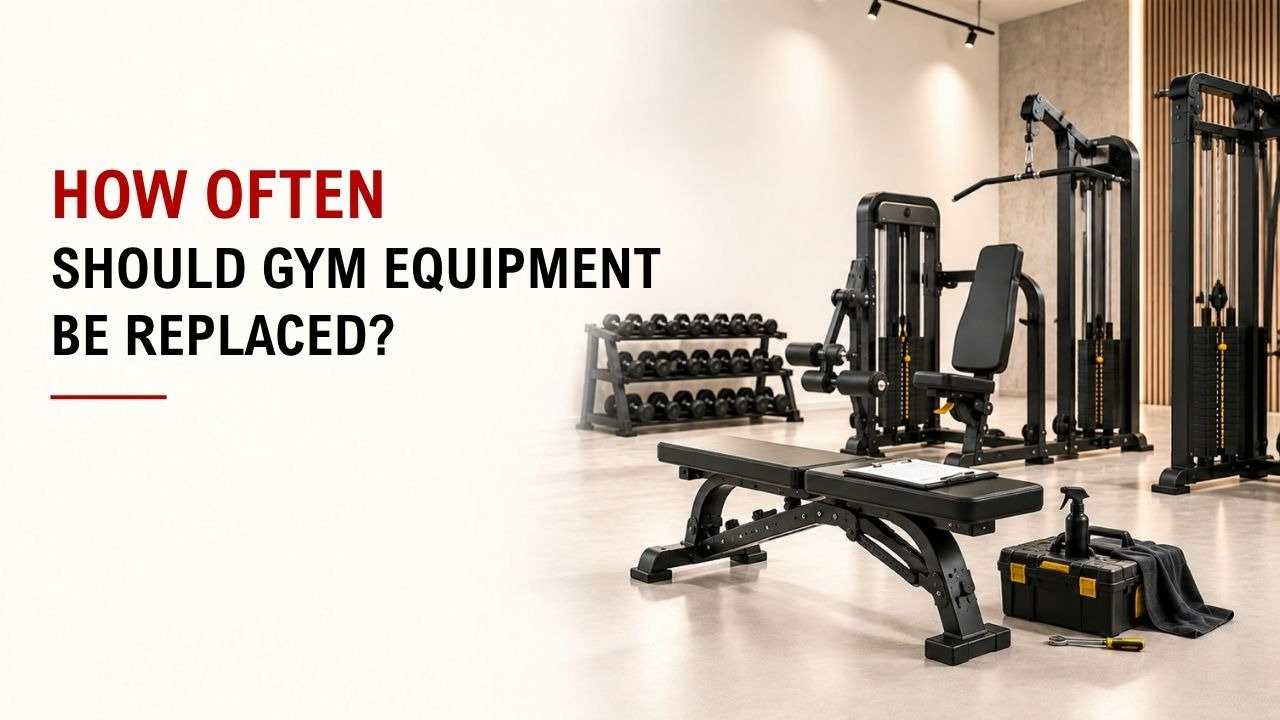

Have you ever wondered if your treadmill or strength machine is simply too old to keep using? Age matters, but condition matters more.
As a quick guide, cardio equipment often lasts 7 to 10 years, while strength equipment can last 10 to 20 years or longer. Maintenance, usage, and build quality can shorten or extend that lifespan.
As founder and chief designer of YR Fitness, I have seen firsthand which parts fail first, which machines are worth repairing, and when replacement makes more sense.
This guide will show you how often different gym equipment should be replaced, when to repair it, and the main signs that it is time for an upgrade.
1. How Often Should Cardio Equipment Be Replaced?
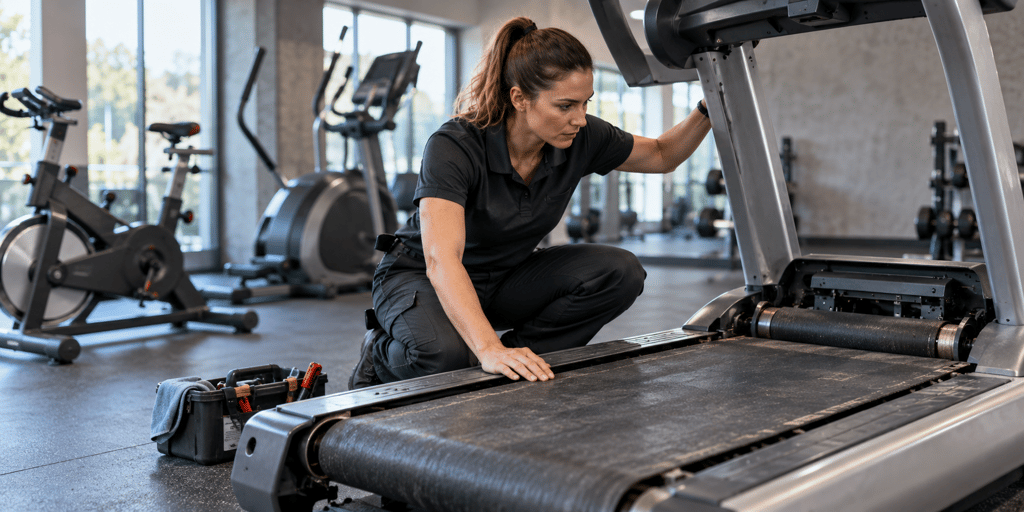
Cardio equipment usually wears faster than strength equipment.
Why?
It has motors, belts, rollers, electronics, bearings, drive systems, and other moving parts working throughout your workout.
Quick Cardio Replacement Guide
Cardio Equipment | Typical Replacement Time | What Usually Wears First |
Treadmill | 7 to 10 years | Belt, deck, rollers, motor, electronics |
Elliptical | 7 to 10 years | Bearings, drive system, pedals, electronics |
Exercise bike | 7 to 10 years | Belt or chain, bearings, pedals, console |
Other commercial cardio machines | Around 7 to 12 years | Depends on machine type and use |
Commercial fitness industry benchmarks place treadmills, ellipticals, and exercise bikes at roughly 7 to 10 years, although actual life depends heavily on usage and maintenance.
Does a 10-year-old treadmill automatically need replacing?
No.
If it still runs smoothly and reliably, there may be no reason to remove it just because of its age.
Look at the parts that actually affect the workout. Life Fitness, for example, includes the belt, rollers, drive belts, motor, speed controller, wiring, display, frame, and stop system in its treadmill preventive maintenance checklist.
Here is a simpler way to check:
Check | Probably Fine | Time to Investigate |
Belt | Smooth and centered | Slipping or badly worn |
Motor | Consistent operation | Repeated faults or unusual noise |
Deck | Smooth underfoot | Rough or uneven feel |
Console | Works normally | Repeated electronic failures |
Frame | Stable | Movement, damage, or corrosion |
In my experience, how the machine feels tells you more than the date on the label.
If it becomes rough, noisy, unstable, or unreliable even after proper servicing, replacement starts to make more sense.
2. How Often Should Strength Equipment Be Replaced?
Strength equipment usually lasts longer.
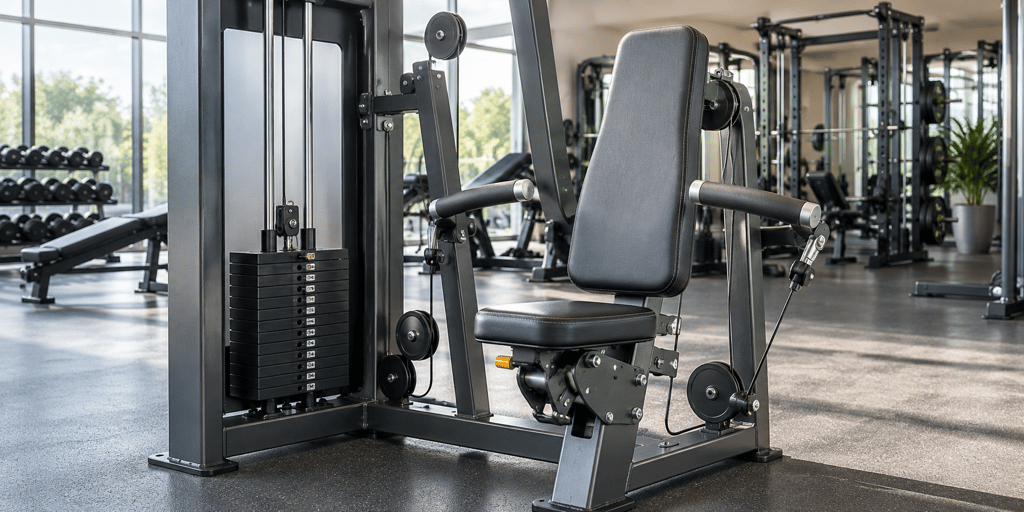
Most strength machines have fewer electronics, and their main structures are often made from welded steel. Industry benchmarks show selectorized strength equipment commonly lasting 10 to 15+ years, while racks, benches, functional systems, and free weights can remain usable much longer.
Quick Strength Equipment Replacement Guide
Strength Equipment | Typical Replacement Time |
Selectorized strength machines | 10 to 15+ years |
Plate-loaded equipment | 15 years or longer |
Benches and racks | 15 to 20+ years |
Dumbbells and weight plates | 15 to 20+ years |
These are planning ranges, not expiration dates.
A machine does not suddenly become unusable on its 15th birthday.
What actually wears out first?
Usually, it is not the whole machine.
You may see wear in:
- Cables
- Pulleys
- Seat pads
- Upholstery
- Grips
- Bearings
- Adjustment pins
- Bolts and other hardware
Life Fitness, for example, recommends regular checks of strength-machine hardware and guide rods as part of its strength maintenance schedule.
This matters because replacing one worn cable or pad is very different from replacing an entire machine.
I often see this issue. Someone notices torn upholstery and assumes the machine is finished, while the frame and movement system may still have years left.
Check the structure first. Then check the movement.
If those two things are still good, replacing smaller wear parts can be the better choice.
At YR Fitness, we use 3.0 mm+ Q235 steel tubing and CNC-machined POM cams and pulleys in our strength equipment. If your current machines are reaching the end of their useful life, you can compare our commercial strength range and see which equipment fits your next upgrade.
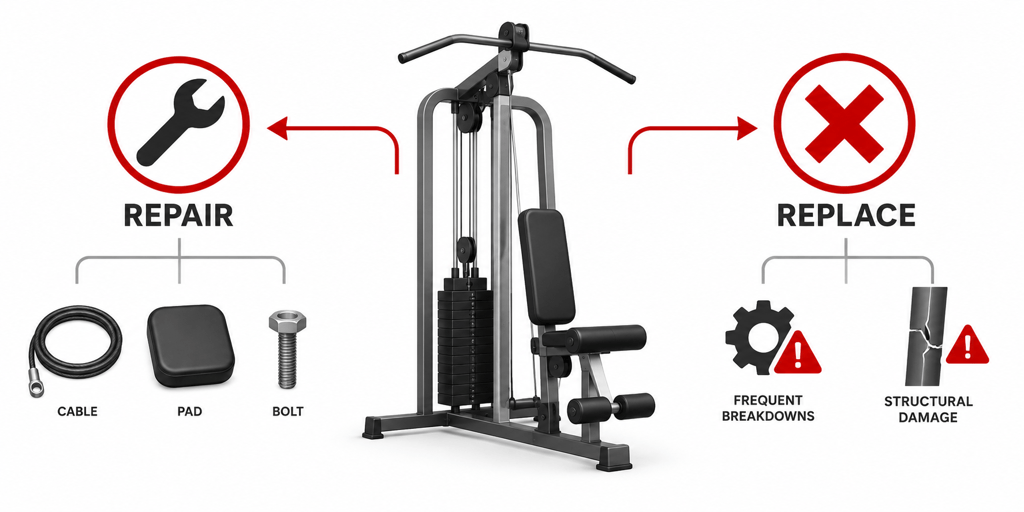
3. Should I Repair or Replace My Gym Equipment?
Ask yourself one question:
Will this repair give the machine several more years of reliable use?
If yes, repairing it is often worth considering.
A belt, cable, pulley, pad, grip, bearing, or other wear component can usually be replaced without retiring the entire machine.
Repair vs. Replace
Situation | Repair | Replace |
One worn cable or belt | ✓ | |
Torn upholstery | ✓ | |
Worn grip or adjustment pin | ✓ | |
Minor bearing problem | ✓ | |
Same failure keeps returning | ✓ | |
Several major parts are failing | ✓ | |
Frame has serious structural damage | ✓ | |
Machine remains unstable after servicing | ✓ | |
Electronics repeatedly fail | ✓ | |
Parts are no longer available | ✓ | |
Repair costs keep increasing | ✓ |
Here is why maintenance matters.
Manufacturer maintenance guidance calls for checking components such as belts, rollers, bearings, wiring, frames, bolts, drive systems, and safety features rather than waiting until a complete failure occurs.
Small problems are easier to deal with early.
A loose bolt is one thing. A machine that has been moving under load with loose hardware for months is another.
I would rather replace one worn component on a solid machine than throw away good equipment too early.
On the other hand, once breakdowns become frequent and reliability keeps dropping, another repair may simply delay the replacement you already need.
4. 5 Signs Your Gym Equipment Needs Replacing
Still unsure?
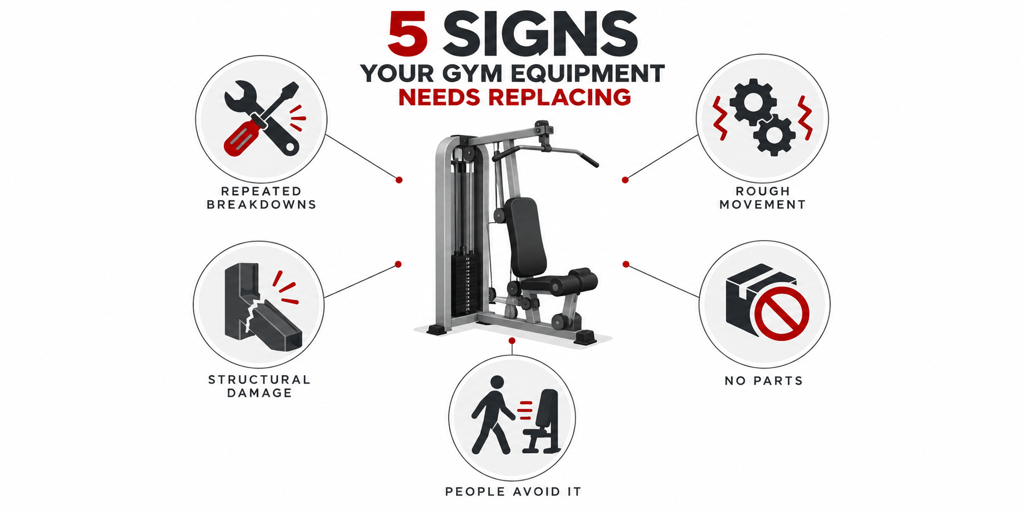
Use these five signs.
It Keeps Breaking Down
One repair does not mean a machine is finished.
But what if you repair it this month and another major problem appears next month?
That pattern matters.
Repeated breakdowns usually mean the machine deserves a closer look, especially if several systems are starting to fail at the same time.
The Movement No Longer Feels Smooth
Your body often notices a problem before you know which component is causing it.
Watch for:
- Grinding
- Jerking
- Slipping
- Heavy vibration
- Strange noises
- Uneven resistance
Service the machine first.
If it still feels wrong afterward, replacement becomes a much stronger option.
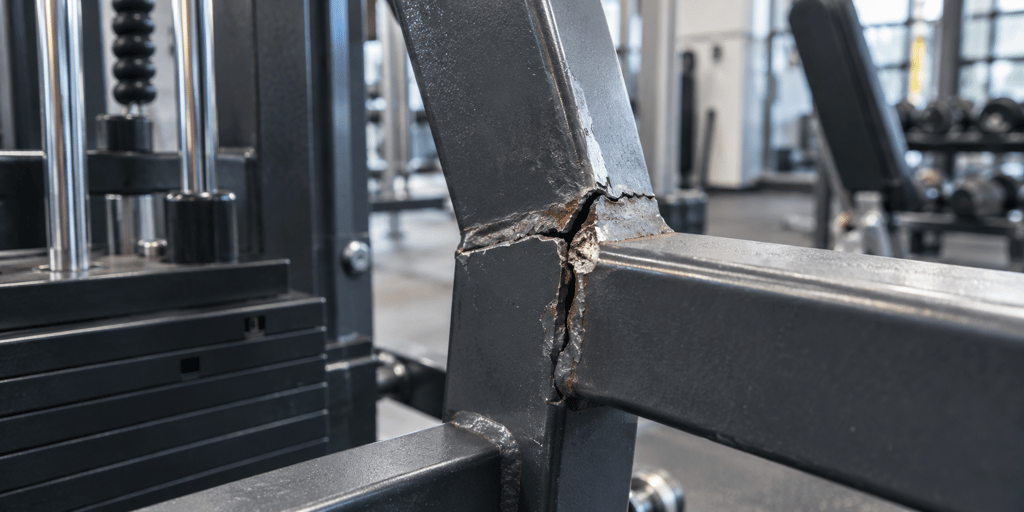
There Is Structural Damage
A scratch is usually cosmetic.
A cracked weld is not.
Take structural problems seriously, including:
- Cracks
- Bent structural parts
- Severe corrosion
- Damaged welds
- An unstable frame
Stop using equipment if you suspect serious structural damage until it has been properly inspected.
Also check whether your machine is subject to a safety recall. The U.S. Consumer Product Safety Commission maintains a searchable product recall database, including recalls involving exercise equipment.
Replacement Parts Are Hard to Find
Older machines can be perfectly usable until one small part fails.
Then comes the problem: Can you still buy that part?
If cables, boards, displays, motors, or other components have been discontinued, keeping an older machine running can become frustrating and expensive.
Parts availability should therefore be part of your replacement decision.
You Avoid Using It
This one sounds simple because it is.
Do you always choose another treadmill because yours feels rough?
Do you skip a strength machine because its movement feels awkward?
Do you avoid equipment because you do not trust it to finish the workout?
If the answer is yes, the machine is no longer doing its job very well.
Conclusion
As a simple guide, cardio equipment often lasts 7 to 10 years, while strength equipment can last 10 to 20 years or longer.
But age is only one factor. Replace equipment when repairs become frequent, movement feels poor, parts are hard to find, or safety becomes a concern.
If you are ready to replace older equipment, explore YR Fitness for commercial strength, cardio, and fitness equipment built for regular use.
Related articles: