





Feeling nervous about your first personal training session? Not knowing what to expect can make your first gym visit feel harder than it should.
A good first session includes a quick consultation, warm-up, movement assessment, full-body workout, and cool-down. The goal is to learn basic exercises, move safely, and build confidence without pushing too hard.
As an Exercise Physiology & Biomechanics Expert at YR Fitness, I believe beginners should learn proper movement before worrying about heavy weights. I’ve seen how a simple, well-planned first session can help people feel more comfortable with exercise.
In this guide, you’ll find an easy 60-minute personal training plan with beginner-friendly exercises. Follow each step to see what your first session should look like and how to get started.
1. Start With a Quick Client Consultation (5 Minutes)
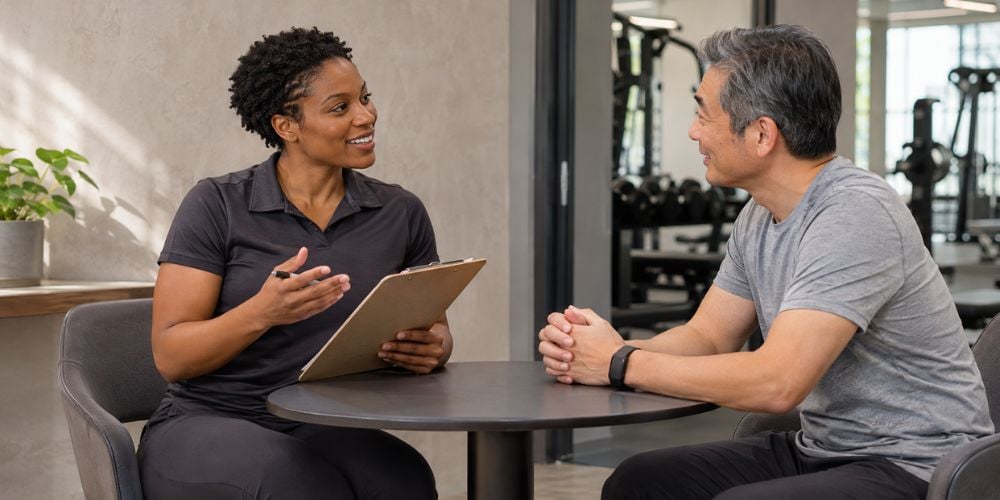
Before exercising, your personal trainer should spend five minutes getting to know you.
This conversation helps them understand your goals, fitness level, and any physical limitations.
Your trainer should ask about:
- Fitness goals: Do you want to lose weight, build muscle, or improve fitness?
- Exercise experience: Have you worked out at a gym before?
- Health history: Do you have injuries, medical conditions, or exercise restrictions?
- Workout preferences: Are there exercises you enjoy or prefer to avoid?
- Training schedule: How often can you realistically exercise?
Your trainer should also complete appropriate pre-exercise health screening before starting physical activity. Some medical conditions may require clearance from a healthcare professional.
Why does this matter?
Your trainer needs to know what your body can handle before choosing exercises.
For example, if you have knee discomfort, they may adjust your squat depth or select another leg exercise.
My advice: Be open about previous injuries or discomfort. Even small details can help your trainer make your workout more comfortable.
2. Guide the Client Through a Warm-Up (8 Minutes)
Start with a simple warm-up to prepare your body for exercise.
A warm-up gradually raises your heart rate, gets your muscles moving, and helps you feel more comfortable.
The American Heart Association’s warm-up and cool-down guidance recommends warming up for around 5–10 minutes before exercise.
Easy 8-Minute Warm-Up Plan
Exercise | Duration | Purpose |
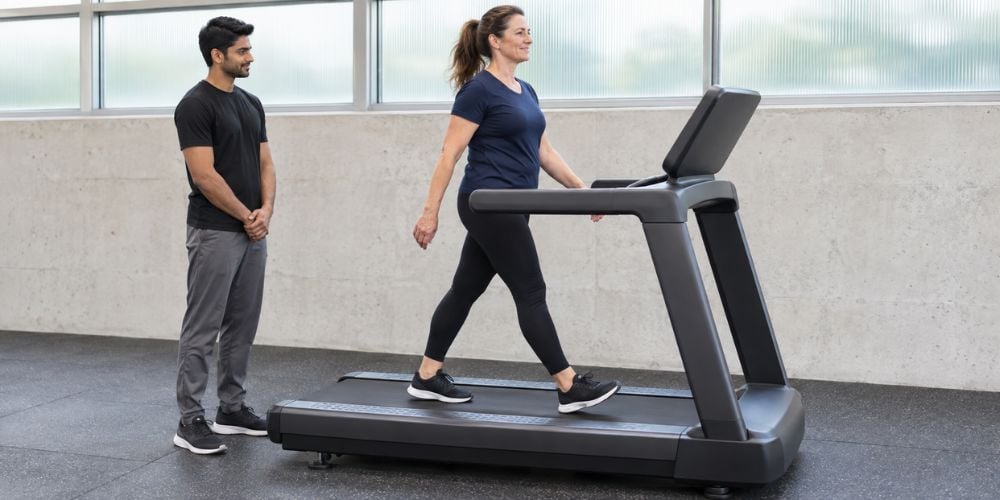
Treadmill walking | 3 minutes | Gradually raise heart rate |
Arm circles and shoulder rolls | 2 minutes | Warm up shoulders |
Bodyweight squats | 1 minute | Prepare your legs |
Hip and ankle mobility | 2 minutes | Improve comfortable movement |
Follow these steps:
- Walk on the treadmill at a comfortable pace.
- Perform gentle arm circles and shoulder rolls.
- Complete a few controlled bodyweight squats.
- Finish with easy hip and ankle movements.
Keep everything slow and comfortable.
How should you feel afterward?
You should feel warmer and ready to move, not tired before the workout starts.
If you’re breathing heavily, slow down. Your warm-up should prepare you for the main workout, not drain your energy.
3. Check Basic Movement Patterns (10 Minutes)
Before lifting weights, your trainer needs to see how your body moves.
This is called a movement assessment. It helps your trainer choose exercises that match your current ability.
Four Basic Movement Checks
Movement | What Your Trainer Checks | Main Muscles |
Bodyweight squat | Knee alignment, hip movement, and balance | Quadriceps, glutes |
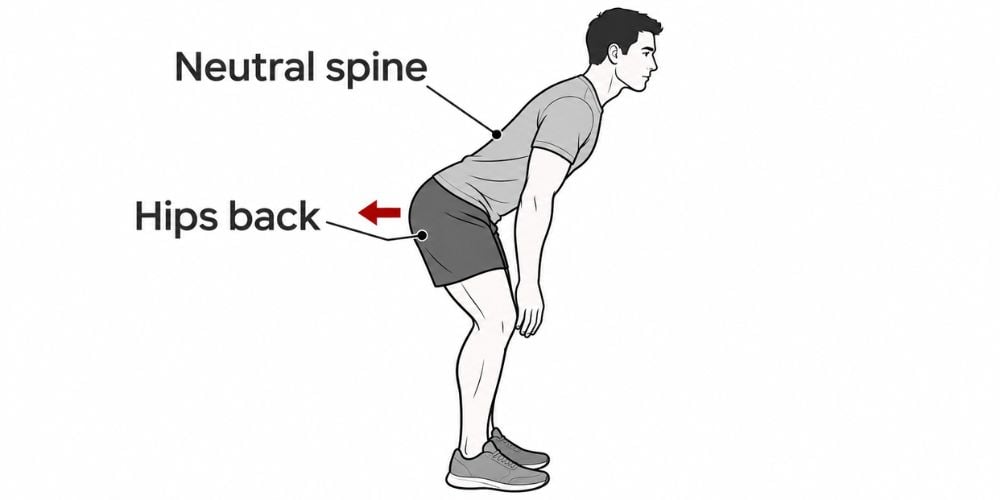
Hip hinge | Hip control and back positioning | Back, biceps |
Shoulder mobility | Comfortable overhead arm movement | Chest, shoulders, triceps |
Single-leg balance | Stability and coordination | Glutes, hamstrings |
Dead bug | 2 × 6 per side | Core |
What Should You Expect?
Your trainer may ask you to:
- Perform 5 slow bodyweight squats.
- Bend at your hips while keeping your back neutral.
- Raise your arms overhead comfortably.
- Balance on one leg for a few seconds.
What if you struggle with a movement?
That’s okay. These are simple checks, not tests you need to pass.
Your trainer can adjust an exercise or choose an easier movement if something feels uncomfortable.
I often see beginners worry about getting every movement right immediately. What matters more is learning how to move with control and improving over time.
Remember: Your first session is about finding a comfortable starting point, not testing your limits.
4. Beginner Full-Body Workout (25 Minutes)
Now comes the main part of your session.
Your first workout should target the major muscle groups without being too difficult.
You only need five simple exercises to get started. You can also explore this full-body machine workout for beginners if you want more ideas for your next gym visit.
Beginner Full-Body Workout Plan
Exercise | Sets × Reps | Main Muscles |
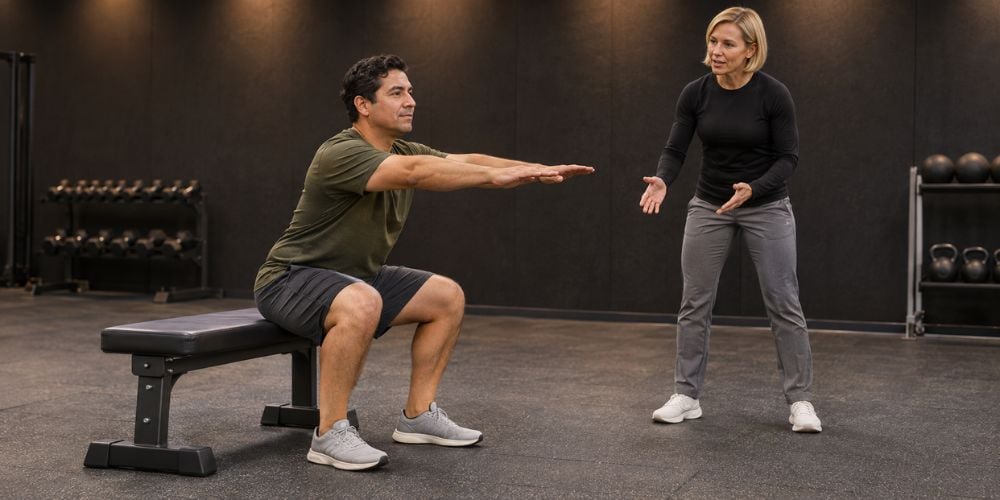
Bodyweight squat to bench | 2 × 8 | Quadriceps, glutes |
Seated row machine | 2 × 10 | Back, biceps |
Chest press machine | 2 × 10 | Chest, shoulders, triceps |
Glute bridge | 2 × 10 | Glutes, hamstrings |
Dead bug | 2 × 6 per side | Core |
These exercises cover the major muscle groups without making the session too complicated.
The CDC’s physical activity guidelines recommend muscle-strengthening activities at least two days per week for adults. You can work toward that goal gradually as your fitness improves.
Exercise 1: Bodyweight Squat to Bench
This exercise helps you learn how to squat while maintaining control.
How to do it:
- Stand in front of a bench with your feet shoulder-width apart.
- Slowly lower your hips toward the bench.
- Lightly touch the bench.
- Push through your feet to stand back up.
Keep your feet flat and let your knees move comfortably.
Beginner tip: If the squat feels difficult, use a higher bench to reduce how far you need to lower your body.
Exercise 2: Seated Row Machine
The seated row strengthens your back and arms.
How to do it:
- Sit upright with your feet supported.
- Hold the handles with your arms extended.
- Pull the handles toward your torso.
- Slowly return to the starting position.
Avoid leaning backward or pulling too quickly.
Not sure how much weight to use?
Start light enough to complete all 10 repetitions without swinging your body.
If you’re still getting used to resistance machines, this strength machine workout plan for beginners offers additional exercises and setup tips.
Exercise 3: Chest Press Machine
The chest press works your chest, shoulders, and triceps.
How to do it:
- Adjust the seat so the handles are near chest height.
- Sit with your back against the seat.
- Push the handles forward without forcefully locking your elbows.
- Slowly return to the starting position.
Start with light resistance until the movement feels natural.
Quick check: Are your shoulders lifting or your back leaving the seat?
If so, lower the weight and check your position.
For more details, follow this chest press machine setup and technique guide.
Exercise 4: Glute Bridge
This exercise strengthens your glutes and hamstrings.
How to do it:
- Lie on your back with your knees bent.
- Keep your feet flat on the floor.
- Push through your feet to lift your hips.
- Lower your hips slowly.
At the top, your shoulders, hips, and knees should form a straight line.
Avoid lifting your hips so high that your lower back arches excessively.
Exercise 5: Dead Bug
The dead bug helps improve core control and stability.
How to do it:
- Lie on your back with your arms pointing upward.
- Bend your knees and lift your legs.
- Slowly extend one arm and the opposite leg.
- Return to the starting position and switch sides.
Keep your lower back comfortable and stable throughout the movement.
Beginner tip: If extending both your arm and leg feels too difficult, move only one leg at a time.
Tips for Your First Workout
- Start light: Use bodyweight or light resistance.
- Rest when needed: Take around 45–60 seconds between sets, or longer if needed.
- Move slowly: Focus on controlled repetitions.
- Ask questions: Let your trainer demonstrate unfamiliar exercises.
- Listen to your body: Stop if you feel sharp pain, dizziness, or unusual discomfort.
You don’t need to finish every exercise perfectly.
It’s better to perform fewer repetitions correctly than rush through the workout.
Are Gym Machines Good for Beginners?
Yes. Many strength machines offer guided movement paths that make basic exercises easier to learn.
They can also provide back support and adjustable seats, depending on the machine.
This makes it easier to focus on the muscles you’re training instead of worrying about balancing free weights.
At YR Fitness, we design commercial strength equipment with carefully developed movement angles and adjustable features to support controlled training. If you’re new to gym machines, explore our chest press machines to see how guided movements and adjustable seats can help you learn basic upper-body exercises.
The key is choosing a resistance level you can control throughout every repetition.
5. Finish With a Cool-Down (5 Minutes)
Once you’ve finished the workout, spend five minutes cooling down.
This gives your breathing and heart rate time to gradually return toward their resting levels.
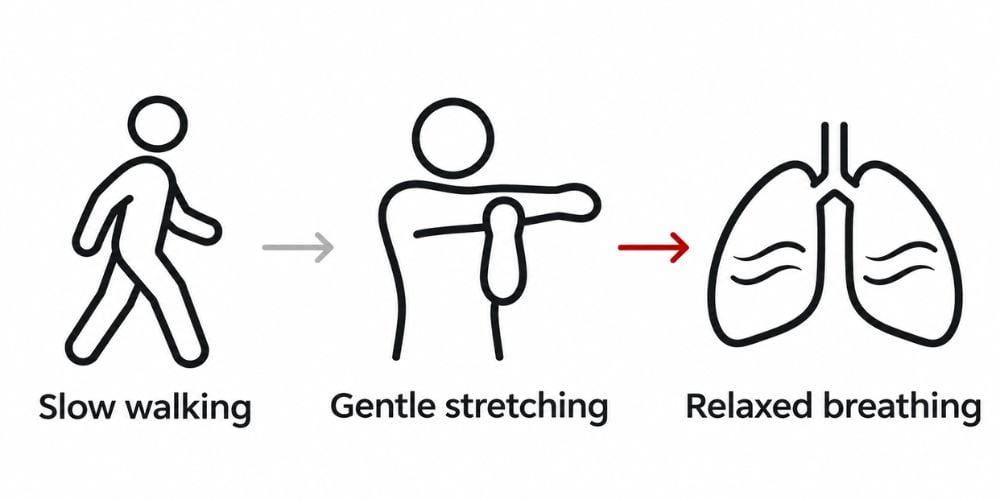
Simple 5-Minute Cool-Down
Slow Walking – 2 Minutes
- Walk at a relaxed pace.
- Let your breathing settle.
- Gradually reduce your activity level.
Gentle Stretching – 2 Minutes
- Gently stretch your chest, shoulders, and legs.
- Hold each stretch without bouncing.
- Never force a painful position.
Relaxed Breathing – 1 Minute
- Sit or stand comfortably.
- Inhale slowly.
- Exhale gently and relax your shoulders.
Conclusion
Your first personal training session should be simple and comfortable. Start with a consultation, warm up, check your movement, complete a light full-body workout, and finish with a cool-down.
Don’t worry about lifting heavy weights or mastering every exercise immediately. Focus on learning proper technique and feeling more confident each time you train.
Using suitable equipment can also make beginner exercises easier to learn. Check out the YR Fitness beginner gym machine workout plan for more exercises, sets, and reps you can use during your next session.
Related articles: