




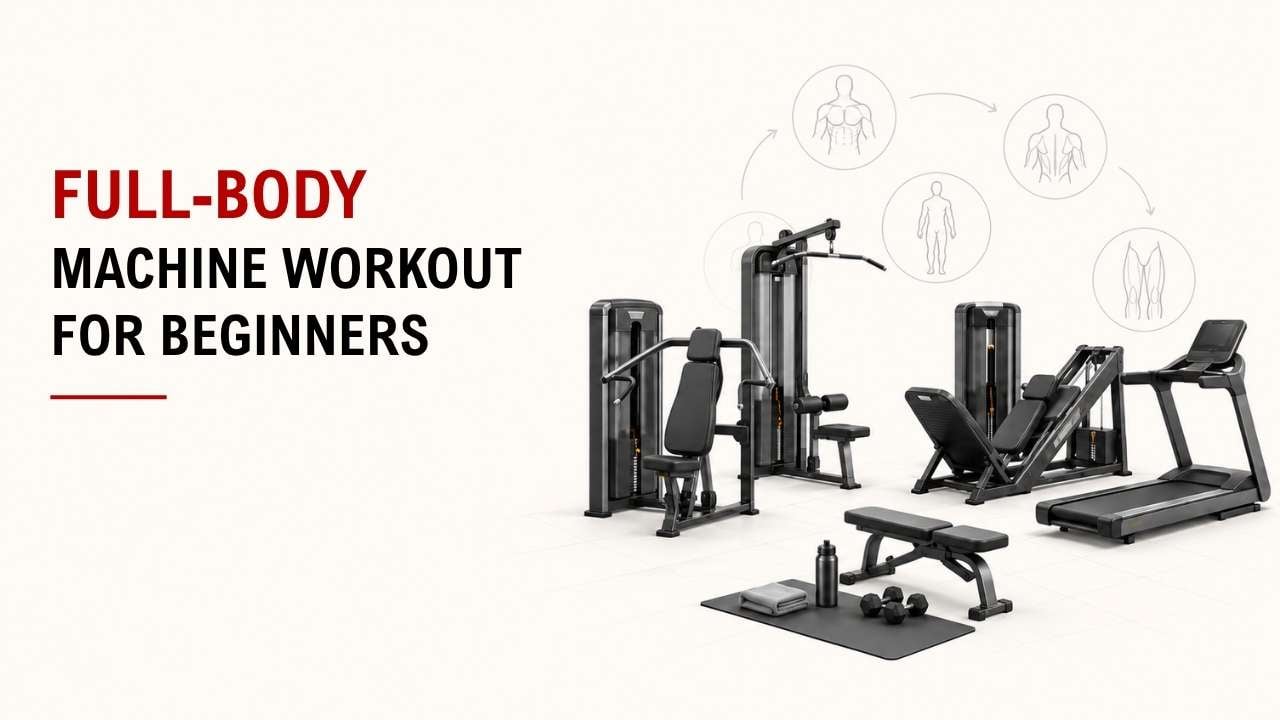

Have you ever walked into a gym and wondered which machines to use? A full-body workout can be much simpler than it looks.
Start with seven basic machines that train your legs, chest, back, shoulders, and core. Use 2 sets per exercise, 10 to 12 reps for most movements, and a weight you can control.
As the founder of YR Fitness, I have spent decades designing strength equipment and studying how people use machines. From that experience, I have seen that beginners often make better progress with simple, repeatable routines.
In this guide, I’ll show you the seven machines, what each one trains, and how to use them. Follow the workout in order and keep it simple.
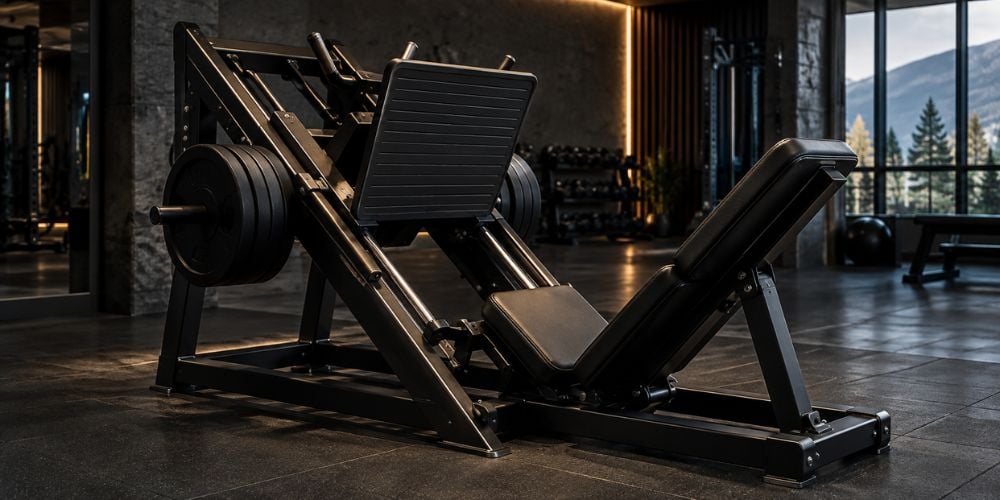
1. Leg Press Machine
The leg press is a good place to start because one exercise trains several large lower-body muscles. It mainly works your quadriceps and glutes, while the hamstrings and other lower-body muscles also contribute.
Sit with your back against the pad and place both feet firmly on the platform. Push the platform away without forcefully locking your knees, then lower it under control.
The ACE seated leg press guide specifically recommends keeping the heels in contact with the platform and controlling both parts of the movement.
Beginner target: 2 sets of 10 to 12 reps
Quick check: Are you bouncing the weight or locking your knees hard at the top? If so, reduce the load and slow down.
I often see beginners put too much weight on the leg press simply because the machine feels stable. Smooth repetitions matter more than filling the machine with plates.
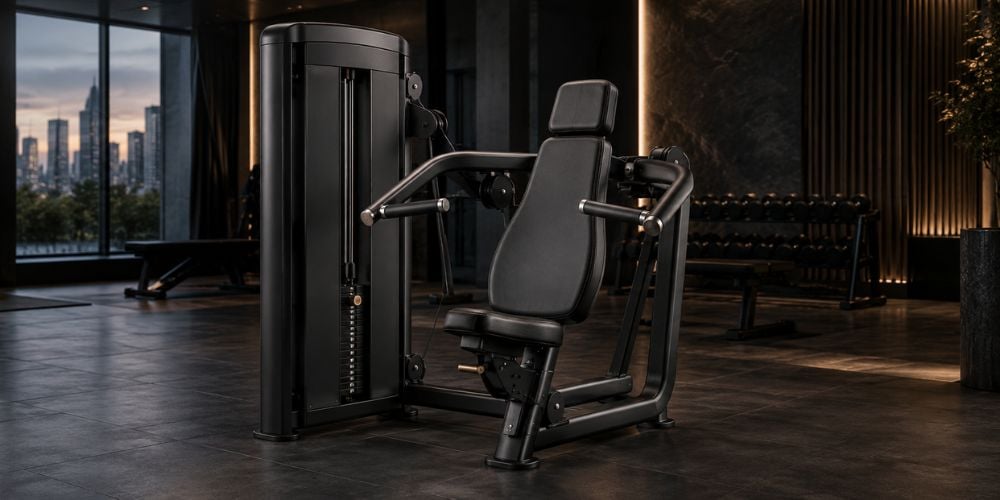
2. Chest Press Machine
The chest press trains your chest, triceps, and front shoulders. Because the machine guides the pressing path, beginners can focus more on learning the movement and less on balancing a bar or dumbbells.
Adjust the seat so the handles sit around mid-chest level. Keep your back against the pad, press the handles forward, then return slowly.
The ACE chest press exercise guide recommends keeping the shoulder blades firmly positioned against the backrest during the press.
Beginner target: 2 sets of 10 to 12 reps
Should you fully stretch your arms?
You can extend your arms through a comfortable range, but do not aggressively lock the elbows or let your shoulders roll away from the pad. Keep the movement smooth.
3. Lat Pulldown Machine
The lat pulldown gives your workout a vertical pulling movement. It mainly trains your back, particularly the lat muscles, while your biceps help with the pull.
Sit firmly under the thigh pads and take a comfortable grip on the bar. Pull it toward your upper chest, then let the bar travel upward slowly.
For a more detailed setup, the ACE seated lat pulldown guide covers the movement step by step.
Beginner target: 2 sets of 10 to 12 reps
Watch for this: If you need to swing backward to bring the bar down, the weight is probably too heavy.
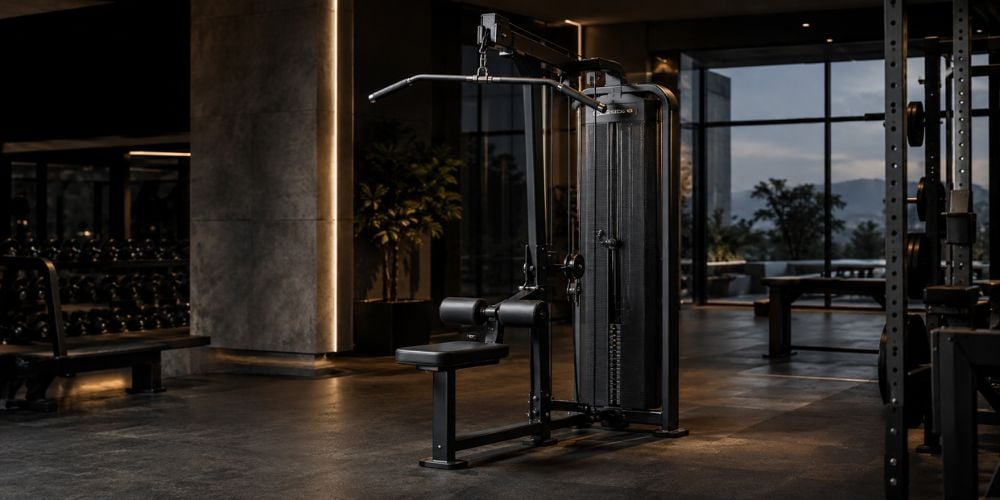
4. Seated Row Machine
The seated row trains your lats, middle back, rear shoulder area, and biceps. Unlike the lat pulldown, you pull horizontally toward your body instead of pulling from overhead.
Sit tall and pull the handles toward your torso by driving your elbows backward. Pause briefly, then return the handles slowly without rocking your body.
ACE also recommends avoiding unnecessary backward leaning during the seated row. You can see its seated row technique guide here.
Beginner target: 2 sets of 10 to 12 reps
In my decades of equipment design work, I have often seen beginners rush this exercise. Slow the return and you will usually find it much easier to feel your back doing the work.
Want to see how these movements translate into actual strength machines? At YR Fitness, we design our commercial strength equipment around practical movement paths, easy adjustments, and repeated daily use. Browse the strength equipment range to compare machines for the legs, chest, back, shoulders, and core.
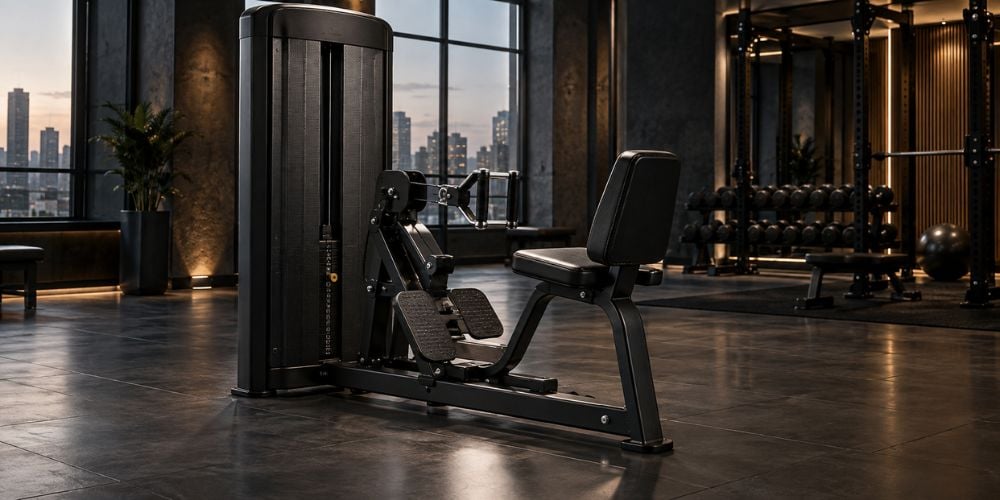
5. Leg Curl Machine
The leg curl gives the hamstrings at the back of your thighs more direct work. This makes it a useful partner to the leg press, which places more emphasis on your quadriceps and glutes.
Your gym may have either a seated or lying version. Position your legs against the pads, curl the weight smoothly, then return to the starting position under control.
NASM classifies the seated leg curl as a machine-based hamstring exercise and provides a full setup guide if you need help adjusting the machine.
Beginner target: 2 sets of 10 to 12 reps
What if your hips keep moving?
Lower the resistance. Your legs should perform the curl while the rest of your body stays fairly still.
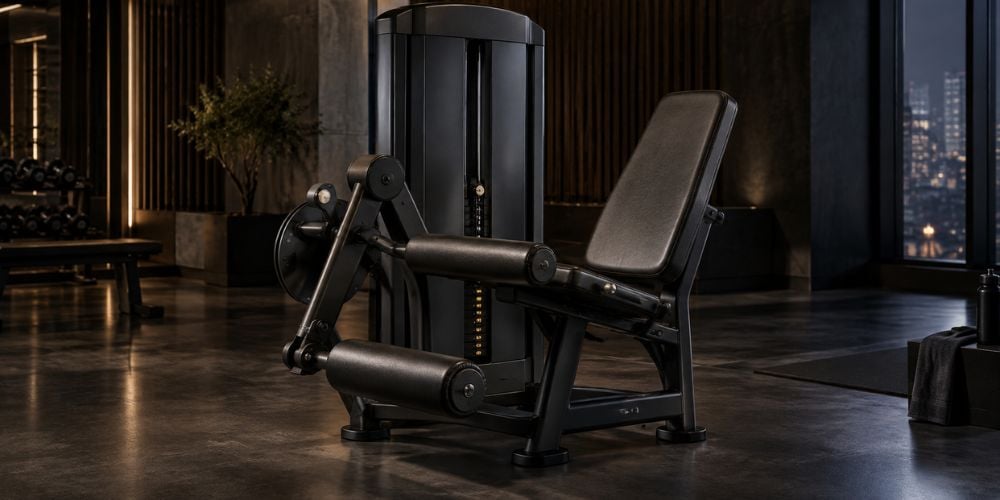
6. Shoulder Press Machine
The shoulder press gives you a vertical pushing exercise. It mainly trains your shoulders, while your triceps help straighten your arms during the press.
Adjust the seat so the handles begin around shoulder level. Keep your back against the pad, press upward, then lower the handles slowly.
Beginner target: 2 sets of 10 to 12 reps
Do not be surprised if you need much less weight here than on the leg press. Your shoulders are smaller than the large muscle groups in your legs, so comparing those numbers does not tell you much.
My advice: Start lighter than you think you need. You can always add resistance once your movement feels comfortable.
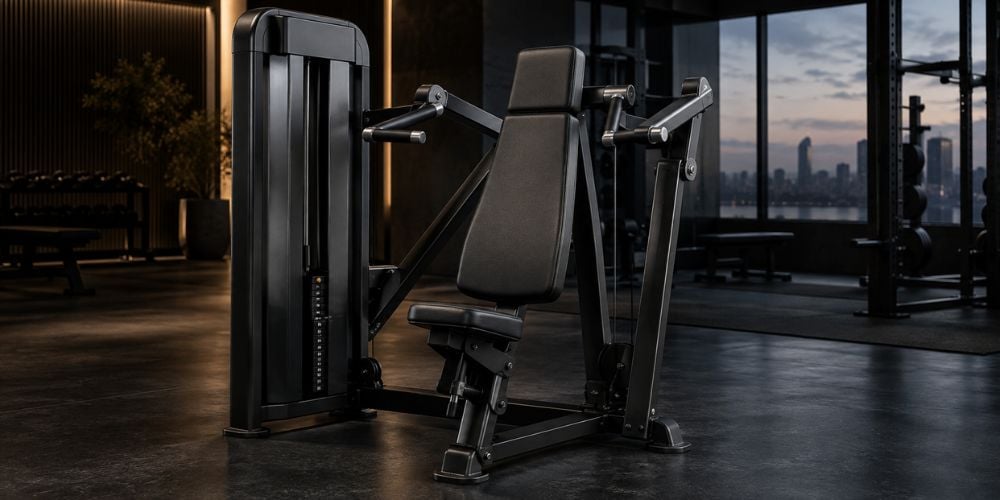
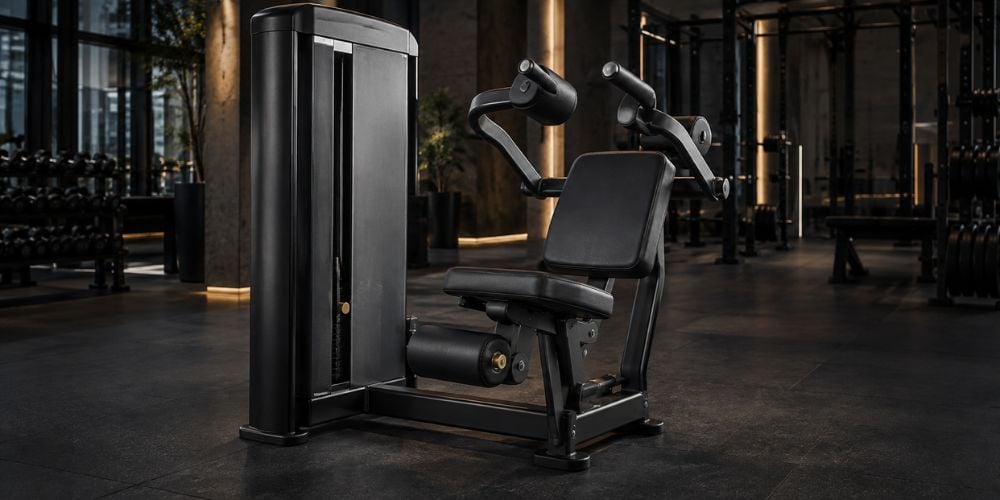
7. Abdominal Crunch Machine
Finish the workout with the abdominal crunch machine. It gives you a guided way to train your abdominal muscles and core.
Start with low resistance. Brace your stomach, bring your ribs closer to your hips, then return slowly instead of letting the weight pull you back.
The ACE seated crunch guide lists the movement as a beginner-level abdominal exercise.
Beginner target: 2 sets of 10 to 15 reps
I often see people rush abdominal machines because the movement is short. Slow it down and focus on the muscles doing the work rather than simply moving the weight stack.
8. Your Full Workout Order
You do not need to memorize much. Just follow this order:
Order | Machine | Main Focus |
1 | Leg Press | Legs and glutes |
2 | Chest Press | Chest |
3 | Lat Pulldown | Back |
4 | Seated Row | Back |
5 | Leg Curl | Hamstrings |
6 | Shoulder Press | Shoulders |
7 | Abdominal Crunch | Core |
That gives you lower-body pushing, upper-body pushing, upper-body pulling, direct hamstring work, shoulder work, and core training in one session.
Final Thoughts
A beginner full-body workout machine can stay simple. Use these seven machines, focus on controlled reps, and build up gradually as you get stronger.
If you want to explore the same types of machines used in this workout, at YR Fitness, we can help you find commercial strength equipment for every major muscle group.
Browse the range and compare the options that fit your training needs.
Related articles: