




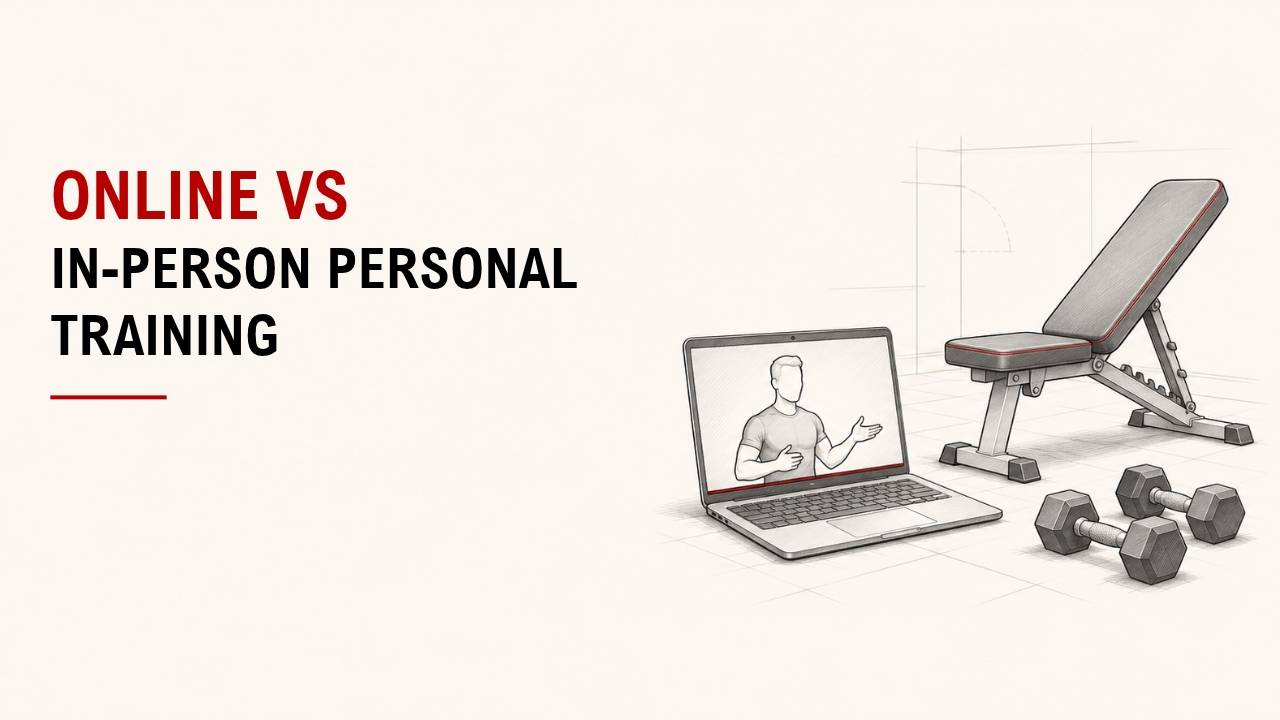

Not sure whether online or in-person personal training is better for you? The right choice mainly depends on how much flexibility, guidance, and accountability you need.
Here is the short answer: online training gives you more freedom, while in-person training gives you more direct coaching and immediate feedback.
As an Exercise Physiology & Biomechanics Expert at YR Fitness, I look closely at how people learn movements, control exercises, and build consistent training habits. I often see that the better training format is simply the one that matches how much support you personally need.
In this guide, I will compare online and in-person training across form support, flexibility, equipment, and accountability. Keep reading and you should quickly see which option fits you better.
1. What Is Online Personal Training?
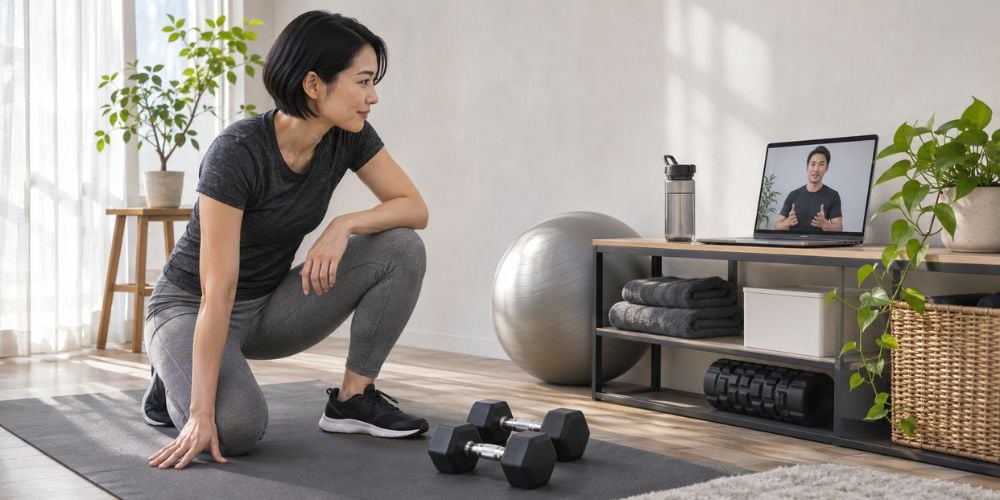
Online personal training means your coach works with you remotely.
You may receive:
- A workout program through an app
- Exercise videos
- Weekly check-ins
- Nutrition guidance
- Progress tracking
- Feedback through messages or video calls
You usually complete the workouts by yourself at home or in your own gym.
The American Council on Exercise also notes that online training can make coaching more accessible and improve communication between trainers and clients.
I often describe online coaching as guided independent training. You still get professional support, but you are responsible for completing most workouts yourself.
2. What Is In-Person Personal Training?
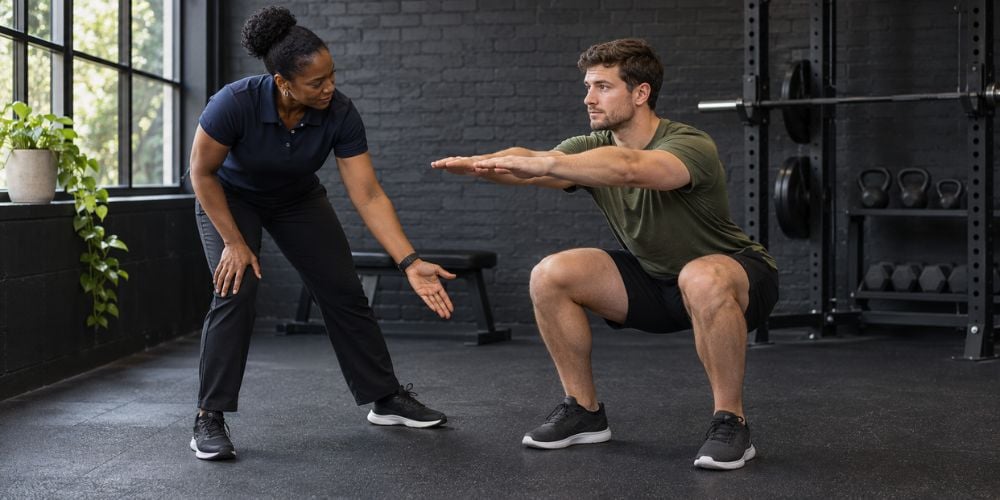
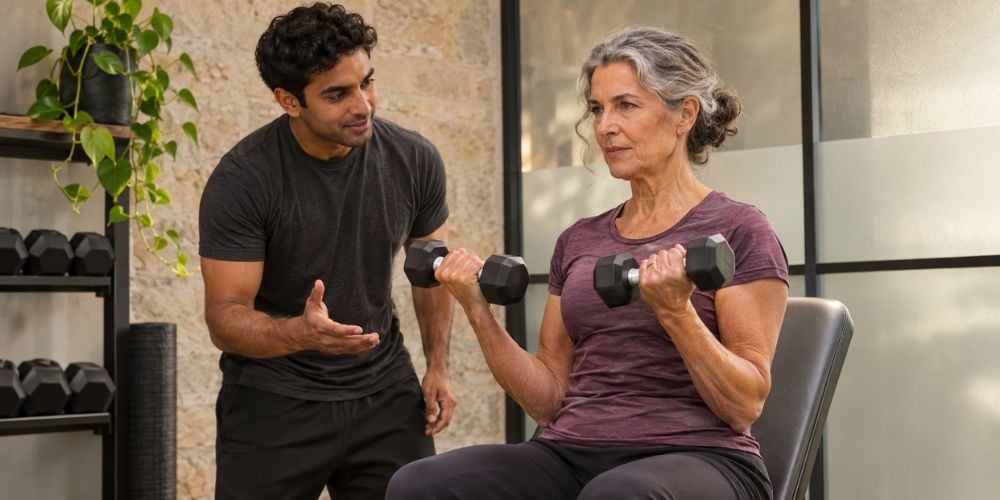
In-person personal training means your trainer is physically beside you during the session.
They can watch your movement, change the exercise, adjust the weight, and correct mistakes straight away.
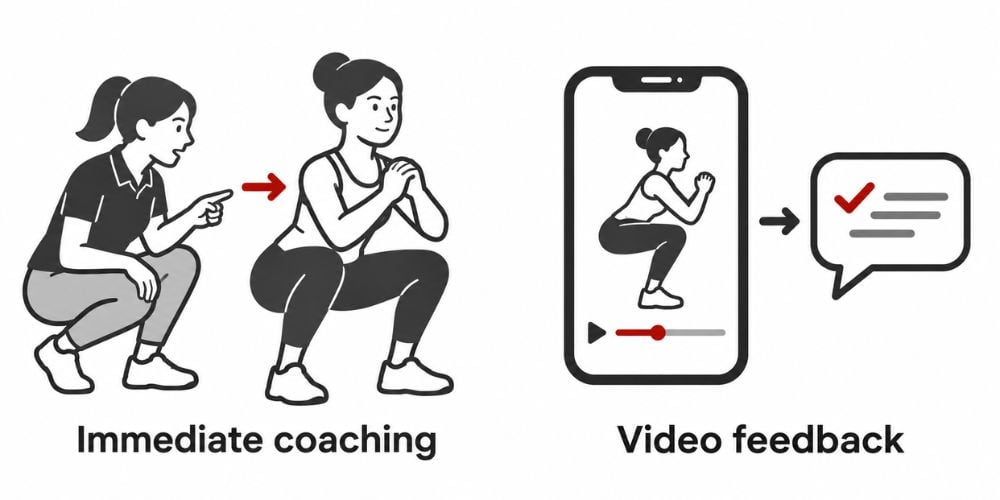
For example, if your knees move inward during a squat, your trainer can notice it immediately. If the weight is too heavy, they can reduce it before your form gets worse.
That immediate feedback is the main advantage.
3. Which Gives Better Exercise Form Support?
For immediate technique correction, in-person training gives you more direct support.
Your trainer can watch you from different angles and correct problems while you exercise.
They may adjust:
- Foot position
- Grip width
- Seat position
- Range of motion
- Exercise tempo
Online trainers can still review your form, but the process is different.
You may record a set, send the video, and receive feedback afterward. ACE’s guidance on online exercise sessions also highlights the importance of clear communication and an effective virtual setup when coaching remotely.
That approach can work well if you already understand the basic movement.
What if you are a beginner?
If you have never performed squats, rows, presses, or machine exercises before, closer supervision can make learning easier.
In my experience, beginners sometimes think they are copying an exercise correctly because the movement looks similar. Small details such as seat height, foot position, and range of motion can still change how the exercise feels.
Ask yourself:
Do I already know how to perform my exercises correctly?
If so, online coaching may be very practical.
If not, a few in-person sessions can help you build a stronger foundation first.
If you train in a gym and want to understand the machines around you, take a look at the commercial strength and cardio equipment from YR Fitness. We design our equipment around controlled movement paths, practical adjustments, and heavy daily gym use, which can make it easier to understand what well-built training equipment should feel like.
4. Which Is More Flexible?
Online training is usually more flexible.
You can often train:
- Before work
- After work
- At home
- At your local gym
- While traveling
- Whenever your schedule allows
You do not always need to match your trainer’s appointment times.
That is useful if your daily schedule changes often.
In-person training usually requires a fixed time and location.
That may feel less flexible, but some people actually prefer the structure.
Why?
Because a booked appointment can make the workout harder to skip.
I often see two types of trainees here. Some do better with freedom, while others stay more consistent when someone expects them to show up.

5. What About Equipment?
Your equipment access depends on where you train.
With online coaching, you may use:
- Dumbbells
- Resistance bands
- Bodyweight exercises
- A home gym
- Equipment at your local fitness center
Your trainer has to build the program around what you actually have.
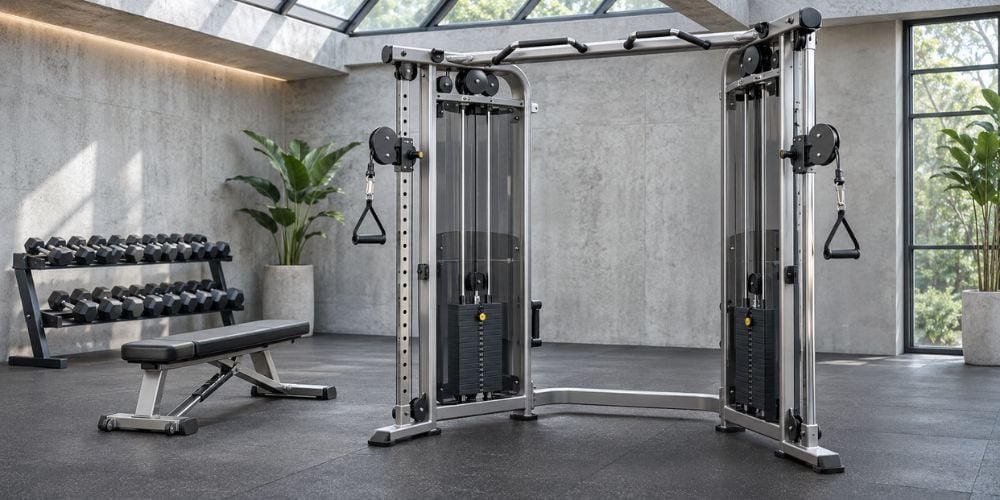
In-person sessions are often held inside a gym or studio, so you may have access to more equipment.
That can include:
- Cable machines
- Selectorized strength machines
- Benches
- Free weights
- Cardio machines
- Functional training equipment
Here is the practical difference:
Training Setup | Typical Equipment Access | Main Consideration |
Online at home | Bodyweight, bands, dumbbells | Program must fit limited equipment |
Online at a gym | Most standard gym equipment | You need to follow the program independently |
In-person gym session | Full gym equipment | Trainer can choose and adjust equipment directly |
In-person studio | Depends on studio setup | Usually more structured and supervised |
More equipment does not automatically mean a better workout.
What matters is whether you have enough equipment to train the major muscle groups and progress over time. Current U.S. Physical Activity Guidelines recommend that adults include muscle-strengthening activity on at least two days each week, alongside regular aerobic activity.
So the key point is simple:
Choose a training style that matches the equipment you can realistically use every week.
A great program is not useful if you cannot access the equipment it requires.
6. Which Gives Better Accountability?
This depends heavily on how self-motivated you are.
In-person training gives you strong face-to-face accountability because your trainer is physically there.
You booked the session. Your trainer is waiting, watching your effort, and keeping you focused.
That can make skipping workouts harder.
Online coaching still provides accountability through:
- Weekly check-ins
- Workout tracking
- Progress photos
- Messages
- Video calls
- App notifications
The difference is that nobody is standing beside you.
You still have to start the workout yourself.
Ask yourself:
If nobody is watching, will I still train?
If yes, online training may fit you well.
If you often skip workouts when training alone, in-person sessions may give you the extra structure you need.
Conclusion
Choose online personal training if you want more flexibility and are comfortable training on your own. Choose in-person training if you want closer guidance, immediate feedback, and stronger accountability.
The best option is the one that helps you train consistently and safely.
If you want to see the kinds of commercial machines commonly used for structured strength and cardio training, explore YR Fitness and use our equipment range as a practical reference for your next gym session.
Related articles: