





Not sure what a personal trainer should ask during your first consultation? The right questions can make your training plan much more useful.
Your trainer should ask about your goals, experience, injuries, activity level, schedule, and exercise preferences. These answers help shape a plan that actually fits you.
As an Exercise Physiology & Biomechanics Expert at YR Fitness, I work closely with exercise movement, training methods, and gym equipment. I often see better results when trainers understand the person first instead of rushing straight into a workout.
Below are the six main questions your trainer should ask. Keep reading to see what should be covered before your training begins.
1. What Are Your Main Fitness Goals?
Start with the most obvious question:
What do you actually want to achieve?
A trainer may ask:
- Do you want to lose body fat?
- Are you trying to build muscle?
- Do you want to get stronger?
- Are you training for general fitness?
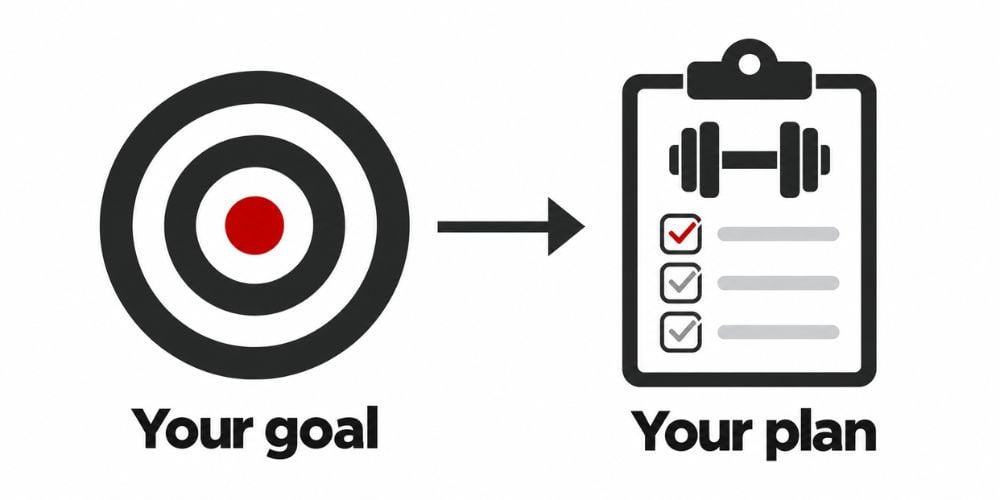
Your goal gives the program direction.
Someone training mainly for strength may need a different plan from someone focused on cardiovascular fitness.
Not sure how specific it is? “I want to get fitter” is fine as a starting point. But your trainer should help turn it into something easier to plan and measure.
For example:
“I want to train three times per week and improve my leg and upper-body strength over the next three months.”
Here is a quick way to think about it:
Your Goal | A Useful Follow-Up Question |
Lose body fat | What change are you hoping to see? |
Build muscle | Which areas do you want to focus on? |
Get stronger | Which movements matter most to you? |
Improve fitness | What activities currently feel difficult? |
Prepare for an event | When is the event? |
The clearer the goal, the easier it is to build the right starting plan.
2. What Is Your Training Experience?
Next, your trainer needs to know where you are starting.
Useful questions include:
- Have you trained in a gym before?
- How long have you been exercising?
- What workouts have you done?
- Have you used strength machines?
A complete beginner should not receive the same program as someone who has trained consistently for years.
I often see beginners progress better when they first learn a few basic movements instead of trying too many exercises at once.
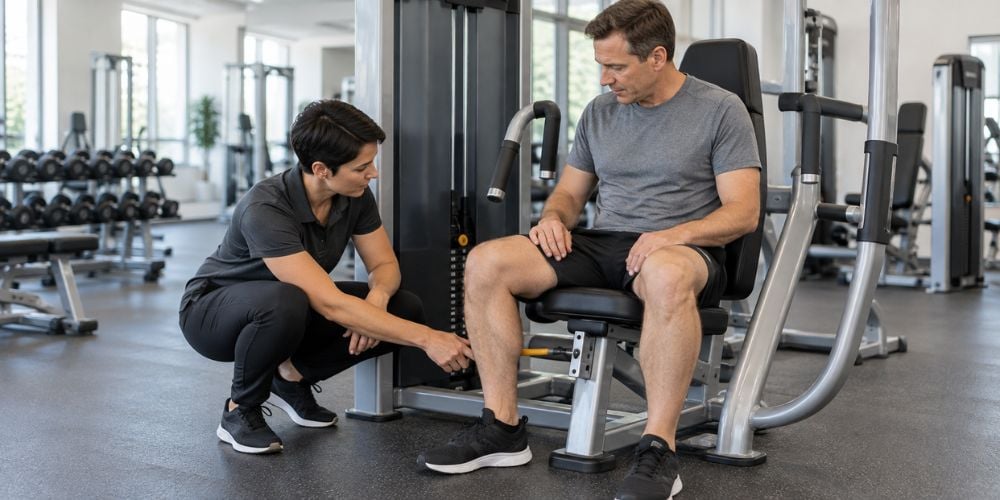
Your trainer should also ask how comfortable you feel using equipment. If machines are new to you, learning the seat position, adjustment points, and movement path may matter more than adding weight.
Why ask all this? Because your previous experience tells the trainer how much instruction you are likely to need during those first sessions.
3. Do You Have Any Injuries or Physical Limitations?
This is one question your trainer should never skip.
They should ask:
- Do you have any current pain?
- Have you had previous injuries?
- Have you had surgery?
- Are there movements that feel uncomfortable?
- Has a doctor or physical therapist given you restrictions?
- Do you struggle with certain ranges of motion?
For more structured pre-exercise screening, trainers may also use tools such as the official PAR-Q+ pre-participation screening questionnaire. It is designed to help identify whether further medical guidance may be appropriate before increasing physical activity.
Not everyone should perform an exercise in the same way.
I find this conversation works best when people are specific. Instead of saying, “My knee is bad,” explain which movements cause discomfort and whether the issue is current or from an older injury.
If the problem needs medical assessment, your trainer should also know when to refer you to an appropriate healthcare professional.
Your exercise choices also depend on the equipment available to you. At YR Fitness, we design our commercial strength and cardio equipment around practical movement paths, adjustment, and daily training use, so you can explore different machine styles and better understand the options a trainer may include in a program.

4. What Does Your Current Activity Level Look Like?
Your trainer should know what you already do before adding more exercise.
Expect questions like:
- How often do you currently exercise?
- Do you walk regularly?
- Do you play sports?
- Do you have an active job?
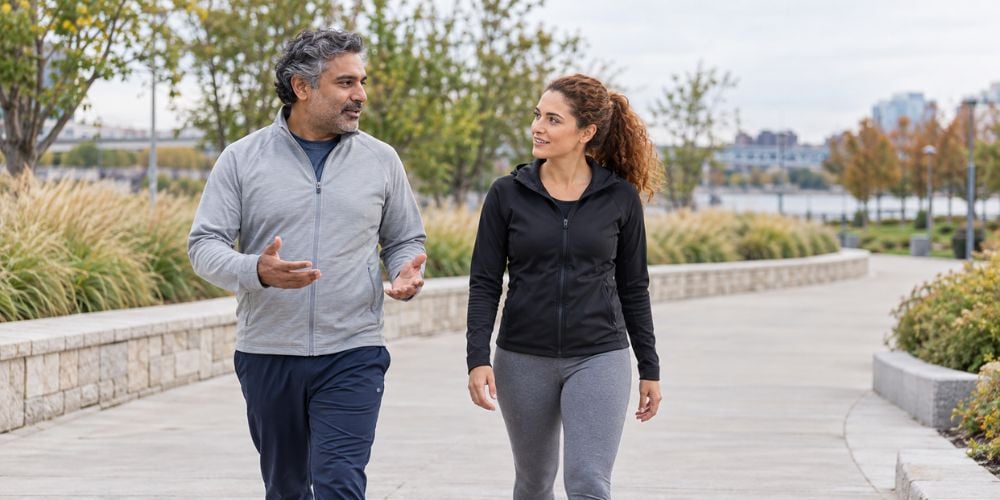
2 people can have the same goal but very different starting points.
Someone sitting at a desk for eight hours a day may need a different starting workload from someone who already walks, cycles, or plays sports several times per week.
The trainer is trying to understand your current activity and training load, not just what happens inside the gym.
The CDC’s adult physical activity guidance recommends at least 150 minutes of moderate-intensity aerobic activity per week for adults, plus muscle-strengthening activity on at least two days. That gives useful context, but your trainer still needs to consider your personal starting point.
Already very active? Say so. Starting from almost no exercise? Say that too.
Both answers help your trainer avoid giving you too much or too little work.
5. How Many Days Can You Realistically Train?
Your trainer should not ask how many days you wish you could train.
A better question is:
How many days can you actually stick to?
They may ask:
- How many workouts can you manage each week?
- How long can each session be?
- Which days work best?
- Do you prefer mornings or evenings?
- Are weekends easier?
Be realistic.
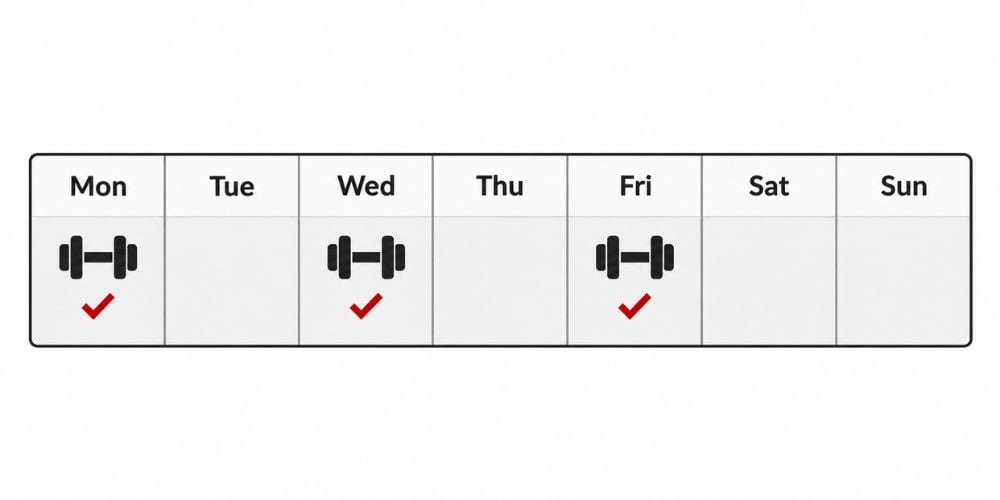
Three workouts you complete every week are usually more useful than planning six sessions and regularly missing half of them.
The U.S. Department of Health and Human Services’ Physical Activity Guidelines for Americans provide evidence-based guidance on how activity can be spread across the week. Your trainer can use guidelines like these as a reference while still fitting the program around your schedule.
A simple starting point might look like this:
Available Time | Possible Starting Approach |
2 days per week | Full-body training |
3 days per week | Full-body or simple split |
4 days per week | Upper/lower or another structured split |
Short sessions | Fewer exercises with more focus |
Longer sessions | More room for warm-up, strength work, and cardio |
What if you only have two days? That can still work.
Your schedule should shape the program, not fight against it.
6. What Exercises Do You Like or Dislike?
This question is easy to overlook, but it matters.
Your trainer should ask:
- Which exercises do you enjoy?
- Which exercises do you dislike?
- Do you prefer machines or free weights?
- Do you enjoy cardio?
- Do you like structured workouts?
- Are there exercises that make you uncomfortable?
Why does preference matter?
Because you are more likely to stay consistent with training you can actually enjoy.
The exercise should support the goal without making training unnecessarily complicated.

Conclusion
A first consultation does not need to be complicated. Your trainer mainly needs to understand what you want, where you are starting, what your body can comfortably do, and what type of training suits you.
I would rather see a trainer spend a few extra minutes asking the right questions than rush straight into a workout. Those few minutes can make the program much more practical and personal.
If you also want to understand the strength and cardio machines that may appear in your training plan, explore the equipment range at YR Fitness and compare the different machine styles available.
Related articles: