






Are you fully booked but still charging the same training rate? That may be a sign it is time to review your prices.
The simple answer is: raise your prices when demand is high, your experience grows, your clients get better results, or your costs increase.
As the founder and chief designer of YR Fitness, I have spent decades working with trainers and fitness businesses. In my experience, many good trainers wait too long to adjust their rates.
Below are the clear signs that it may be time to charge more. Keep reading and compare them with your current situation.
1. When Your Schedule Is Almost Full
If most of your training times are already booked, demand for your service is strong.
You may notice:
- Evening sessions fill quickly
- Clients ask for unavailable time slots
- You regularly turn away new clients
- Your waiting list keeps growing
If this happens consistently, your current price may be too low for the demand.
Are you regularly saying, “Sorry, I’m fully booked”?
If yes, it is worth reviewing your rate.
You do not need to make a huge increase. Even a small adjustment can help you earn more without adding more working hours.

2. You Have More Experience and Qualifications
The price you charged as a new trainer does not need to stay the same forever.
Over time, you may gain:
- More coaching experience
- Additional certifications
- Better exercise knowledge
- Stronger programming skills
- Experience with different clients
- A training specialty
All of these can increase the value of your coaching.
I would ask one simple question:
Are you a better trainer than when you last set your price?
If the answer is clearly yes, your rate may need to catch up.
Experience alone does not mean you should increase prices every year. But when your knowledge and coaching ability have improved, a price review makes sense.

3. Your Clients Are Getting Better Results
Results are one of the clearest signs that your service has value.
Your clients may be improving their:
- Strength
- Fitness
- Exercise technique
- Training consistency
- Confidence
- Ability to reach specific goals
You may also see more referrals, testimonials, repeat bookings, and long-term clients.
That matters because you are not only selling an hour of your time. You are providing guidance, accountability, programming, and experience.
I often see trainers improve their coaching first and think about pricing much later. When the quality of the service improves, the price should eventually reflect that.
The training environment can support that value too. At YR Fitness, we design commercial strength and cardio equipment for practical movement, durability, and regular training use.
If your coaching and training setup are both improving, clients will receive a stronger overall experience.

4. When Your Business Costs Increase
Sometimes a price increase is simply about keeping your service sustainable.
Your expenses may include:
- Gym rental
- Travel
- Insurance
- Training software
- Equipment
- Education
- Certifications
- Marketing
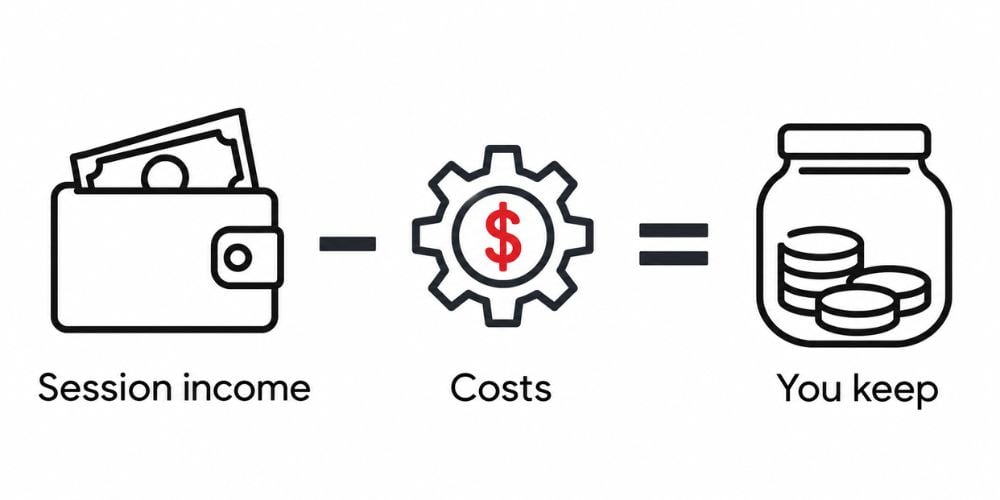
If those costs increase while your price stays the same, you keep less from every session.
A simple way to look at it is:
Session price − session-related costs = what you actually keep
Do not focus only on what the client pays. Look at what remains after you cover the cost of providing the service.
If that number keeps falling, your current rate may no longer work long term.
5. When You Add More to Your Service
Are your clients getting more from you than they did when you first created your prices?
Maybe you now provide:
- Personalized workout plans
- Progress assessments
- Regular check-ins
- Training app access
- Exercise videos
- Online support
- Extra programming
- Mobility work
- Detailed session tracking
Those extras take time.
A basic 60-minute session is not the same as a full coaching service that includes planning, tracking, and support outside the gym.
If your package becomes more complete, your price can increase with it.
Your training space can also improve the service. If you are upgrading a private studio, YR Fitness offers commercial strength machines, cardio equipment, and fitness accessories built for frequent daily use.
Better equipment alone does not mean you should raise prices. But better coaching, better support, and a better training environment together can create more value for the client.
6. When Your Rates Are Far Below Similar Trainers
You do not need to copy another trainer’s prices.
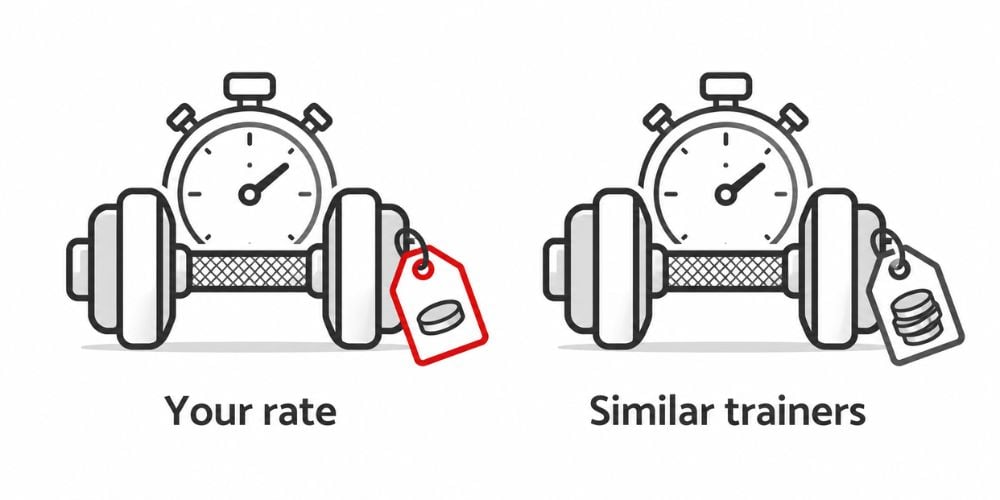
But you should know roughly what trainers with similar services charge in your area.
Compare trainers with similar:
- Experience
- Qualifications
- Session length
- Specialties
- Training locations
- Client types
- Service packages
If comparable trainers charge much more than you, ask yourself why.
Lower pricing can help when you are starting out. But staying too cheap for too long can make it harder to build a sustainable business.
You may end up taking too many sessions just to earn enough. That leaves less time for programming, recovery, education, and improving your service.
Very low prices can also make some clients question why you are so much cheaper.
You do not need to be the most expensive trainer around. Your price simply needs to make sense for the level of service you provide.
Quick Check: Is It Time to Raise Your Price?
Sign | What It Tells You |
Your schedule is almost full | Demand for your time is strong |
You have more experience | Your coaching value has increased |
Clients are getting good results | Your service has proven value |
Your costs have increased | Your old price may no longer be sustainable |
You added more services | Clients receive more value |
You charge much less than similar trainers | You may be underpricing your service |
If several of these signs apply at the same time, reviewing your prices is reasonable.

7. How Should You Raise Your Prices?
Keep the change simple and clear.
You can:
- Choose a reasonable new rate
- Give current clients advance notice
- Explain the change clearly
- Keep the message short
- Avoid apologizing too much
- Focus on the value you provide
You can also keep existing clients on their old rate for a short period while using the new price for new clients.
The exact approach is up to you. The important part is making the change clear and fair.

Conclusion
You should consider raising your prices when your schedule is filling up, your experience has grown, your clients are getting better results, your costs have increased, or your service has expanded.
Your rate should reflect the time, knowledge, support, and training experience you provide today.
If you want to improve that experience before raising your rates, better equipment can be part of the upgrade. At YR Fitness, we can help you choose durable commercial gym equipment that supports professional training sessions and gives clients a better place to train.
Related articles: