








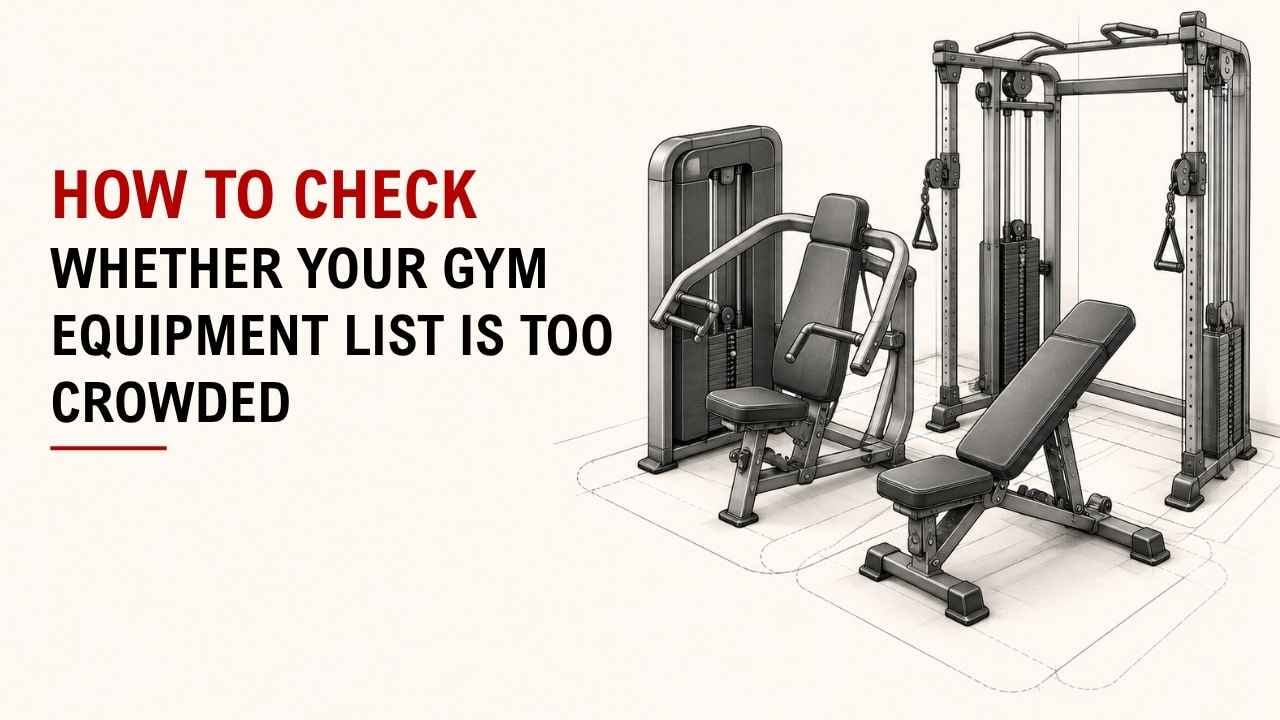

Does your gym feel crowded when you move between machines? You may have more equipment than the space can comfortably handle.
The simple answer is: check machine clearance, walking paths, repeated equipment, open workout space, and busy-hour traffic. These signs quickly show whether your setup is too crowded.
As an Ergonomics Engineer at YR Fitness, I study how equipment spacing and layout affect the way people move and train. I regularly review these details, so I know where crowding problems usually appear.
Below are seven quick checks you can use. Start with the space around each machine and work through the list.
1. Check the Space Around Each Machine
Start with one simple question:
Can you use every machine comfortably without getting too close to the next one?
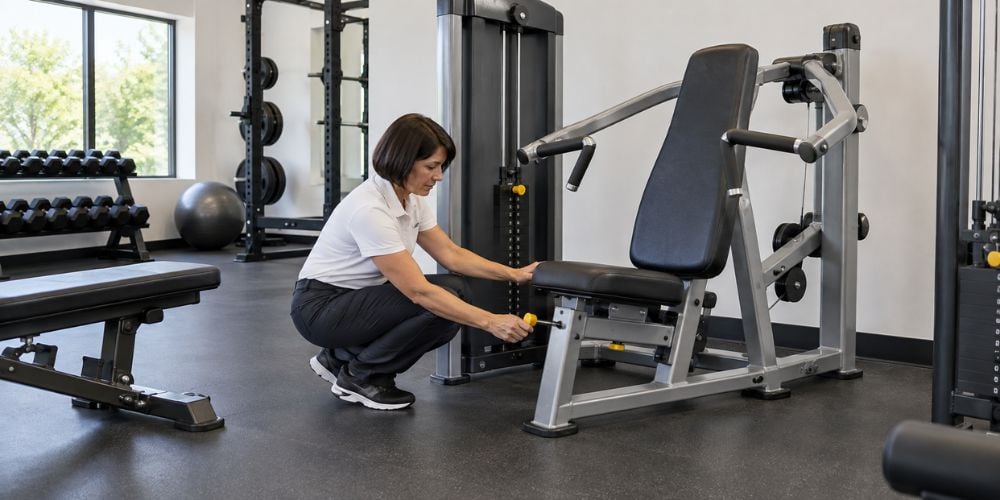
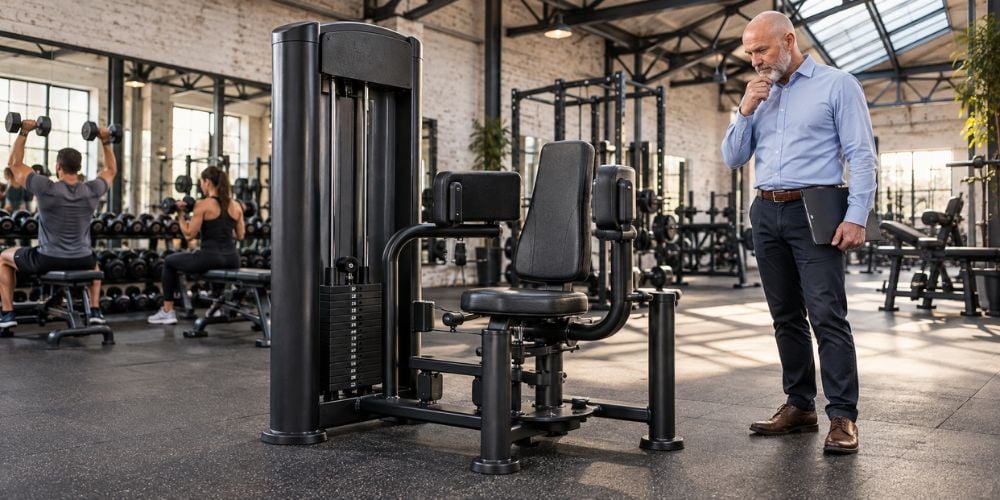
Do not only look at the machine footprint. You also need room to sit down, stand up, adjust the seat, move handles, load weights, and finish the exercise.
The U.S. Access Board provides a useful reference point for commercial facilities. Its guidance for exercise equipment and machines calls for clear floor space of at least 30 × 48 inches at accessible exercise equipment, positioned so a person can transfer to or use the machine.
That is an accessibility requirement rather than a universal spacing rule for every machine, but it shows why simply fitting the machine footprint is not enough.
What to Check | Why It Matters |
Room to enter and exit | You should not squeeze around nearby equipment |
Arm and leg clearance | Your movement should not enter another user’s space |
Moving machine parts | Handles, pedals, arms, and weight systems need room |
Adjustment space | You need access to seats, pins, plates, and handles |
Passing space | Other people should still be able to move nearby |
I often stand at each station and imagine another person training beside me. If both people would interfere with each other, the area is too tight.
2. Look at Your Main Walking Paths
Now walk through the gym like you normally would during a workout.
Can you move between stations without turning sideways, stepping around benches, or crossing someone else’s exercise area?
Pay attention to routes between:
- Strength machines
- Cardio equipment
- Free-weight areas
- Stretching areas
- Entrances and exits
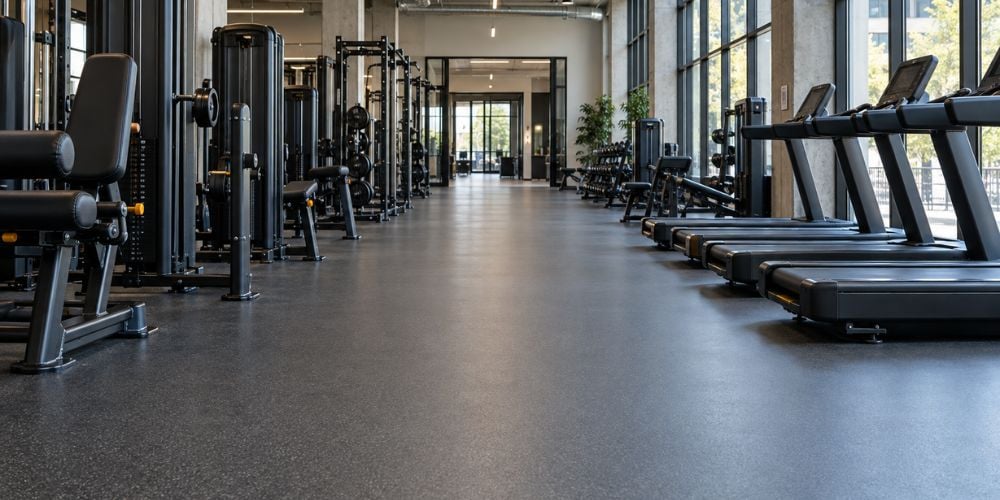
Here is why this matters: a gym can have enough total floor area and still feel crowded if the equipment breaks up the natural walking routes.
For another useful U.S. benchmark, the 2010 ADA Standards for Accessible Design generally specify a 36-inch minimum clear width for accessible walking surfaces.
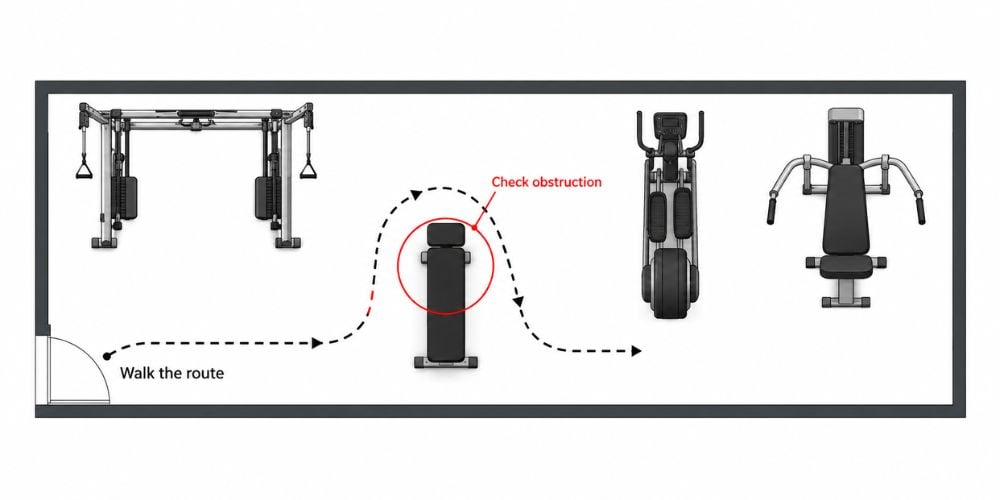
Quick Test: Can you walk from one end of the gym to the other without changing direction just to avoid equipment?
If not, start with the machines blocking that route.
3. Check for Too Many Similar Machines
Do several machines perform almost the same job?
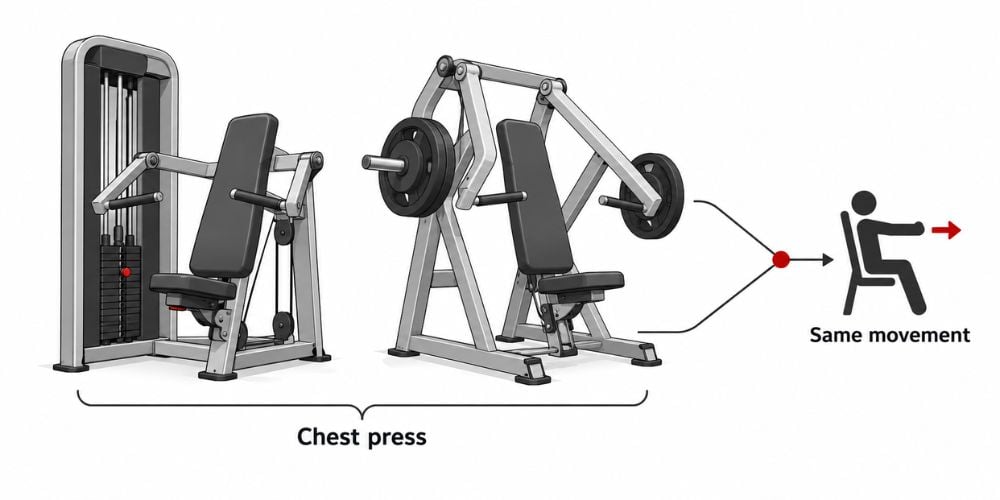
You may have multiple chest press variations, several rowing machines, or different machines that train the same small muscle group.
That is not always bad. But when space is limited, too much overlap can make the gym feel crowded without adding much training value.
Ask yourself:
Would I really miss this machine if another one already covers the same movement?
Compare:
- Main muscles trained
- Movement pattern
- Resistance type
- How often do you use it
I prefer keeping equipment that gives a clear benefit rather than keeping something just because it fits.
A Quick Overlap Check
Situation | What to Ask |
Two chest machines | Do they provide meaningfully different movements? |
Several rowing machines | Do you regularly use each variation? |
Machine plus cable alternative | Could one station cover both exercises? |
Large single-purpose machine | Is it used enough to justify the space? |
Similar rarely used machines | Could removing one improve the layout? |
You do not have to remove variety. Just make sure the variety is actually useful.
4. Test the Layout During Busy Hours
An empty gym can make a crowded layout look better than it really is.
The real test happens when several people train at the same time.
Look for:
- People blocking walking routes
- Users waiting beside machines
- Bags or accessories filling narrow gaps
- People stepping into nearby workout areas
- Difficulty moving between stations
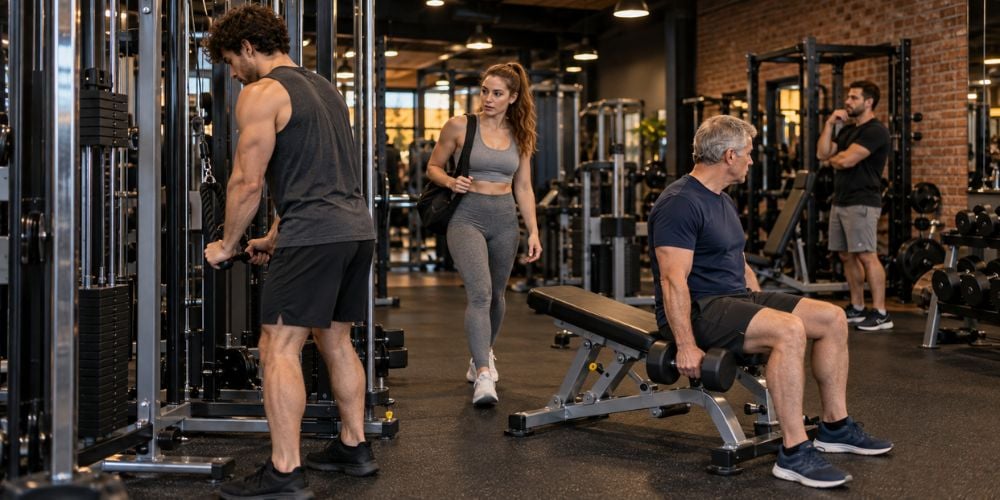
I often see layouts work well when the gym is quiet but become uncomfortable as soon as more people arrive.
If that happens regularly, the problem may be the amount of equipment rather than the room itself.
5. Check Whether You Still Have Open Workout Space
Not every empty area needs another machine.
You still need space for:
- Warm-ups
- Stretching
- Mobility work
- Bodyweight exercises
- Small accessories
- Short functional workouts
Ask yourself:
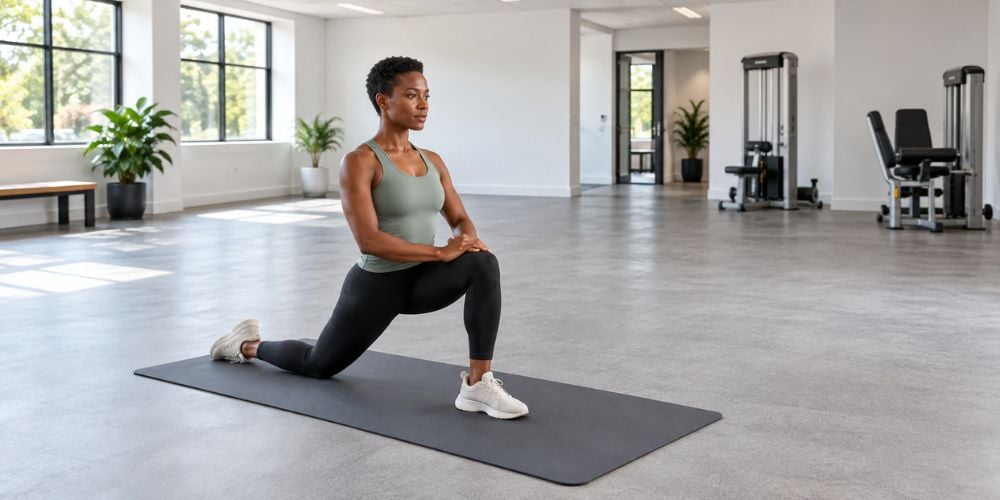
Can I put down a mat and move freely without blocking someone else?
If the answer is no, consider removing or relocating one or two machines.
At YR Fitness, we believe a useful equipment list should give you enough training variety without filling every available corner. If you are comparing machine types or planning a cleaner setup, browse our commercial gym equipment range and focus on the pieces that add something your current setup is missing.
6. Identify Equipment That Is Rarely Used
Now be practical.
Which machines do you actually use?
Some equipment takes up a lot of floor space but gets very little attention. Other machines may repeat exercises you can already do with cables, dumbbells, or another station.
Ask:
Does this machine deserve the space it takes up?
Consider removing or relocating equipment that:
- Is rarely used
- Repeats another movement
- Takes up too much space
- Blocks useful walking areas
- Makes nearby equipment harder to access
Sometimes removing just one low-use machine can make the whole room feel better.
7. Do One Final Crowding Check
Finally, walk through your normal workout from start to finish.
Can you move easily, adjust every machine, and train without getting in someone else’s way?
What You Notice | What It Usually Means |
You squeeze between machines | Walking space is too narrow |
Exercises overlap nearby areas | Machines need more clearance |
Several machines feel repetitive | You may have unnecessary equipment |
No open floor remains | The room lacks flexible workout space |
Busy periods feel chaotic | The layout struggles with normal traffic |
Some machines are rarely touched | Floor space may be better used elsewhere |
If you notice several of these problems at once, your equipment list is probably too crowded.
Conclusion
Checking your gym setup does not need to be complicated. Look at machine clearance, walking space, equipment overlap, busy-hour movement, open floor area, and how often each machine is actually used.
More equipment is not always better if it makes training uncomfortable.
If you are reviewing your setup, YR Fitness offers commercial strength, cardio, and training equipment for different gym layouts and workout needs. Explore the equipment options here and choose pieces that add useful training options without overcrowding your space.
Related articles:



