









Do columns, angled walls, or awkward corners make your workout space hard to arrange? A machine may physically fit, but that does not mean you can use it comfortably.
The simple answer is: mark every obstacle first, measure the real training space each machine needs, and keep your main walking routes clear. Do not try to force equipment into every empty corner.
As an Ergonomics Engineer at YR Fitness, I work with equipment dimensions, user clearance, and how people move around gym machines. I often see difficult rooms become much easier to use once the layout is planned around the person, not just the machine.
Below, I’ll show you seven practical ways to work around columns and irregular walls. Start with the room itself, then decide where each piece of equipment can actually be used comfortably.
1. Mark Every Column and Irregular Wall
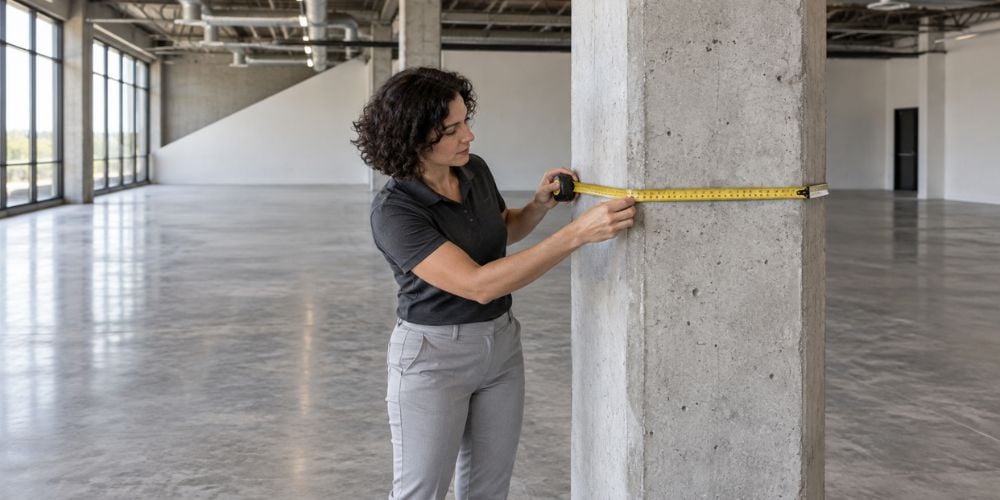
Start with the things you cannot move.
Measure and mark:
- Columns
- Angled walls
- Wall recesses
- Corners
- Support beams
- Doors
- Windows
- Narrow sections of the room
Add these measurements to a simple floor plan.
Why do this first?
Because total room size can be misleading. Columns and uneven walls can break one large room into several smaller usable areas.
I usually treat columns as permanent boundaries before thinking about equipment. It makes the real usable floor area much easier to see.
This basic approach also matches the broader planning principles in ACSM’s Health/Fitness Facility Standards and Guidelines, which includes both facility design and facility equipment among its core topics.
Quick Tip: Measure from the widest part of each obstacle. A little extra room is better than discovering later that a machine sits too close to the wall.
2. Measure the Real Equipment Footprint
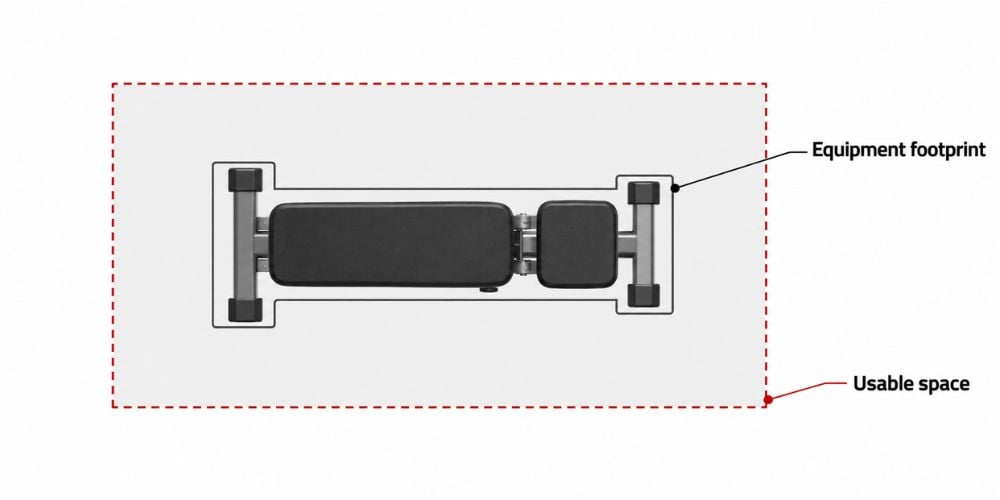
Do not measure only the machine frame.
A machine may be 120 cm wide, for example, but the person using it may need much more room.
Check the full working space:
What to Check | Why It Needs Space |
Machine length and width | Determines the basic footprint |
Moving arms | May extend beyond the frame |
Pedals | Need room through their full movement |
Adjustable seats | May slide forward or backward |
Weight-loading areas | Need room to add or remove plates |
Entry and exit | You need space to get on and off |
Exercise movement | Arms and legs still need room to move |
Think about a bench.
The bench itself may fit beside a column, but can you still move around it and pick up dumbbells without hitting the wall?
That is the real equipment footprint.
Clear space matters for accessibility too. The U.S. Access Board’s exercise-equipment guidance specifies a clear floor space of at least 30 × 48 inches for accessible exercise equipment, increasing to 36 × 48 inches when that space is enclosed on three sides. These are U.S. accessibility requirements rather than universal gym-spacing rules, but they show why the usable area around a machine matters just as much as the frame itself.
3. Keep Main Walkways Clear
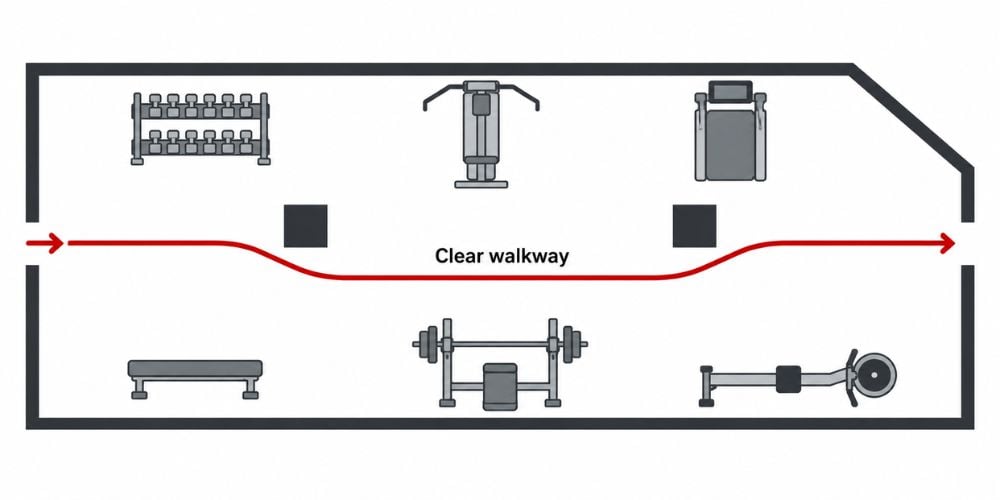
Walking space should come before extra equipment.
You should be able to move through the room without:
- Turning sideways between machines
- Stepping over equipment
- Walking through someone’s exercise area
- Squeezing between a machine and a column
Columns make this harder because they can suddenly narrow a walkway.
Quick check: Can you walk from one side of the room to the other without constantly changing direction?
If not, you may have too much equipment in that area.
I often see layouts where everything technically fits but the room still feels cramped once people start moving. One clear walking route can make the whole space feel easier to use.
Protect that route first. Then arrange equipment around it.
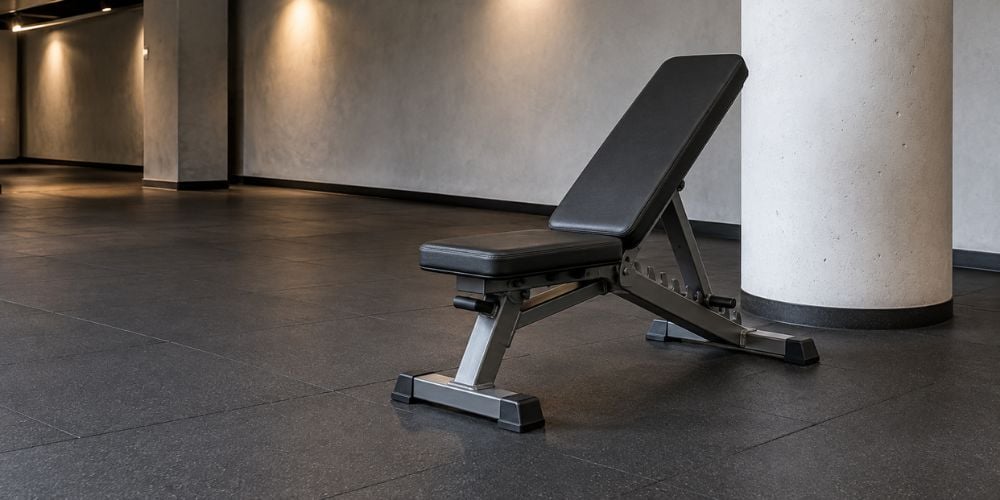
4. Put Compact Equipment Near Columns
Columns naturally create small pockets of floor space.
Instead of squeezing a large machine into one of them, use equipment that needs less room.
Equipment | Near a Column? | Main Check |
Adjustable bench | Often works | Keep exercise movement clear |
Dumbbell rack | Good option | Leave access in front |
Small strength machine | Sometimes | Check moving parts |
Kettlebell storage | Good option | Keep weights out of walkways |
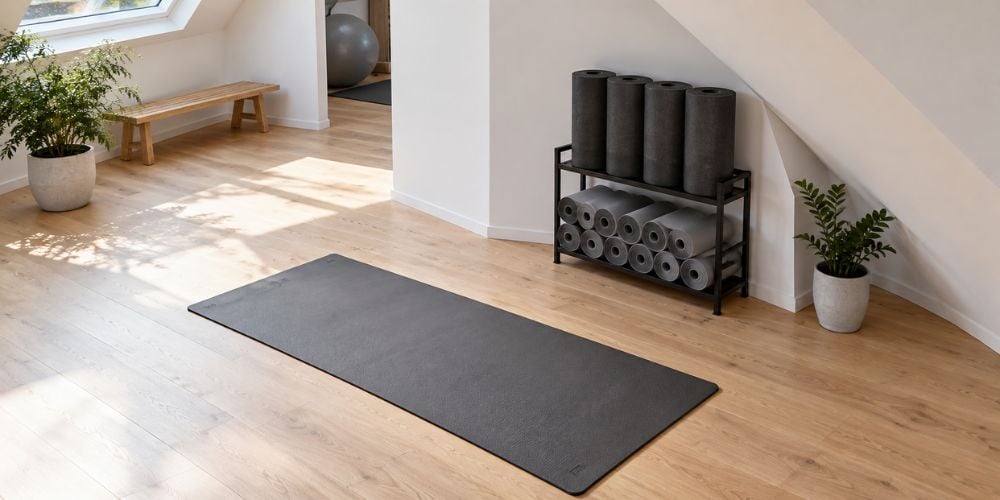
Mat storage | Good option | Little training clearance needed |
Resistance band station | Often works | Check pulling direction |
Foam rollers | Good option | Easy use of small spaces |
Large cable machine | Usually better elsewhere | Needs more working clearance |
A bench beside a column, for example, may work well if you face away from it. The same position may be uncomfortable during an exercise with wide arm movement.
Avoid the spot if the column blocks:
- Your arms
- Your legs
- Seat adjustments
- Weight changes
- Entry or exit
A small gap is only useful if you can actually train there.
At YR Fitness, we design strength and cardio equipment for real training environments, so we know that machine size is only part of the layout decision. If you are comparing equipment for a room with columns, narrow sections, or awkward walls, browse our equipment range and compare the machine style with the space you actually have.
5. Use Irregular Walls for Low-Traffic Equipment
Angled walls and awkward corners can still be useful.
They often work well for:
- Stretching areas
- Small storage racks
- Benches
- Compact selectorized machines
- Mobility equipment
Equipment that mainly faces one direction is usually easier to place against an irregular wall.
On the other hand, a machine that needs access from several sides is harder to fit there.
I use one simple question:
How much do I need to move around this equipment?
If the answer is “not much,” an angled wall may be a good location.
6. Keep Large Machines in the Cleanest Areas
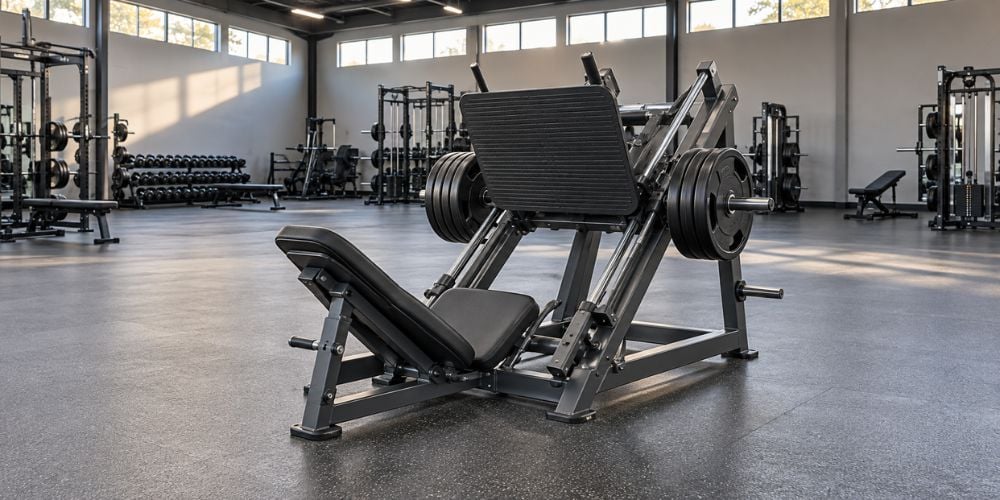
Save your widest and most regular floor space for your biggest equipment.
This may include:
- Leg presses
- Smith machines
- Functional trainers
- Cable crossovers
- Treadmills
- Ellipticals
- Large plate-loaded machines
These machines normally need more room around them.
Trying to squeeze one between a column and an angled wall can block walking space, limit adjustments, or simply make the machine uncomfortable to use.
A better approach?
Place large equipment where the walls are straighter and the floor is more open. Then use smaller equipment to fill the difficult spaces.
This also makes future changes easier. If you replace a large machine later, you already have a clear area where another one can fit.
7. Check the Layout from the User’s Position
A floor plan can look perfect and still feel wrong.
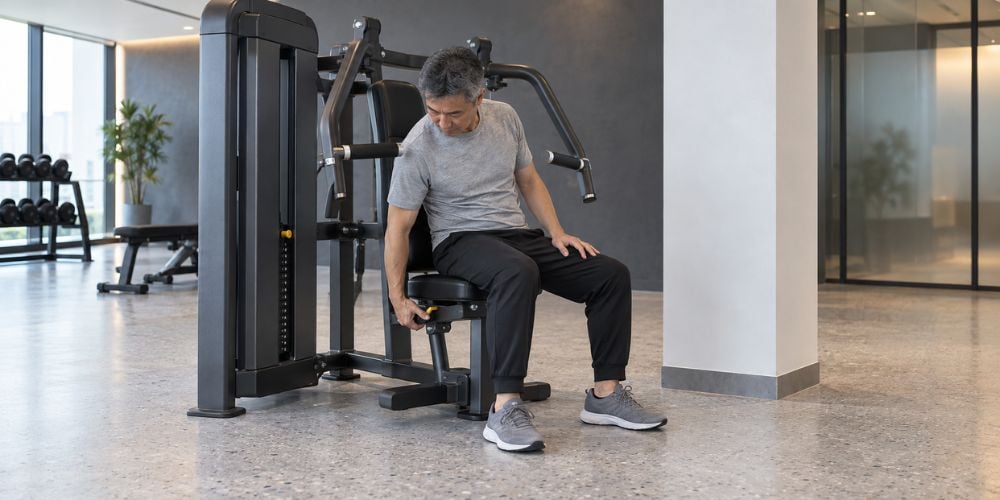
Before you finalize anything, stand or sit where you will actually exercise.
Ask:
- Can I get on easily?
- Can I get off easily?
- Can I adjust the seat?
- Can I reach the weight stack?
- Can I use the full exercise range?
- Will my arms or legs get too close to the wall?
- Does the column make space feel cramped?
- Can someone walk past while I train?
If something feels uncomfortable, move the equipment.
I like to mark equipment positions with tape before moving heavy machines into place. You can also use a digital planning tool such as the Life Fitness Gym Planner, which lets you build a layout in 2D and 3D and evaluate equipment placement, spacing, flow, and sightlines before installation.
One Simple Rule to Remember
Do not ask:
“Can the machine fit here?”
Ask:
“Can I comfortably use the machine here?”
That is the better way to plan.
Conclusion
Columns and irregular walls do not have to ruin your workout layout. Mark the obstacles first, measure the real training space, protect your walkways, and use smaller equipment in awkward areas.
Keep your biggest machines in the cleanest parts of the room and always test the layout from the user’s position.
If you are still deciding which equipment shape works best for your space, YR Fitness offers strength, cardio, and accessory options in different configurations. Explore the equipment range and compare your available space before choosing where each machine should go.
Related articles:



