








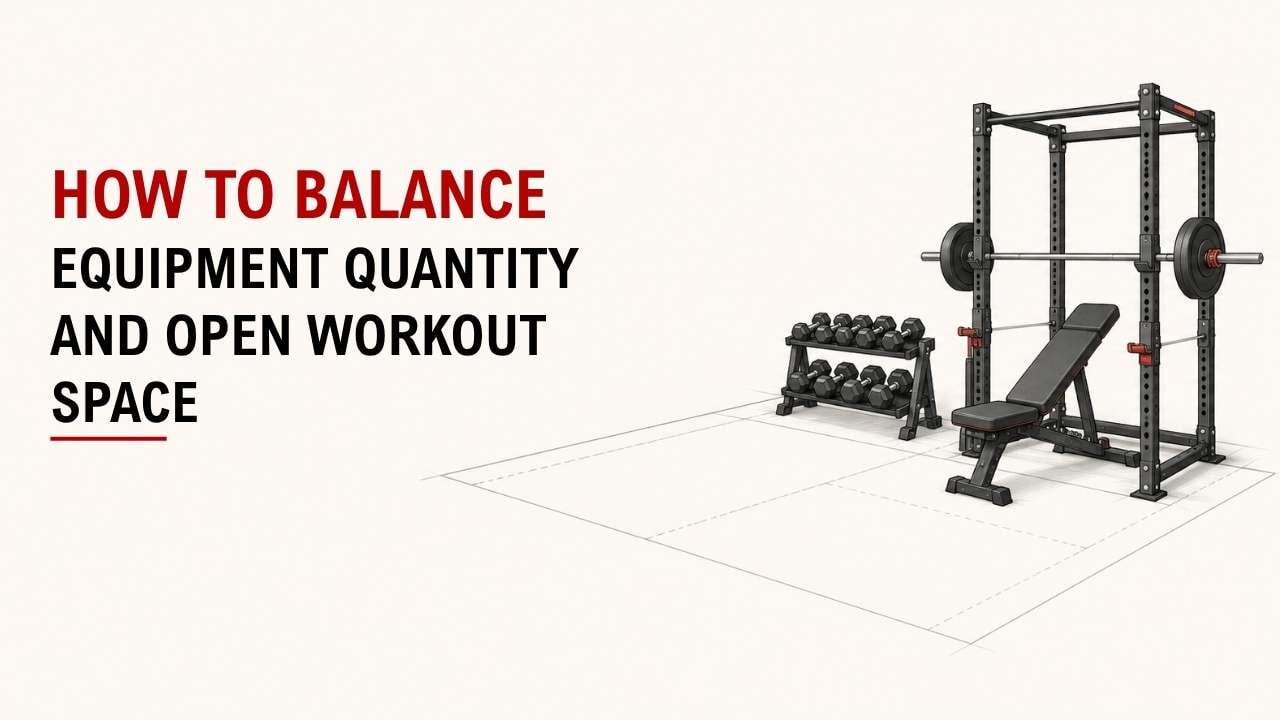

Does your workout area feel crowded even though you like having plenty of equipment? Too much equipment can quickly reduce the space you need to move comfortably.
The simple answer is to keep the equipment you use most and protect enough open space for movement, stretching, and flexible exercises. A good setup gives you variety without making the room feel packed.
As an Ergonomics Engineer at YR Fitness, I study how equipment layout affects movement, comfort, and usable training space. I often see better results when people choose equipment around how they actually train instead of trying to fill every empty area.
Below, I’ll show you the simple ways to balance equipment quantity and open workout space. Use them to make your training area easier to move through and easier to use.
1. Start with the Workouts You Actually Do
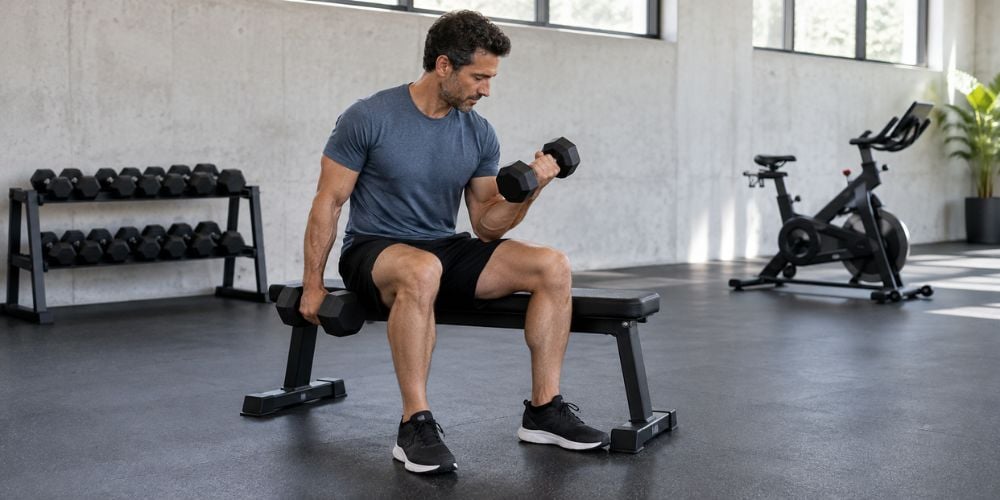
Before adding another machine, look at what you actually do each week.
Your list might include:
- Strength machines
- Dumbbell exercises
- Barbell exercises
- Cardio
- Stretching
- Mobility work
- Bodyweight exercises
This matters because your space should support your training, not simply hold equipment.
The CDC’s adult physical activity guidance includes both aerobic activity and muscle-strengthening work. That is a useful reminder that a balanced workout area may need room for more than one training style.
What You Do Most | What Deserves Space | What Can Stay Flexible |
Machine strength | Frequently used machines | Rarely used isolation machines |
Free weights | Bench, dumbbells, rack | Movable accessories |
Cardio | Your preferred cardio machine | Extra machines you rarely use |
Mobility | Clear floor and mat | Bands and small accessories |
Bodyweight work | Open floor | Portable equipment |
I like to ask one simple question:
Would I miss this machine if it disappeared tomorrow?
If the answer is no, you may not need it.
2. Keep Enough Space Around Each Machine
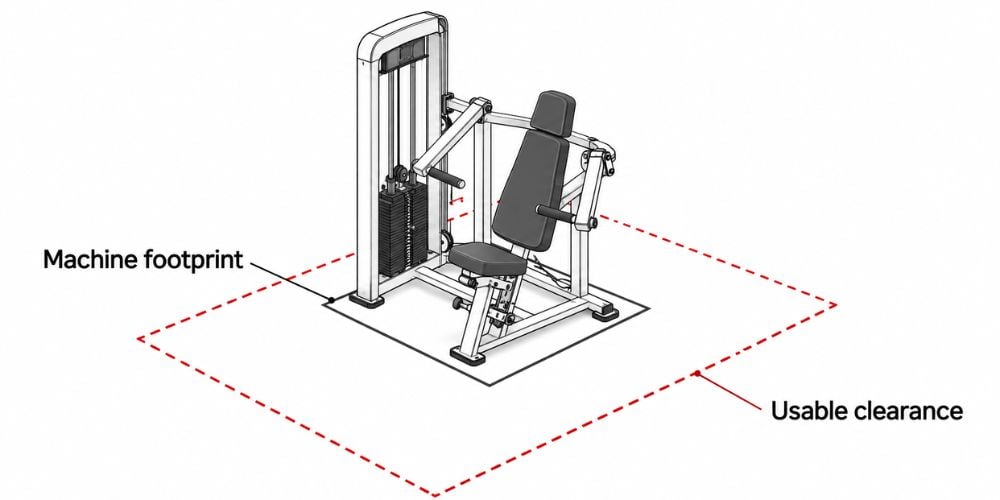
A machine needs more room than its physical footprint.
You also need space to:
- Get on and off
- Adjust the seat or handles
- Load weight plates
- Move machine arms
- Use attachments
- Walk around it safely
Here is why this matters: equipment can technically fit while still being uncomfortable to use.
For an accessibility reference, the U.S. Access Board exercise-equipment guidance specifies a clear floor space of at least 30 × 48 inches for accessible exercise machines, increasing to 36 × 48 inches when that space is enclosed on three sides. These are accessibility requirements, not a universal home-gym spacing formula, but they show why usable clearance matters.
Clearance Reference | Space |
Basic accessible clear floor space | 30 × 48 in |
Enclosed on three sides | 36 × 48 in |
Main lesson for your layout | Measure usable space, not just machine size |
I often see people measure only the machine itself. Measure the space needed while using it too.
Can you adjust it comfortably? Can you move around it without squeezing past?
If not, give it more room.
3. Protect a Dedicated Open Workout Area
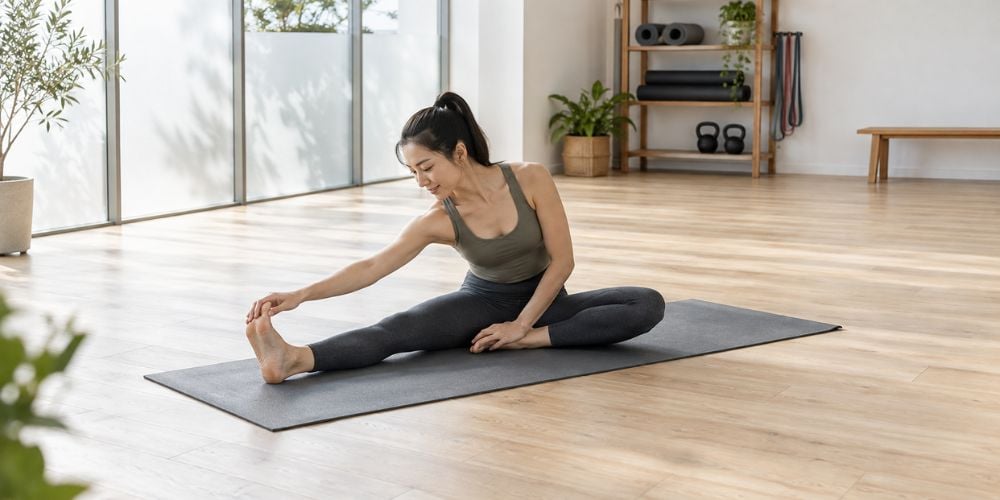
Empty floor space is not wasted floor space.
You can use it for:
- Stretching
- Warm-ups
- Mobility drills
- Push-ups
- Lunges
- Core exercises
- Kettlebell work
- Resistance bands
- Exercise mats
A small open area can support many movements without adding another large machine.
The current U.S. Physical Activity Guidelines also emphasize regular physical activity rather than one specific type of equipment. In practical terms, your workout area should make it easy to move, not just give you somewhere to put machines.
Quick Check: Can you put down an exercise mat without moving several pieces of equipment first?
If not, protect the floor a little more open floor.
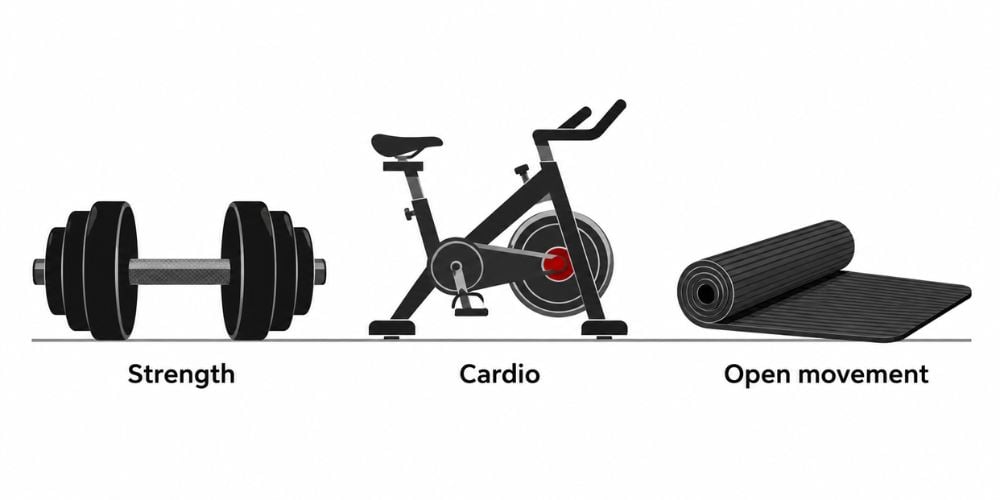
4. Balance Equipment by Training Type
Try not to let one equipment category take over the entire room.
A simple balance looks like this:
Training Type | Equipment or Space |
Strength | Main resistance machines |
Free weights | Dumbbells, bench, rack |
Cardio | Treadmill, bike, or elliptical |
Functional training | Cables, bands, kettlebells |
Mobility | Open floor and mats |
You do not need every machine you would find in a commercial gym.
Instead, make sure your setup covers the main movement patterns you use:
- Pushing
- Pulling
- Squatting
- Hinging
- Basic cardio
That usually gives you more useful variety than filling the room with machines that perform similar jobs.
At YR Fitness, we recommend checking machine dimensions and exercise functions together before choosing equipment. If space is tight, compare which machines cover the movements you need while taking up the least unnecessary floor area.
5. Leave Clear Walking Paths
Can you walk across your workout area without stepping around plates, benches, or machine arms?
You should be able to.
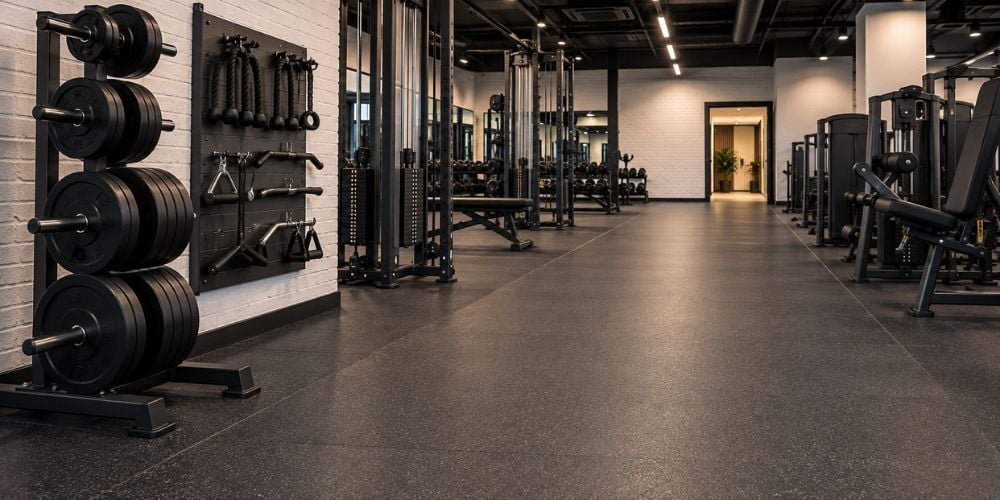
Keep the main routes between these areas clear:
- Machines
- Doors
- Storage
- Cardio equipment
- Free weights
- Open workout areas
The ADA standards also emphasize clear floor space and unobstructed approaches around accessible elements. The exact requirements depend on the setting, but the basic layout lesson is useful: do not make movement an afterthought.
I usually prefer a layout where you can immediately see where to walk. If you constantly turn sideways or step over equipment, the room is probably too crowded.
And do not forget storage.
Dumbbells, mats, cable handles, and weight plates can quickly take over your open space if they do not have a dedicated place.
6. Choose Multi-Purpose Equipment When Space Is Limited
Limited space does not have to mean limited exercise variety.
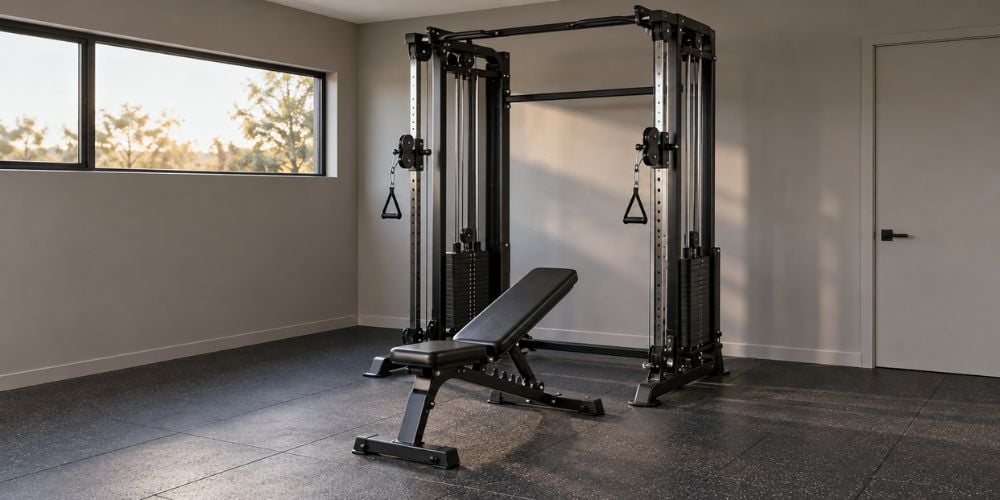
Look for equipment that handles several movements instead of buying one machine for every exercise.
Good options include:
- Adjustable benches
- Power racks
- Functional trainers
- Cable machines
- Adjustable dumbbells
- Resistance bands
A functional trainer, for example, can support chest exercises, rows, shoulder movements, arm exercises, and lower-body movements in one area.
Can one piece of equipment replace two or three others?
If yes, it may be the smarter choice when your floor space is limited.
The goal is not to squeeze in the highest possible number of machines. It is to get the most useful training options from the space you have.
Final Thoughts
A good workout area gives you enough equipment to train well while still leaving room to move.
Keep the machines you use most, protect some open floor, maintain clear walking paths, and use multi-purpose equipment where it makes sense.
Before buying another machine, check its dimensions, working clearance, and how many exercises it can support. Explore YR Fitness strength, cardio, and training equipment to compare options with the floor space you actually have.
Related articles:



