








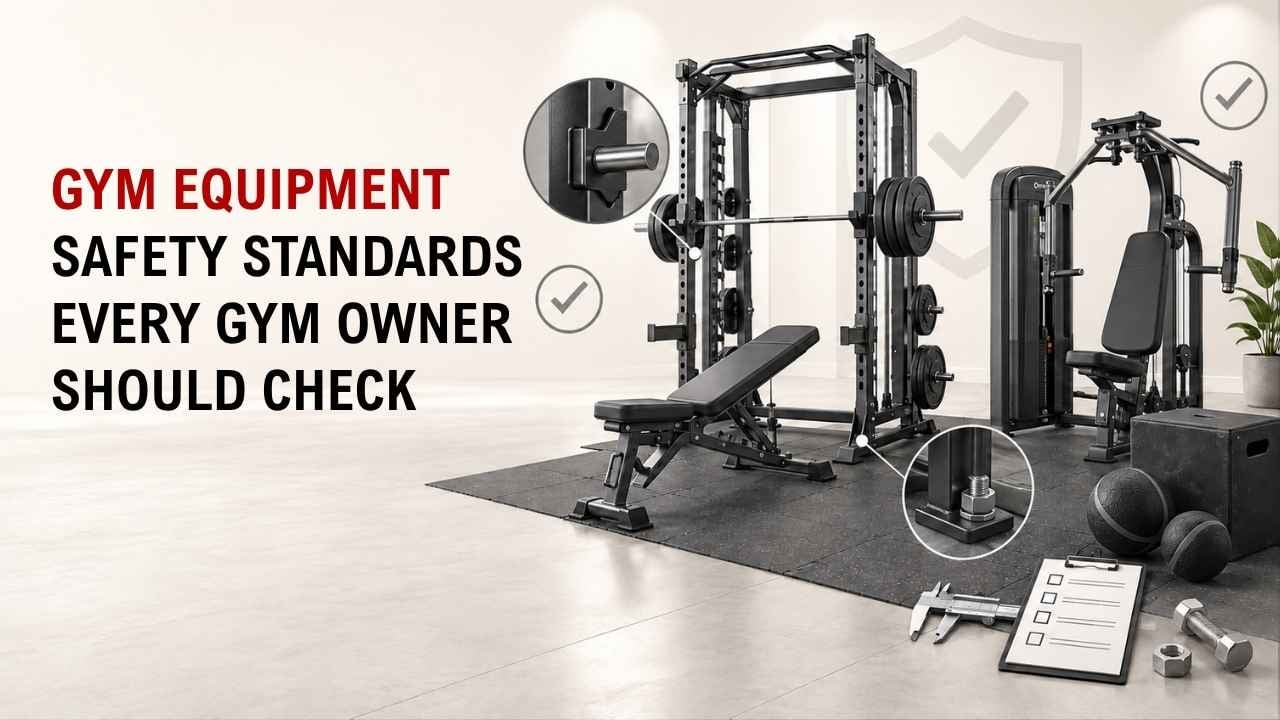

Is your gym equipment really safe for daily member use, or does it only look strong when it is new?
The simple answer is this: safe gym equipment should follow recognized standards, have strong structure, clear warning labels, correct installation, and a maintenance plan your staff can actually follow.
I have spent decades designing commercial fitness equipment at YR Fitness, and I often see the same issue. Gym owners usually notice safety problems only after the machines are already installed and used by members.
So let’s make it easier. This guide shows you what to check before buying, before opening, and during daily gym operation.
- 1. How Do I Know If the Equipment Really Meets Safety Standards?
- 2. Will Strength Machines Stay Safe After Heavy Daily Use?
- 3. Can Members Stop Cardio Machines Quickly If Something Goes Wrong?
- 4. Can New Members Understand the Warning Labels?
- 5. Is My Gym Layout Making Safe Equipment Unsafe?
- 6. Are My Benches, Racks, and Free Weights Safe Enough for Heavy Lifting?
- 7. Is This Equipment Really Made for Commercial Gym Use?
- 8. Are the Electrical Parts Safe for My Country and Gym Setup?
- 9. Could Members Get Their Fingers Caught in Moving Parts?
- 10. Can My Staff Maintain the Equipment Easily?
- 11. What Should My Gym Equipment Safety Checklist Include?
- 12. How Do I Know If a Factory Takes Safety Seriously?
- Final Thoughts
1. How Do I Know If the Equipment Really Meets Safety Standards?
Before you look at price, color, frame shape, or logo position, check one basic thing first.
Does the equipment follow recognized safety standards?
You do not need to be an engineer to understand this. You only need to know what documents to ask for.
Here is why this matters.
A supplier may say, “Our machine is commercial grade.” That sounds good. But what does it actually mean?
Was the machine tested?
Does the certificate match the exact model?
Is the test based on a recognized standard?
These are simple questions, but they can protect your gym later.
Common Safety Standards
Standard / Guideline | What It Covers | Why It Matters to You |
General safety requirements and test methods for indoor stationary training equipment | Helps you check if the equipment follows an international safety framework. | |
Treadmills, strength machines, bikes, ellipticals, benches, labels, and more | Useful when comparing different machine types and asking for model-specific proof. | |
Fitness equipment and facility safety signs and labels | Helps you check whether warning labels are clear, visible, and properly placed. | |
Workplace safety responsibility in the U.S. | Useful if your gym also needs to consider staff safety and workplace risk. | |
Local electrical and product safety rules | Voltage, plug type, grounding, wiring, and market-specific compliance | Important for treadmills, bikes, ellipticals, and other powered equipment. |
ISO 20957-1:2024 covers general safety requirements and test methods for indoor stationary training equipment. ASTM F08.30 also lists standards for many fitness products, including treadmills, strength equipment, benches, bikes, ellipticals, and labels.
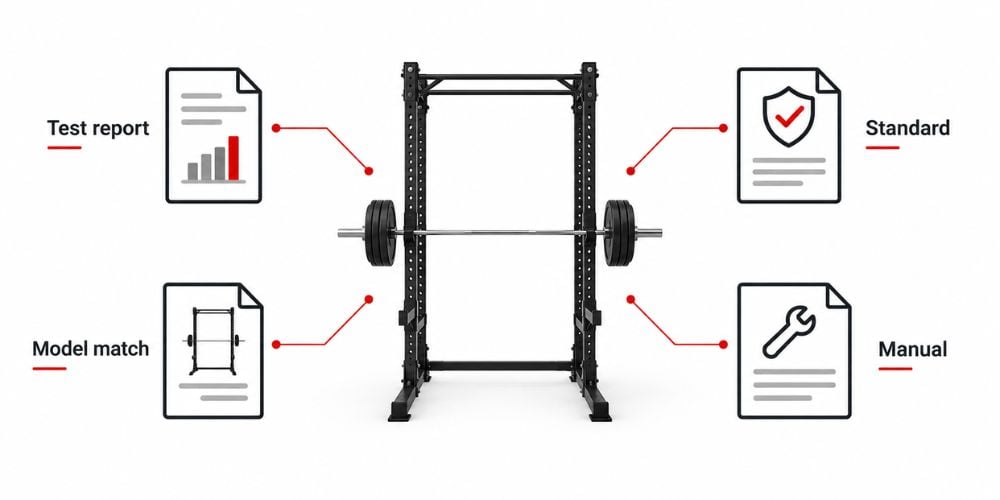
What Documents Should You Request?
Document | Why You Need It | What to Check |
Safety certificate | Shows claimed compliance | Model number, issue date, test scope, and certifying body |
Test report | Shows how the machine was tested | Exact product model, load test, stability test, and test conditions |
User manual | Helps members and staff use the equipment correctly | Clear instructions, warnings, and adjustment steps |
Installation manual | Helps avoid assembly mistakes | Bolt list, leveling guide, anchoring instructions, and electrical notes |
Maintenance guide | Helps staff inspect equipment regularly | Daily, weekly, and monthly tasks |
Spare parts list | Helps with long-term operation | Cable, pulley, pad, belt, pin, motor, and console availability |
Warranty terms | Helps control future repair cost | Coverage period, excluded parts, and claim process |
Here is a practical rule:
If the supplier cannot explain the safety documents clearly before payment, support may be even harder after delivery.
2. Will Strength Machines Stay Safe After Heavy Daily Use?
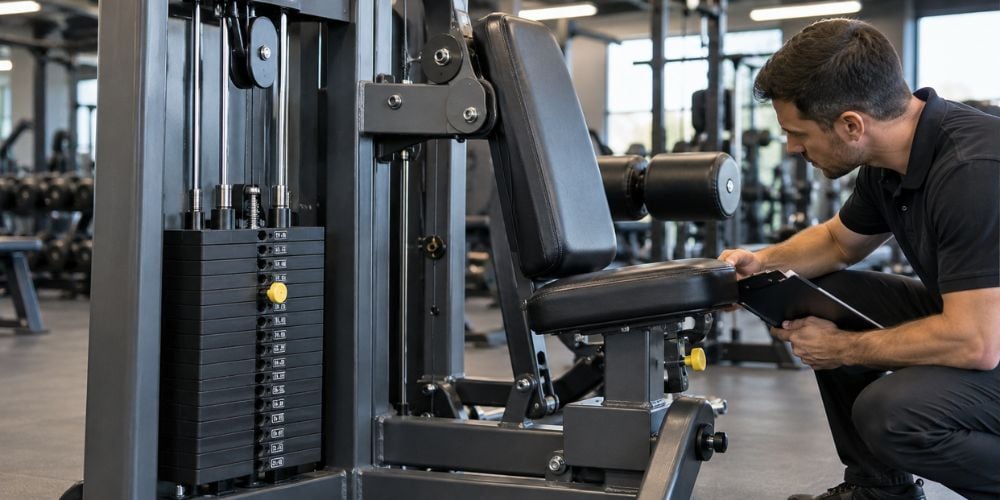
Strength machines work hard every day.
A chest press, lat pulldown, leg extension, seated row, or cable machine may be used by hundreds of members each week. Some members train carefully. Some use heavy loads. Some adjust the machine properly. Others just sit down and start pulling.
That is normal in a real gym. So the machine must be safe under real commercial use, not just in a showroom video.
What Should You Check First?
Area to Check | What Can Go Wrong | What Good Equipment Should Show |
Frame structure | Shaking, bending, poor stability | Thick steel tube, strong base, and stable movement |
Welding | Cracks, weak joints, uneven frame | Clean welds with consistent strength |
Weight stack | Sticking, shaking, unsafe movement | Smooth vertical travel and stable guide rods |
Selector pin | Pin slips or does not lock | Secure lock and easy adjustment |
Cable | Fraying, snapping, rubbing | Smooth routing and strong cable coating |
Pulley | Noise, resistance, uneven pull | Smooth rotation and correct alignment |
Handles | Slipping or loosening | Firm grip and strong connection |
Seat adjustment | User cannot lock position | Simple, secure, and clear adjustment |
Movement path | Joint discomfort or awkward training | Natural angle and controlled motion |
Noise under load | Hidden looseness or friction | Smooth and quiet operation |
ASTM F2216 covers selectorized strength equipment. It includes design and manufacturing parameters for indoor selectorized strength machines.
At YR Fitness, we design strength equipment for commercial gyms where machines are used again and again every day. We pay close attention to movement angle, frame structure, cable routing, and long-term stability because a machine should still feel safe after thousands of reps.
What Is a Simple Buyer Test?
Stand beside the machine and ask:
“What happens when a strong member uses this machine every day for one year?”
Then check:
- Does the frame move?
- Does the cable rub?
- Does the weight stack shake?
- Does the seat lock firmly?
- Does the motion feel natural?
- Does the machine make unusual noise?
If the machine already feels unstable when new, it will not become safer after daily use.
Useful next step: If strength equipment safety is a priority for your gym, you can review commercial-grade options on the strength equipment page.
3. Can Members Stop Cardio Machines Quickly If Something Goes Wrong?
Cardio equipment needs extra attention.
Why?
Because it has moving belts, motors, consoles, power cords, and electronic controls. If one part fails, the member may not have much time to react.
A treadmill accident can happen quickly. A bike or elliptical can also become unsafe if pedals, handles, or resistance systems are loose.
The risk is real. The National Safety Council reported that exercise and exercise equipment injuries increased 17% in 2024, reaching 564,845 injuries, compared with 482,886 injuries in 2023. You can review the data from the National Safety Council injury facts report.
This does not mean gym owners should be afraid of cardio equipment. It means safety checks should become routine.
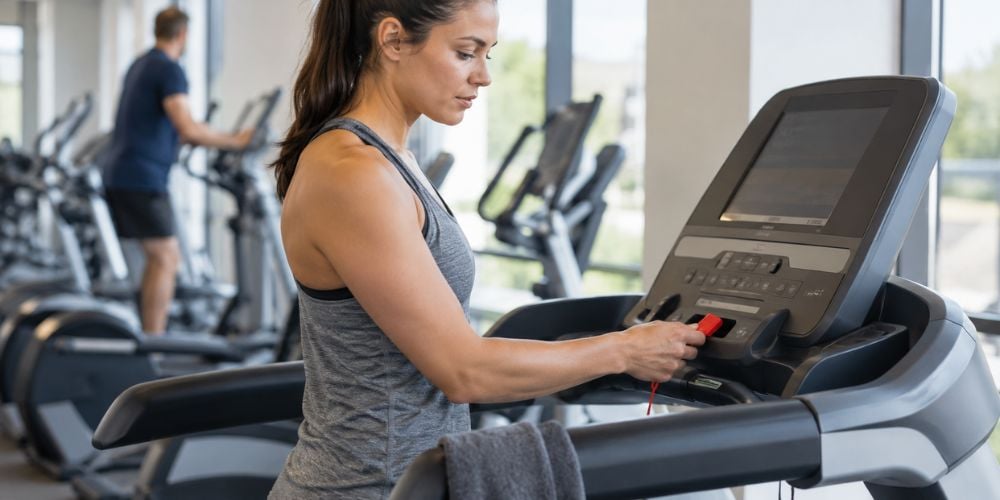
What Should You Check on Treadmills?
Treadmill Safety Point | Why It Matters |
Emergency stop button | Helps users stop quickly when something feels wrong |
Safety key or stop cord | Stops the belt if the user loses control |
Running belt alignment | Reduces tripping and belt damage |
Belt surface condition | Helps prevent slipping |
Side rail grip | Gives users a stable place to step off |
Deck stability | Supports repeated impact |
Motor ventilation | Reduces overheating risk |
Power cord condition | Helps prevent electrical hazards |
Maximum user weight | Prevents overload |
Warning labels | Helps new users understand risks |
Space behind treadmill | Gives users room if they slip or step off suddenly |
ASTM F2115 covers motorized treadmills and includes requirements related to stop mechanisms and user warnings.
What Should You Check on Bikes and Ellipticals?
Equipment Area | What to Check |
Base | Stable and not rocking |
Pedals | Secure, non-slip, and not cracked |
Resistance system | Smooth and predictable |
Handles | Firm and comfortable |
Seat adjustment | Locks securely |
Foot platforms | Wide enough and slip-resistant |
Console | Easy to read and not loose |
Moving parts | Protected from fingers, clothes, and hair |
User instructions | Clear enough for beginners |
Here is the simple rule: Every cardio machine should stop safely, move smoothly, support the right user weight, and be easy for members to understand.
If a member needs staff help just to stop the machine, the design is not clear enough.
4. Can New Members Understand the Warning Labels?
Many members use gym equipment without asking staff for help.
That is normal.
But it also means the machine must guide them clearly.
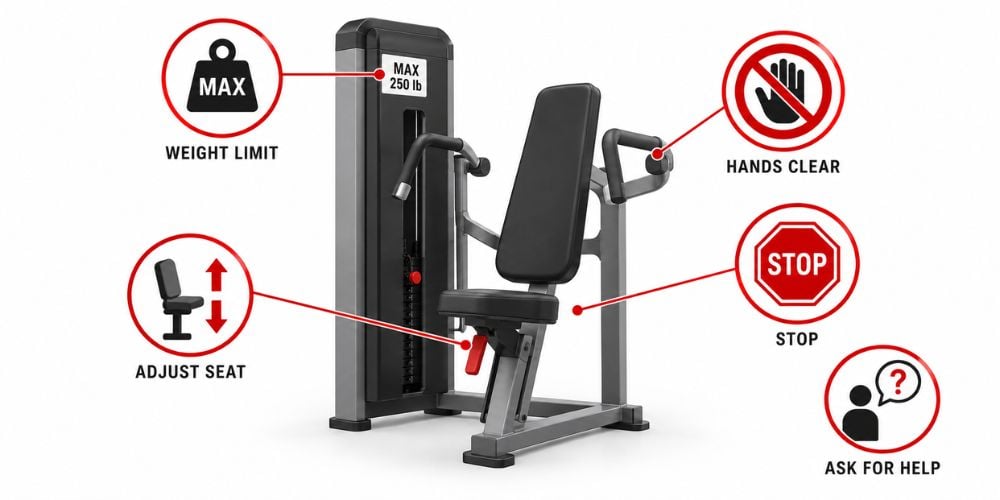
A good label can tell a beginner:
- Where to sit
- How to adjust the machine
- Where not to place hands
- What weight limit to follow
- How to stop the machine
- When to ask staff for help
This sounds small.
It is not.
What Labels Should You Check?
Label Type | Where It Is Commonly Needed | Why It Matters |
Maximum user weight | Treadmills, bikes, benches, strength machines | Prevents overload and misuse |
Correct exercise position | Strength machines and benches | Helps reduce poor posture and wrong movement |
Moving part warning | Weight stacks, pulleys, guide rails | Helps users avoid moving components |
Pinch point warning | Adjustable seats, bench joints, machine arms | Protects fingers and hands |
Emergency stop instruction | Treadmills and powered cardio machines | Helps users react quickly |
Age or supervision warning | Public gyms, schools, hotels, and outdoor areas | Helps prevent unsafe unsupervised use |
Electrical warning | Powered cardio machines | Reduces electrical misuse |
Maintenance warning | Service panels and moving parts | Protects staff during inspection |
“Read instructions before use” notice | Most equipment | Reminds beginners to use the machine properly |
ASTM F1749 establishes requirements for fitness equipment and facility safety signs and labels. It also classifies labels by hazard level using signal words such as danger, warning, and caution.
5. Is My Gym Layout Making Safe Equipment Unsafe?
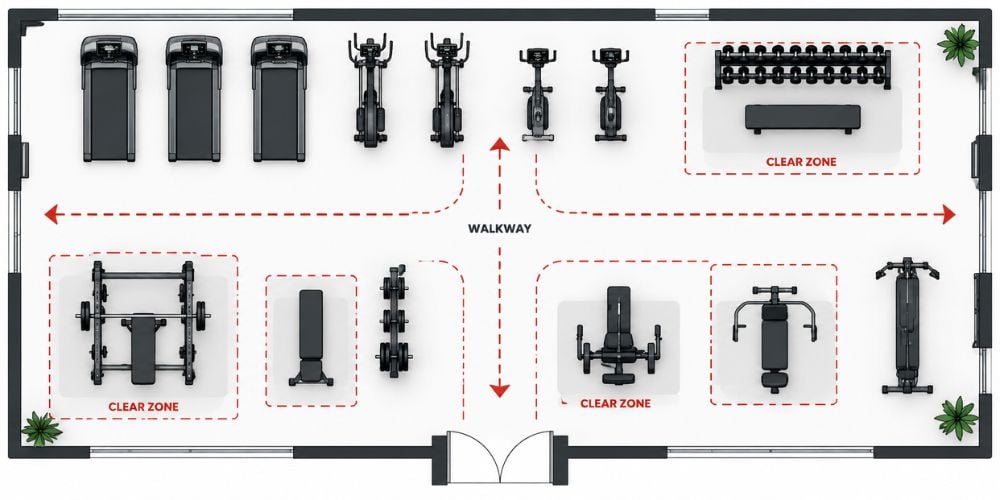
Even safe equipment can become unsafe in a poor layout. This is one of the most common issues I see in gym projects.
The owner buys good machines. The supplier ships the right models. But once everything is installed, the walkways are too narrow, benches are too close, or treadmills do not have enough space behind them.
Then the problem is not always the equipment.
The problem is the layout.
What Layout Points Should You Check?
Area | Safety Question to Ask |
Treadmill zone | Is there enough open space behind each treadmill? |
Cardio zone | Are power cords protected and away from walking paths? |
Strength machine zone | Do machine arms or user paths overlap? |
Free-weight zone | Is there enough space for lifting, spotting, and putting weights back? |
Bench area | Can users move around benches without bumping into others? |
Walkways | Can members pass safely, even during peak hours? |
Emergency exits | Are exits clear and not blocked by equipment? |
Mirrors | Are free weights placed far enough to reduce impact risk? |
Staff visibility | Can staff see high-risk areas clearly? |
Flooring | Is the floor level, stable, and suitable for heavy machines? |
ACSM’s Health/Fitness Facility Standards and Guidelines is often used by fitness facilities to support safer facility operation, programming, and design decisions.
At YR Fitness, we often help gym owners think about equipment placement, not just equipment selection. We do this because a strong machine can still create a poor member experience if people cannot move safely around it.
A Simple Layout Test
Walk through your gym like a new member.
Ask:
- Can I find the machine easily?
- Can I enter and exit the machine without twisting my body?
- Can another member pass behind me?
- Can staff reach me quickly if I need help?
- Can I lift free weights without hitting another person?
- Can I return dumbbells safely?
- Can I see warning labels and instructions clearly?
If the answer is no, the layout needs another look.
Useful next step: Before finalizing a new gym floor plan, gym owners can explore gym layout support to plan equipment placement with safety and member flow in mind.
6. Are My Benches, Racks, and Free Weights Safe Enough for Heavy Lifting?
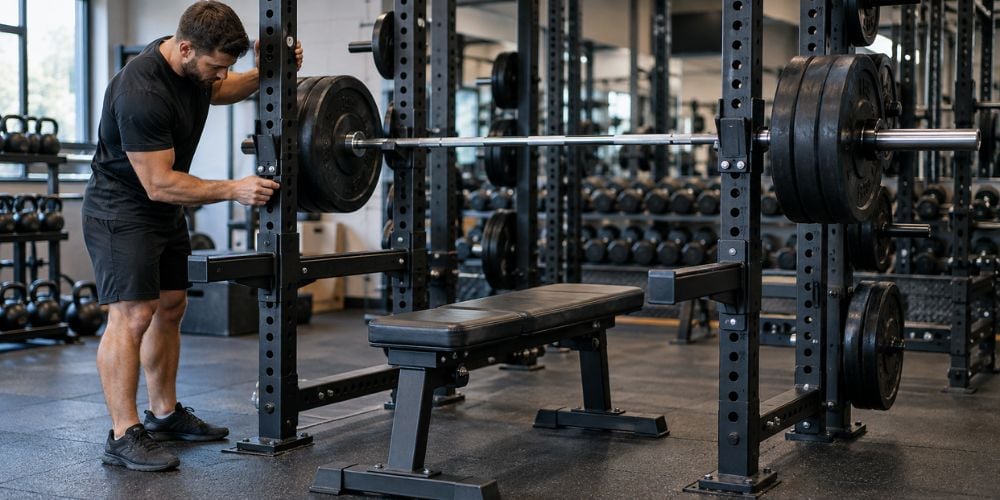
Free weights look simple. But they can create serious safety risks if they are poorly made or poorly maintained.
A loose dumbbell head, unstable bench, weak rack hook, or missing safety catch can cause real injury. These products also take more abuse than many gym owners expect.
Members lift them. Drop them. Drag them. Re-rack them. Adjust them. Use them during peak hours.
So they need regular checks.
What Should You Check on Dumbbells and Barbells?
Item | What to Check | Warning Sign |
Dumbbell head | Firm connection to handle | Loose head or spinning end |
Rubber coating | Cracks, peeling, bad smell | Coating breaking apart |
Handle | Grip texture and straightness | Slippery or bent handle |
Weight marking | Clear number | Faded or missing marking |
Barbell shaft | Straightness and sleeve rotation | Bent shaft or stuck sleeve |
Collars | Secure lock | Loose collar during lifting |
Storage rack | Stable frame | Rack shaking or sharp edges |
What Should You Check on Benches?
Bench Part | What Good Quality Looks Like |
Frame | Stable and not wobbling |
Padding | Firm, supportive, and not collapsed |
Upholstery | No tears, exposed staples, or sharp backing |
Adjustment system | Smooth and secure |
Locking pins | Easy to use and fully engaged |
Feet | Stable contact with the floor |
Welds | Clean and consistent |
What Should You Check on Racks?
Rack Area | What to Look For |
Base | Wide and stable |
Uprights | Strong, straight, and not shaking |
J-hooks | Easy to adjust and strong enough for the load |
Safety catches | Secure and properly positioned |
Load rating | Clear and suitable for commercial use |
Finish | No sharp edges or peeling coating |
Labels | Clear warnings and capacity information |
ASTM F08.30 includes standards for externally loaded strength training equipment, strength benches, and external weight storage equipment.
The rule is simple: If it shakes when empty, do not trust it under heavy load.
And if safety catches are missing, weak, or hard to adjust, members may stop using them.
That becomes a bigger risk.
7. Is This Equipment Really Made for Commercial Gym Use?
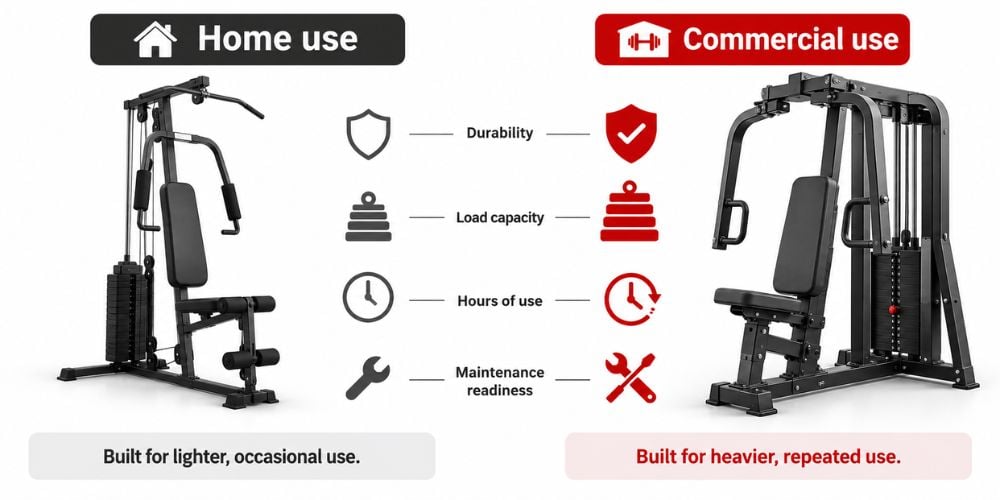
Commercial gym use is very different from home use. In a home gym, 1 or 2 people may use a machine.
In a commercial gym, many people use the same machine every day. Some users train light. Some train heavy. Some clean the machine. Some do not. Some adjust everything properly. Some force the machine into position.
That changes everything.
Commercial Use vs Home Use
Area | Home Use | Commercial Gym Use |
Daily users | Usually 1–3 people | Many users per day |
Training load | Usually moderate | Light to very heavy |
Operating hours | Shorter | Often long daily hours |
Adjustment frequency | Low | High |
Cleaning frequency | Lower | Higher |
Wear on pads | Slower | Faster |
Wear on cables and belts | Slower | Faster |
Misuse risk | Lower | Higher |
Repair urgency | Flexible | Urgent because members are waiting |
This is why commercial equipment must be designed for repeated use.
A machine can look strong in photos. But photos do not show what happens after months of sweat, impact, cleaning chemicals, heavy loading, and constant adjustment.
What Should You Check?
- Maximum user weight
- Maximum training load
- Weight stack load
- Cable tensile strength
- Frame stress test
- Pulley durability
- Bearing quality
- Upholstery durability
- Coating resistance
- Spare parts availability
This matters even more if your gym is open for long hours every day. The longer your operating hours, the more important durability becomes.
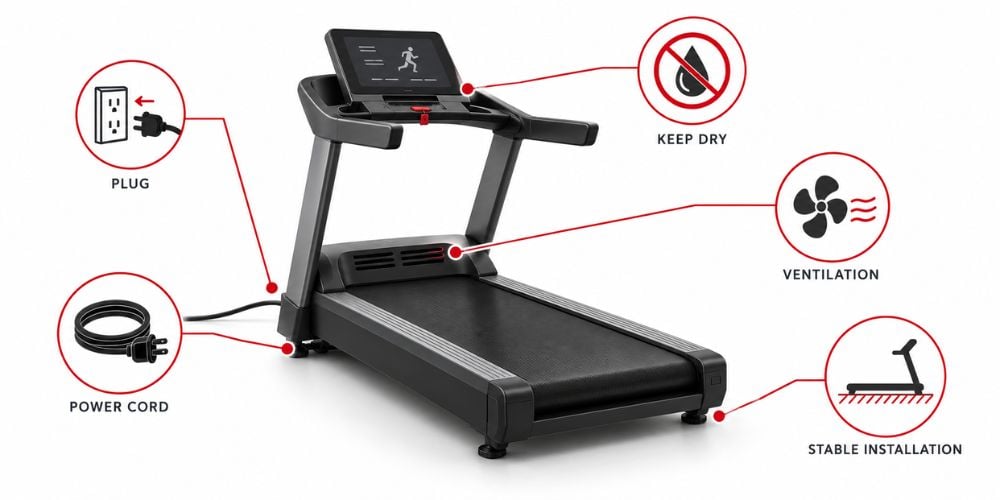
8. Are the Electrical Parts Safe for My Country and Gym Setup?
Electrical safety is important for treadmills, bikes, ellipticals, stair climbers, and other powered machines.
Many electrical problems start small.
A loose wire.
A wrong voltage.
A damaged cord.
Poor ventilation.
Too much cleaning liquid near the console.
At first, these may not look serious. Later, they can become safety issues.
Electrical Points You Should Check
Area | What to Check |
Voltage | Matches your country or facility power supply |
Plug type | Correct for your market |
Power cord | No cuts, crushing, or exposed wire |
Grounding | Properly installed |
Console | Stable, responsive, and protected |
Motor ventilation | Enough airflow around the motor |
Overload protection | Suitable for commercial operation |
Moisture protection | Reasonable protection from sweat and cleaning |
Error code guide | Staff can understand basic fault messages |
Service access | Technicians can inspect safely |
For powered machines, electrical safety may involve standards such as UL 1647 for motor-operated massage and exercise machines or broader appliance safety standards such as IEC 60335-1, depending on the market and product type.
Common Mistakes to Avoid
- Using the wrong voltage
- Plugging too many machines into one outlet
- Letting power cords cross walking areas
- Cleaning consoles with too much liquid
- Blocking motor ventilation space
- Ignoring small error messages
- Using damaged power strips
- Moving cardio machines without checking the cord afterward
Ask yourself:
“If this treadmill stops working during peak hours, will my staff know what to check first?”
If the answer is no, ask the supplier for clearer instructions.
Cardio safety is not only about the machine itself. It is also about how the machine is powered, installed, cleaned, and maintained.
9. Could Members Get Their Fingers Caught in Moving Parts?
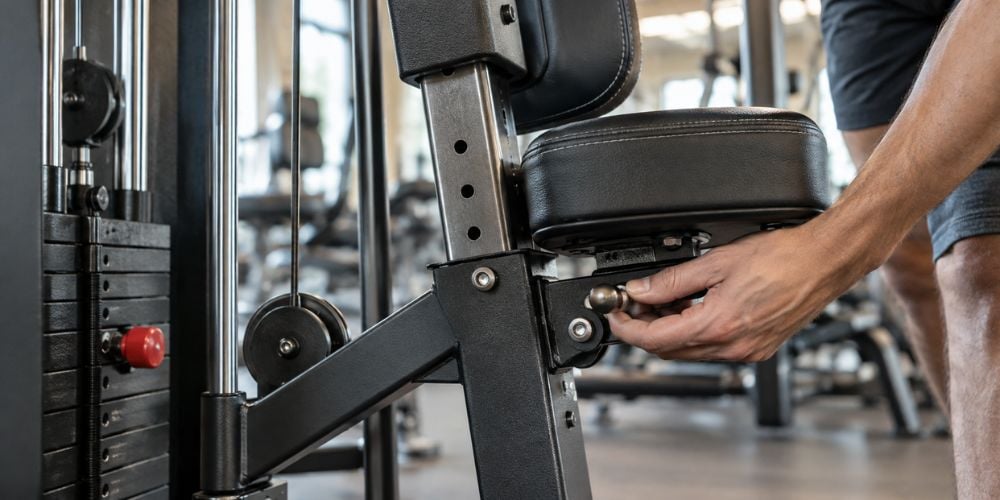
Pinch points are areas where fingers, clothes, hair, or skin can get caught between moving parts.
This is one of the safety issues many buyers miss during purchase.
Why?
Because the machine may look clean from the outside. But when a user adjusts the seat, moves the arm, folds a treadmill, or changes the weight, the risk becomes easier to see.
Where Do Pinch Points Often Appear?
Equipment Area | Common Risk |
Weight stack | Fingers near moving plates |
Pulley and cable area | Cable movement near hands or clothing |
Adjustable bench joints | Fingers caught during angle adjustment |
Seat adjustment parts | Hands near locking holes or sliding rails |
Selectorized machine arms | Body or clothing near moving arms |
Smith machine guide rails | Hands near rails or stops |
Plate-loaded levers | Hands or legs near moving arms |
Folding treadmill parts | Fingers near hinge areas |
What Safety Features Help Reduce Risk?
- Weight stack guards
- Protective covers
- Rounded edges
- Smooth movement paths
- Safe spacing between moving parts
- Clear warning labels
- Secure locking pins
- Easy-to-use adjustment systems
Here is a simple test.
Use the machine like a beginner would use it.
Adjust the seat. Change the pin. Move the handle. Watch where your hands naturally go.
If your fingers come close to moving parts, your members may face the same risk. This is where design matters. A machine should not only look clean. It should guide users away from danger.
10. Can My Staff Maintain the Equipment Easily?
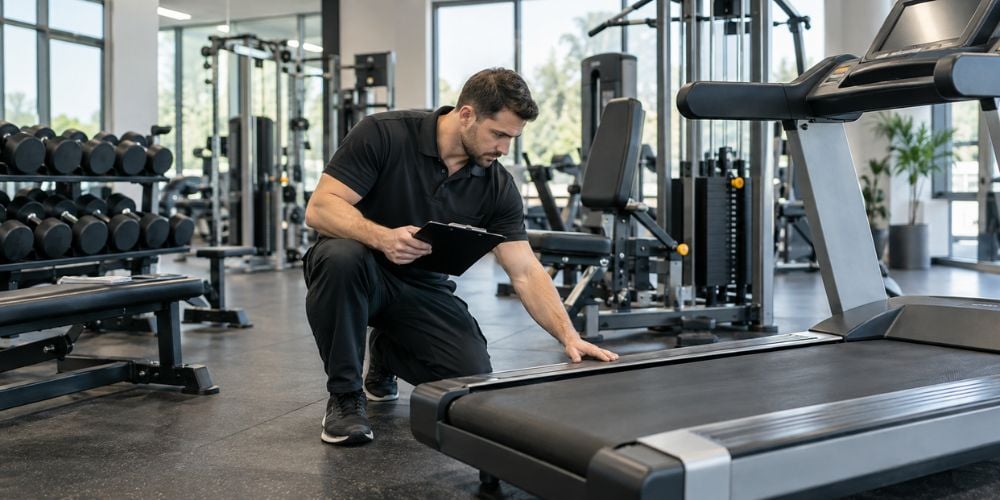
Safety does not end after installation. A machine that is safe today may become unsafe after months of heavy use if no one checks it.
Worn cables, loose bolts, torn pads, damaged belts, and missing labels should be handled early.
Do not wait for a machine to fail.
A useful reminder comes from equipment maintenance guidance by Markel, which notes that the safety and integrity designed into a machine can only be maintained when equipment is regularly examined for damage and repaired.
That is exactly how gym owners should think.
Maintenance is not just cleaning. It is safety control.
What Should Be Included in Maintenance Documents?
Document / Guide | What It Should Tell Your Staff |
Daily inspection guide | What to check before members use the equipment |
Weekly cleaning guide | How to clean without damaging parts |
Monthly tightening schedule | Which bolts and areas need attention |
Lubrication instructions | Where and how to lubricate moving parts |
Cable replacement guide | When cables should be replaced |
Belt adjustment guide | How to adjust treadmill belts safely |
Spare parts list | Which parts are replaceable |
Troubleshooting instructions | What common problems mean |
Warranty terms | What is covered and what is excluded |
Suggested Maintenance Schedule
Frequency | What to Check | Who Can Do It |
Daily | Obvious damage, loose parts, belt issues, floor hazards, warning labels | Floor staff or maintenance staff |
Weekly | Bolts, upholstery, handles, dumbbells, racks, cable movement | Maintenance staff |
Monthly | Pulleys, guide rods, bearings, lubrication, electrical cords, machine spacing | Trained technician or experienced maintenance staff |
Quarterly | Full safety review, high-use machine wear, spare parts planning | Manager and technician |
Yearly | Full equipment audit, replacement planning, supplier service review | Owner, manager, and service team |
A good maintenance system should be simple enough for staff to follow. If the process is too complicated, it may not happen every day.
Create one clear rule:
If equipment looks unsafe, remove it from use until it is checked.
That one rule can prevent many avoidable accidents.
11. What Should My Gym Equipment Safety Checklist Include?
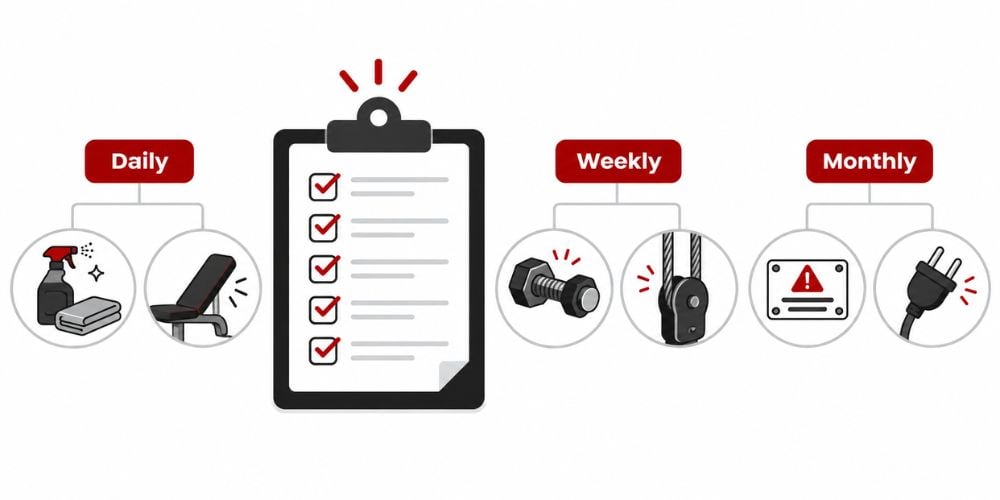
A safety checklist helps staff inspect equipment faster. It also makes inspections more consistent.
This is useful for maintenance planning, warranty claims, staff training, and risk management.
The checklist does not need to be fancy.
It just needs to be used.
Daily Safety Checklist
Checkpoint | Yes / No |
Machines are stable | |
Bolts do not look loose | |
Cables are not frayed | |
Treadmill belts are aligned | |
Dumbbells are not damaged | |
Benches do not wobble | |
Warning labels are visible | |
Floors are dry and clean | |
Broken equipment is removed from use |
Weekly Safety Checklist
Checkpoint | Yes / No |
Visible bolts are tightened | |
Upholstery is not torn | |
Cable movement is smooth | |
Weight stacks move smoothly | |
Cardio machines show no error messages | |
Free-weight storage is stable | |
Rack hooks and safety catches work properly | |
Handles and grips are secure | |
Power cords are safe |
Monthly Safety Checklist
Checkpoint | Yes / No |
Pulleys and bearings are inspected | |
Required parts are lubricated | |
Electrical connections are checked | |
Frames have no rust or cracks | |
Maintenance records are reviewed | |
Worn parts are replaced early | |
Machine spacing is still safe | |
Staff notes are updated |
Safety Checklist by Equipment Type
Equipment Type | Main Risk | What to Check First |
Treadmill | Falls, belt issues, electrical problems | Emergency stop, belt, cord, rear clearance |
Bike | Pedal slip, loose seat, unstable base | Pedals, seat lock, resistance, frame |
Elliptical | Foot slip, handle looseness, unstable motion | Foot platform, handles, resistance system |
Selectorized machine | Cable wear, pin failure, pinch points | Cable, pulley, selector pin, guards |
Cable machine | Cable snap, pulley wear | Cable route, pulley, attachments |
Bench | Wobbling, failed adjustment | Frame, pad, pin, feet |
Rack | Bar drop, wrong safety catch position | J-hooks, safeties, load rating |
Dumbbell | Loose head, cracked coating | Handle, head connection, coating |
Barbell | Bent bar, sleeve issue | Straightness, sleeve rotation, collars |
A checklist is not just paperwork. It is a habit.
And in a busy gym, habits protect people better than memory.
12. How Do I Know If a Factory Takes Safety Seriously?
Factory selection is one of the most important safety decisions a gym owner makes.
A cheap machine may save money at the start. But if it has weak welding, poor movement design, unclear labels, no test documents, or no spare parts support, it can cost more later.
Safety starts before the equipment reaches your gym.
- In-house Design Ability: A serious factory should have its own design team, not just copy machines from the market. This matters because safe gym equipment needs correct movement angles, proper body positioning, and stable force direction.
- Commercial-use Product Development: The factory should understand the difference between home-use equipment and commercial gym equipment. Commercial machines need to handle more users, heavier loads, longer operating hours, and frequent adjustments.
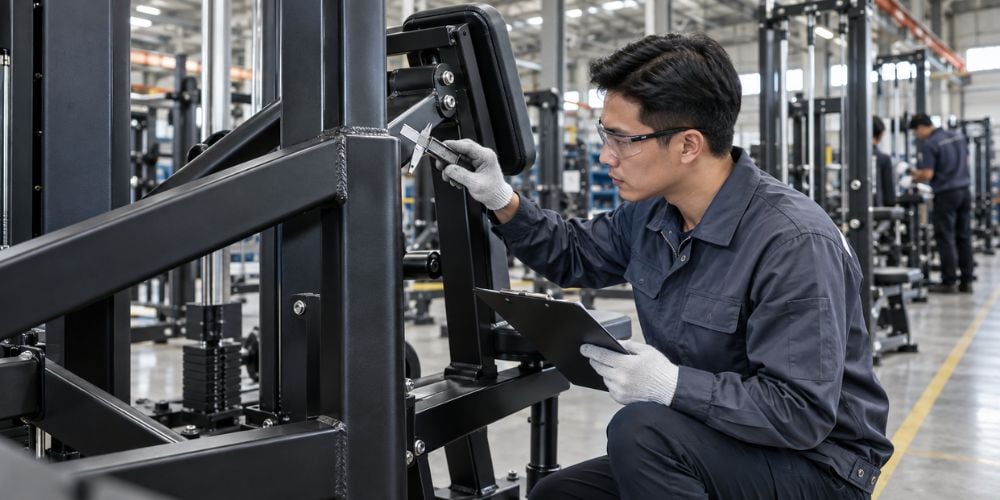
- Strong Material Control: Safe equipment starts with solid materials. The factory should be able to explain the steel tube size, frame thickness, cable quality, upholstery material, coating process, and key component suppliers.
- Stable Welding Process: Welding is one of the most important safety details in strength equipment, racks, benches, and frames. Poor welding may not fail on day one, but it can become a risk after long-term heavy use.
At YR Fitness, we have been manufacturing commercial gym equipment since 1997 for gym owners, distributors, dealers, and wholesalers worldwide. We focus on self-designed movement angles, solid materials, advanced production processes, and over 40 patents because safe equipment needs more than a strong-looking frame.
My advice is simple:
“Ask for the exact model test proof, not just a general certificate.”
That advice sounds basic.
But it is very important.
A supplier may show a certificate. But if the certificate does not match the machine you are buying, it may not protect your project.
Final Thoughts
Gym equipment safety is not one document, one label, or one inspection.
It is a full process.
It starts before buying. It continues during installation. And it becomes part of the daily gym operation after opening.
A smart gym owner checks recognized standards, machine structure, cardio safety, warning labels, layout, electrical parts, moving parts, maintenance routines, and factory support.
This may sound like a lot.
But the idea is simple: Buy safer equipment. Install it correctly. Check it regularly. Fix small problems early.
That is how you protect members, reduce repair problems, and support long-term business operation.
For a new gym, expansion project, or equipment replacement plan, you can visit the official website to compare commercial gym equipment options built for daily fitness business use.
Related articles:



