








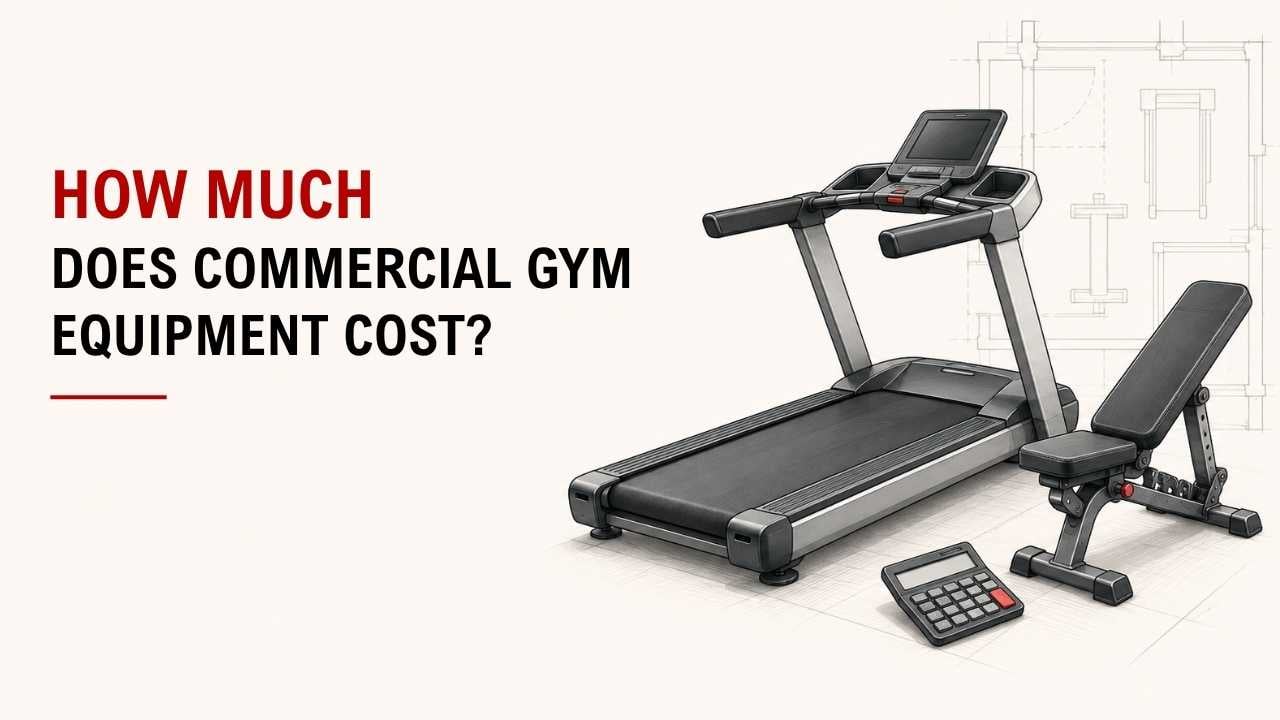

Have you ever wondered how much commercial gym equipment actually costs? The price can vary a lot depending on the machine.
The quick answer is simple: individual pieces can cost from about $500 to more than $20,000, while a complete gym may cost around $25,000 to $500,000+.
As the founder and chief designer of YR Fitness, I have spent decades working with commercial gym equipment and machine design. In my experience, the biggest cost differences usually come from equipment type, construction, features, and brand.
Below, I will break down the main costs for cardio, strength equipment, free weights, and full gym setups.
1. How Much Does Cardio Equipment Cost?
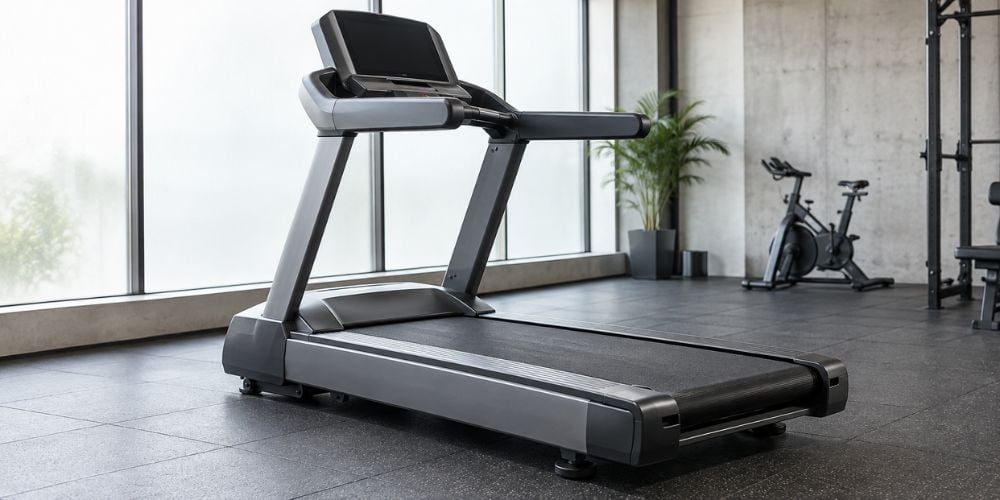
Cardio machines are often some of the most expensive pieces in a gym. Treadmills usually sit near the top because they include motors, belts, decks, consoles, and other moving parts.
Cardio Equipment | Typical Commercial Price |
Treadmill | 5,000–20,000+ |
Exercise bike | 2,500–13,000+ |
Elliptical | 4,500–15,000+ |
Rower | 2,500–5,500+ |
Stair climber | 9,000–23,000+ |
Are those ranges realistic? Current commercial treadmill listings include Matrix models at $5,465, $5,965, $10,495, $15,230, and $18,570.
Commercial bikes show an equally wide spread. Current commercial exercise bike listings include a Matrix CXC at $2,530 and a Performance Touch Upright Cycle at $13,280.
Ellipticals can move from roughly $4,640 to $15,430, depending heavily on the console and model. Current Matrix elliptical prices show that difference clearly.
The same pattern appears with other cardio equipment. Commercial Matrix rowers currently run from about $2,720 to $5,155, while ClimbMill models range from about $9,275 to $23,120.
Here is why this matters: more expensive cardio usually gives you heavier-duty construction, upgraded consoles, stronger drive systems, or features designed for repeated daily use.
2. Commercial Strength Equipment Cost
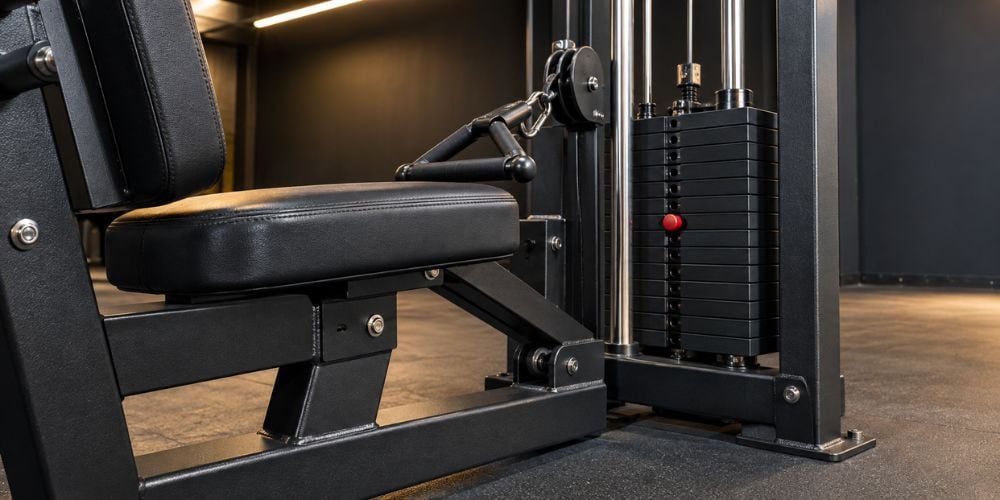
Strength machines usually cost less than premium cardio equipment. But a complete strength area still becomes expensive because you need several different stations.
Strength Equipment | Typical Price |
Selectorized strength machine | 2,500–7,000+ |
Leg press | 3,000–7,000+ |
Smith machine | 2,500–7,000+ |
Functional trainer | 3,000–8,000+ |
Commercial bench | 500–1,500+ |
For a real-world comparison, current commercial strength equipment listings include a Matrix 45-degree leg press at $6,025, hack squat at $5,770, and Smith machine at $6,025. The same listings include benches from $830 upward, with some Olympic benches above $2,000.
In my decades of design experience, I would never judge a strength machine by price alone. Frame stability, movement path, cables, bearings, upholstery, and how the machine feels during training matter just as much.
A $3,000 machine that performs reliably every day can make more sense than paying extra for features you rarely use.
3. Free Weights and Racks Cost
Free-weight equipment looks simple, but the total can climb quickly.
You may need:
- Power racks
- Adjustable benches
- Dumbbells
- Barbells
- Weight plates
- Storage racks
- Collars and other accessories
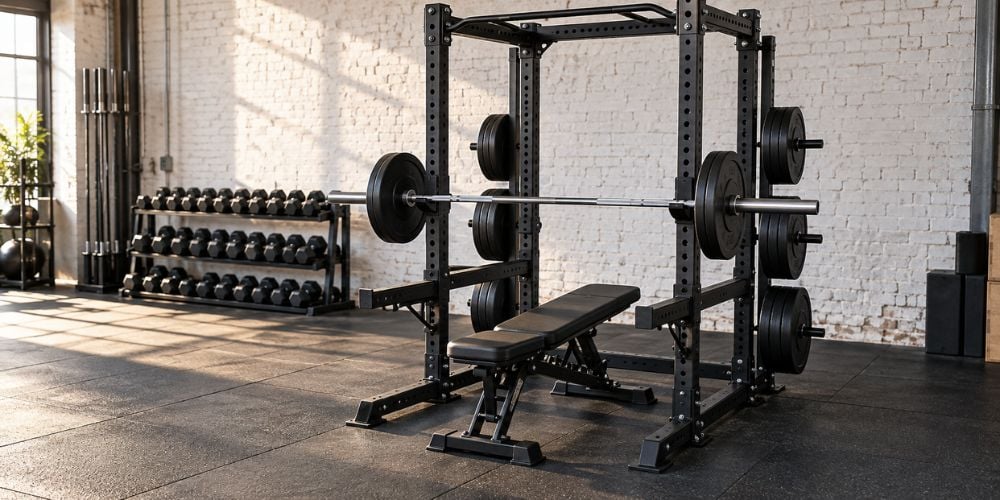
A commercial-style power rack can start below $1,000 and climb into several thousand dollars once you add larger frames and attachments. For example, REP Fitness power racks currently include options around $764.99, $1,249, and $1,499.99+.
Dumbbells add another large cost. Current urethane dumbbell pricing starts at $49.99 for a 5 lb pair, then rises as the weight increases.
Once you add several benches, bars, plates, dumbbells, and storage, a complete commercial free-weight area can easily reach 10,000–50,000+.
Do you need the most expensive rack? Usually not.
I would pay more attention to stability, weight capacity, useful attachments, and how many people can train at the same time. Those details normally matter more than premium extras.
4. How Much Does It Cost to Equip an Entire Gym?
This is probably the number you came here for.
Gym Size | Rough Equipment Budget |
Small training studio | 25,000–75,000 |
Small commercial gym | 50,000–150,000 |
Medium commercial gym | 100,000–300,000 |
Large full-service gym | 250,000–500,000+ |
These are planning ranges, not fixed prices. Your final cost depends mainly on how much cardio equipment you buy, how many strength stations you need, and whether you choose premium or more cost-effective equipment.
For example, a 50 m² facility may only need one treadmill, several strength stations, a rack, a bench, dumbbells, and plates. A 300 m² gym may need multiple treadmills, ellipticals, bikes, dozens of strength stations, racks, benches, and hundreds of free-weight items.
The quantities grow quickly as the space increases. A real gym equipment package example for a 50 m² space includes one treadmill, six strength-area pieces, and free weights, while the same planning resource covers facilities all the way up to 1,000 m².
If you are trying to work out what a complete setup could look like, at YR Fitness, we can help you match the equipment quantity to your available space instead of simply adding machines one by one. Explore our gym equipment packages by floor size to compare layouts from 50 m² to 1,000 m².
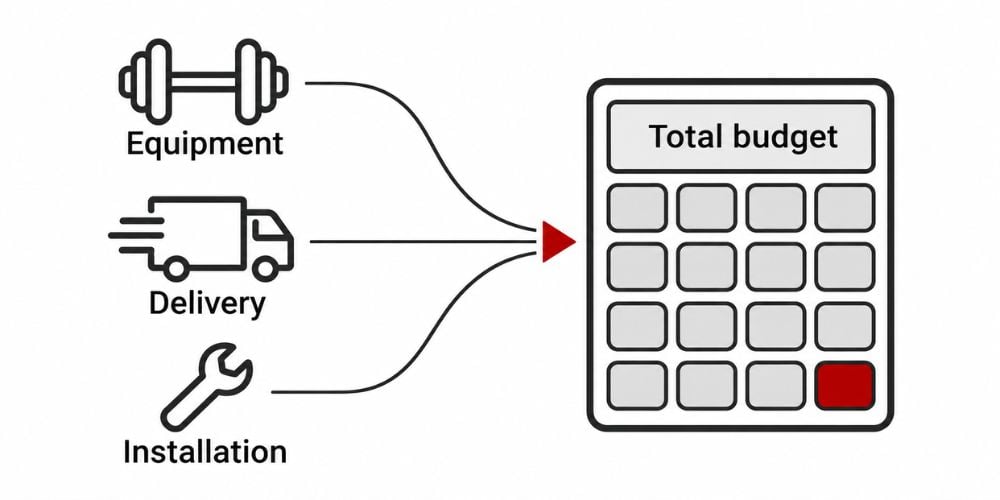
One thing I often see is people focusing only on the machine prices. Shipping, installation, flooring, accessories, maintenance, and replacement parts can also affect the real total.
5. New vs. Used Commercial Gym Equipment
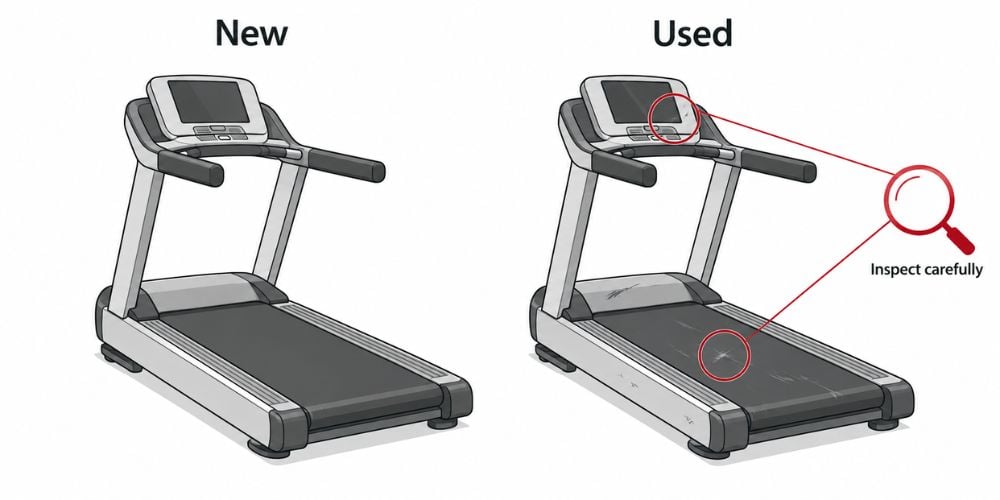
Want to spend less? Used equipment can cut the upfront cost, but it also brings more uncertainty.
Option | Cost | Main Advantage | Main Risk |
New | Highest | Full life ahead of it | Larger upfront cost |
Refurbished | Medium | Lower price with some restoration | Quality depends on refurbisher |
Used | Lowest | Cheapest way to buy | Wear and unknown history |
Before buying used equipment, check the cables, upholstery, bearings, frames and welds, belts and decks, consoles, motors, and replacement-part availability.
For a simple bench or rack, buying used can be fairly straightforward. For treadmills and other machines with motors and electronics, I would inspect much more carefully.
There is another check people sometimes miss: recalls.
Before buying an older machine, you can search the U.S. Consumer Product Safety Commission recall database for the brand and model. Exercise equipment has been recalled for issues ranging from moving components to electrical and fire hazards, so checking the model history takes only a few minutes and can save trouble later.
What about warranty? It matters because frames, moving parts, motors, electronics, upholstery, and other wear items do not all have the same service life.
That is why comparing only the purchase price can be misleading. A slightly higher upfront price may make sense if it comes with better parts support and less uncertainty about the machine’s history.
Conclusion
So, how much does commercial gym equipment cost? Individual pieces may range from around $500 to more than $20,000, while a complete commercial gym can cost roughly $25,000 to $500,000+.
Cardio usually costs the most per machine, while strength equipment and free weights add up because you need more individual pieces.
If you want to see how those pieces can fit together, at YR Fitness, we can help you compare commercial cardio, strength equipment, racks, and accessories for different spaces and budgets.
Related articles:



