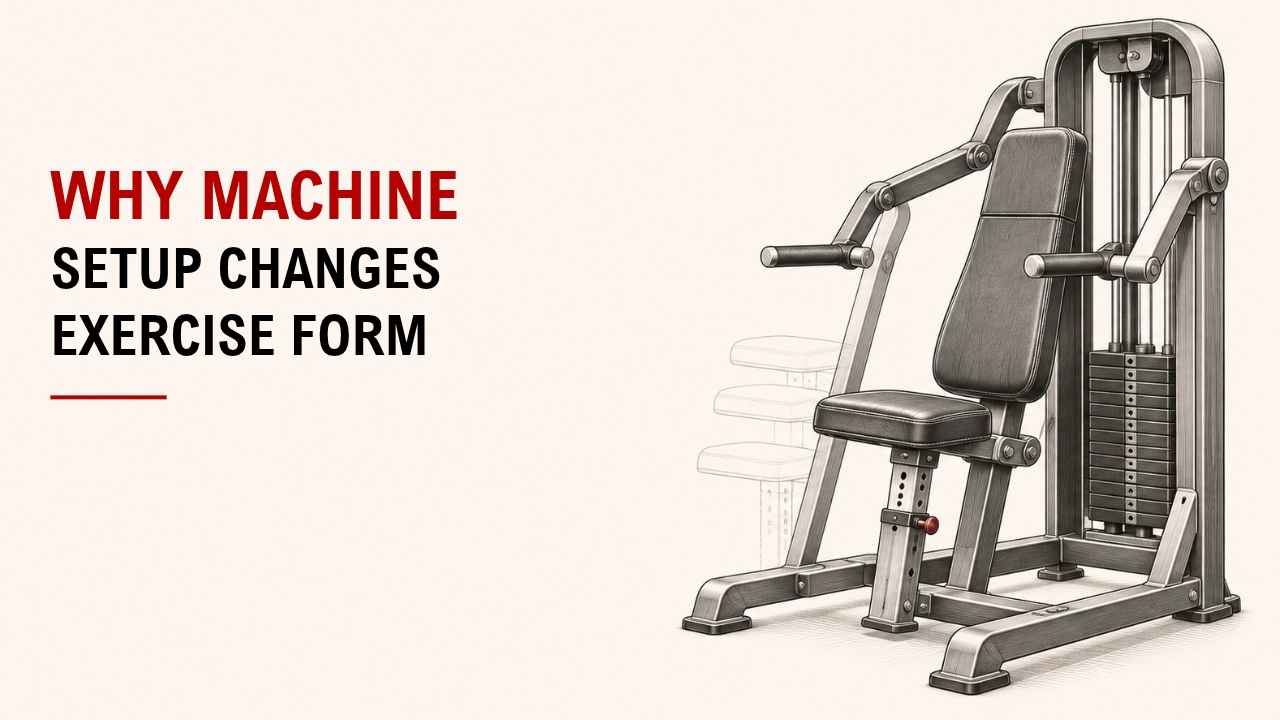

Have you ever adjusted a machine and suddenly felt the exercise differently? Even a small setup change can affect your form.
The short answer is simple: setup changes your joint position, support, range of motion, and leverage. That changes how your body moves through each rep.
As the founder and chief designer of YR Fitness, I have spent decades working with strength-machine design and movement angles. In my experience, the right setup often makes exercise feel smoother and more natural.
Below are seven reasons machine setup changes your form. Check them before adding more weight.
1. Seat Height Changes Your Joint Position
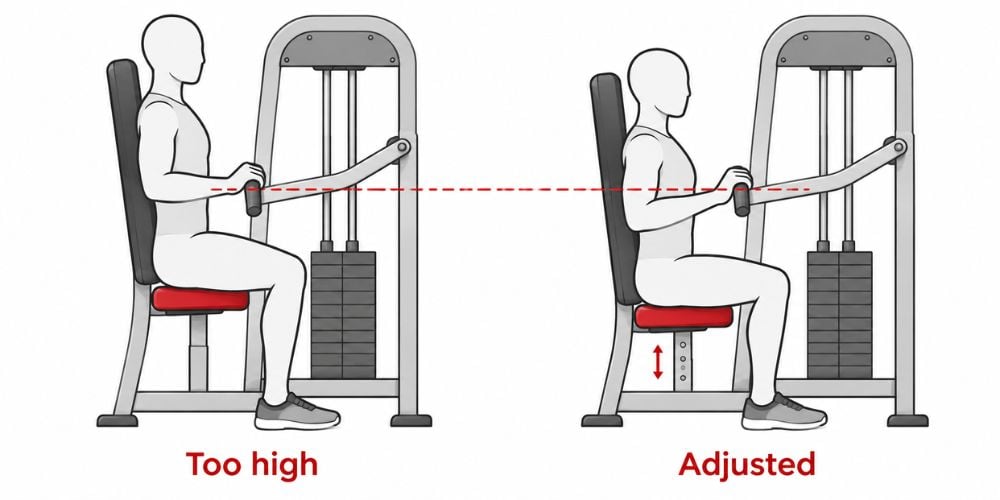
Seat height controls where your body sits in relation to the handles, pads, and machine pivot points.
If the seat is too high or too low, your shoulders, elbows, hips, or knees may start from a different angle. Your body may then change its movement to complete the rep.
Take a chest press as an example. The American Council on Exercise recommends adjusting the seat so the handles sit around mid-chest level on a seated chest press. ACE seated chest press guide
The same idea applies to:
- Shoulder press machines
- Leg extensions
- Leg curls
- Seated rows
- Pec deck machines
On a seated biceps curl, for example, ACE recommends aligning the elbow with the machine’s axis of rotation. That is a good example of why seat position matters. ACE seated biceps curl guide
Does the machine already feel awkward before the first rep? Check your seat height first.
2. Pad Position Changes Where Your Body Is Supported
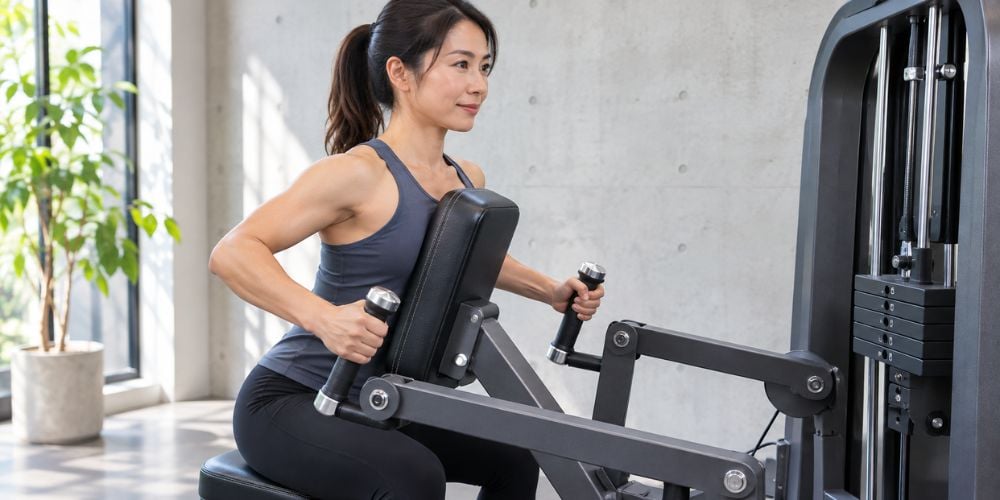
Pads help keep your body stable. Move them to the wrong position, and you may start compensating.
For example, if the chest pad on a row machine sits too far away, you may reach excessively for the handles or pull your torso away from the support.
The same issue can happen with:
- Thigh pads
- Back pads
- Ankle rollers
- Shoulder pads
- Knee pads
Here is why this matters: support should help you hold your position, not force you into one.
Can you stay against the intended pad throughout the rep? If not, adjust it before increasing the weight.
3. Handle Position Changes Your Arm Path
Adjustable handles change where your hands start and how your shoulders and elbows travel.
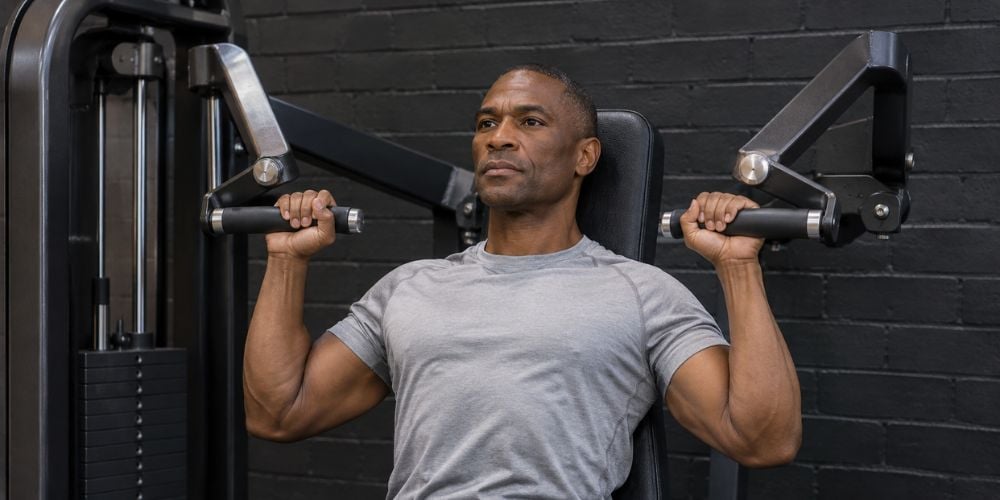
If chest press or pec deck handles start too far behind you, the starting stretch may feel excessive. Start too far forward, and you may shorten the movement unnecessarily.
Choose a position that lets you move smoothly without forcing your shoulders or elbows.
The ACE seated shoulder press guide, for example, recommends setting the handles around shoulder height or slightly above.
Should you copy the setting used by the person before you? Not automatically.
The NSCA notes that machine selection and adjustment can depend on factors such as a person’s height and body proportions. Machines may therefore fit two people differently.
4. Foot Placement Changes Your Lower-Body Form
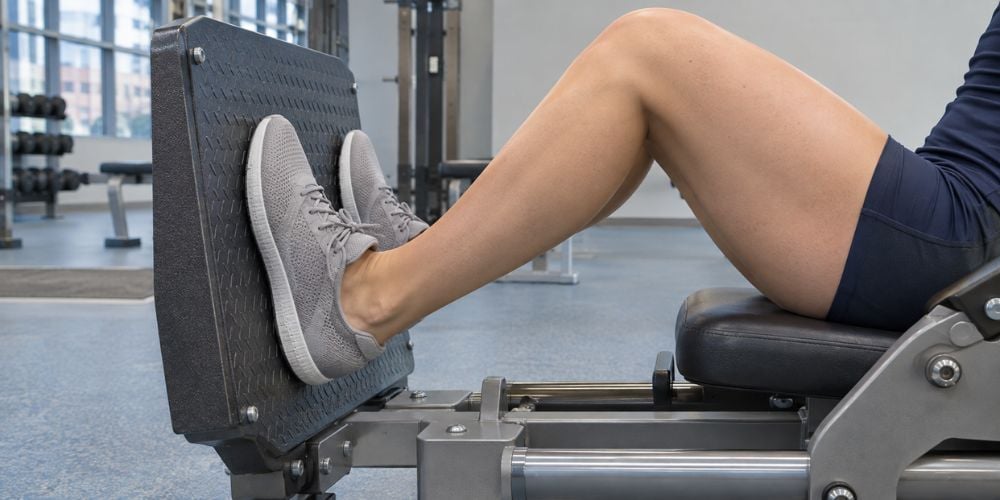
Foot position changes what happens to your ankles, knees, and hips.
You will notice this most often:
- Leg press
- Hack squat
- Smith machine
- Pendulum squat
- Calf raise
For example, moving your feet on some squat machines changes how much your knees and hips bend. Moving them wider or narrower can also change how the movement feels.
For a seated leg press, ACE recommends starting with the heels flat and adjusting the seat and feet so the knees are around a 90-degree bend. It also recommends keeping the heels supported during the press. ACE seated leg press guide
What should you watch for?
- Keep your heels supported.
- Let your knees track comfortably.
- Keep your hips controlled.
- Avoid extreme foot positions just to make the exercise feel different.
If you want to compare how different machine designs handle seats, pads, handles, and training positions, at YR Fitness, we make commercial strength equipment with adjustable setups for different users. Browse the range and look closely at how each machine supports the body before and during the movement.
5. Setup Changes Your Range of Motion
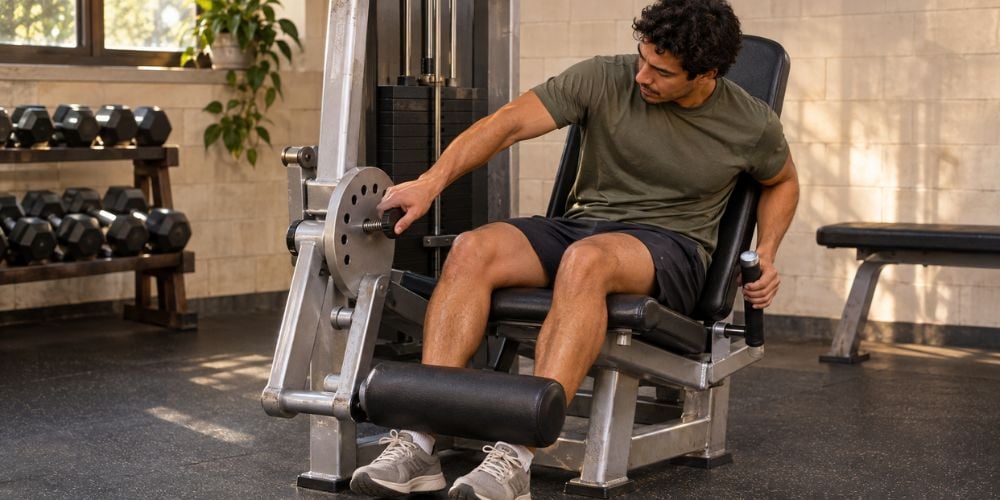
Seat position, pads, handles, and machine stops can all change how far you move.
A poor setup may create too much range, pushing you into an uncomfortable position. On the other hand, it may create too little range and cut the movement short.
In my decades of design experience, I often see people chase the deepest possible movement simply because the machine allows it. A better goal is a range you can control while keeping your body stable.
Exercise | Setup That Changes Range |
Chest press | Seat and handle starting position |
Leg press | Seat or backrest position |
Leg extension | Seat and roller position |
Pec deck | Arm starting position |
Seated row | Chest pad and handle position |
Changed a setting? Test two or three light reps before returning to your normal training weight.
6. Setup Changes Your Leverage
Why can the same weight suddenly feel heavier after you adjust the machine?
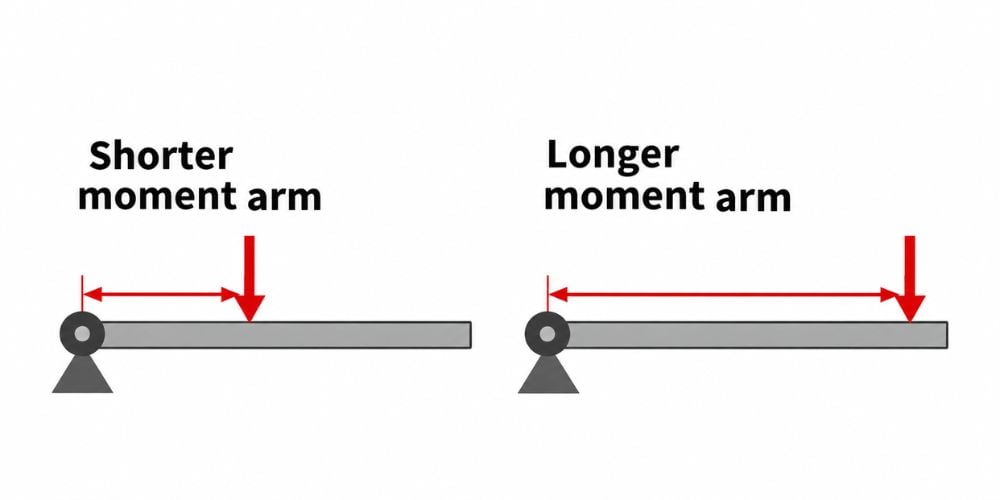
One reason is leverage. Changing your body position changes how your joints meet the machine’s resistance.
So even if the weight stack still says 40 kg, the exercise may not feel the same. Your new position may place you in a stronger or weaker part of the movement.
Machine design matters too. The NSCA explains that resistance machines can use different resistance systems and movement designs across their range of motion.
Should you lower the weight after changing your setup? Yes, if you need to.
Get your position right first. Then choose a resistance you can control from start to finish.
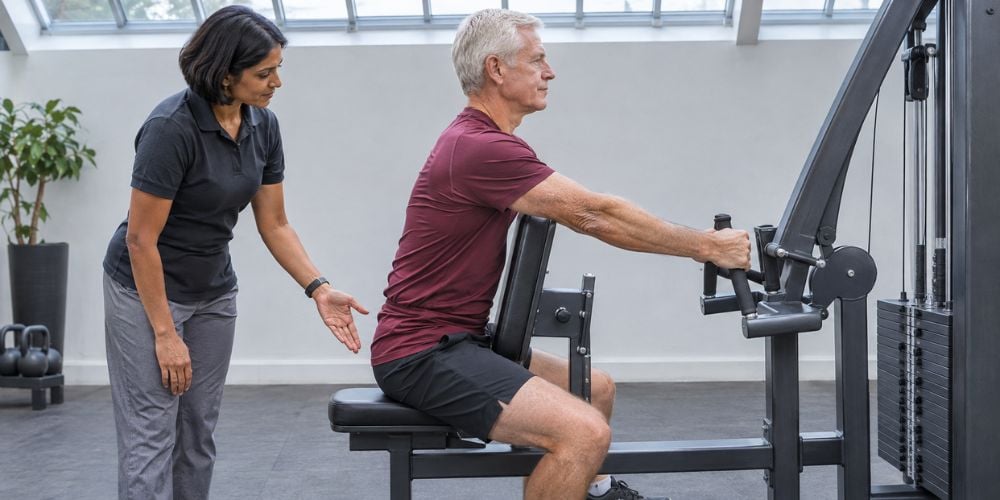
7. Poor Setup Makes You Compensate
Poor setup often shows up as unwanted body movement.
You may:
- Lift your hips off the seat
- Round your lower back
- Shrug your shoulders
- Twist your torso
- Move your knees inward or outward
- Reach too far for the handles
- Shorten each repetition
These signs do not always mean the exercise itself is wrong. Sometimes you simply need to change the setup.
ACE’s leg press guidance, for example, tells users to keep the back and sacrum against the backrest and avoid lifting the butt or rounding the lower back during the exercise.
Before changing your technique completely, ask yourself:
Is the seat right? Are the pads supporting me? Can I reach the handles comfortably? Are my feet stable?
Then perform a few light reps. If the movement feels smoother, you have probably found a better setup.
Conclusion
Machine setup changes exercise form because it changes where your joints start, how your body is supported, your movement path, range of motion, and leverage.
Take a few seconds to adjust the seat, pads, handles, and foot position before adding more weight. A machine should help you move smoothly, not make you fight against its setup.
If you want to explore strength machines built around practical movement paths and adjustable user positions, at YR Fitness, we can help you find equipment designed for a more natural training experience. Browse the equipment range and see which designs best match the way you want to train.
Related articles: