


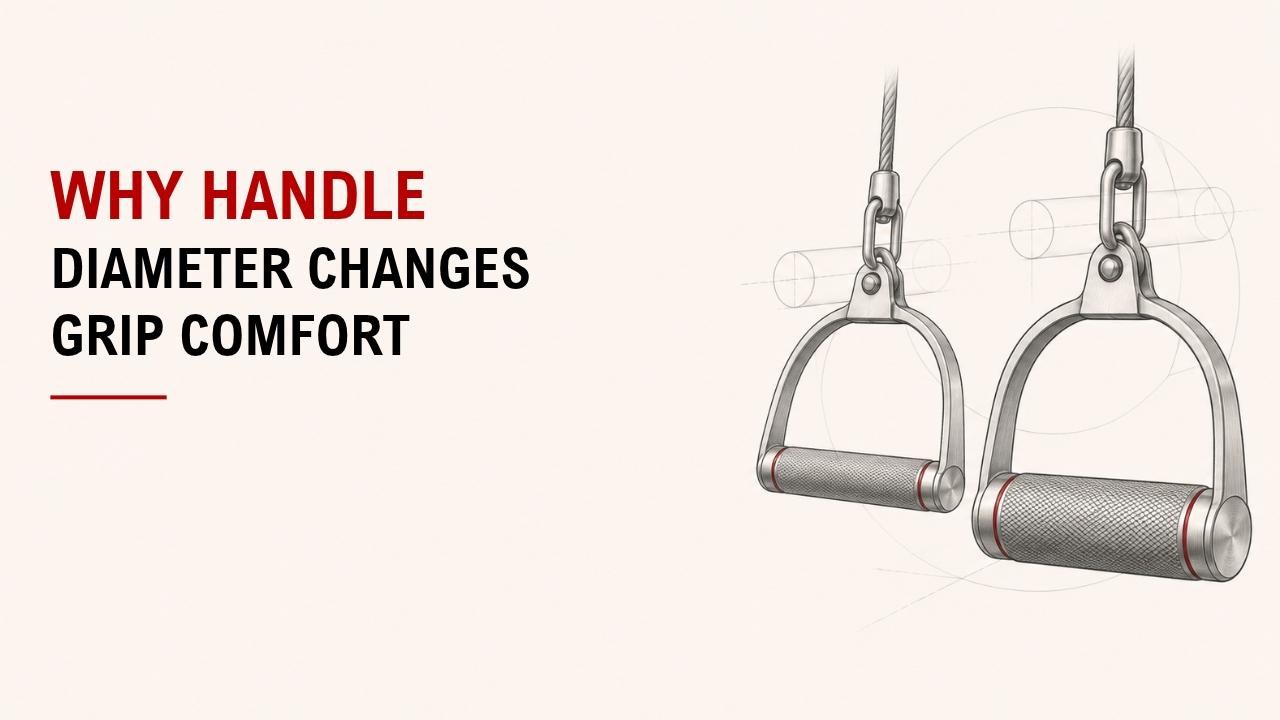

Have you ever used a gym handle that felt too thick or too thin? The diameter can quickly change how comfortable and secure your grip feels.
The short answer is simple: thicker handles usually need more grip effort, while thinner handles are easier to wrap your fingers around. Hand size and exercise type also matter.
As an Ergonomics Engineer at YR Fitness, I study how handle size, hand position, and equipment design affect comfort during exercise. I’ve seen many cases where a small change in grip design moves feel much more natural.
Below, I’ll show you the six main reasons handle diameter changes grip comfort. You’ll also see what to look for the next time you train.
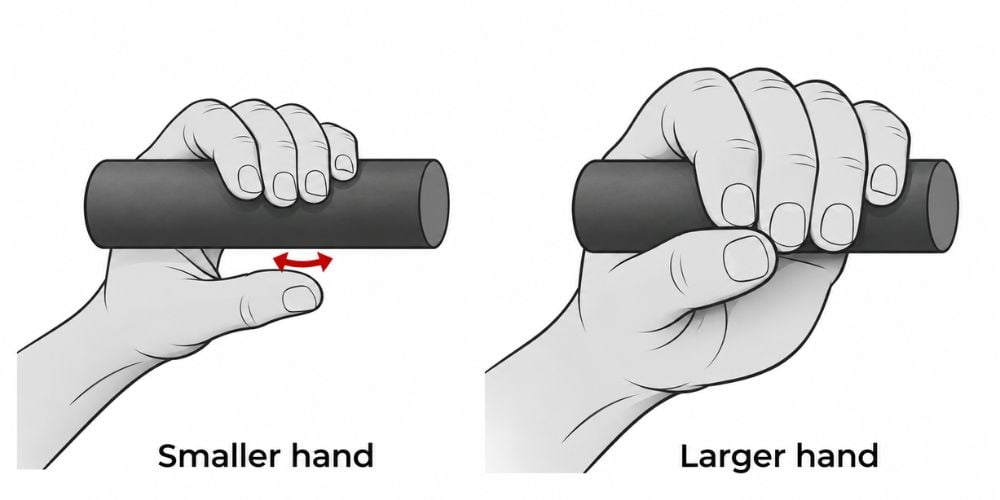
1. Thicker Handles Make Your Fingers Work Harder
A thicker handle gives your fingers less room to wrap around it.
That usually means you need to squeeze harder to keep the handle secure. Your fingers and forearms may also tire sooner.
Research on the effect of handle diameter during a power grip found that handle diameter changed both total grip force and how force was shared across different parts of the hand. The study also found that maximum grip force depended on the relationship between hand length and handle diameter.
You may notice this most during:
- Lat pulldowns
- Seated rows
- Dumbbell curls
- Farmer carries
- Cable exercises
Why does this matter?
If you are trying to train your back or arms, you may not want your grip to fail first.
A thicker grip can be useful when grip training is the goal. For normal strength work, however, too much thickness may simply add unnecessary hand fatigue.
Simple takeaway: thicker handles generally increase grip demand.
2. Thin Handles Are Easier to Wrap Your Hand Around
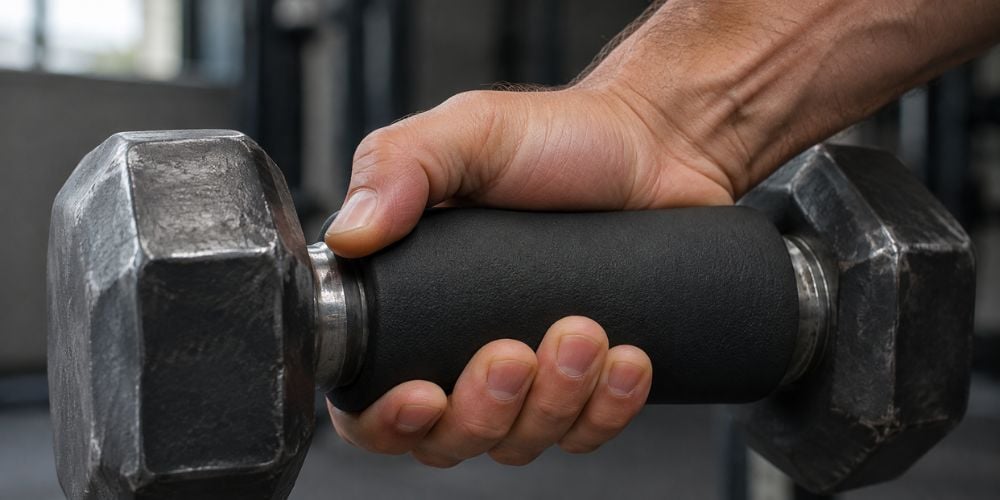
A thinner handle lets your fingers close farther around the grip.
For many people, that feels more secure because the fingers can form a more complete wrap. You may also need less effort simply to hold the handle.
But thinner is not automatically better.
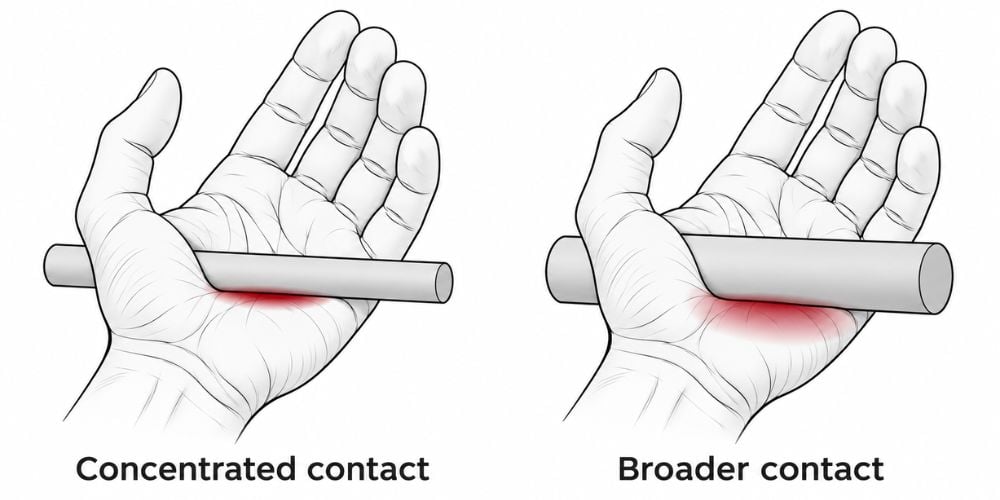
If the handle becomes too small, pressure can feel more concentrated against your palm, especially as the resistance gets heavier.
Here is the basic trade-off:
Handle Feel | What You May Notice | Possible Issue |
Very thin | Easy finger wrap | More concentrated palm pressure |
Moderate | Secure, natural grip | Often easier to control |
Very thick | More hand contact | Fingers may not wrap fully |
Oversized | High grip demand | Earlier hand and forearm fatigue |
I usually think of it this way:
You want enough thickness for comfort, but not so much that closing your hand becomes work by itself.
3. Diameter Changes Pressure on Your Palm
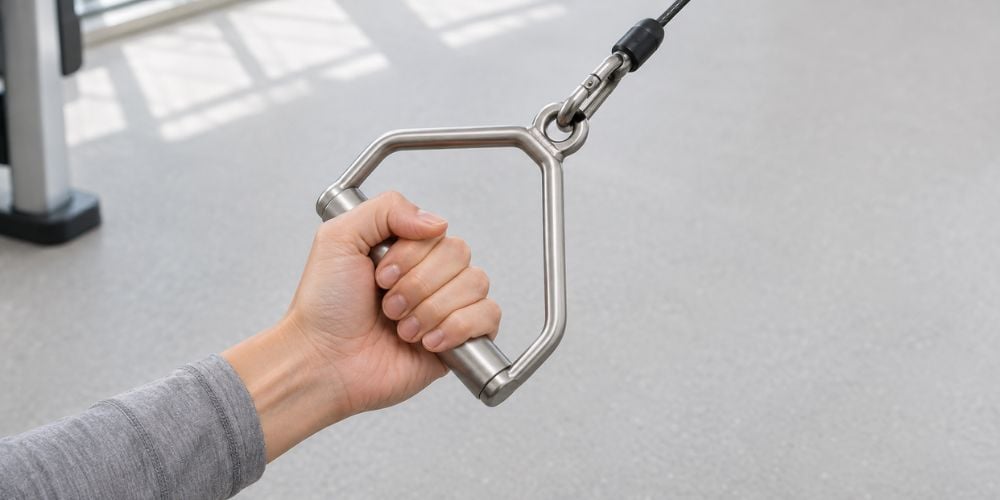
Handle diameter also changes how your hand contacts the grip.
A smaller handle puts the load across a different contact area than a larger one. That changes both pressure distribution and where your hand produces force.
A study of cylindrical handles, hand size, grip force, and contact area tested handles from 38 to 83 mm in diameter. The researchers found that the relationship between handle size and hand size explained much of the variation in grip force, normal force, and contact area.
Here is why this matters.
A slightly larger handle may spread contact across more of your hand. But once the grip becomes too large, your fingers may struggle to wrap around it securely.
Good grip comfort is usually a balance of:
- Palm pressure
- Finger position
- Grip security
- Handle thickness
When I test a handle, I pay attention to whether the pressure feels spread naturally or concentrated in one uncomfortable spot.
4. Hand Size Changes What Feels Comfortable
Not everyone has the same hands.
That means one handle diameter cannot feel perfect for everyone.
Someone with larger hands may feel comfortable with a thicker grip. Someone with smaller hands may find the exact same handle awkward.
Ask yourself:
Can I close my hand around the handle naturally?
If yes, the diameter is probably a reasonable fit.
If your fingers barely reach around it, the handle may be too thick. If the grip feels like it is digging sharply into your palm, it may be too thin.
At YR Fitness, we consider handle position and grip design as part of the complete movement experience, not as separate details. If you want to see how different grips are used across commercial strength machines, explore our equipment at YR Fitness and compare how the handles change from one exercise to another.
5. Handle Diameter Changes Forearm Fatigue
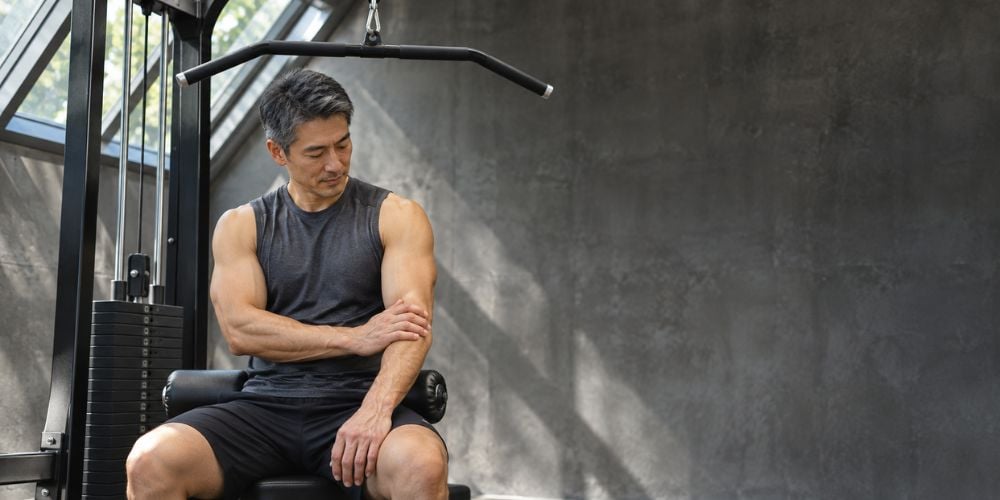
Your forearms help keep your fingers closed around the handle.
The harder you need to squeeze, the more your grip can become part of the exercise.
Think about a lat pulldown.
Your goal is probably to train your back. But if the handle is difficult to hold, your fingers and forearms may tire before your back does.
I often see this happen with weights that otherwise feel completely manageable.
Weight is not the problem. The grip becomes the limiting factor.
A study looking at handholds found another useful example. When researchers compared larger 51 mm handholds with smaller 22–32 mm ones, breakaway strength was 8–13% lower with the larger diameter, depending on handhold orientation.
You can read the handhold diameter and breakaway-strength study if you want the technical details.
It was not a gym-machine study, so the situation is different. But it clearly shows that increasing diameter can change how effectively the hand holds onto a cylindrical grip.
6. Exercise Type Also Matters
The right grip also depends on what you are actually doing.
A farmer carrying and a seated row do not ask the same thing from your hands.
Exercise | Main Grip Priority | If the Handle Is Too Thick |
Lat pulldown | Secure grip without early fatigue | Forearms may limit the set |
Seated row | Comfortable wrap and wrist position | Harder to focus on the back |
Dumbbell curl | Control without excessive squeezing | Grip may distract from the curl |
Cable exercise | Easy grip through different angles | Hand fatigue may build sooner |
Farmer carry | Strong grip is part of the exercise | Extra grip demand may be useful |
Chest press | Stable, comfortable hand position | Grip may feel unnecessarily tiring |
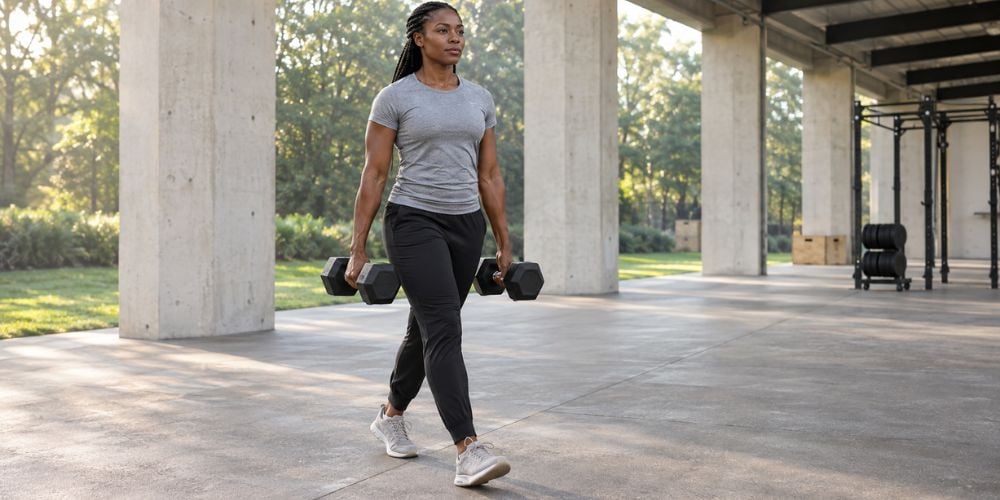
Take the farmer’s carry.
Grip strength is part of the challenge, so a thicker handle may be completely acceptable.
The seated row is different.
You’ll probably want your back to tire before your fingers do.
So is one diameter best for every exercise?
No.
The grip should support the movement’s purpose.
Conclusion
Handle diameter changes how far your fingers wrap around the grip, where pressure sits in your hand, and how quickly your forearms become tired.
A handle that is too thick may make you squeeze harder. A handle that is too thin may create uncomfortable pressure in a smaller part of your hand.
And if you want to compare how grip design is applied across different strength machines, browse the equipment at YR Fitness and look closely at the handles, angles, and user contact points before deciding what feels most natural.
Related articles:



