


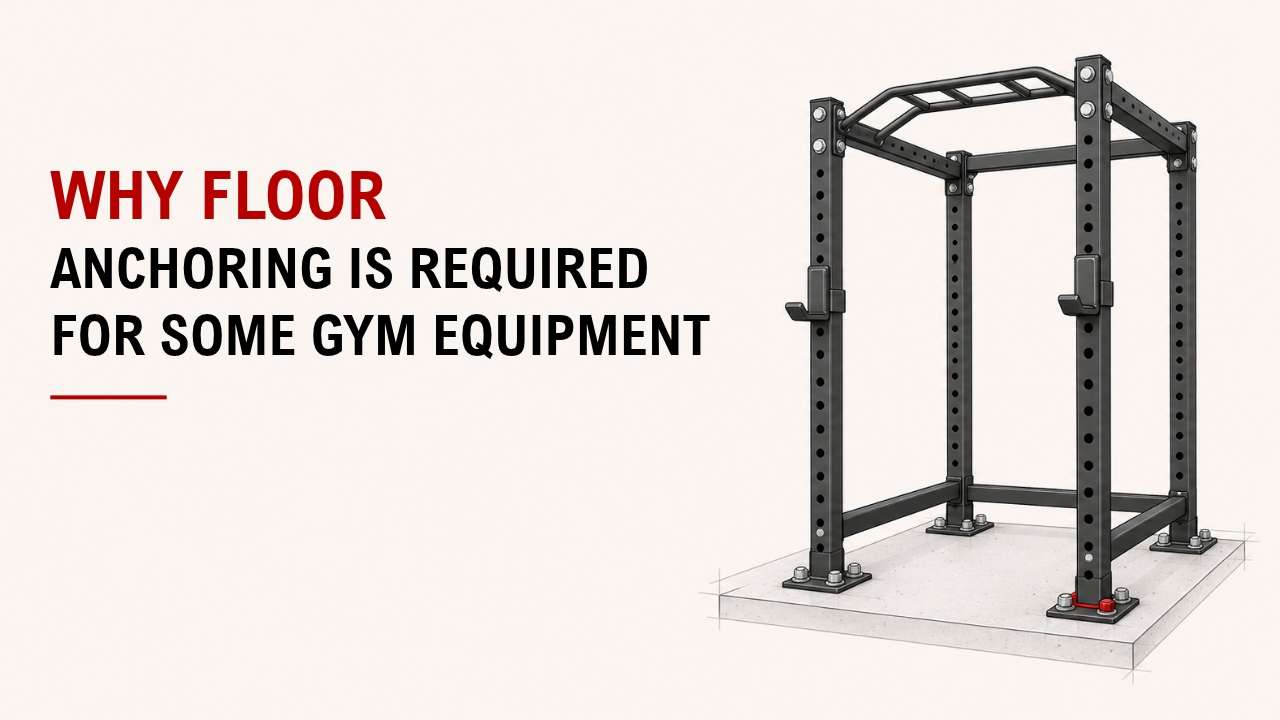

Why are some gym machines bolted to the floor? They need extra support to stay stable during exercise.
The reason is simple: floor anchoring prevents tipping, sliding, and unwanted movement. It keeps equipment secure during heavy workouts.
As a Machinery & Structural Engineer at YR Fitness, I work with equipment frames, structural strength, and stability. I often see how proper anchoring helps prevent dangerous machine movement.
Below are five reasons floor anchoring matters and which machines may need it. You’ll also learn how to spot equipment that needs extra support.
- 1. Prevents Equipment From Tipping Over
- 2. Stops Equipment From Sliding
- 3. Supports Equipment With Tall or Upright Frames
- 4. Helps Prevent Accidents and Equipment Damage
- 5. Meets Manufacturer Installation Requirements
- 6. Which Gym Equipment Usually Needs Floor Anchoring?
- How Do You Know If a Machine Needs Anchoring?
- Conclusion
1. Prevents Equipment From Tipping Over
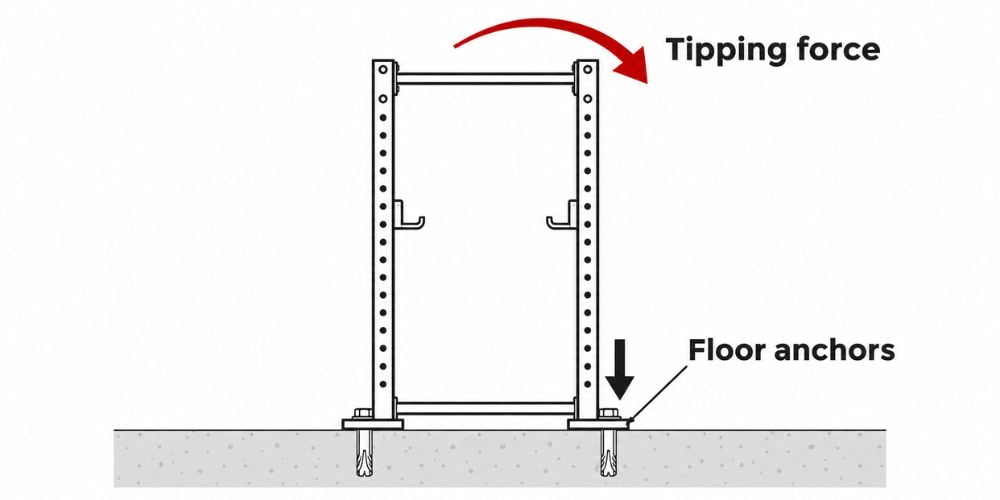
Some gym machines can tip when users apply strong pulling or pushing forces.
This is more likely with tall frames, narrow bases, or heavy attachments. Even a heavy machine can become unstable if enough force acts outside its base.
Floor anchoring helps by:
- Keeping equipment from tipping during exercise.
- Resisting strong pulling and pushing forces.
- Helping users train with greater confidence.
- Reducing the risk of equipment falling.
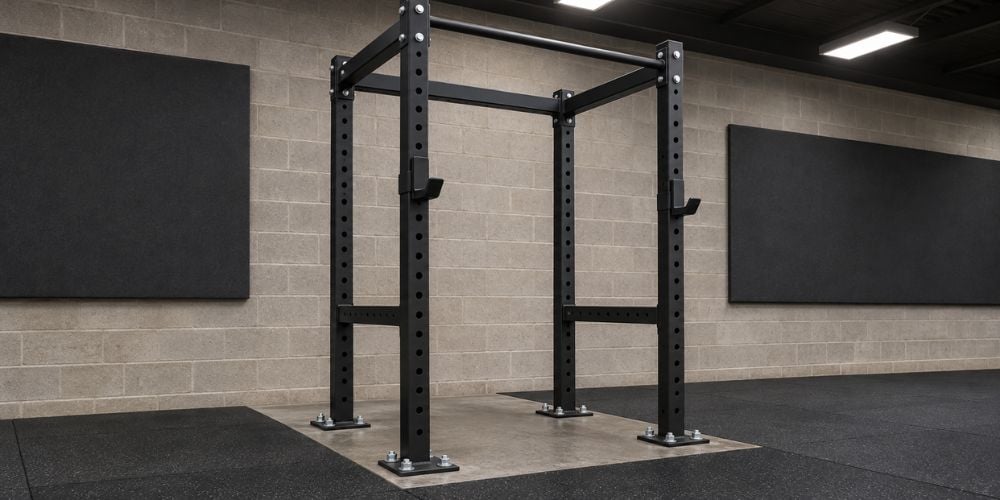
For example, a power rack experiences different forces during pull-ups or when someone racks a heavy barbell.
Some racks must be bolted down before use. The Rogue Bolt-Together R-3 Power Rack is one example where the manufacturer specifically requires floor anchoring.
What if a machine starts rocking?
Stop using it and tell gym staff. Rocking can indicate a stability or installation problem.
I often remind people that a heavy machine is not always a stable machine. Its frame design, base, and installation all matter.
2. Stops Equipment From Sliding
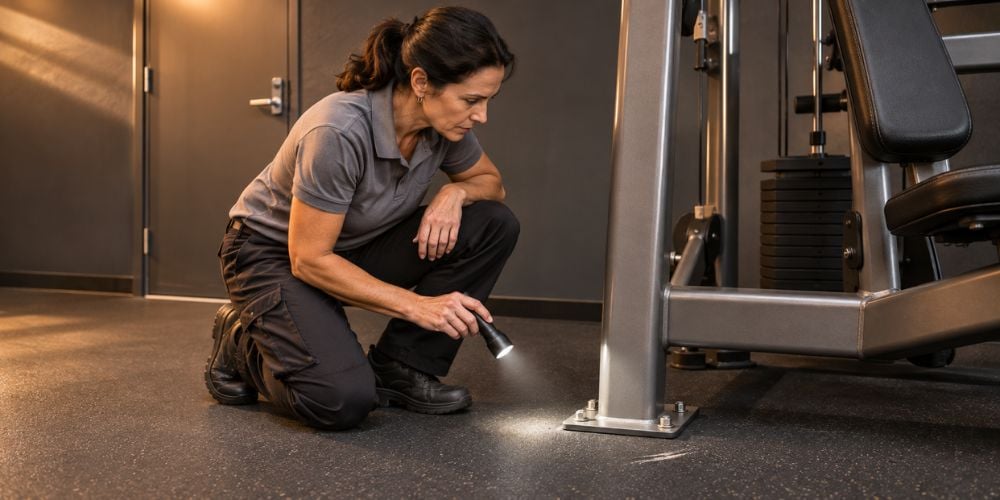
Have you ever felt a gym machine shift slightly while exercising?
Repeated pulling, pushing, or sudden movements can cause some unsecured machines to slide across the floor.
Floor anchors help keep them in place.
Here is why this matters:
Without Proper Stability | How Floor Anchoring Helps |
Machine shifts during exercise | Keeps equipment in position |
Strong pulls cause movement | Resists pulling forces |
Equipment moves closer to walkways | Helps maintain safe spacing |
Machine position changes between workouts | Keeps the exercise setup consistent |
Repeated movement wears the floor | Reduces movement-related damage |
For example, cable machines experience pulling forces from different directions. If the machine is not stable enough, these forces may cause it to move.
Quick tip: If a machine slides while you train, don’t try to fix it by adding more weight. Ask gym staff to inspect it first.
3. Supports Equipment With Tall or Upright Frames
Tall gym machines can need extra support because their height may increase tipping risk.
Cable towers, functional trainers, and some squat racks have upright frames that experience strong forces during exercise.
For example, pulling a cable from a high position can create force that affects the machine’s balance.
Floor anchoring helps:
- Keep tall frames secure.
- Reduce unwanted rocking.
- Resist pulling forces from different directions.
- Maintain stability during exercise.
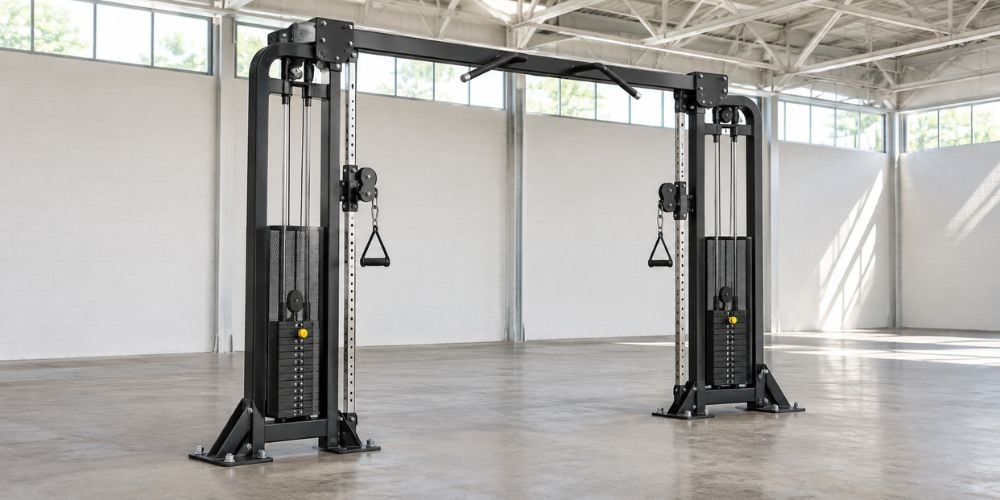
Think about a cable crossover machine. Users may pull cables from both sides, creating different forces on its frame.
Anchoring helps resist those forces when the machine’s design requires it.
Do all tall machines need anchoring?
No. Some have wide bases and are designed to stand securely without floor bolts.
The safest approach is to follow the manufacturer’s instructions rather than judge by height alone.
At YR Fitness, we pay close attention to frame strength, floor contact, and machine stability because these details affect how equipment performs during daily use. Our commercial strength machines are built with durable materials and practical structural designs to support regular training.
Explore our commercial gym equipment collection to see machines designed for heavy daily use, and review their installation requirements before choosing the right equipment for your training space.
4. Helps Prevent Accidents and Equipment Damage
An unstable gym machine can create risks for both users and nearby equipment.
If it tips, rocks, or slides during exercise, someone could lose their balance or get injured.
Repeated movement may also damage the machine or flooring.
Common problems include:
- Equipment tipping toward users.
- Machines moving into walkways.
- Damage to frames or connections.
- Scratches and wear on gym floors.
- Collisions with nearby machines.
I have seen how small movements can point to bigger installation problems. That’s why unusual rocking or shifting should never be ignored.
What should you do if a machine feels unstable?
Stop exercising and report it to gym staff.
Do not try to tighten floor anchors or modify the machine yourself. Proper installation should be handled by qualified personnel.
5. Meets Manufacturer Installation Requirements
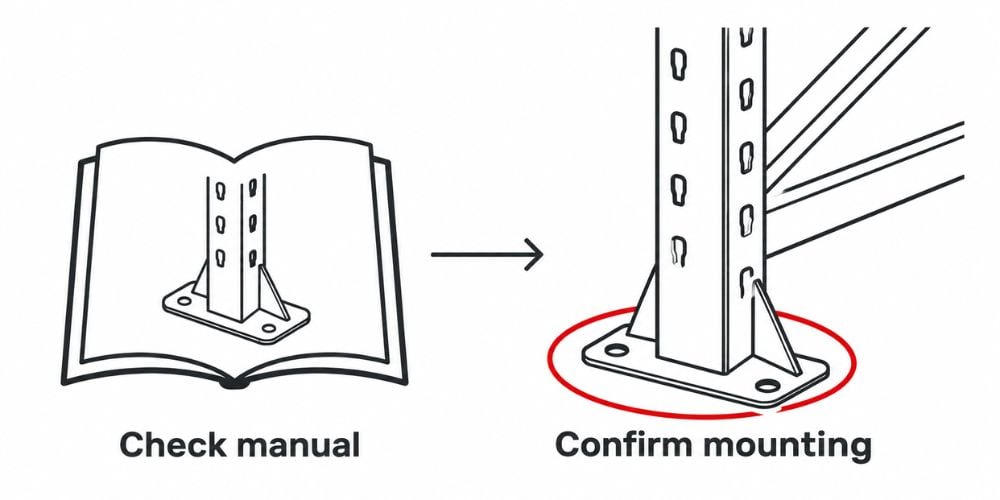
Some gym machines are specifically designed to be anchored to the floor.
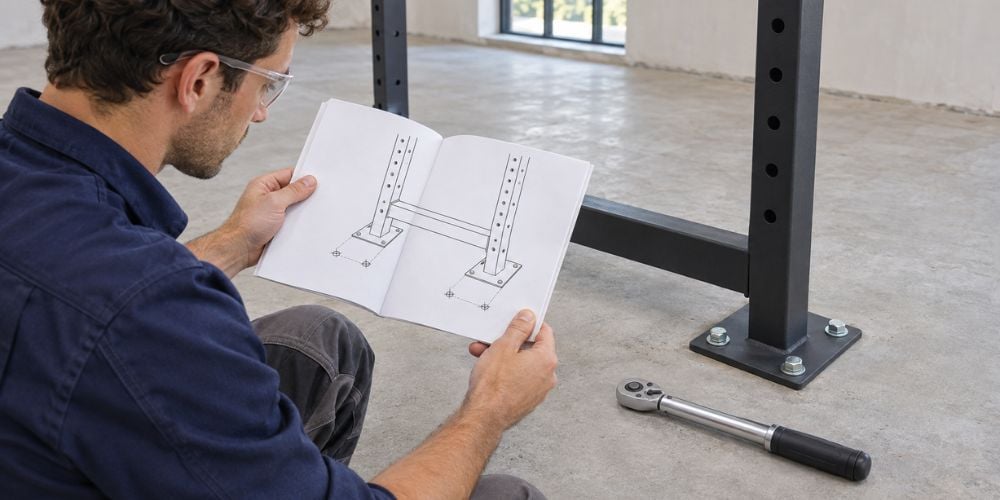
Manufacturers provide installation instructions explaining how equipment should be secured for safe operation.
Ignoring these requirements may affect stability and create safety or warranty problems.
Installation instructions may specify:
- Whether floor anchoring is required.
- Where anchor bolts should be placed.
- Which bolt types and sizes to use.
- What flooring or concrete conditions are suitable.
- How the installation should be inspected.
For example, certain power racks and training rigs require secure mounting before anyone uses them.
The Rogue HD Concrete Anchors guide also explains why anchor length matters when rubber flooring is installed over concrete.
Even if a machine feels stable without anchors, it may not be safe under normal training loads.
Does any floor work for anchoring?
Not necessarily. The floor structure must support the selected anchors and the forces created during exercise.
The Precor strength equipment assembly guide recommends consulting a licensed contractor about suitable fasteners and floor conditions.
Remember, proper anchoring is not just about installing bolts. The anchors must match the machine and the floor structure.
6. Which Gym Equipment Usually Needs Floor Anchoring?
Not every gym machine needs floor anchors.
It depends on the machine’s height, frame design, stability, and the forces created during exercise.
Here are some common examples:
Gym Equipment | Floor Anchoring Requirement | Main Reason |
Power racks | Often required, depending on design | Resists tipping forces |
Cable crossover machines | Some models require anchoring | Handles pulling from different directions |
Functional trainers | Depends on frame design | Maintains stability during cable exercises |
Wall-mounted training rigs | Require secure structural mounting | Supports the frame during training |
Smith machines | Depends on manufacturer instructions | Helps prevent unwanted frame movement |
Large selectorized machines | Many are freestanding; some need anchoring | Depends on frame stability and loading |
How Do You Know If a Machine Needs Anchoring?
Start by checking the manufacturer’s installation manual.
You can also look for:
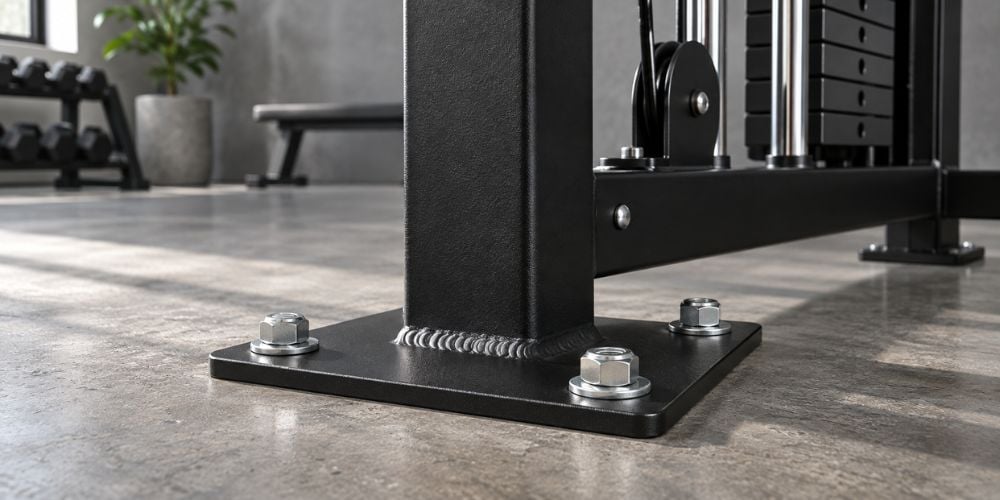
- Anchor holes: Openings near the machine’s base.
- Installation labels: Warnings or instructions mentioning floor bolts.
- Mounting requirements: Instructions requiring permanent fixing.
However, anchor holes alone do not mean anchoring is mandatory.
If you are unsure, ask gym staff or the equipment manufacturer before using the machine.
One thing I always tell fitness enthusiasts is that equipment should never be judged by weight alone. A heavy machine can still need floor anchoring to remain stable under certain forces.
Conclusion
Floor anchoring helps prevent tipping, stop sliding, support tall frames, and reduce accidents. Some gym machines require it to operate safely.
Always follow the manufacturer’s instructions and avoid using equipment that feels unstable.
At YR Fitness, we design commercial gym equipment with strength, stability, and daily use in mind. Explore our equipment range to find reliable machines and learn more about their installation requirements.
Related articles:



