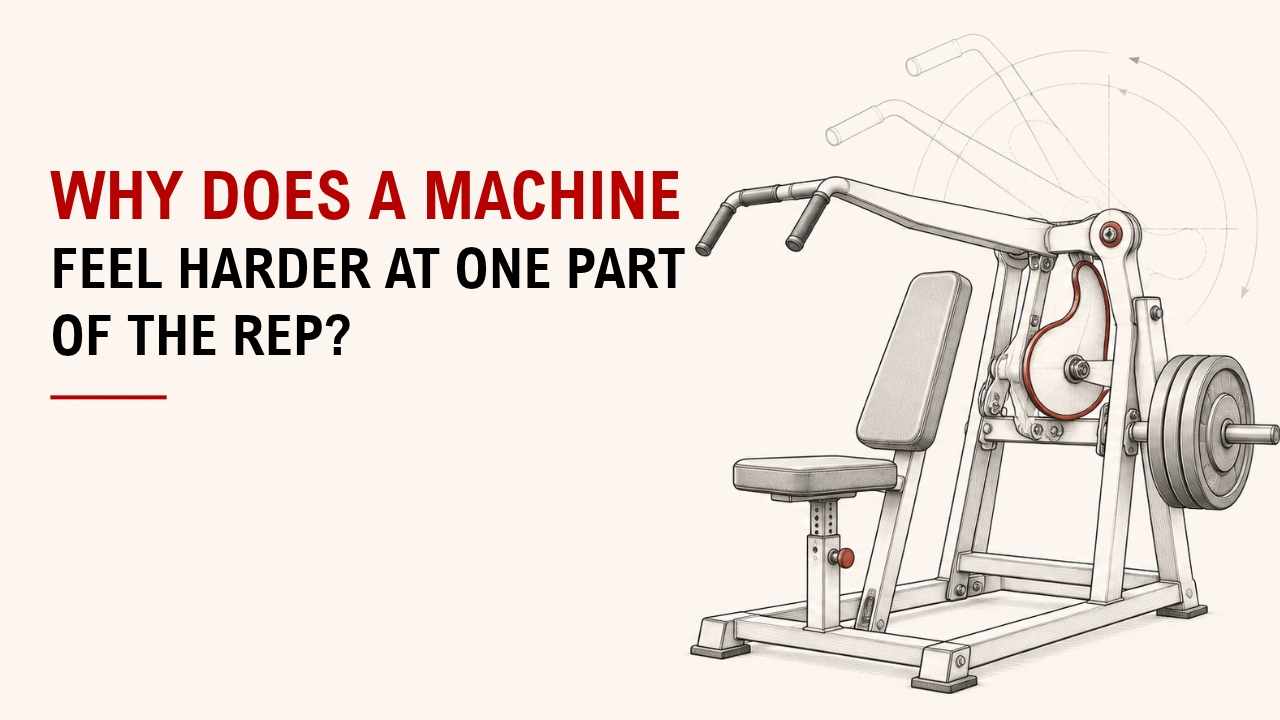

Have you ever used a gym machine that feels easy at first, then suddenly much harder halfway through the rep? It can seem strange when the weight stack has not changed.
The short answer is simple: your muscle strength, joint leverage, and the machine’s resistance mechanics change as you move. The same weight can therefore feel very different from one part of the rep to another.
As an Exercise Physiology & Biomechanics Expert at YR Fitness, I work closely with movement paths, resistance curves, and joint positions. I often see people blame the weight when changing leverage is actually what they are feeling.
Below, I’ll explain the six main reasons this happens and show you what to look for during your own exercises. Keep scrolling, and the hard part of your next rep should make much more sense.
1. Your Muscle Strength Changes Through the Range of Motion
Your muscles are not equally strong at every joint angle.
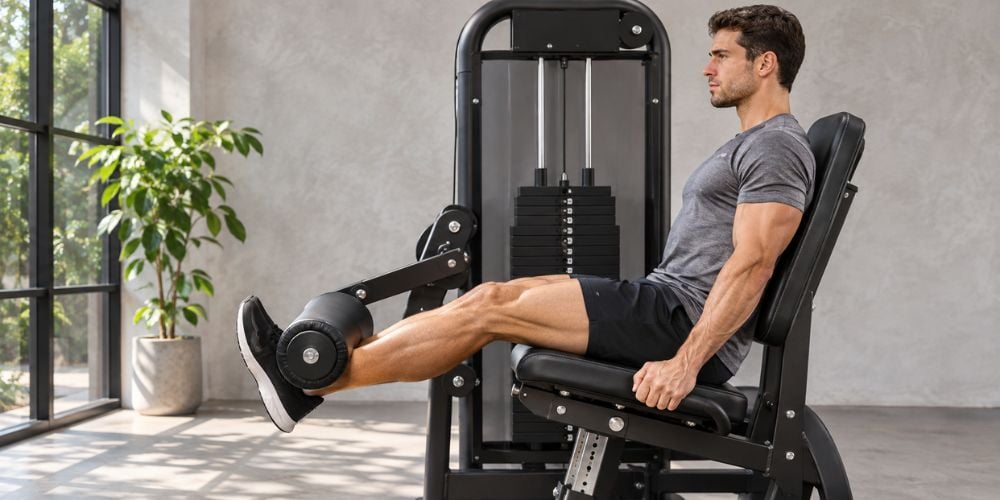
For example, during a leg extension, your quadriceps may produce force more easily at some knee angles than others. This changing ability is often described as part of your strength curve.
Why does that matter?
At one point, the weight may feel manageable. A few centimeters later, your muscles may have less mechanical advantage, so the same weight suddenly feels heavier.
Muscle force also depends partly on muscle length and how the muscle fibers are positioned to produce tension. The muscle length–tension relationship helps explain why force production changes as a muscle moves between different lengths.
I often tell people not to judge an exercise only by the number on the weight stack. Notice where the movement becomes difficult.
2. Your Joint Leverage Changes
Your joint position also changes how difficult the resistance feels.
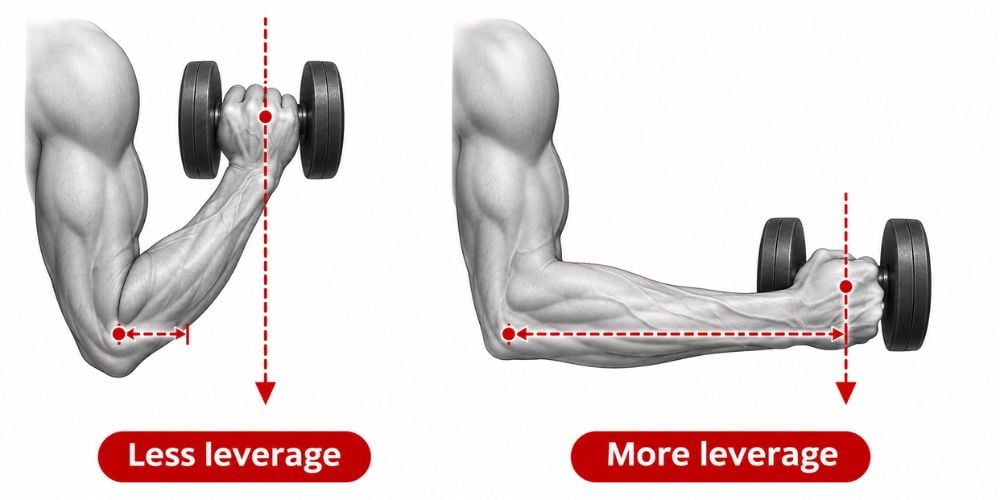
The important idea here is the moment arm. In simple terms, it describes how much leverage a force has around a joint.
Research on muscle moment arms shows that this leverage can change as joint position changes. Moment arms are directly related to a muscle’s ability to produce torque around a joint. This systematic review of shoulder muscle moment arms gives a more detailed explanation.
Think about holding a dumbbell with your elbow bent.
When gravity has more leverage against your elbow, your biceps must work harder. When gravity has less leverage, the same dumbbell feels easier.
The same principle applies to many machines.
What Changes During the Rep | What You May Feel |
Arm or leg angle | One position feels stronger than another |
Distance from resistance to joint | Joint torque increases or decreases |
Muscle moment arm | Your muscle gains or loses leverage |
Resistance direction | The hardest point moves |
So, did the weight suddenly get heavier?
No. Its mechanical effect on your joint changed.
3. The Machine May Use a Cam to Change Resistance
Sometimes the changing difficulty comes from the machine itself.
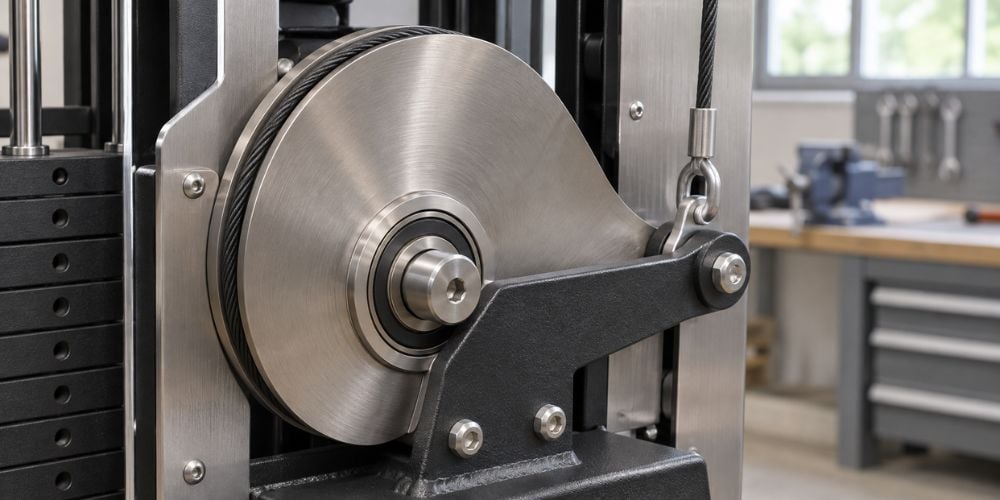
Many selectorized strength machines use a cam. This is a specially shaped wheel connected to the cable or weight-stack system.
Unlike a normal round pulley, a cam changes mechanical advantage as it rotates.
That allows the machine to make resistance slightly heavier or lighter at different parts of the rep.
Why would a manufacturer do that?
The idea is usually to better match the resistance with the strength you can produce at different joint angles. If you are stronger in one part of the movement, the machine can provide more resistance there.
Here is the basic difference:
Machine Mechanism | What It Does | How the Rep May Feel |
Round pulley | Keeps the pulley radius more constant | Mechanical resistance is more consistent |
Shaped cam | Changes leverage as it rotates | Resistance rises or falls through the rep |
Plate-loaded lever | Rotates weight around a pivot | Difficulty changes with lever position |
Cable system | Pulls along the cable direction | Resistance changes as cable angle changes |
A good resistance curve should challenge you without creating an awkward or sudden jump in force.
At YR Fitness, we design our strength equipment with movement paths, joint positions, and resistance behavior in mind rather than focusing only on how much weight a machine can hold. If you want to compare different strength-machine designs and see how these ideas are applied in real equipment, you can explore our commercial gym equipment.
4. The Lever Arm of the Machine Changes
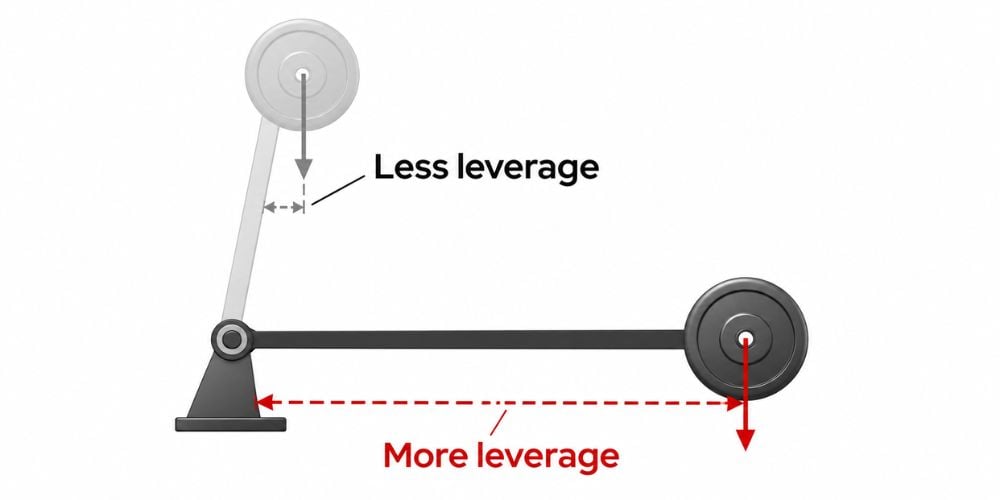
This effect is especially noticeable on plate-loaded machines.
The plates sit on a lever that rotates around a pivot. As that lever moves, its position relative to gravity changes.
Imagine the lever starting almost vertically.
Gravity may have relatively little leverage against the pivot in that position. As the lever moves toward a more horizontal position, gravity gains leverage and the exercise can feel harder.
Once the lever continues past that position, resistance may decrease again.
That is why two machines loaded with the same 20 kg of plates can feel completely different.
The question is not only:
“How much weight is on the machine?”
It is also:
“Where is that weight relative to the pivot?”
I notice this often when comparing plate-loaded presses and rowing machines. Two machines can look very similar but feel completely different because their lever lengths and pivot locations are different.
So don’t be surprised if your usual 20 kg feels much heavier on another machine. Twenty kilograms of plates does not automatically mean the same resistance curve.
5. Cable Direction Changes During the Rep
Cable exercises add another factor: the direction of the cable.
A cable always pulls along its own line. Your arm or leg, however, keeps changing position during the rep.
That means the angle between your limb and the cable changes too.
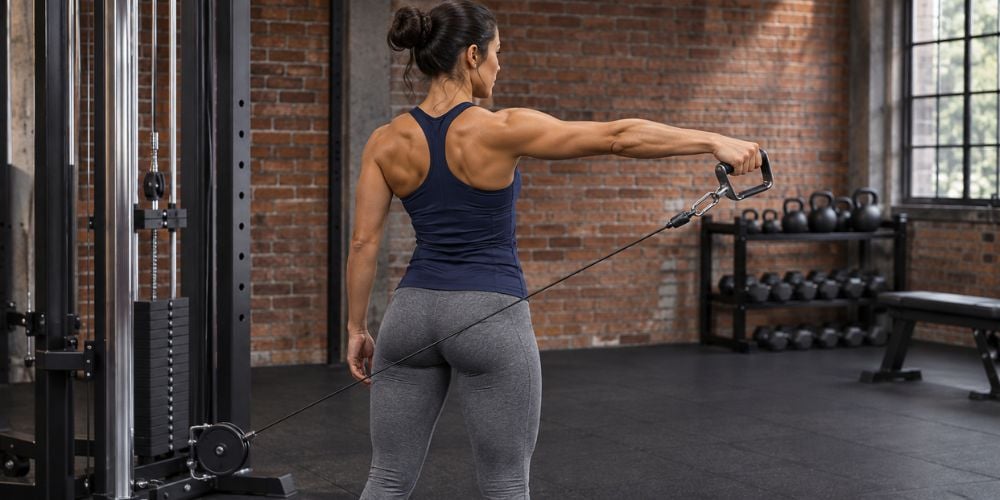
Take a cable lateral raise.
At one point, the cable may pull against your arm at an angle that creates a lot of torque at your shoulder. At another point, the cable may have less leverage.
The weight stack stays the same, but the exercise does not feel the same.
Want to change where a cable exercise feels hardest?
Try changing your position slightly.
Moving closer to or farther away from the pulley changes the cable angle. That can shift the resistance curve and make a different part of the movement more challenging.
When I use cables, I pay attention to the cable direction as much as the weight itself. It is often a quick clue to where the exercise will become hardest.
6. Your Muscle Length Changes
Your muscles also change length throughout an exercise.
A muscle normally moves between a more lengthened position and a more shortened position. It cannot produce exactly the same force at every length.
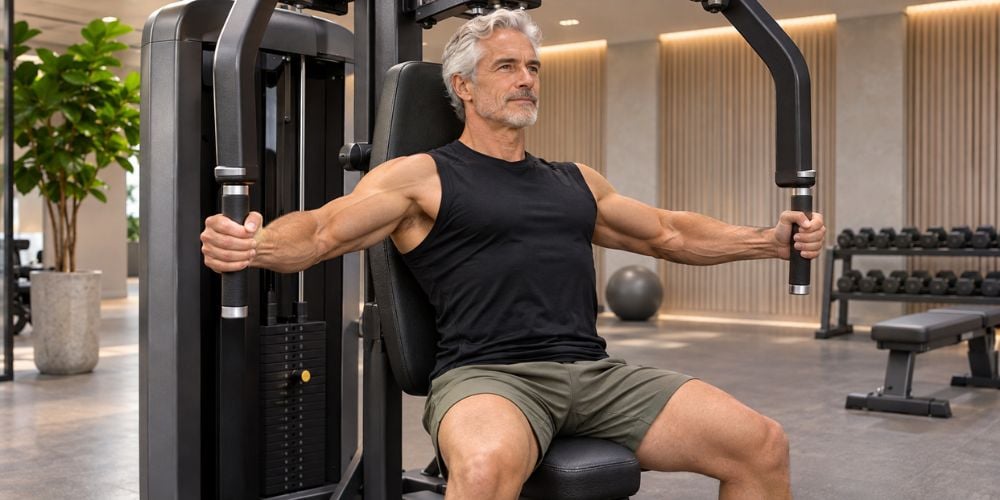
Take a chest fly.
Your chest muscles begin in a more lengthened position when your arms are open. They shorten as your arms come together.
At the same time, several other things are changing:
- Your muscle length
- Your joint angle
- Your body’s leverage
- The machine’s leverage
- The direction of resistance
All of these factors combine to create the resistance curve you feel.
This is why I prefer judging an exercise by the entire movement rather than asking whether the machine simply feels heavy.
Conclusion
A machine feels harder at one part of the rep because your body and the machine are both changing leverage as you move. Muscle strength, joint angles, lever arms, cams, cable direction, and muscle length can all affect where the exercise feels hardest.
You do not need to avoid a machine just because one section feels challenging. Focus on whether you can move smoothly, stay in position, and control the resistance through the full range.
If you want to see how these resistance principles are used across different strength-machine designs, you can explore YR Fitness equipment and compare the movement paths and machine styles that best fit the exercises you enjoy.
Related articles: