




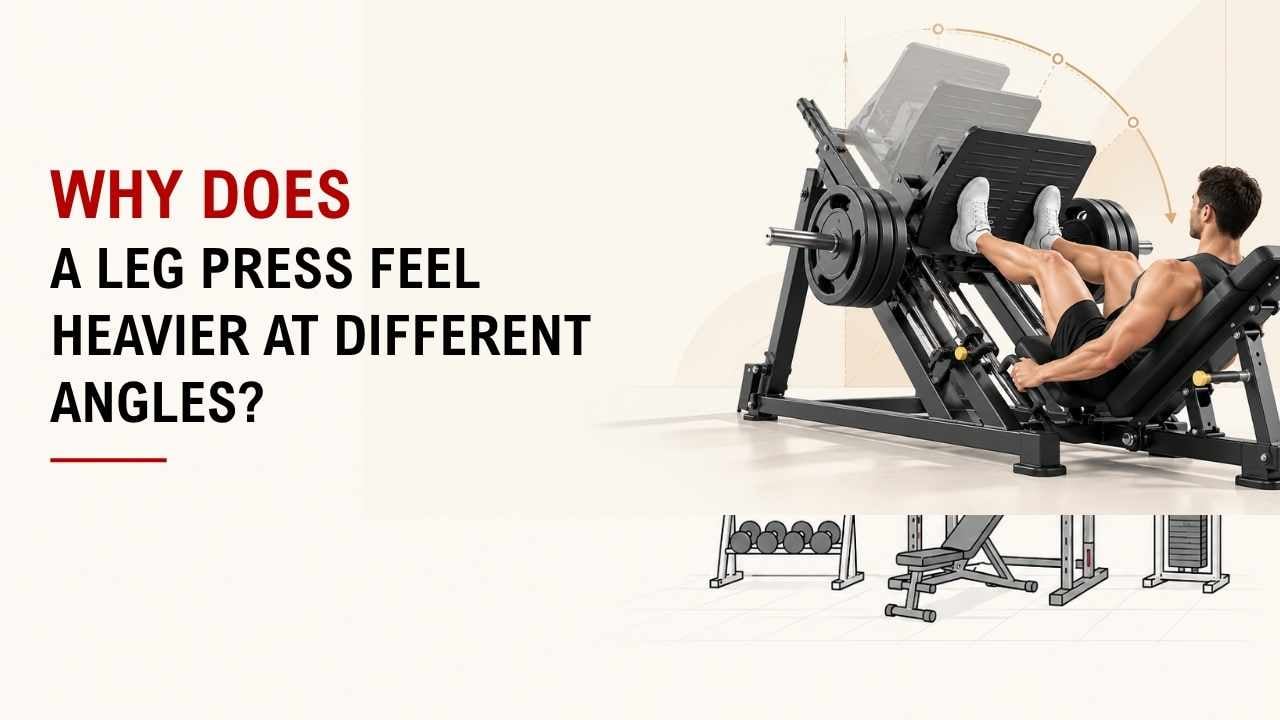

Have you ever moved to another leg press, loaded your usual plates, and suddenly thought, Why does this feel so much heavier? The angle of the machine is often a big part of the answer.
The short answer is: a steeper leg press usually makes you work against more of the loaded weight. Sled weight, friction, machine design, seat position, and range of motion can also change how hard each rep feels.
As the Founder and Chief Designer of YR Fitness, I have spent decades working with strength machines and movement angles. In my experience, the number of plates alone rarely tells you how difficult a leg press really is.
Below, I will show you exactly why two leg presses can feel so different. Keep reading, and you will know what is actually changing when you switch machines.
- 1. A Steeper Leg Press Usually Feels Heavier
- 2. Why a 45-Degree Leg Press Does Not Feel Like the Full Plate Weight
- 3. The Sled Has Weight Too
- 4. Machine Design Changes Resistance
- 5. Your Seat and Body Angle Matter
- 6. Range of Motion Can Make the Same Weight Feel Heavier
- 7. Do Not Compare Leg Press Numbers Between Machines
- Conclusion
1. A Steeper Leg Press Usually Feels Heavier
The main reason is gravity.
On an angled leg press, the sled moves along rails instead of straight up and down. As those rails become steeper, more of the loaded weight acts directly against the direction you are pushing.
OpenStax explains this with inclined-plane physics: the part of an object’s weight acting parallel to a slope is calculated as weight × sin(angle).
Here is what that looks like:
Leg Press Angle | Approx. Portion of Weight Acting Along the Rails* |
30° | 50% |
45° | 71% |
60° | 87% |
90° | 100% |
*Simplified theoretical values. Real machine resistance also depends on sled weight, friction, bearings, and machine geometry.
So, does a steeper angle really matter?
Yes. If everything else stays the same, a 60-degree sled will normally place more gravitational resistance along its path than a 30-degree sled.
Quick takeaway: the steeper the rails, the more of the load works against you.
2. Why a 45-Degree Leg Press Does Not Feel Like the Full Plate Weight
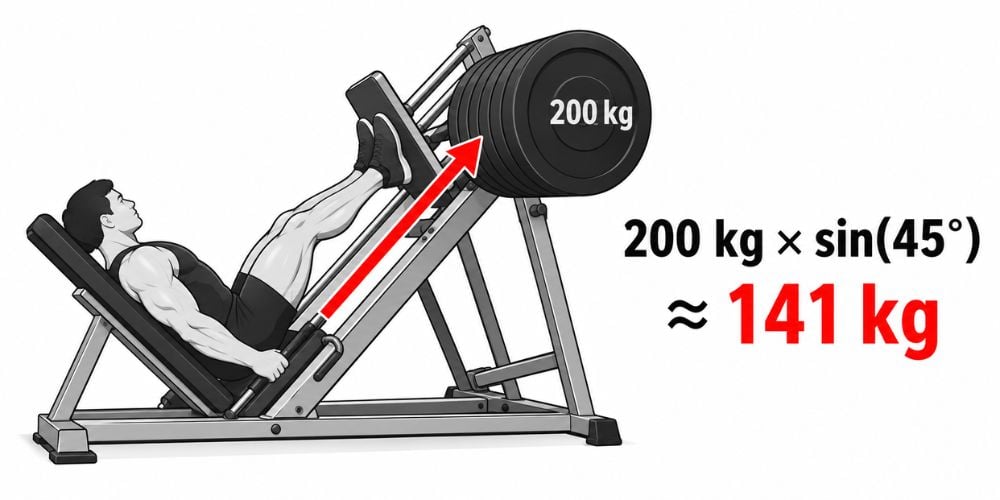
Suppose you load 200 kg of plates onto a 45-degree leg press.
Are your legs pushing directly against all 200 kg?
Not in simple incline calculation.
At 45 degrees:
sin(45°) ≈ 0.707
So:
200 × 0.707 = about 141 kg
That means the gravitational component of the plate load acting along the rails is roughly 141 kg-equivalent, before considering the rest of the machine.
Example | Value |
Plates loaded | 200 kg |
Sled angle | 45° |
sin(45°) | 0.707 |
Approx. plate-load component along rails | 141 kg-equivalent |
This does not mean you are exactly “leg pressing 141 kg.”
The sled has its own weight. Bearings create resistance, machine geometry changes leverage, and your body position also matters.
The calculation is simply a useful way to understand why the number written on the plates is not the same as the resistance you feel. The same incline-force principle is covered in OpenStax’s explanation of common forces.
3. The Sled Has Weight Too
Here is something that is easy to forget: you are not moving only the plates.
The footplate, carriage, weight horns, and other moving parts also have weight.
Imagine two 45-degree machines:
Machine | Moving Sled Weight |
Machine A | 30 kg |
Machine B | 60 kg |
Put the same plates on both and Machine B still starts with more moving mass.
This is one reason I recommend testing an unfamiliar leg press with a lighter load first. Your normal working weight may feel surprisingly different.
What about an empty leg press?
It is not necessarily “zero weight.” You may already be moving a fairly heavy carriage before adding a single plate.
That is also why asking someone, “How much do you leg press?” does not tell you very much unless you know which machine they used.
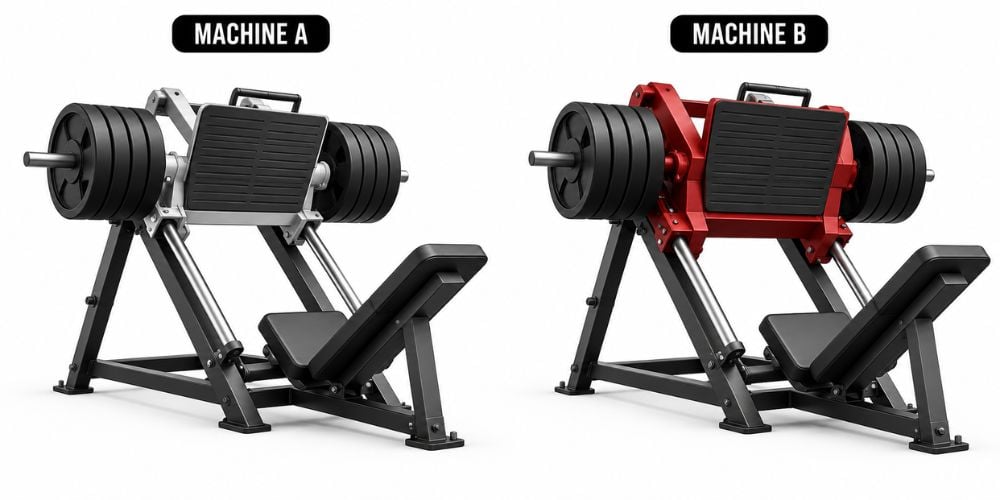
4. Machine Design Changes Resistance
Angle is important, but it is only part of the story.
Two machines can both say 45-degree leg press and still feel noticeably different.
Here are some of the reasons:
Machine Feature | How It Can Affect the Feel |
Sled weight | Changes the starting resistance |
Bearings and rollers | Affect how smoothly the sled moves |
Rail design | Changes the travel path |
Footplate position | Changes your body position and leverage |
Lever/linkage system | Can change resistance through the rep |
Friction | Adds resistance against movement |
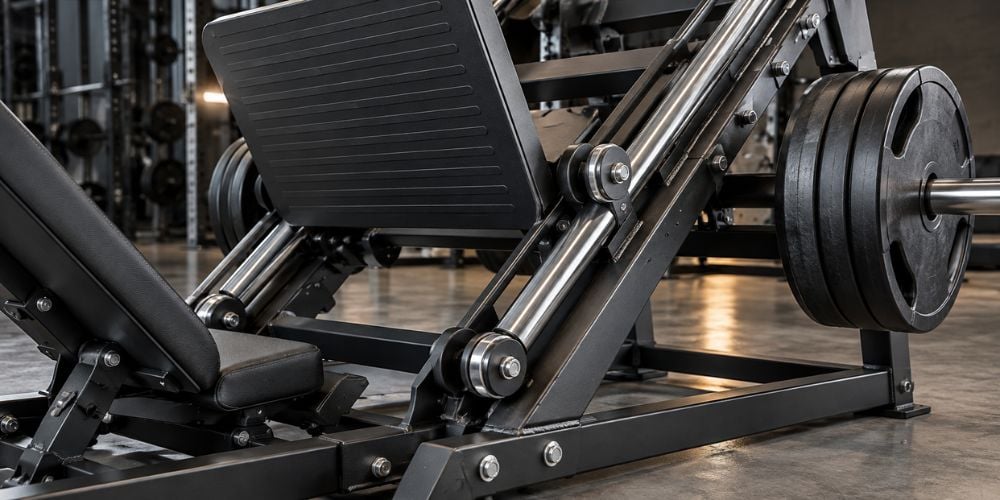
Friction matters because it opposes relative motion between surfaces. OpenStax’s guide to friction explains the basic principle clearly
In my design experience, small details in the sled path and guide system can noticeably change how a leg press feels. If you want to see a practical 45-degree example, the YR Fitness 7329 45° Leg Press uses a 75 mm alloy-steel slide bar with a hard-chrome surface to support smooth, controlled sled movement.
5. Your Seat and Body Angle Matter
What if the machine stays the same but suddenly feels harder?
Check your seat position.
Changing the seat or backrest changes your hip and knee angles. That changes your leverage and can make different parts of the rep feel easier or harder.
In practical terms, you may notice:
- A more closed hip position makes the bottom feel tighter.
- A different seat setting changes your knee bend.
- Moving your feet changes your ankle, knee, and hip positions.
- A setup that creates a longer movement can feel harder.
Which seat position should you use?
There is no single perfect setting for everyone. Choose a position where your back stays supported and you can control the sled through a comfortable range.
6. Range of Motion Can Make the Same Weight Feel Heavier
Picture 2 reps using the same plates.
On the first rep, you lower the sled only a short distance. On the second, you lower it farther before pressing it back up.
Which one usually feels harder?
For many lifters, it is the longer rep.
A longer range also means the load travels farther.
This is why I often see plate numbers rise while repetitions quietly become shorter. The number looks better, but it becomes harder to tell whether strength has actually improved.
For a broader view, a systematic review and meta-analysis on range of motion found that full-range resistance training produced greater strength and lower-body hypertrophy adaptations than partial-range training on average across the included studies.
That does not mean you should force the sled as deep as possible.
Use a range you can control without your hips lifting excessively from the backrest or your technique breaking down.
Best way to track progress? Try to keep your range of motion reasonably consistent from workout to workout.
7. Do Not Compare Leg Press Numbers Between Machines
This is the easiest rule to remember:
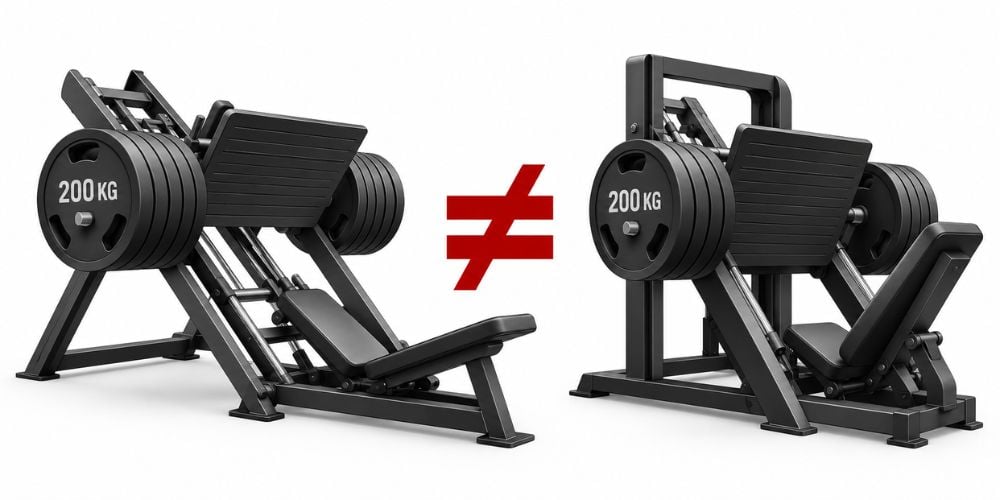
Your 200 kg leg press on one machine is not automatically equal to 200 kg on another.
Here is why:
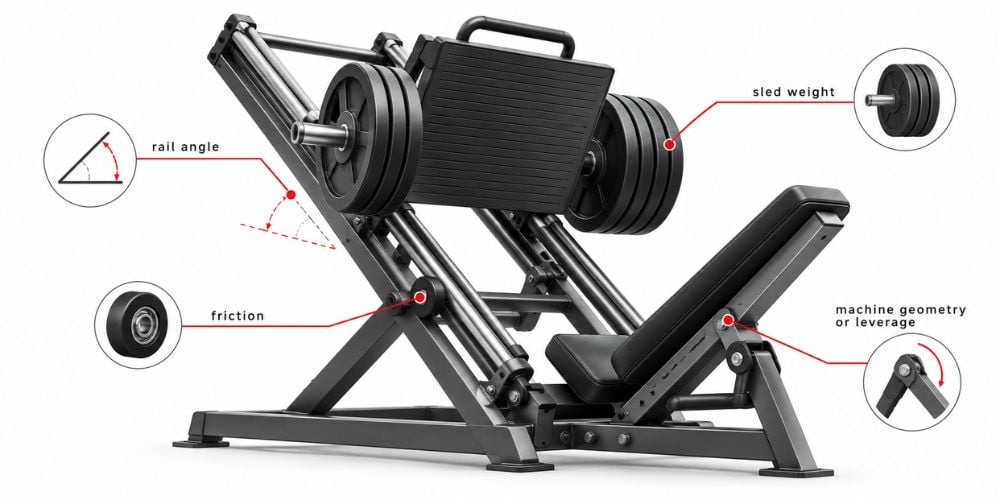
What Changes? | Why It Matters |
Sled angle | Changes the gravitational component |
Sled weight | Changes starting resistance |
Friction | Changes how freely the sled moves |
Movement path | Changes how resistance is delivered |
Seat position | Changes your joint angles |
Starting position | Changes your leverage |
Lever system | Can change the resistance curve |
Range of motion | Changes how far you move the load |
So what should you do when you switch machines?
Start lighter.
Set your seat and feet first. Perform a few controlled reps, see how the machine feels, and then add weight.
Do not chase the number you used on the previous leg press.
A much better comparison is your performance on the same machine, with a similar seat setup, technique, and range of motion.
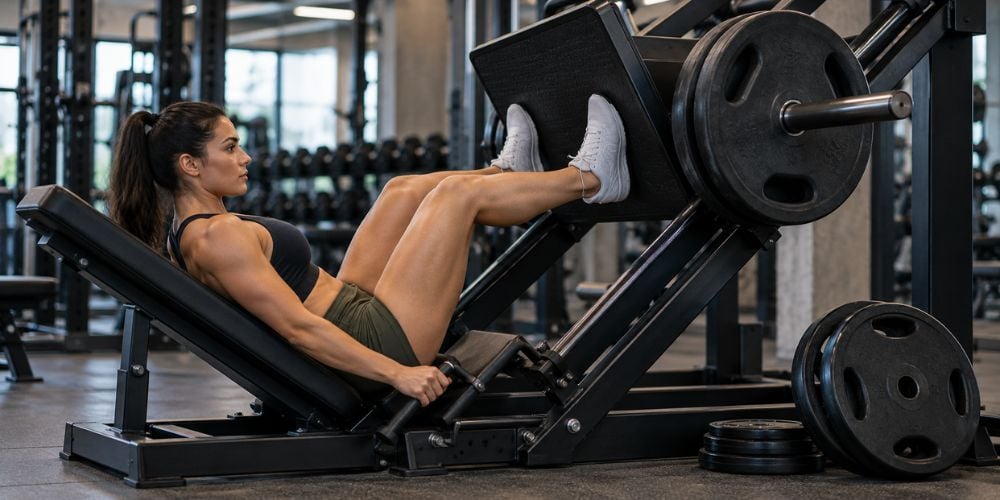
Conclusion
A leg press feels heavier at different angles mainly because the machine angle changes how much of the load works against your pressing direction. Sled weight, friction, machine design, seat position, and range of motion then add to that difference.
So if your normal weight suddenly feels much heavier on another machine, there is no need to worry about the number.
If you want to see how thoughtful movement paths and solid machine construction come together in a leg press, explore the YR Fitness leg press range. We offer different leg press designs so you can find the movement style that feels right for your training.
Related articles: