
Have you ever used a cable machine and wondered why it feels different from dumbbells? The movement may look similar, but the resistance works differently.
The simple answer is that cables pull in the direction of the pulley, while free weights are pulled downward by gravity. This changes the tension, difficulty, and the amount of control you need.
As an Exercise Physiology & Biomechanics Expert at YR Fitness, I work closely with resistance paths, joint movement, and strength equipment. I often see small changes in resistance direction make a big difference in how an exercise feels.
Below, I’ll show you the main reasons cables feel different from free weights. Once you understand them, choosing between the two becomes much easier.
1. Cable Resistance Comes from the Pulley
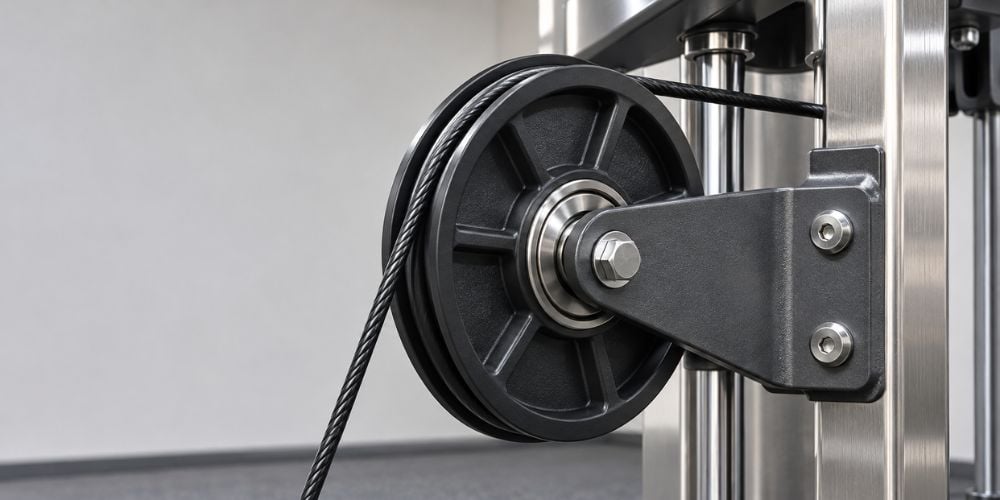
The biggest difference starts with the pulley.
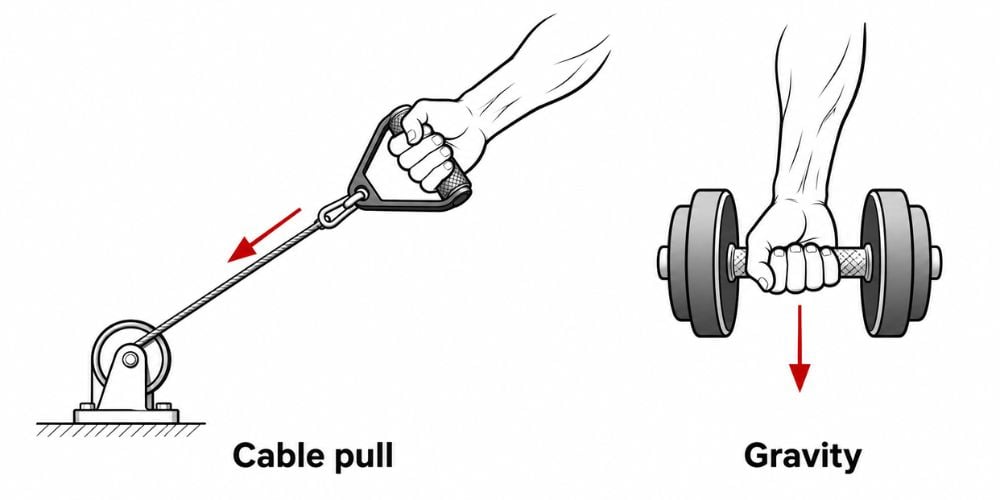
With dumbbells or barbells, gravity pulls the weight toward the floor. With cables, resistance pulls along the direction of the cable.
In fact, biomechanics research comparing cable and free-weight resistance makes the same distinction: free-weight resistance acts vertically because of gravity, while cable resistance follows the cable direction.
If the pulley is low, the resistance pulls toward the bottom of the machine. Move the pulley higher, and the direction changes with it.
Take a cable curl as an example.
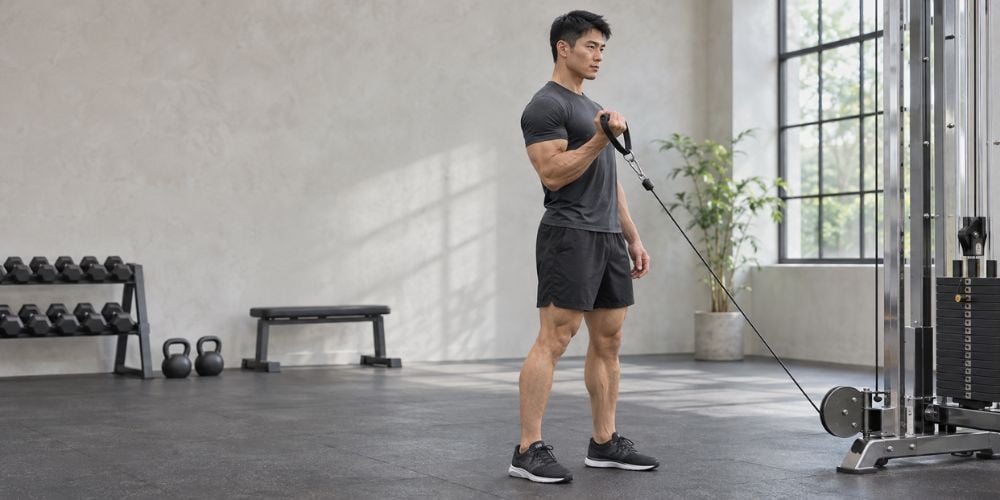
A low pulley keeps pulling your hands back toward the machine as you curl. With a dumbbell curl, gravity simply pulls the weight straight down.
Quick takeaway: Free weights resist gravity, while cables resist you along the cable line.
2. Cables Can Keep More Constant Tension
Cables can make your muscles feel like they are working through more of the rep.
With free weights, resistance at the joint changes as your joint angle and leverage change.
Think about a dumbbell curl. The middle often feels hardest, while the top may feel easier even though the dumbbell weighs the same.
A cable can keep pulling from a useful angle for more of the movement.
That does not mean cable resistance is perfectly constant. Your joint angles and leverage still change.
Research comparing cable and barbell preacher curls found that the two setups placed greater torque at different parts of the curl. That is a useful example of why two similar-looking exercises can feel different throughout the rep.
You may notice this most during:
- Cable curls
- Triceps pushdowns
- Cable lateral raises
- Cable flyes
- Cable rows
Why do cables sometimes create a stronger burn? One reason is that there may be fewer obvious points where the working muscle gets a break.
3. The Resistance Direction Can Be Adjusted
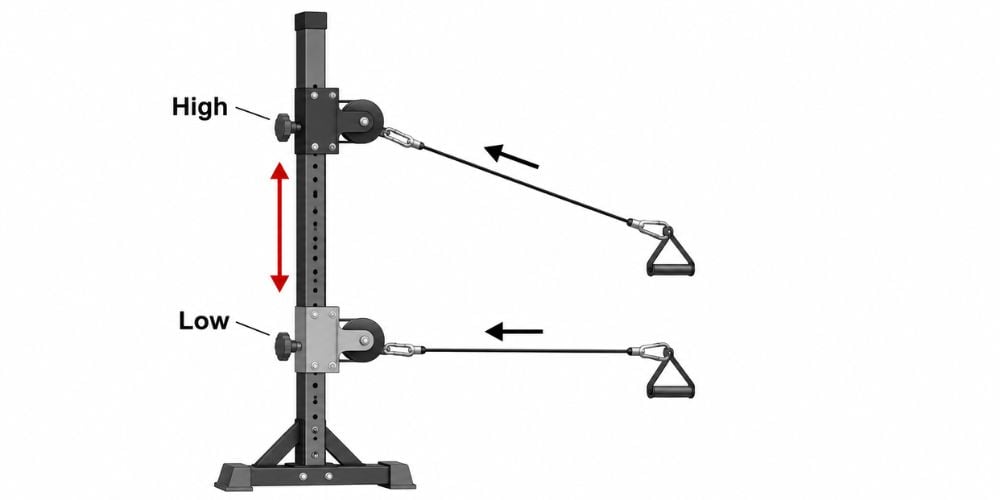
One major advantage of cables is that you can change where the resistance comes from.
Set the pulley low, and the cable pulls from below. Raise it, and the resistance angle changes.
Here is why this matters: you can match the line of resistance more closely to the movement you want to perform.
For example, compare a dumbbell chest fly with a standing cable fly.
During a dumbbell fly, gravity pulls the dumbbells toward the floor. Near the top, the dumbbells are almost directly above your shoulders, so resistance against the chest can decrease.
With cables, the handles are still being pulled outward toward the pulleys. Your chest continues working to keep the handles together.
Exercise | Useful Pulley Position | Main Resistance Direction |
Cable lateral raise | Low | Down and toward machine |
Cable fly | Mid-height | Outward |
Face pull | Upper chest/head height | Forward |
Triceps pushdown | High | Upward |
Cable curl | Low | Downward |
Pulley position is not just a setup detail. It can change how the entire exercise feels.
At YR Fitness, we pay close attention to pulley placement, adjustment range, and cable paths because they directly affect exercise setup and movement feel. If cable exercises are an important part of your training, you can explore our cable and strength equipment to compare different pulley layouts and training options.
4. Free Weights Depend More on Gravity
With free weights, gravity always pulls downward.
That means you often need to change your body position if you want to change the resistance angle.
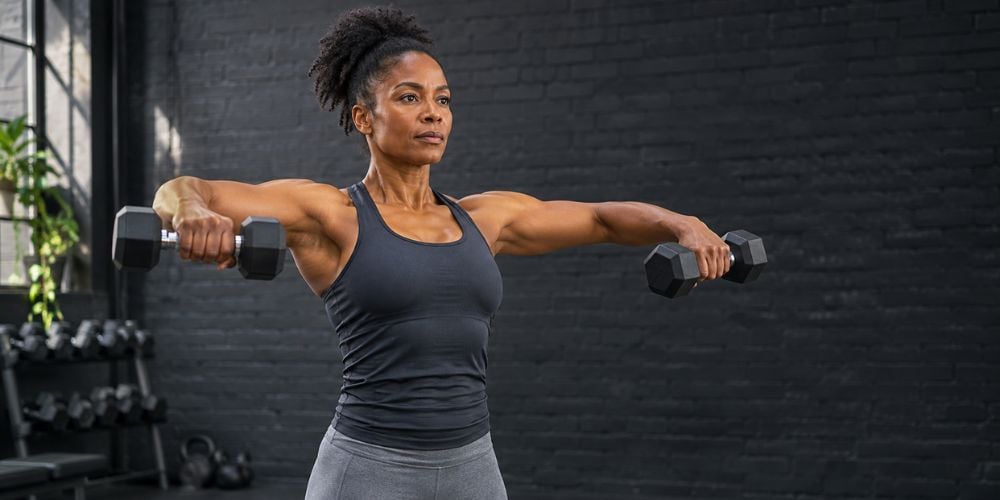
A dumbbell lateral raise is a good example.
The bottom usually feels relatively easy. As your arm rises toward shoulder height, the exercise becomes harder because your leverage changes.
The dumbbell itself has not become heavier.
You can notice the same effect in:
- Dumbbell flyes
- Front raises
- Biceps curls
- Triceps extensions
- Reverse flyes
With cables, you can often change the pulley position instead of changing your whole body position.
5. Cables Often Feel Smoother
Cable exercises often feel more continuous from start to finish.
Instead of moving a dumbbell or barbell freely through space, you pull a handle connected to a cable, pulley system, and weight stack.
That gives you a clearer line of resistance.
Take a one-arm dumbbell row and a seated cable row.
With the dumbbell row, you control the weight through open space. Your torso, shoulder, arm, and grip all help keep the weight on the path you want.
With the cable row, the cable provides a more defined pulling direction.
For many people, that simply feels easier to control.
Does smoother mean better? No. It just means the resistance is being delivered differently.
Not every cable machine feels equally smooth, either.
Pulley quality, cable routing, bearings, friction, and machine geometry can all affect the movement. I have used cable stations that moved very smoothly and others where friction made the same amount of weight feel noticeably different.
6. Free Weights Require More Stabilization
Free weights usually give the load more freedom to move.
That means you have to control more of the movement yourself.
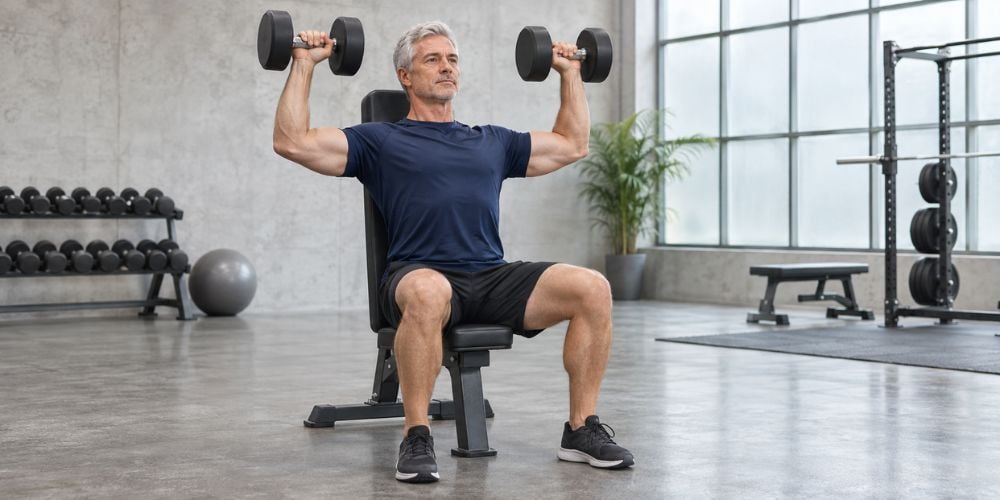
Take a dumbbell shoulder press.
You are not only pushing the dumbbells upward. You are also stopping them from drifting forward, backward, inward, or outward.
Your stabilizing muscles help control those small movements.
Cables still require stabilization, especially during standing exercises. But the cable gives you a clearer resistance direction.
The difference can become even more noticeable when you compare free weights with seated or supported cable exercises.
Cable Exercise | Similar Free-Weight Exercise | Main Difference You May Feel |
Cable chest press | Dumbbell bench press | Dumbbells need more side-to-side control |
Cable row | Dumbbell row | Cable gives a clearer pulling direction |
Cable lateral raise | Dumbbell lateral raise | Cable can provide tension earlier in the rep |
Cable curl | Dumbbell curl | Cable angle can maintain tension near the top |
So, are free weights better because they require more stabilization?
Not necessarily. They simply challenge you differently.
The latest ACSM resistance-training guidance also notes that using a specific equipment type, such as machines versus free weights, does not consistently determine results for the average healthy adult. Your goals, training effort, and overall program still matter.
I personally like using both rather than treating one as the winner.
Conclusion
Cable machines feel different from free weights because the resistance comes through a pulley rather than directly from gravity. That changes the resistance direction, muscle tension, movement feel, and amount of stabilization you need.
Neither option is automatically better. Once you understand how each one creates resistance, choosing the right tool for an exercise becomes much easier.
If you want to try more cable-based movements, explore YR Fitness strength and cable equipment to see different pulley setups and exercise options. Choose the setup that gives you the movement, control, and training variety you actually need.
Related articles: