Are you getting enough regular clients to think about leaving a commercial gym? Opening your own studio can be exciting, but the right timing matters more than having the perfect space.
The short answer: open a private studio when your client base is stable, your income can cover the costs, and your schedule shows steady demand. You should also know what type of training space and equipment your clients actually need.
As an Exercise Physiology & Biomechanics Expert at YR Fitness, I spend a lot of time looking at how trainers, clients, equipment, and training spaces work together. I often see trainers focus on getting a studio first, when proven client demand should really come first.
Below are six clear signs that you may be ready. Use them as a quick check before committing to rent, equipment, and other monthly costs.
1. When You Already Have a Stable Client Base
Clients should come before the studio.
If you already have regular clients who train with you every week, opening your own space becomes much safer. You are not starting from zero and hoping people will appear.
NASM’s guidance on recurring revenue for personal trainers explains that ongoing packages and memberships can make coaching income more predictable than relying on single-session bookings. That predictability matters when you are about to take on regular studio expenses.
Ask yourself:
- How many clients train with me consistently?
- Would most of them follow me to another location?
- Am I getting regular referrals?
- Are new clients still asking for sessions?
If most of your business depends on walk-in members from a commercial gym, moving too early can be risky.
My simple rule: build demand first, then build the studio.
Quick Studio Readiness Check
What to Check | Stronger Sign You’re Ready | Warning Sign |
Client base | Regular paying clients | Mostly occasional clients |
Client loyalty | Clients would follow you | Clients mainly come because of the gym |
Referrals | Regular word-of-mouth leads | Few new inquiries |
Schedule | Popular hours stay booked | Many empty training slots |
Income | Several stable months | Income changes heavily month to month |
You do not need every box to be perfect. But the more stable these areas are, the less pressure your new studio will face.

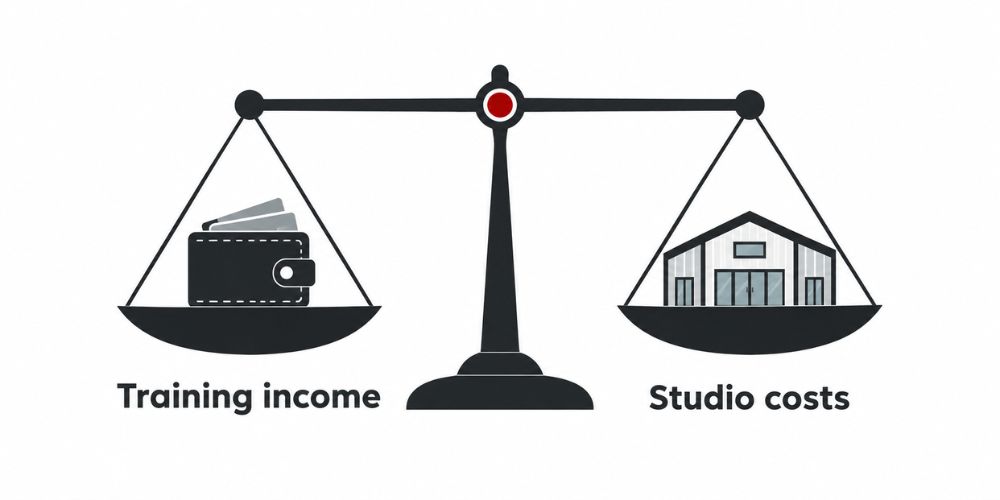
2. When Your Income Can Cover Studio Costs
Having clients is not enough. Your income also needs to support the business.
Calculate your likely monthly costs:
- Rent
- Electricity and water
- Insurance
- Equipment
- Maintenance
- Cleaning
- Software
- Marketing
- Business permits
Then compare those costs with realistic monthly training income.
For U.S.-based trainers, the U.S. Small Business Administration provides a useful break-even calculation guide. Break-even is the point where total revenue equals total costs, and the SBA recommends considering both fixed and variable expenses when making the calculation.
What should you avoid? Building your budget around your best-ever month.
Look at several months and use a realistic average instead. I would also keep money aside for unexpected costs, because a broken machine or several client cancellations should not immediately put the studio under financial pressure.
3. When Your Schedule Is Nearly Full
A consistently busy schedule is another good sign.
If your most popular hours are regularly booked, your current setup may be limiting your growth. Your own space can give you more control over training times and how you organize sessions.
But there is one question I would ask first:
Are clients booking because they specifically want to train with you?
That distinction matters.
ACE’s fitness-business coverage includes advice from a trainer who opened his own facility after building his clientele. His key lesson was simple: build your clientele before opening your own place and know those clients are likely to be there when you make the move.
If people choose you because of your coaching rather than simply because you work inside a popular gym, your demand is much stronger.

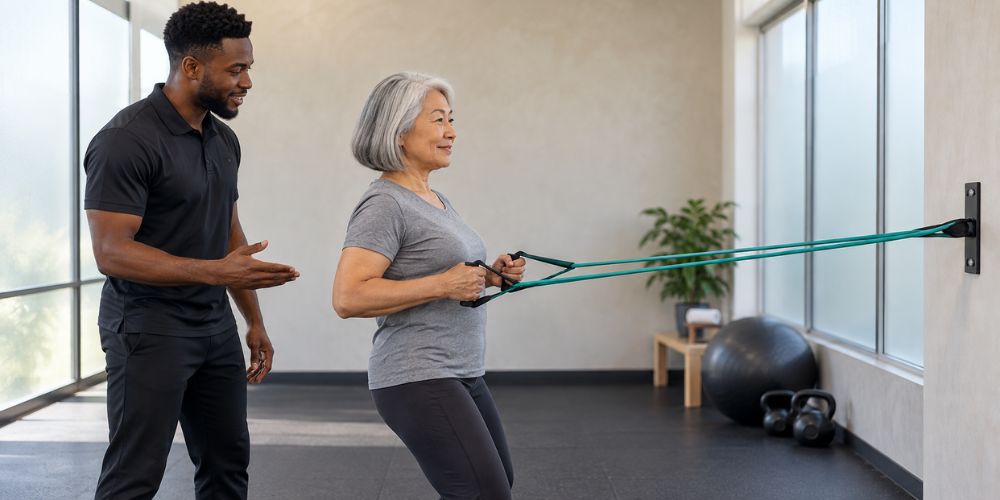
4. When Clients Want More Privacy
Not every client enjoys training in a crowded gym.
Some people prefer:
- Fewer distractions
- Less waiting for equipment
- More privacy
- More personal attention
- A quieter training environment
This can be especially helpful for beginners, older adults, one-to-one clients, and people who feel uncomfortable in busy gyms.
I often see clients become more comfortable when the training environment feels calm and personal. If several clients are already asking for more privacy, listen to them.
Why does this matter? Because client demand is a better reason to open a studio than simply wanting your own gym.
5. When You Know What Type of Studio You Need
Do not rent a space first and figure out the training model later.
Decide exactly how you plan to train people.
Studio Model | Space Priority | Main Equipment Need |
One-to-one training | Compact, private space | Versatile equipment |
Strength training | Strong lifting area | Rack, bench, weights |
Functional fitness | More open floor | Accessories and cable equipment |
Semi-private training | Multiple training stations | Flexible equipment |
Small-group training | Larger open area | Enough stations for several clients |
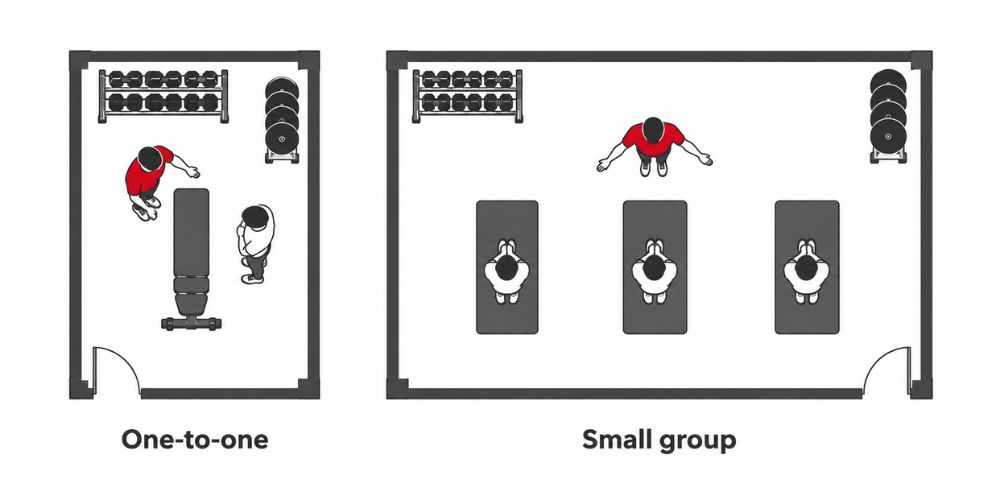
One-to-one training may only need a compact area with versatile equipment. Small-group training needs more open floor space and enough stations for several people to exercise safely.
Here is why this matters: your training model should decide your equipment and layout, not the other way around.
At YR Fitness, we build commercial strength, cardio, and functional training equipment for repeated daily use. If you are planning your first studio, you can explore our commercial gym equipment and compare options based on your training style, available floor space, and budget before buying more equipment than you need.
6. When You Can Start With Essential Equipment
You do not need to fill the studio with machines on day one.
Start with what your clients will actually use:
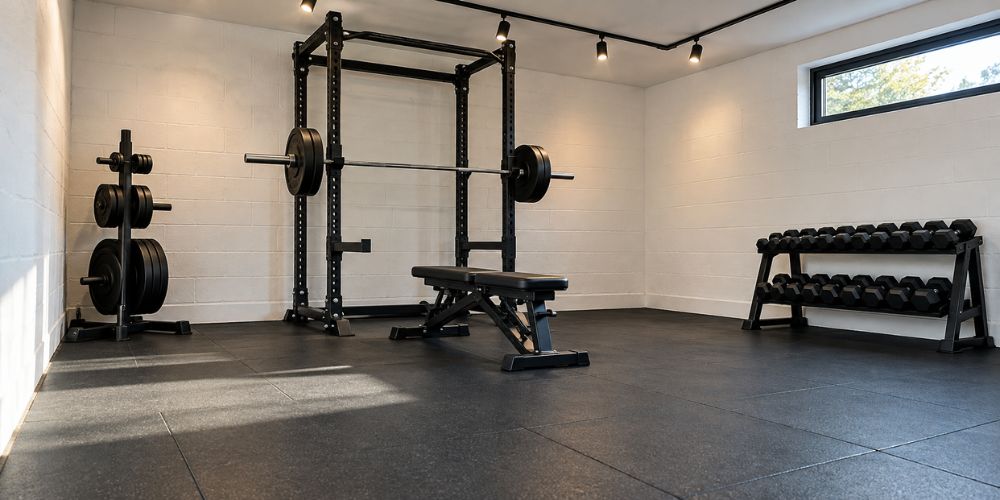
- Power rack
- Adjustable bench
- Dumbbells
- Cable machine
- Barbells and plates
- Resistance bands
- Mats
- Functional training accessories
- One or two cardio machines if needed
Strength-focused clients? Put more of your budget into strength equipment.
Functional workouts? Keep more open floor space instead of filling every corner with machines.
I prefer planning the training program first and choosing equipment second. This simple order can prevent expensive purchases that barely get used.
So, When Should You Open?
You are probably getting close when:
- You already have loyal clients.
- Your income comfortably covers expenses.
- Your schedule stays busy.
- Clients want a more private environment.
- You know what type of studio you want.
- You can afford essential equipment without overspending.
Do not open simply because having your own studio sounds exciting.
Open when your existing training business gives you a clear reason to need one.
Conclusion
A personal trainer should open a private studio when client demand is proven, income is stable, the schedule is busy, and the numbers make sense.
Starting small can help you control costs while still giving clients a focused training experience.
If equipment planning is your next step, explore YR Fitness commercial gym equipment and build your first setup around your available space, training style, and actual client needs. Buy the essentials first, then expand as your studio grows.
Related articles: