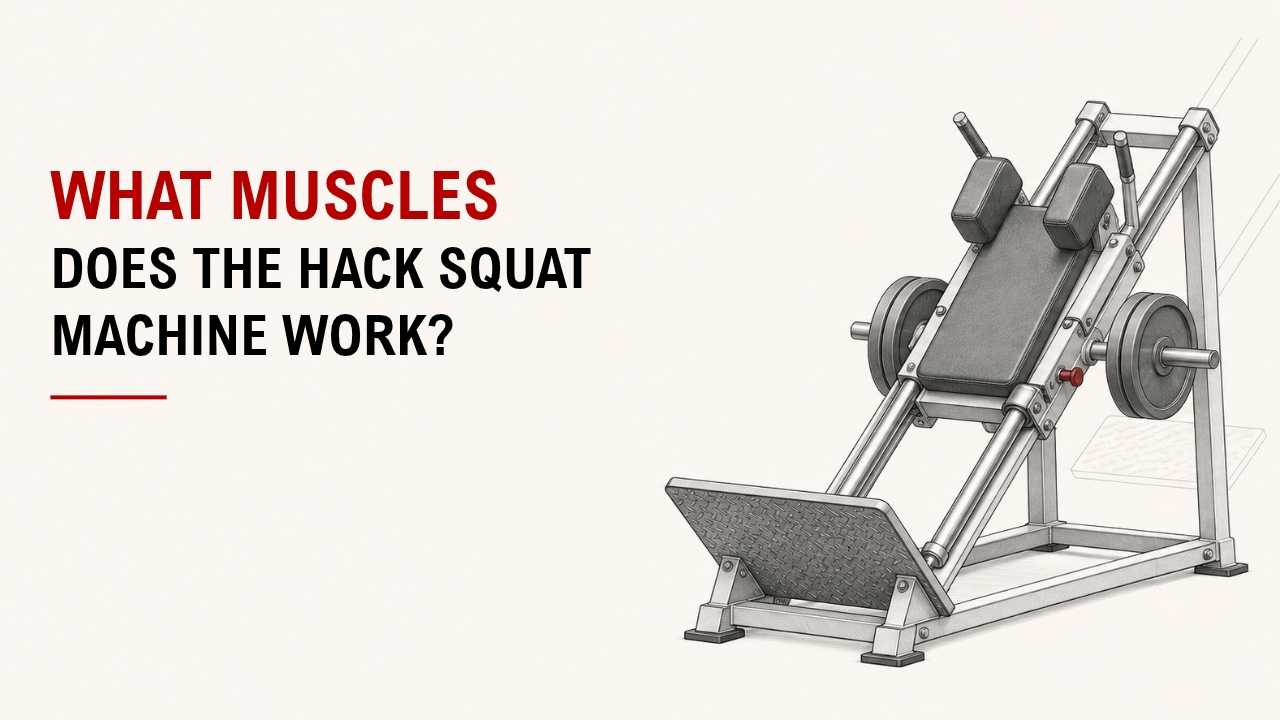

Ever tried the hack squat machine and wondered which muscles you’re actually training? Is it just your thighs, or are other leg muscles working too?
The hack squat machine mainly works your quadriceps, the muscles at the front of your thighs. It also trains your glutes and inner thighs, while your hamstrings and calves help support the movement.
As an Exercise Physiology and Biomechanics Expert at YR Fitness, I understand how machine angles and body positioning affect muscle engagement. I’ve seen how small adjustments can help people target their leg muscles more effectively.
In this guide, you’ll learn which muscles the hack squat targets and how foot placement changes muscle emphasis. You’ll also find simple tips to improve your technique and get more from every rep.
1. Primary Muscles Worked: Quadriceps
Your quadriceps do most of the work during hack squats. These muscles straighten your knees as you push the weight upward.
The quadriceps are traditionally divided into four muscles, as explained in this quadriceps anatomy review.
Muscle | Location | Main Function |
Vastus Lateralis | Outer thigh | Straightens your knee and contributes to thigh size |
Vastus Medialis | Inner front thigh, near the knee | Extends and stabilizes your knee |
Vastus Intermedius | Beneath the rectus femoris | Helps straighten your knee |
Rectus Femoris | Front of your thigh | Straightens your knee and helps flex your hip |
All four muscles work together as you push yourself upward.
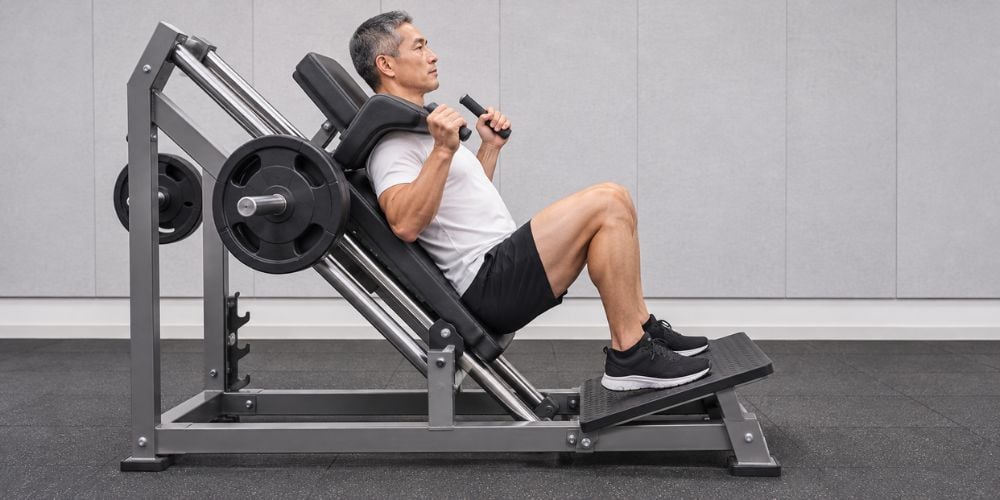
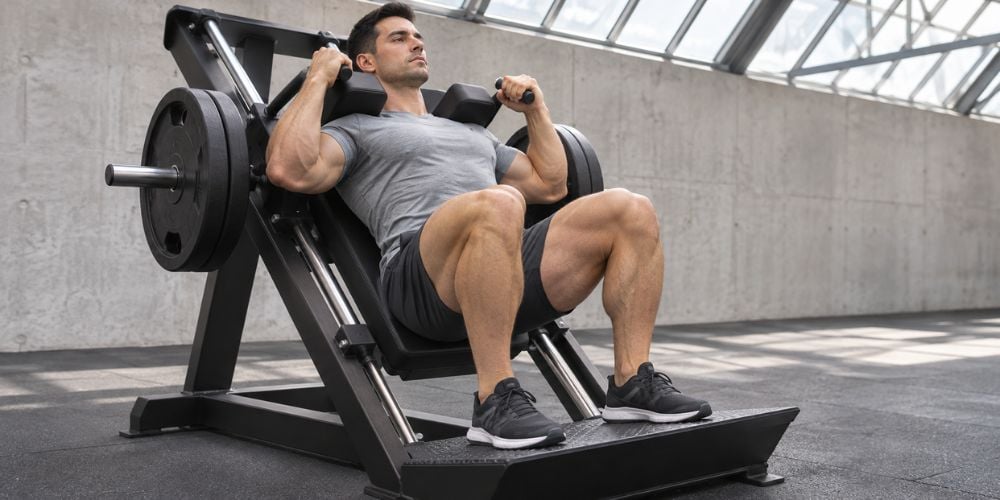
The hack squat machine supports your back and guides your movement. This makes it easier to focus on your legs without balancing a free barbell.
Best for: Building stronger quadriceps, increasing thigh size, and improving lower-body strength.
2. Secondary Muscles Worked
Your quadriceps aren’t the only muscles working. The hack squat also involves your glutes, inner thighs, hamstrings, and calves.
Here’s what each one does.
Gluteus Maximus (Glutes)
Your glutes are the large muscles in your buttocks. They help extend your hips as you push upward.
They help you:
- Push your hips upward.
- Build lower-body strength.
- Rise from a deep squat position.
Want to feel your glutes working more? Try using a comfortable squat depth that allows your hips to move without lifting your back off the pad.
Your glutes generally work harder when your hips move through a larger range of motion.
Adductor Magnus (Inner Thigh)
The adductor magnus is a large muscle on the inside of your thigh.
It helps you:
- Extend your hips.
- Control thigh movement.
- Support your quadriceps and glutes.
This muscle plays an important supporting role, especially as you rise from the bottom of the squat.
Hamstrings
Your hamstrings run along the back of your thighs.
They help support your knees and hips during the movement. However, they play a smaller role than your quadriceps and glutes because your knees and hips straighten together.
Calves
Your calves include the gastrocnemius and soleus muscles.
They help control your ankle position and keep your feet stable as you lower and push the weight upward.
Quick takeaway: Your quadriceps are the main target, while your glutes and inner thighs also contribute. Your hamstrings and calves provide additional support.
If you’re wondering how this compares with other leg exercises, read this leg press vs. hack squat comparison. It explains how both machines train your lower body differently.
3. How Foot Placement Affects Muscle Emphasis
Did you know that moving your feet can change how a hack squat feels?
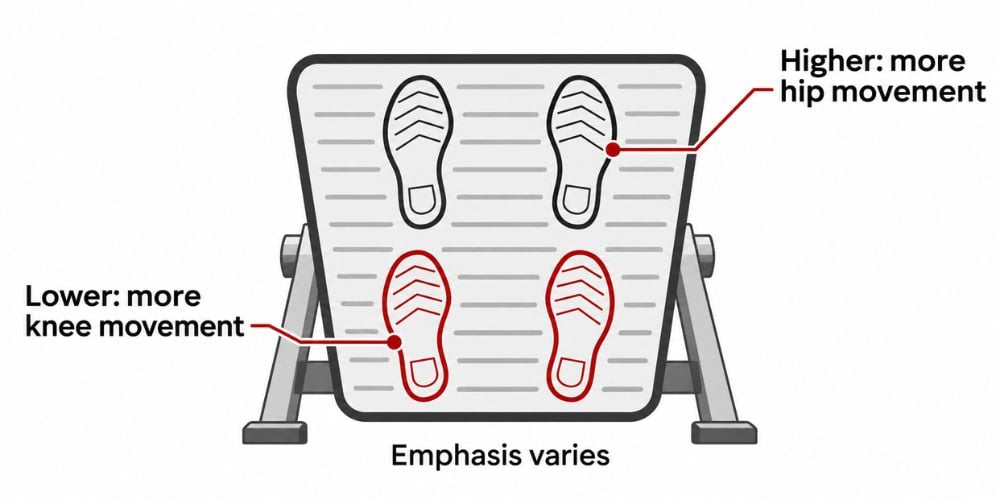
Your foot position affects how your knees and hips move. This can slightly shift the emphasis between your quadriceps and glutes.
Here’s a quick comparison:
Foot Placement | Muscle Emphasis | Best For |
Standard | Quadriceps and glutes | Beginners and general leg training |
Higher | May increase glute emphasis | More hip involvement |
Lower | May increase quadriceps emphasis | Greater knee movement |
Wider | Quadriceps, glutes, and inner thighs | A wider, comfortable squat stance |
Standard Foot Placement
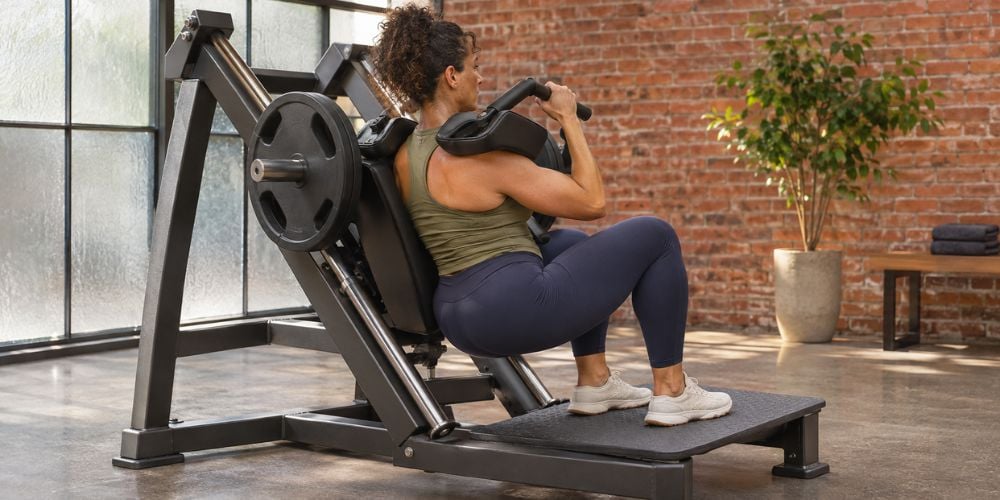
Place your feet about shoulder-width apart, with your toes pointing slightly outward.
This provides a balanced starting position for training your quadriceps and glutes.
I usually recommend this position for beginners because it’s easier to find a comfortable stance and control the movement.
Higher Foot Placement
Move your feet slightly higher on the platform.
This may allow more hip movement and increase glute emphasis. Your quadriceps still do plenty of work.
Lower Foot Placement
Move your feet slightly lower on the platform, while keeping your heels flat.
This may allow greater forward knee movement and place more emphasis on your quadriceps. You’ll need enough ankle mobility to maintain a comfortable position.
Wider Foot Placement
Place your feet slightly wider than shoulder-width apart.
This changes how your hips move and may increase inner thigh involvement. Your quadriceps and glutes remain active.
Does foot placement completely isolate one muscle?
No. Your body proportions, squat depth, and machine design also affect muscle engagement.
A published biomechanical review of squatting explains how stance width, foot position, and squat depth influence joint loading and muscular demands. The exact effects can vary between people and squat machines.
At YR Fitness, we design our strength machines with controlled movement paths to support different training needs. If you want to explore the options, compare our 45-degree hack squat machine with the 35-degree hack squat machine, which offers a more upright movement path.
Both options support lower-body training, so you can see how different machine angles affect the exercise.
4. How to Target Your Muscles Properly
You don’t need complicated techniques to get a good hack squat workout.
Focus on your body position, use a manageable weight, and control every repetition.
Step-by-Step Guide
- Position your back: Keep your back and shoulders firmly against the pads.
- Set your feet: Place them about shoulder-width apart on the platform.
- Release the safety locks: Follow the machine’s instructions before starting.
- Lower slowly: Bend your knees and hips while keeping your back supported.
- Push upward: Press through your whole foot to straighten your legs.
- Control the movement: Avoid bouncing at the bottom or snapping your knees straight at the top.
Need more help with your setup? This hack squat form guide walks you through the movement in more detail.
Common Mistakes to Avoid
Even small mistakes can make your hack squats less comfortable.
- Lifting your heels: Keep your heels flat against the platform.
- Using too much weight: Choose a load you can control from start to finish.
- Letting your knees collapse inward: Keep your knees moving in line with your toes.
- Lifting your hips or lower back off the pad: Maintain contact with the back support.
- Lowering too quickly: Move at a controlled pace instead of relying on momentum.
I often see people focus too much on lifting heavier weights. But controlled repetitions usually make it easier to maintain good technique and train the intended muscles.
How Many Sets and Reps Should You Do?
New to hack squats? Keep your first few workouts simple.
Start with:
- Sets: 2–3
- Repetitions: 8–12 per set
- Weight: Light to moderate, depending on your strength
- Movement: Slow and controlled
Use a range of motion that feels comfortable for your knees and hips. Always check that the safety stops are correctly positioned before starting.
As you become more comfortable with the movement, gradually increase the resistance while maintaining proper form.
Conclusion
The hack squat machine mainly works your quadriceps, making it a useful exercise for building stronger, more muscular thighs.
Your glutes and inner thighs also help during the movement, while your hamstrings and calves provide additional support.
Start with a comfortable foot position, focus on controlled repetitions, and gradually increase the weight as you get stronger.
Want more ways to train your legs? Explore the YR Fitness Hack Squat & Leg Press Machine to see how two lower-body exercises can work together in your training routine.
Related articles: