








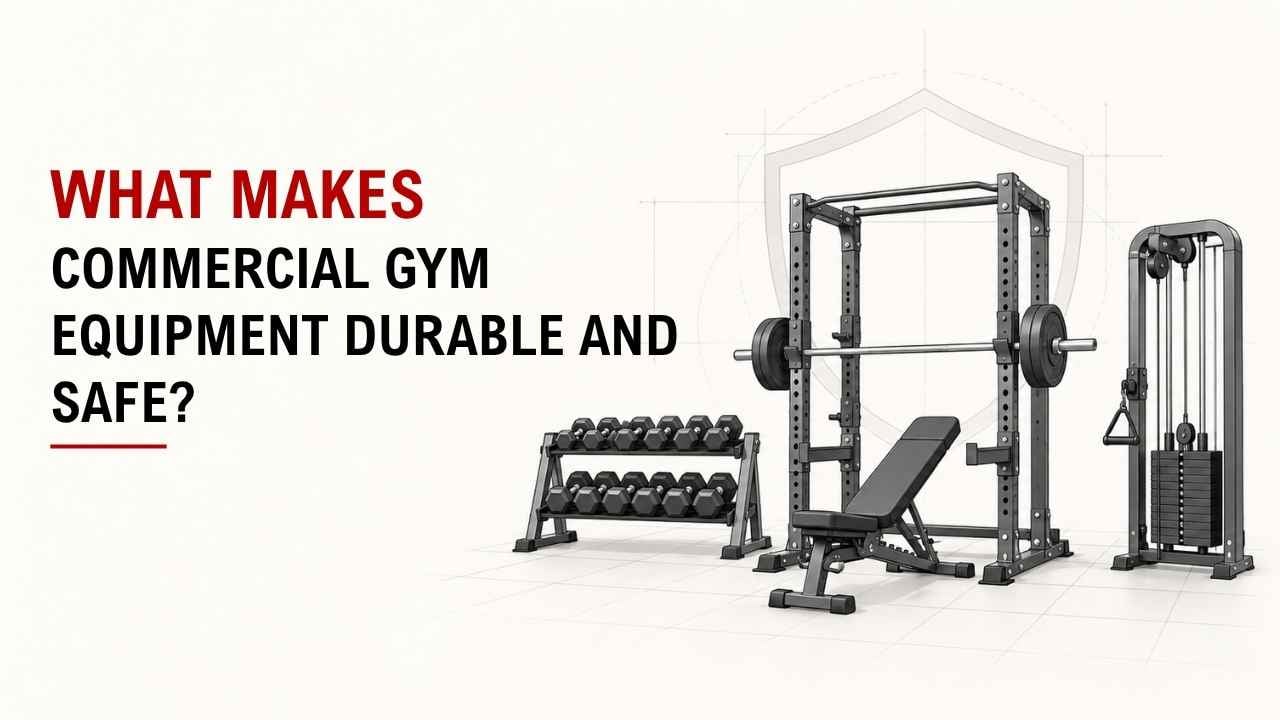

Have you ever looked at a gym machine and wondered, “Will this still feel solid after thousands of workouts?” That is the right question to ask before you buy, not after your members start using it.
Durable and safe equipment comes from strong materials, smart structure, proper testing, and reliable production control. If one of these areas is weak, the machine may cost more in repairs and member complaints later.
Hi, I’m George Yang, Founder and Chief Designer of YR Fitness. I have worked with commercial gym equipment for over 30 years, and my journey started in repairing machines for China’s National Athletes Team.
In this guide, I’ll walk you through what to check before buying gym equipment. No complicated theory, just practical points that help you choose machines that can handle real daily use.
- Key Factor 1: Will the Frame Stay Stable After Years of Use?
- Key Factor 2: Can You Trust the Welding and Assembly?
- Key Factor 3: Can This Machine Handle Real Gym Loads?
- Key Factor 4: Will It Fit Different Members Comfortably?
- Key Factor 5: Are Moving Parts Protected Enough for a Busy Gym?
- Key Factor 6: Will the Finish, Pads, and Grips Last?
- Key Factor 7: What Safety Standards Should I Ask About?
- Key Factor 8: Will Members Actually Enjoy Using It?
- Key Factor 9: Does the Factory Control Quality Before It Ships?
- Key Factor 10: Will Installation and Layout Keep Members Safe?
- Red Flags of Poor-Quality Commercial Gym Equipment
- Buyer Checklist: What Should You Check Before Buying?
- Conclusion
Key Factor 1: Will the Frame Stay Stable After Years of Use?
The frame is the first thing you should check. If the frame is weak, everything else becomes less reliable.
A good frame keeps the machine stable when members push, pull, press, lift, or load weight plates. It also reduces shaking, bending, and long-term wear.
So, what should you look at?
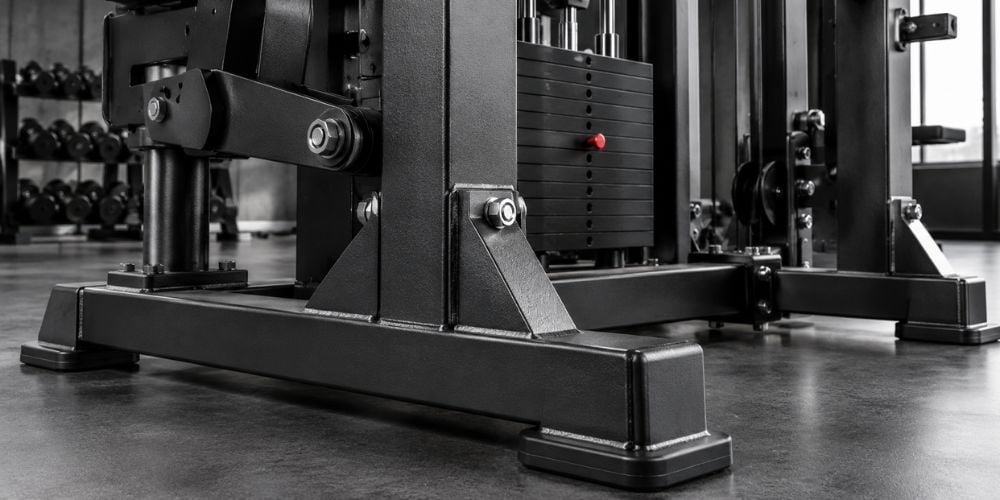
- Steel Thickness: A large frame does not always mean a strong frame. Ask about steel thickness, tube size, and material quality.
- Base Width: A wide and well-balanced base helps reduce shaking. This is important for cable crossovers, Smith machines, leg press machines, and plate-loaded equipment.
- Reinforced Stress Points: Areas around arms, uprights, seats, and weight stacks carry more force. These parts should be reinforced, not treated like normal frame sections.
- Small Hardware: Bolts, pins, brackets, and bushings matter too. Weak small parts can make a strong-looking machine loosen over time.
Here is a quick way to check frame quality:
Frame Area | Why It Matters | What You Should Check |
Main Frame | Carries the machine load | Tube thickness, steel quality, frame weight |
Uprights | Support arms and guide rods | Reinforcement and alignment |
Seat Support | Holds user body weight | Stability when seated and adjusted |
Weight Stack Area | Handles repeated lifting force | Guide rod support and frame stiffness |
Plate-Loaded Arms | Carry heavy plates | Arm thickness and weld strength |
A cable crossover is a good example. Users pull from high, low, side, and diagonal angles, so the frame must stay firm from every direction.
A leg press is another one. The machine must stay stable when the sled is loaded heavily, not just when it is empty.
Key Factor 2: Can You Trust the Welding and Assembly?
Good welding keeps the machine strong. Good assembly keeps it aligned.
Both matter because a small production mistake can become a big gym problem later. You may see noise, shaking, uneven movement, or faster part wear.
You do not need to be a welding engineer to spot basic warning signs.
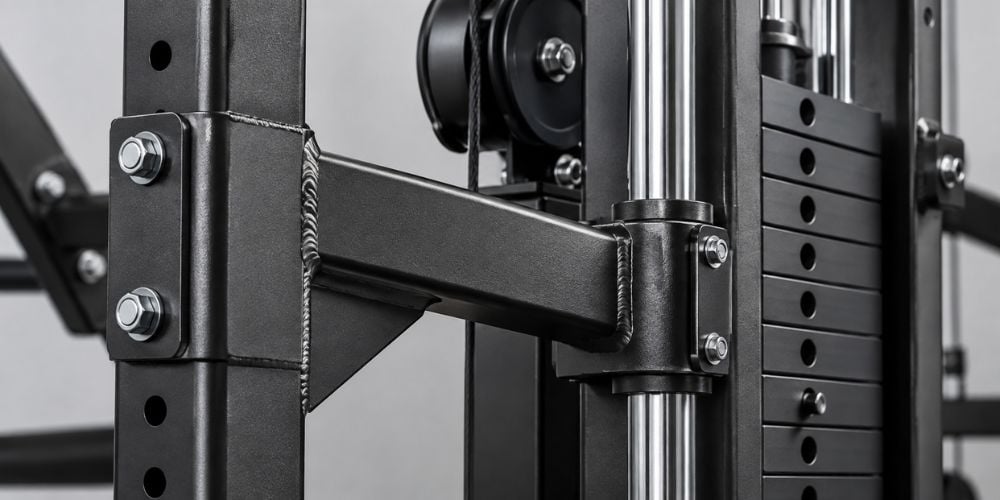
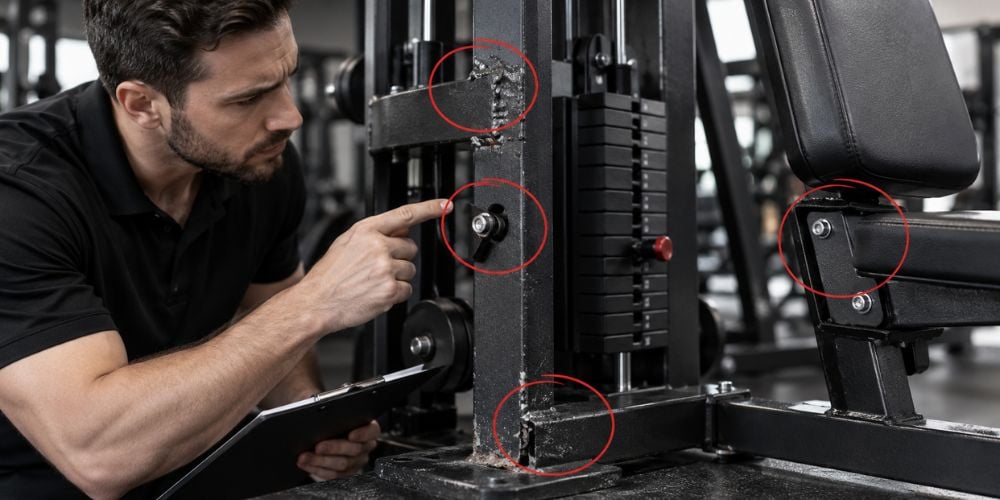
Look for welds that are clean, even, continuous, and properly finished. Be careful with welds that look rough, burned, thin, broken, or uneven.
Assembly accuracy matters too. If holes, pulleys, arms, or guide rods are slightly off, the machine may still work at first, but it may wear faster.
Problem | What You May Notice | What It Can Cause Later |
Misaligned Holes | Hard assembly | Loose parts or uneven pressure |
Uneven Frame | Machine rocks on the floor | Stability issues |
Poor Pulley Alignment | Cable rubs or jumps | Faster cable wear |
Bad Seat Alignment | User feels off-center | Poor comfort and training feel |
Rough Welds | Weak visual quality | Higher cracking risk |
At YR Fitness, we build commercial machines for real gym traffic, not just showroom photos. If you are comparing equipment for a new gym or upgrade, start with our commercial gym equipment range to see which machines fit your space, training zones, and budget.
Key Factor 3: Can This Machine Handle Real Gym Loads?
A durable machine must handle more than a light showroom test. It should handle real members, real loads, and real daily use.
That means heavy users, strong lifters, fast repetitions, repeated adjustments, and long operating hours. This is where load capacity and real-use testing become important.
Before buying, ask for clear load information.
Do not guess.
Load Information | Why It Matters | Example |
Maximum User Weight | Helps avoid unsafe use | Benches, bikes, strength machines |
Maximum Training Load | Shows safe resistance limit | Leg press, racks, plate-loaded units |
Weight Stack Capacity | Prevents overloading | Selectorized machines |
Cable Tension Capacity | Protects moving systems | Cable crossover, lat pulldown |
Rack Load Rating | Supports heavy lifting | Squat rack, Smith machine |
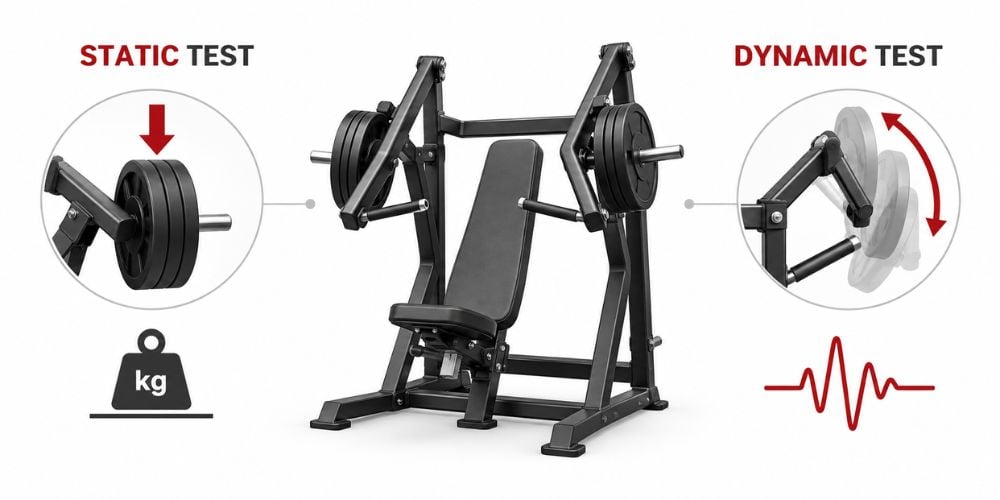
There are 2 basic types of testing to understand.
Static testing checks if the machine can hold a heavy weight without bending or failing. This matters for benches, racks, leg press machines, and plate-loaded units.
Dynamic testing checks how the machine performs during repeated movement. This is closer to real gym use because members do not move perfectly every time.
A bench should support the user and the loaded barbell. A cable machine should handle repeated pulling without fraying, sticking, or losing smooth movement.
This is also why standards help. ISO 20957-1:2024 specifies general safety requirements and test methods for indoor stationary training equipment.
Ask the supplier simple questions:
- What is the maximum user weight?
- What is the maximum training load?
- How do you test the frame?
- How do you test repeated movement?
- Can I see test reports or inspection records?
- What parts usually wear first?
If the answer is only “Don’t worry, quality is good,” that is not enough.
Key Factor 4: Will It Fit Different Members Comfortably?
A machine can be strong and still feel bad.
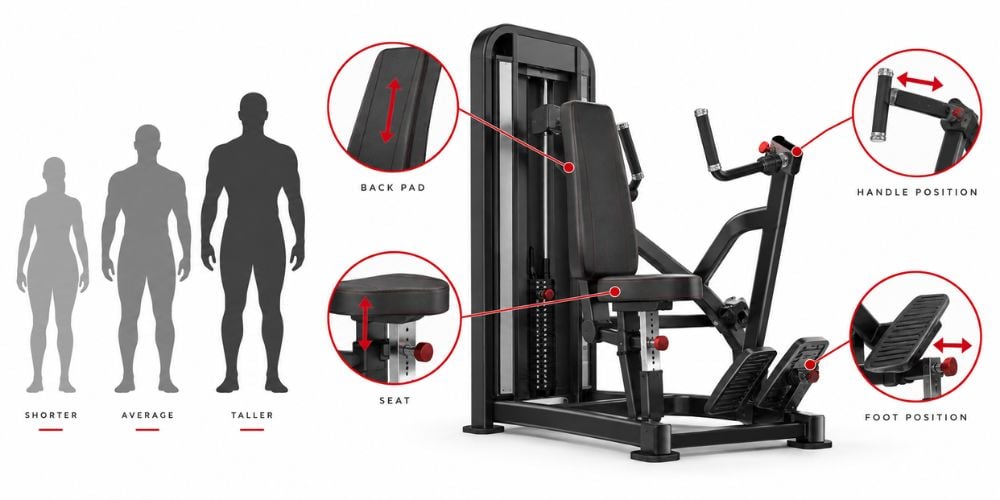
This usually happens when the movement path is wrong, the seat does not adjust well, or the handles do not match the user’s body. For a commercial gym, this matters because your members are not all the same size.
A good machine should guide the body through a natural movement. A chest press should not force the shoulders into a strange angle. A row should not make the user twist. A leg extension should not feel awkward at the knee.
Poor movement design may not break the machine. But it can make members avoid it.
And if members avoid a machine, it is not doing its job.
Adjustable Part | What It Helps With | What You Should Check |
Seat Height | Better body alignment | Does it lock firmly? |
Back Pad | Better posture and support | Does it feel stable? |
Handle Position | Better grip and reach | Can different users reach it? |
Footplate | Better leg drive and control | Is the surface anti-slip? |
Roller Pads | Better joint alignment | Can users set the right height? |
The American College of Sports Medicine notes that health and fitness facility guidance includes practical tools such as preventive maintenance schedules, checklists, and facility support materials. That same practical mindset should apply when choosing equipment that must fit many different members.
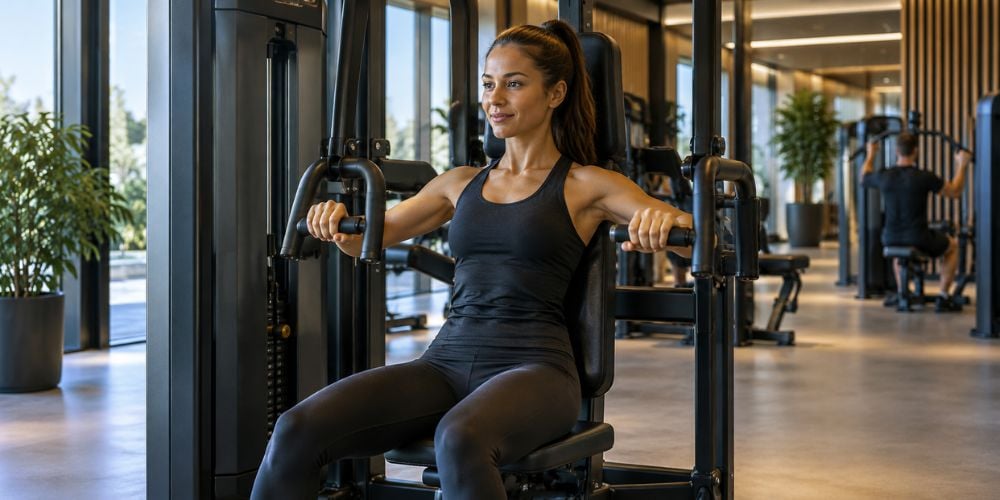
At YR Fitness, we self-design our movement angles because a strength machine should feel natural from the first rep to the last. Before comparing only by price, review our commercial strength equipment to see how different machines support pressing, pulling, leg training, and full strength-zone planning.
Key Factor 5: Are Moving Parts Protected Enough for a Busy Gym?
Busy gyms are different from private training rooms. Members may be tired, distracted, or new to the machine.
That is why moving parts need smart protection. Safety guards, covers, and clear labels help reduce avoidable risks.
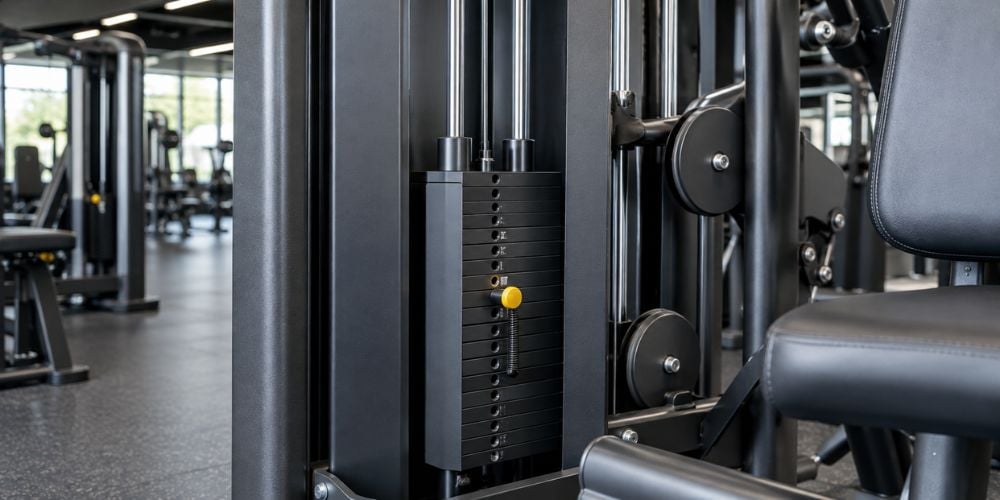
The first area to check is the weight stack.
Weight stacks move up and down all day. If they are exposed, hands, towels, clothing, or fingers can get too close to the moving plates.
A cover helps protect users. It also keeps the machine looking cleaner.
Check these points:
- Is the weight stack covered?
- Does the stack move smoothly?
- Does the selector pin lock firmly?
- Do the guide rods stay straight?
- Is there any sticking or shaking?
Pinch points are another important area.
These are places where fingers, hands, clothing, or body parts can get caught. They often appear near pulleys, moving arms, seat adjustments, folding parts, weight stacks, and lever systems.
Good design keeps these areas away from normal hand positions as much as possible.
ASTM F2276 includes requirements related to guarding, squeeze points, shear points, crush points, adjustment and locking means, handgrips, foot support, and load-transmitting parts such as ropes, belts, chains, and similar components.
A simple rule works well here:
If it adjusts, it must lock.
If it moves, it must be protected.
Key Factor 6: Will the Finish, Pads, and Grips Last?
Durability is not only inside the machine. The outside matters too.
Sweat, cleaning chemicals, humidity, and daily contact can damage low-quality surfaces fast. Members may not know the coating process, but they will notice rust, peeling, cracked pads, and worn handles.
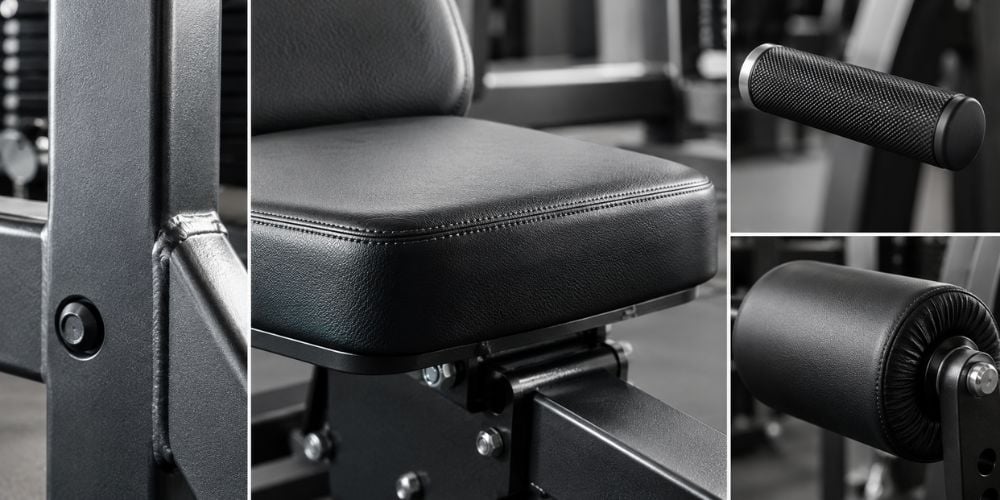
Powder coating helps protect steel from scratches and rust. But coating is only as good as the preparation underneath.
If the steel is not cleaned and treated properly before coating, the finish may peel or corrode faster.
Pads also matter.
A torn seat pad makes the whole gym feel less cared for, even if the machine still works. Pads should resist sweat, friction, cleaning chemicals, and daily pressure.
Handles affect comfort and control. If the grip feels slippery, loose, or poorly shaped, members may not feel secure during exercise.
Surface Part | Common Problem | What To Check |
Powder Coating | Peeling or rust | Smooth finish and edge coverage |
Pads | Cracking or flattening | Foam support and upholstery quality |
Stitching | Loose seams | Tight and even stitching |
Handles | Slipping or cracking | Grip texture and material |
Rubber Feet | Sliding or wear | Stable floor contact |
Plastic Covers | Cracking | Thickness and fit |
This part may seem small. But it affects member trust every day.
Key Factor 7: What Safety Standards Should I Ask About?
A supplier can say “high quality.” That sounds good, but it is too vague.
Safety standards help make the conversation more specific. They give you better questions to ask before buying.
For indoor stationary training equipment, ISO 20957-1:2024 is an important reference. It covers general safety requirements, test methods, environmental aspects, and classification for stationary training equipment.
ASTM F2276 is another useful reference for fitness equipment. It establishes design and manufacturing parameters for fitness equipment, and includes areas such as stability, support, moving parts, guarding, adjustment and locking parts, handgrips, foot support, and load-related components.
So, what should you ask for?
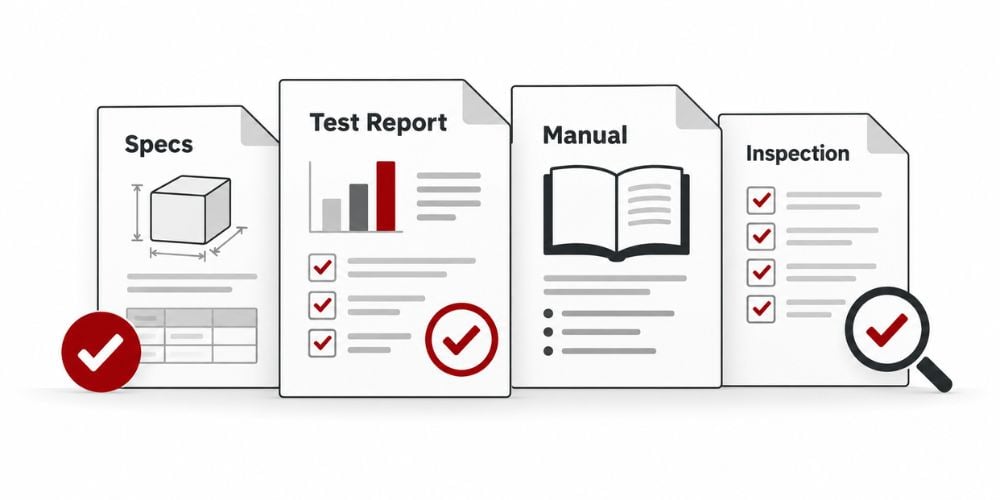
Document To Request | Why It Helps |
Product Specification Sheet | Confirms size, load, material, and function |
Safety Test Report | Supports supplier claims |
Assembly Manual | Helps avoid installation mistakes |
User Manual | Guides correct use |
Maintenance Guide | Helps staff inspect and service equipment |
Spare Parts List | Reduces downtime when parts wear |
Warranty Terms | Clarifies responsibility after purchase |
Are certifications enough?
No.
Certificates are helpful, but they do not replace real inspection. You should still check the frame, welding, movement, locking parts, labels, manuals, and spare parts support.
Trust the documents. But also test the machine.
Key Factor 8: Will Members Actually Enjoy Using It?
Members may not know steel thickness. They may not know bearing type.
But they know when a machine feels good.
A good machine should feel smooth from the first rep to the last. It should not feel jerky, noisy, uneven, or confusing.
If it does, something may be wrong with the cable path, pulley alignment, bearing system, guide rod, or resistance design.
Check these signs:
- Smooth resistance
- Quiet movement
- Balanced left and right sides
- No cable jumping
- No metal grinding sound
- No sudden sticking point
- Easy seat and handle adjustment
- Clear start and finish position
Good equipment also affects member retention.
When machines feel stable, smooth, and comfortable, members trust the gym more. They are more likely to enjoy training and come back.
This is also a safety issue. The National Safety Council reported that 4.4 million people were treated in emergency departments in 2024 for injuries involving sports and recreational equipment, with exercise, cycling, and basketball among the most frequent activities associated with injuries.
That does not mean equipment causes every injury. But it does remind gym owners to take equipment quality, member instruction, and maintenance seriously.
At YR Fitness, we design equipment around daily gym operation, member flow, and long-term use, not just how the machine looks in a catalog. If you are building or upgrading a facility, our one-stop gym solution can help you match equipment choices with layout, training zones, and a smoother member experience.
Key Factor 9: Does the Factory Control Quality Before It Ships?
A good design is important. But production control decides whether every machine matches that design.
This is where many buyers get surprised. The sample looks good, but the bulk order is not always the same.
So, ask how the factory controls quality during production, not only after production.
A reliable manufacturer should check:
- Raw materials before production
- Cutting accuracy
- Welding quality
- Frame alignment
- Hole position
- Coating quality
- Assembly fit
- Movement smoothness
- Noise level
- Labels and manuals
- Packing strength
Final inspection is especially important before shipment.
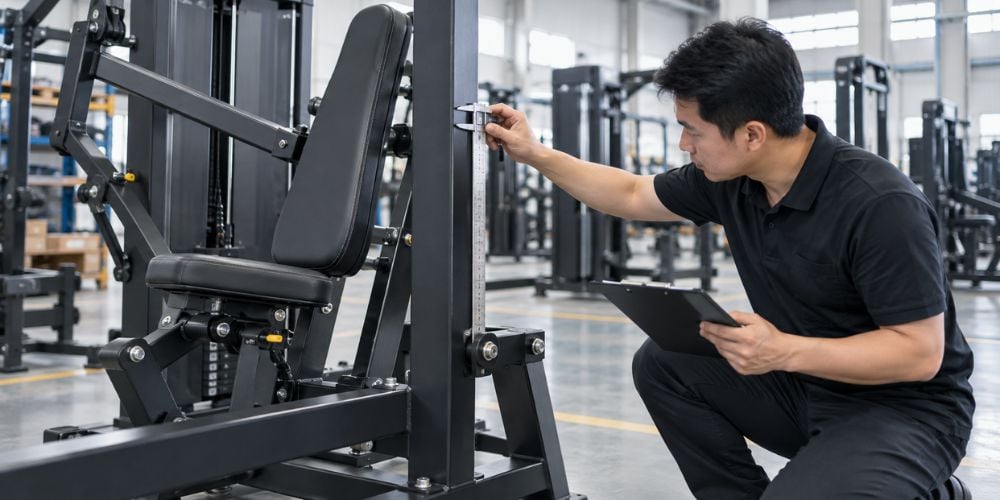
Once the goods arrive in your country, fixing factory mistakes becomes more expensive. It may also delay your gym opening.
QC Stage | What Should Be Checked | Why It Matters |
Incoming Materials | Steel, cables, bearings, pulleys, upholstery | Prevents weak parts entering production |
Cutting And Welding | Tube size, weld quality, frame alignment | Protects structure and fit |
Surface Treatment | Cleaning, coating, anti-rust finish | Reduces peeling and corrosion |
Assembly | Bolts, pins, seats, handles, moving parts | Confirms the machine works as designed |
Final Testing | Stability, movement, noise, labels, packing | Reduces problems after delivery |
Key Factor 10: Will Installation and Layout Keep Members Safe?
Even good equipment can become unsafe if it is installed badly.
Loose bolts, uneven floors, poor spacing, wrong assembly, or missing safety parts can all create problems. So safety does not stop when the equipment leaves the factory.
Start with the floor.
Heavy machines need stable flooring. Uneven flooring can cause wobbling, poor alignment, and extra stress on the frame.
Then check spacing.
Members need enough room to enter, train, load plates, move around, and leave the machine safely.
This is especially important for:
- Free weight zones
- Smith machines
- Squat racks
- Cable machines
- Plate-loaded machines
- Leg press and hack squat areas
- Cardio zones
Treadmills also need special attention.
They need enough rear clearance, proper power setup, and regular inspection. Real recalls show that cardio safety includes more than the running belt.
For example, the U.S. Consumer Product Safety Commission announced a recall of Peloton Tread+ treadmills after one child died and 72 reports were received involving adult users, children, pets, or objects being pulled under the rear of the treadmill.
Another CPSC recall involved Matrix Retail and Vision treadmills because the power cord could become loose from the treadmill’s power socket, creating a fire hazard.
The lesson is simple. Gym layout, installation, wiring, spacing, and maintenance are part of equipment safety too.
Red Flags of Poor-Quality Commercial Gym Equipment
Not every problem is easy to see at first. But some warning signs should make you pause before buying.
Red Flag | What It Usually Means | What To Do |
Shaking Frame | Weak structure or poor base | Test with real movement |
Rough Welds | Poor production control | Ask about factory inspection |
No Load Rating | Unclear safety limit | Request product specifications |
Jerky Movement | Poor cable or pulley alignment | Test before bulk order |
Missing Manuals | Weak support after purchase | Ask for full documentation |
No Spare Parts Plan | Higher downtime risk | Confirm parts availability |
Very Low Price | Possible material shortcuts | Compare specs, not only price |
A low price is not always bad.
But if one quote is much lower than every other supplier, ask what is missing.
Maybe the frame is lighter. Maybe the packing is weaker. Maybe the warranty is shorter. Maybe spare parts will not be available later.
Do not only ask:
Why is this cheaper?
Ask:
What did they remove to make it cheaper?
That second question is usually more useful.
Buyer Checklist: What Should You Check Before Buying?
Before placing an order, use this checklist.
It helps you compare equipment in a simple way.
Do not only ask: How much is it?
Ask: What am I getting for that price?
Checkpoint | What To Look For | Why It Matters |
Frame Structure | Thick steel, wide base, reinforced stress points | Improves stability and service life |
Welding Quality | Smooth, consistent, clean welds | Reduces cracking and structural weakness |
Load Capacity | Clear user weight and training load ratings | Helps prevent unsafe use |
Movement Feel | Smooth, quiet, controlled motion | Improves comfort and confidence |
Biomechanics | Natural angles and comfortable movement path | Supports better exercise form |
Adjustability | Secure seat, pad, handle, and footplate positions | Fits different member body types |
Safety Guards | Protected weight stacks, pulleys, and moving areas | Reduces accidental contact risks |
Locking Systems | Strong pop pins, catches, hooks, and stops | Keeps adjustable parts secure |
Surface Finish | Durable coating and anti-rust protection | Extends appearance and frame life |
Upholstery | Sweat-resistant cover, firm foam, strong stitching | Reduces wear and improves comfort |
Standards | ISO, ASTM, or other relevant safety references | Shows stronger safety awareness |
Manuals | Assembly, operation, and maintenance guidance | Helps staff use and maintain equipment correctly |
Spare Parts | Cables, pulleys, grips, pads, and pins available | Reduces downtime and long-term costs |
Warranty Support | Clear warranty terms and service process | Protects the buyer after purchase |
Supplier Experience | Proven commercial gym project experience | Reduces buying and installation risk |
The CPSC recall database is also useful for gym owners who want to understand what kinds of product hazards regulators track. It is not a buying checklist by itself, but it can help you learn what safety issues appear in the real market.
Conclusion
Durable and safe commercial gym equipment is not built by chance. It comes from strong materials, stable structure, smooth movement, safety protection, proper testing, factory quality control, and safe installation.
For gym owners, this means fewer breakdowns, safer workouts, and a better daily experience for members. When the equipment feels solid and reliable, members trust the gym more.
If you are planning a new gym or upgrading your current facility, YR Fitness gives you a practical way to compare commercial-grade strength machines, cardio equipment, and full gym solutions in one place.
Start with our commercial gym equipment solutions and build a setup that feels stable, trains well, and supports your members every day.
Related articles:



