


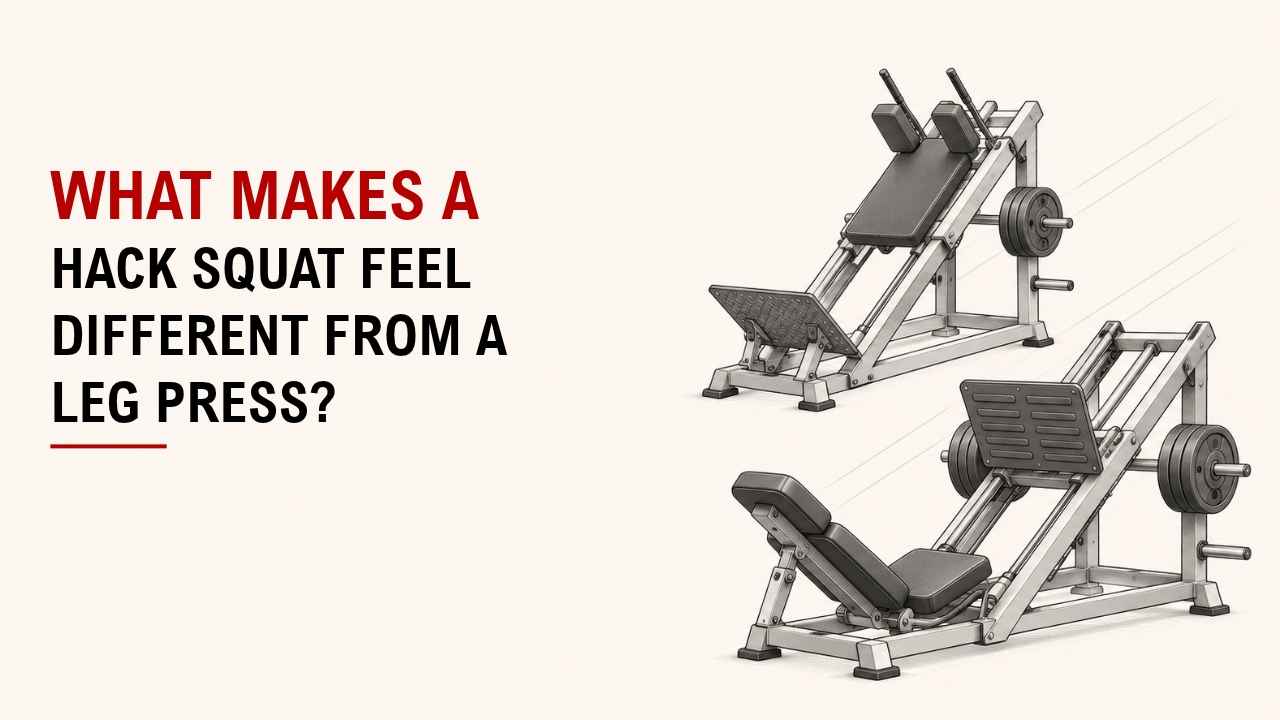

Have you noticed that a hack squat can feel much harder than a leg press with similar weight? The difference comes from how each machine positions and moves your body.
The short answer is simple: body position, movement path, joint angles, and machine design all change how the resistance feels.
As an Exercise Physiology & Biomechanics Expert at YR Fitness, I work closely with strength-machine movement, joint angles, and exercise mechanics. This helps me understand why small design changes can make the same leg exercise feel very different.
Below, I’ll show you the 7 main reasons a hack squat feels different from a leg press.
1. Your Body Position Is Different
The first difference is how your body sits on each machine.
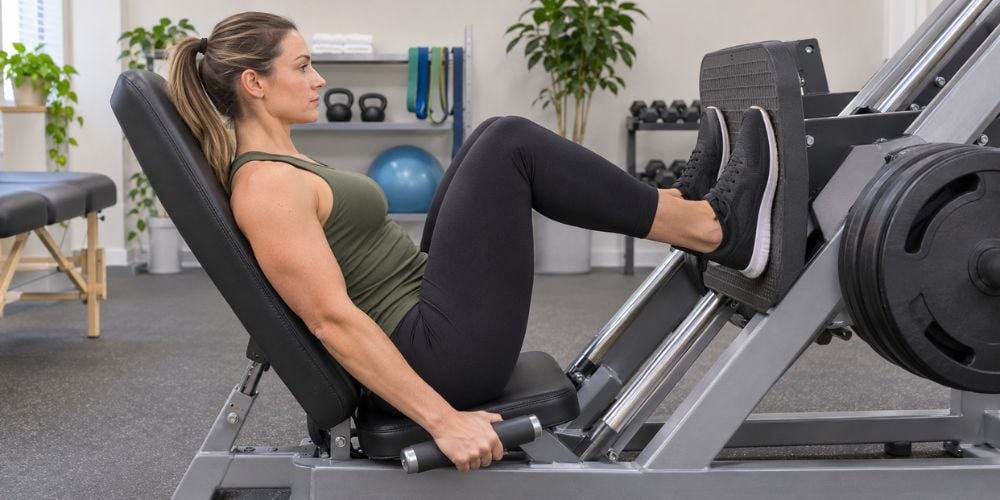
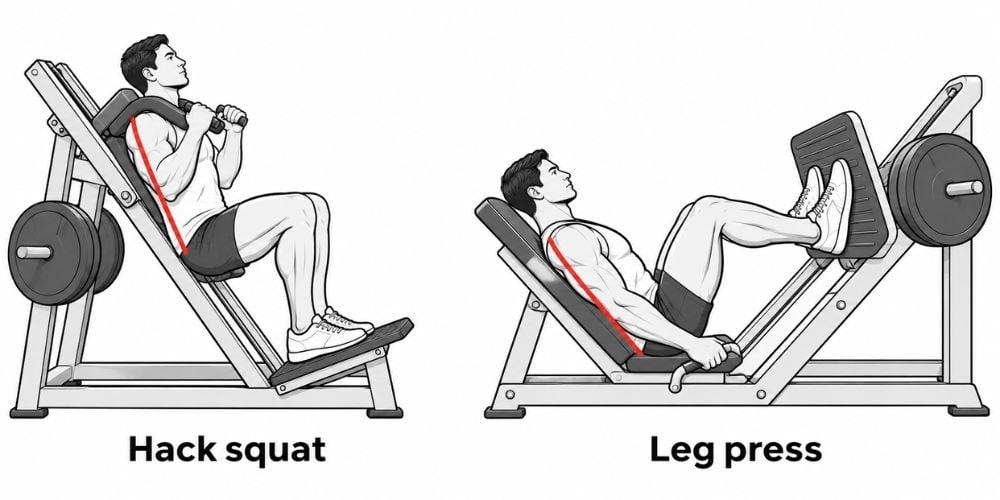
On a hack squat, your back stays against the pad while your body remains more upright. On a leg press, your torso is usually more reclined while you push the platform away.
That changes the position of your:
- Hips
- Knees
- Ankles
- Torso
The hack squat usually feels closer to a standing squat. The leg press feels more like pushing a load away while your upper body stays supported.
Research comparing squat and leg press biomechanics also shows that exercise setup can change knee forces and muscle activity.
2. The Movement Path Changes
Both machines guide you, but they do not guide you in the same direction.
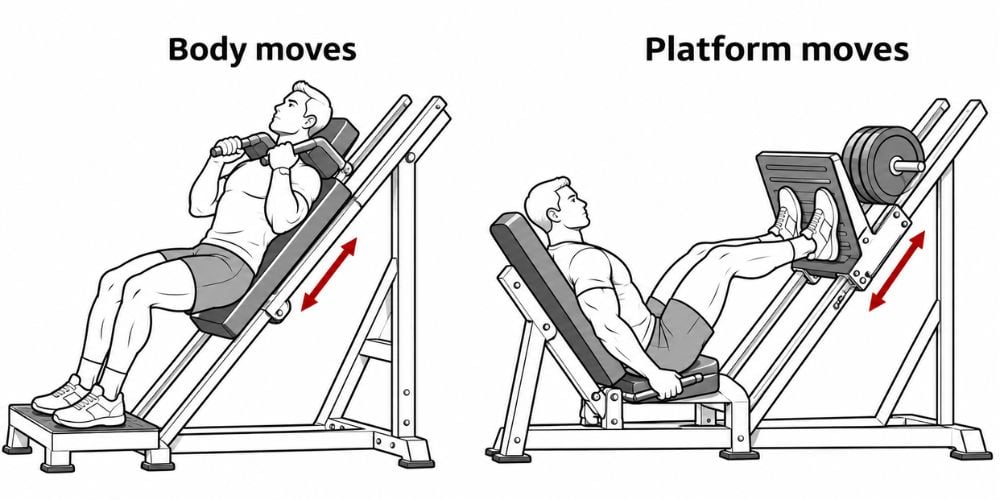
A hack squat usually moves your body along an angled rail. Your feet stay planted while the sled and your body travel together.
On many leg presses, your body stays relatively still while you push the platform away.
So why can the same number of plates feel different?
The machine angle, sled weight, friction, and movement direction all affect the resistance you actually feel. That is why 100 kg on a hack squat may not feel like 100 kg on a leg press.
What Changes | Hack Squat | Leg Press |
Torso position | More upright | More reclined |
Main movement | Body travels with sled | Platform moves away |
Balance required | Low | Very low |
Foot-position freedom | Moderate | Usually higher |
Feel | More squat-like | More like a supported push |
Here is why this matters: do not compare your strength only by the number of plates on each machine.
3. Hack Squats Often Feel More Quad-Dominant
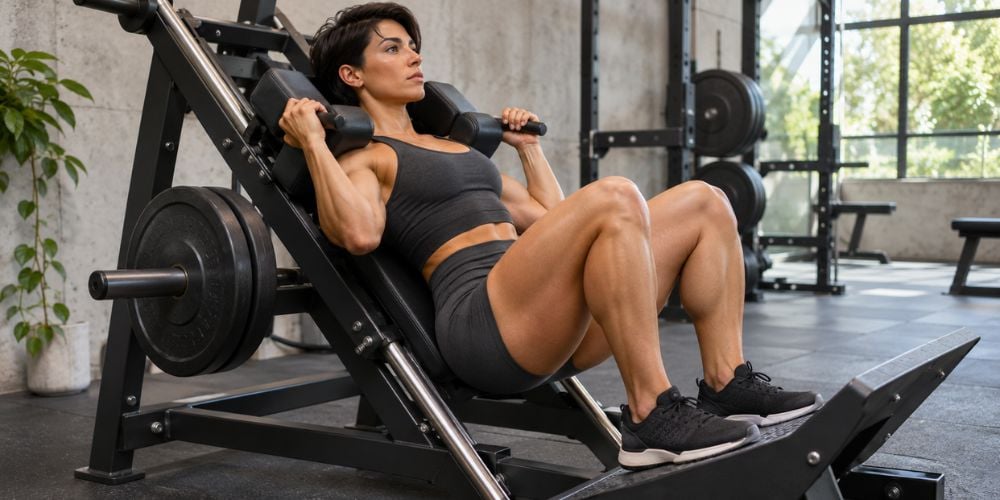
Many people feel hack squats strongly in the front of their thighs.
The machine often allows deep knee bend while keeping your torso supported. Your knees may also travel farther forward than they do on some leg press setups.
This can mean:
- More tension in your quadriceps
- A stronger quad stretch near the bottom
- More effort when driving out of a deep position
I often see people notice this quad-heavy feeling almost immediately when moving from a leg press to a hack squat.
Foot position still matters. Moving your feet slightly higher or lower can change how the exercise feels.
4. Leg Presses Usually Allow More Hip Involvement
On the other hand, a leg press often gives you more room to change your stance.
You can usually place your feet:
- Higher
- Lower
- Wider
- Narrower
A higher foot position can allow more hip movement and may increase contribution from your glutes and hamstrings. Research on different leg press setups has also found that mechanical changes and foot position can affect lower-body muscle activity.
Your quads still work hard. You simply have more freedom to change how your knees and hips contribute.
If you want to compare how these movement angles feel across different machines, take a look at the lower-body strength equipment from YR Fitness. We design our strength machines around controlled movement paths and practical body positioning, so you can see how different setups change the exercise itself.
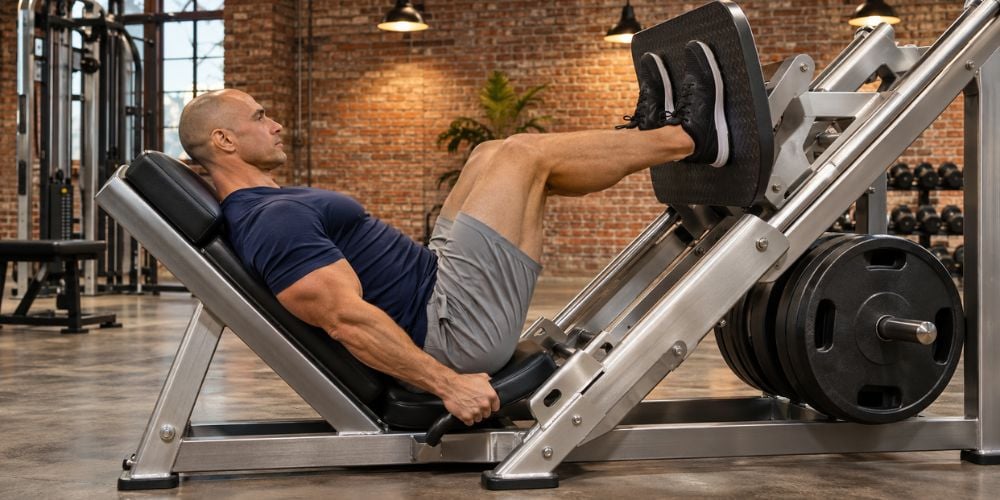
5. The Bottom Position Feels Different
The deepest part of the rep is often where the difference becomes obvious.
On a hack squat, your knees can bend deeply while your torso stays supported. This can create a strong stretch through your quadriceps.
On a leg press, your knees move toward your torso as the platform comes down. Your hips usually bend more as well.
At the Bottom | Hack Squat | Leg Press |
Knee bend | Often deep | Often deep |
Hip bend | Usually less noticeable | Usually greater |
Common feeling | Strong quad stretch | More hip and glute involvement |
Torso | Supported and more upright | Supported and reclined |
Main tip | Control your knee depth | Keep your hips and back stable |
A systematic review of leg press muscle activation found that quadriceps activity generally increased as knee flexion increased during the leg press.
Should you go as deep as possible? Not necessarily.
Use the deepest range you can control while keeping your feet planted and your hips and back stable.
6. Stability Changes How Hard Exercise Feels
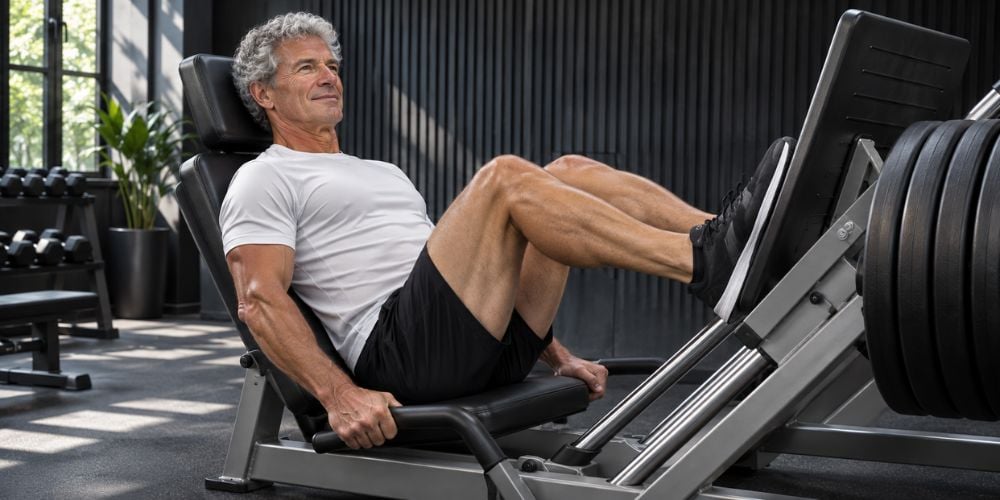
Both machines support your body, but they do it differently.
The hack squat keeps your back against the pad and guides your body along a fixed path. That removes much of the balance needed during a free-weight squat.
The leg press gives your upper body even more support because you are usually seated or reclined. You can focus almost entirely on pushing with your legs.
That extra stability is one reason people can often use heavy loads on a leg press.
But heavier does not automatically mean better. Controlled reps and a comfortable range of motion matter more than simply adding plates.
7. Machine Design Matters
Have you ever used two hack squat machines that felt completely different? That is probably not your imagination.
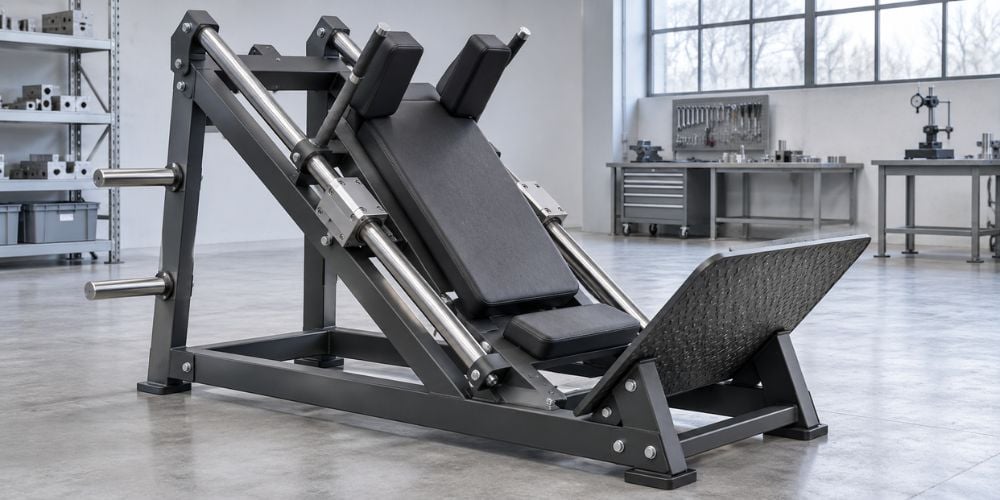
Small design differences can change the entire rep.
Sled Angle
A steeper or flatter track changes how gravity acts on the machine.
That can make one machine feel heavier than another with the same number of plates.
Starting Position
Some machines start you with more knee bends. Others give you more space before you reach the bottom.
Footplate Position
A larger footplate gives you more freedom to adjust your stance. A smaller one may keep you in a more fixed position.
Back Pad and Seat Angle
These change how your hips and torso sit during exercise.
Even a small difference can change where you feel the movement.
Friction and Machine Resistance
Bearings, rails, sled weight, and other mechanical parts affect how smoothly the machine moves.
So, comparing plate numbers between different machines is not always useful. Focus more on how the movement feels and how well you can control it.
Conclusion
A hack squat and leg press both train your legs, but they position and move your body differently.
Neither machine is automatically better. Choose the one that feels comfortable, lets you stay controlled, and fits the way you want to train your legs.
If you want to compare different hack squat, leg press, and lower-body machine designs, explore the strength equipment from YR Fitness. You can quickly see how different setups and movement paths can change the way a leg exercise feels.
Related articles:



