








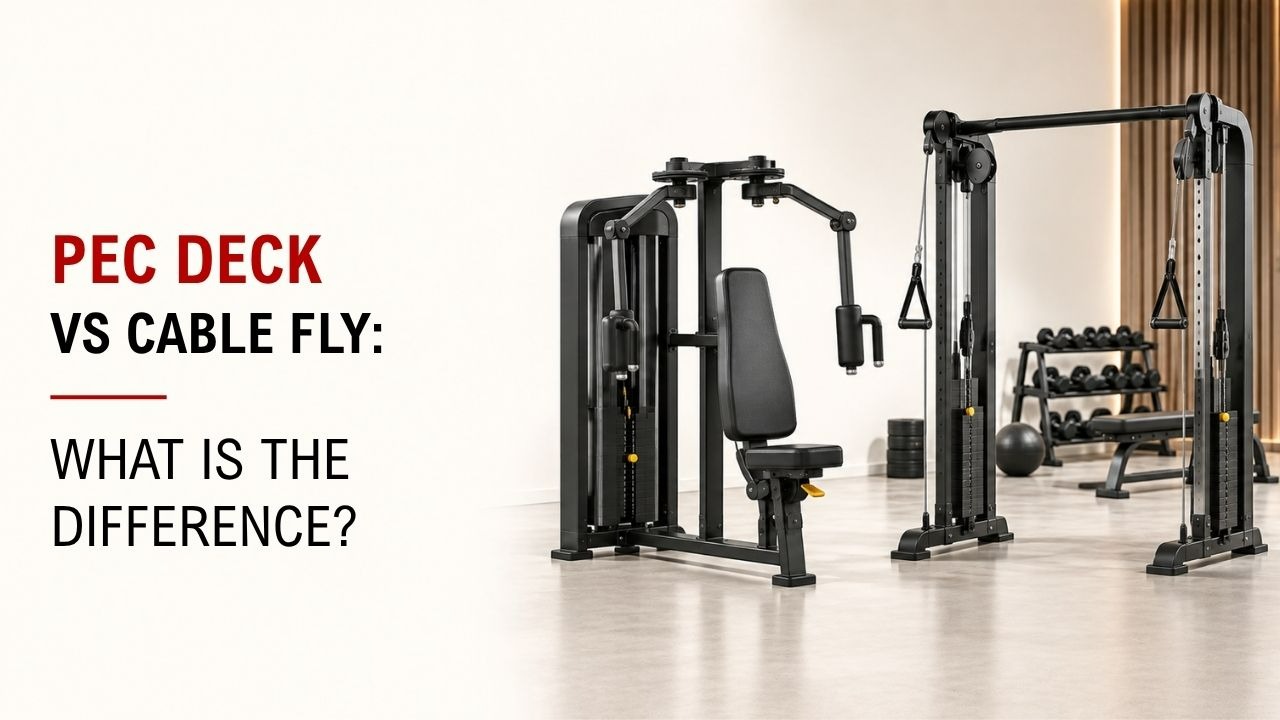

Have you ever wondered whether the pec deck or cable fly is better for chest training? Both work your chest, but they feel very different.
The short answer is simple: choose the pec deck for more stability. Choose cable fly for more movement freedom and training angles.
As the founder and chief designer of YR Fitness, I have spent decades studying strength-machine movement and resistance. In my experience, the better choice depends on how you like to train.
Below, I will compare the main differences between the two. Keep scrolling, and you should quickly know which one suits you better.
Pec Deck vs Cable Fly at a Glance
Want the difference without reading everything first? Here is the quick comparison.
Feature | Pec Deck | Cable Fly |
Movement path | Guided | More freedom |
Stability | Higher | Lower |
Setup | Simple | More adjustment |
Training angles | Limited | Highly adjustable |
Chest isolation | Easy | Easy with good control |
Beginner-friendly | Very good | Good |
Exercise variety | Lower | Higher |
Quick Takeaway: Pec deck is easier to control. Cable fly is easier to customize.
1. The Pec Deck Guides Your Movement
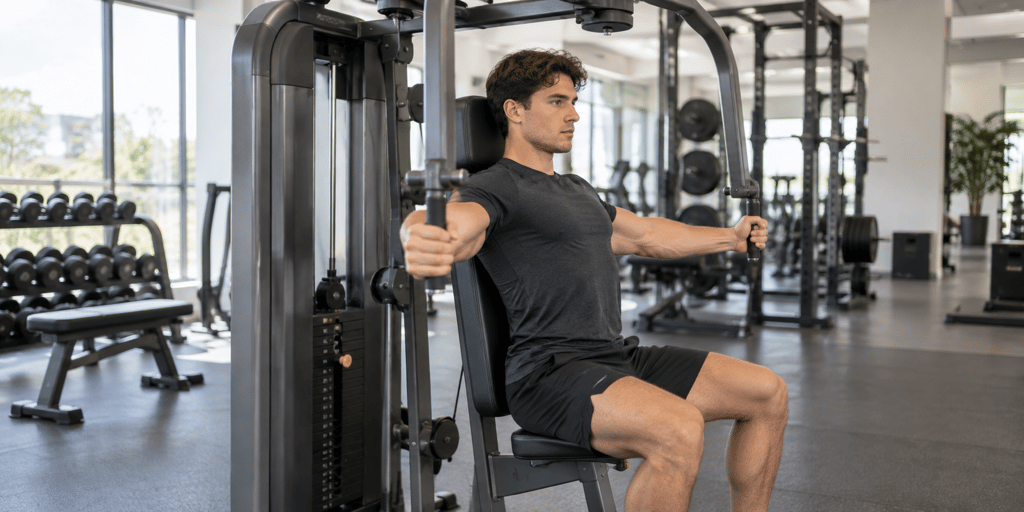
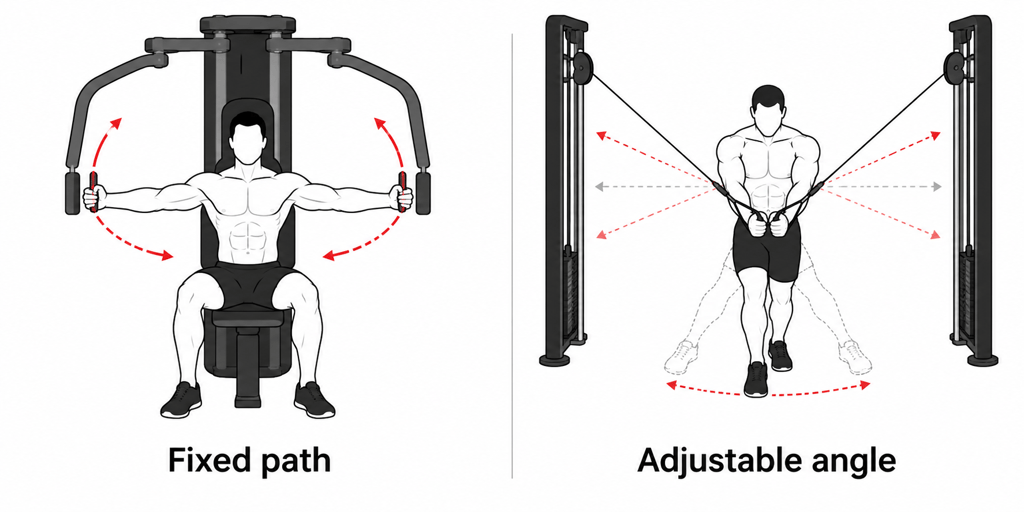
The pec deck keeps you seated with your back supported while you bring the arms or pads together in front of your chest.
The main difference is simple: the machine controls most of your movement path.
That gives you:
- More stability
- Less need to balance
- Easier setup
- More focus on squeezing your chest
Because the machine supports your body, you can spend less effort controlling your position.
I often like this type of movement near the end of a workout, when you want to train the chest without adding unnecessary setup.
Who is it best for? Beginners, anyone who prefers machine training, and lifters who want a straightforward chest isolation exercise.
2. Cable Fly Gives You More Movement Freedom
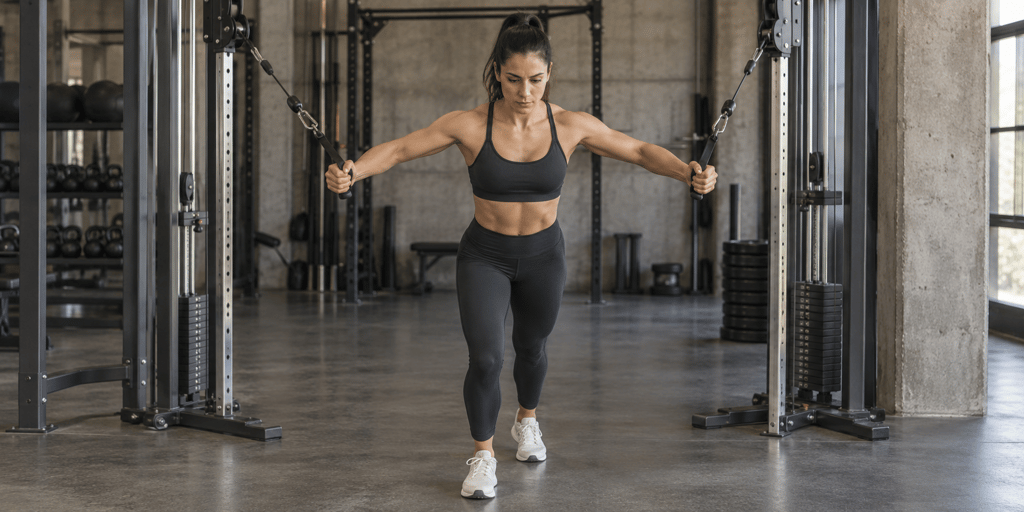
With a cable fly, you control the handles yourself.
Your shoulders, arms, and core help stabilize the movement, so it takes a little more coordination than the pec deck.
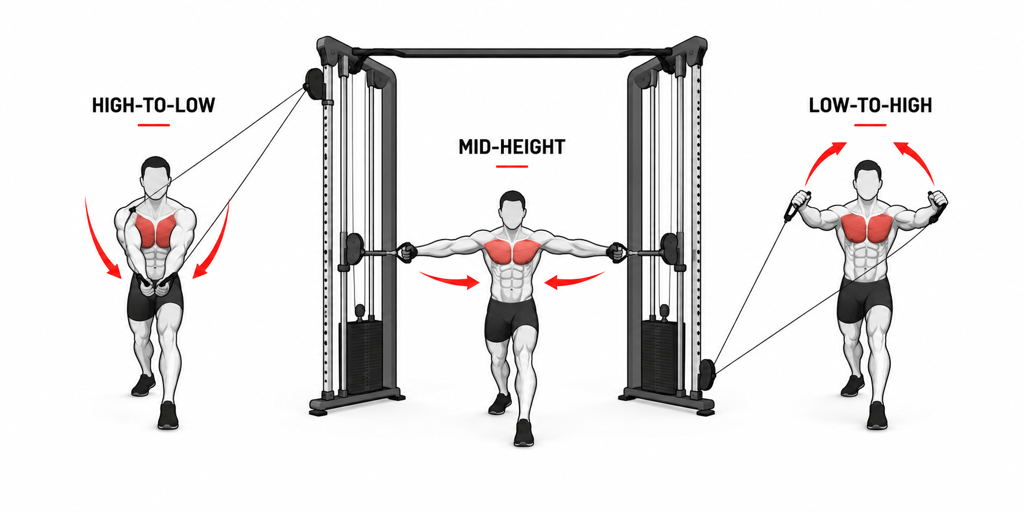
You can also change the pulley height:
- High-to-low: pull downward and inward.
- Mid-height: bring the handles across your chest.
- Low-to-high: pull upward and inward.
This is why cable flies are so versatile. ACE’s standing chest fly guide also recommends keeping a slight bend in the elbows and bringing the handles together under control.
But more freedom comes with a trade-off.
If you choose too much weight, you may start leaning forward or turning the fly into more of a press. ACE also notes that excessive resistance can encourage this forward lean.
Quick difference: the pec deck guides you. The cable fly makes you guide the exercise.
3. The Resistance Feels Different
Both exercises challenge your chest, but the resistance does not feel exactly the same.
Pec Deck | Cable Fly |
Movement follows the machine design | Movement depends more on your position |
Resistance feels predictable | Resistance angle is easier to change |
Each rep is easy to repeat | Small setup changes affect the feel |
Less stabilization required | More stabilization required |
With the pec deck, you sit in one position and follow the machine’s designed path.
With cables, moving your feet or changing the pulley height changes the direction of pull. Even a small setup change can make the exercise feel different.
Here is why this matters: the best resistance setup is one you can control through a comfortable range of motion.
In our decades of strength-machine design, we have seen how small changes in leverage and movement angles can noticeably change how an exercise feels. If you prefer stable machine-based chest training, you can explore our commercial strength equipment and compare different movement designs.
4. Which Is Better for Building Your Chest?
So, which one builds more muscle?
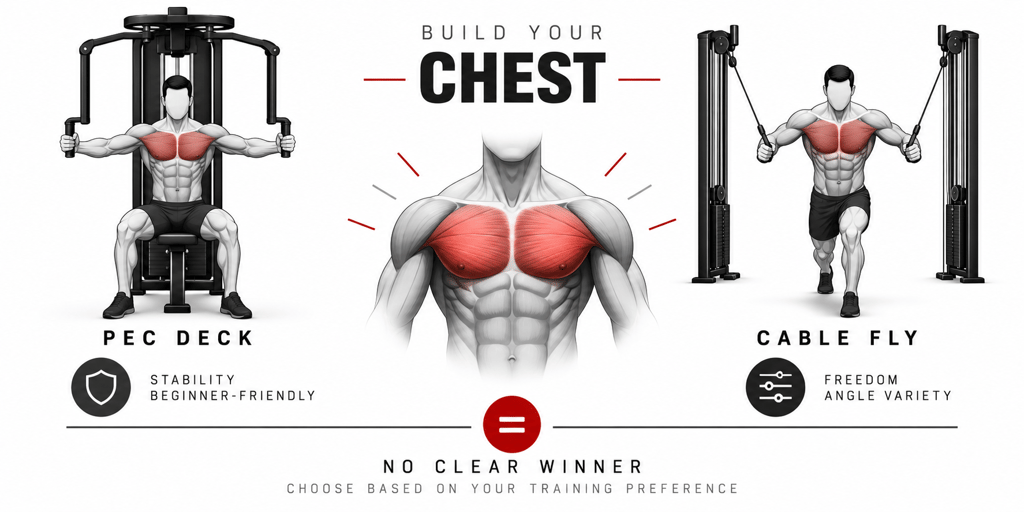
There is no clear winner.
A University of Wisconsin-La Crosse study comparing several chest exercises found no significant difference in pectoralis major muscle activation between the pec deck and bent-forward cable crossover. You can view the study here.
More importantly, ACSM’s 2026 resistance-training position stand reviewed 137 systematic reviews involving more than 30,000 participants and found that equipment type did not consistently affect training outcomes. Training volume and progressive resistance matter more for muscle growth.
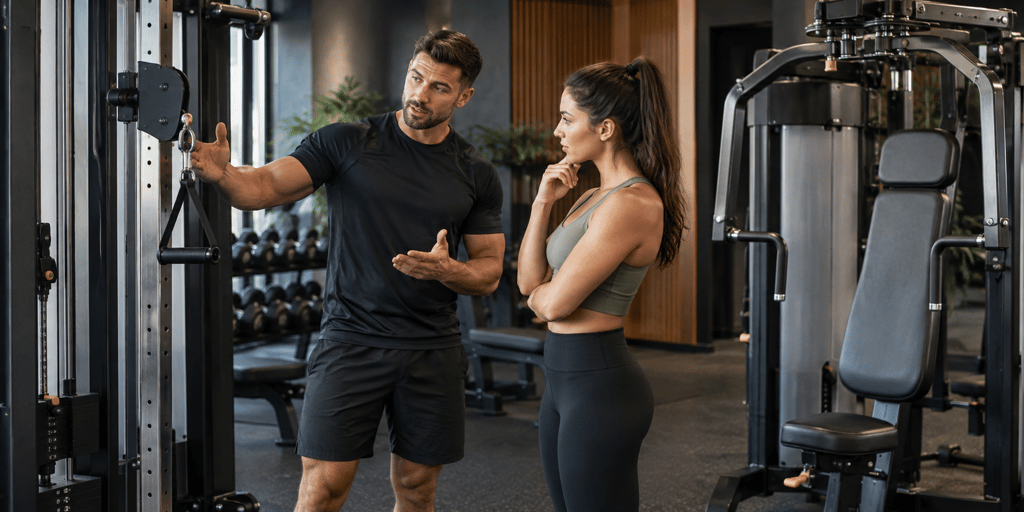
Choose the pec deck if you:
- Want easier chest isolation
- Prefer more stability
- Do not want to focus much on balance
- Want simple exercise when you are tired
Choose the cable fly if you:
- Want more training angles
- Prefer more movement freedom
- Like adjusting your body position
- Want several fly variations from one station
For beginners, the pec deck is often easier to learn.
More experienced lifters may enjoy cables because they can experiment with different angles and positions.
5. Can You Use Both?
Yes. You do not have to choose only one.
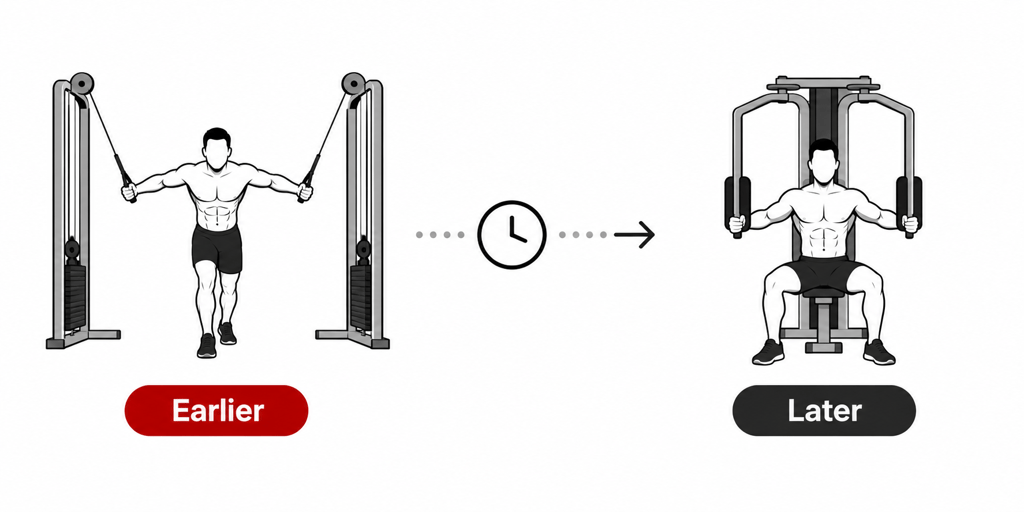
One simple approach is to do cable flys earlier, when you have more energy to control the handles. Then use the pec deck later for stable isolation.
For example:
Exercise | Sets |
Chest press | 3 |
Incline press | 3 |
Cable fly | 2–3 |
Pec deck | 2 |
You can also alternate them between workouts.
Use the pec deck in one workout and cable flys in the next. This gives you variety without making your routine complicated.
Conclusion
The main difference is straightforward: the pec deck guides your movement, while the cable fly gives you more ways to change the training angle.
Choose the pec deck if you want simple chest isolation. Choose cable flys if you prefer variety and more control over your movement.
If you want commercial chest machines designed around comfortable movement and consistent resistance, at YR Fitness we can help you explore strength equipment built for reliable everyday training.
Related articles:



