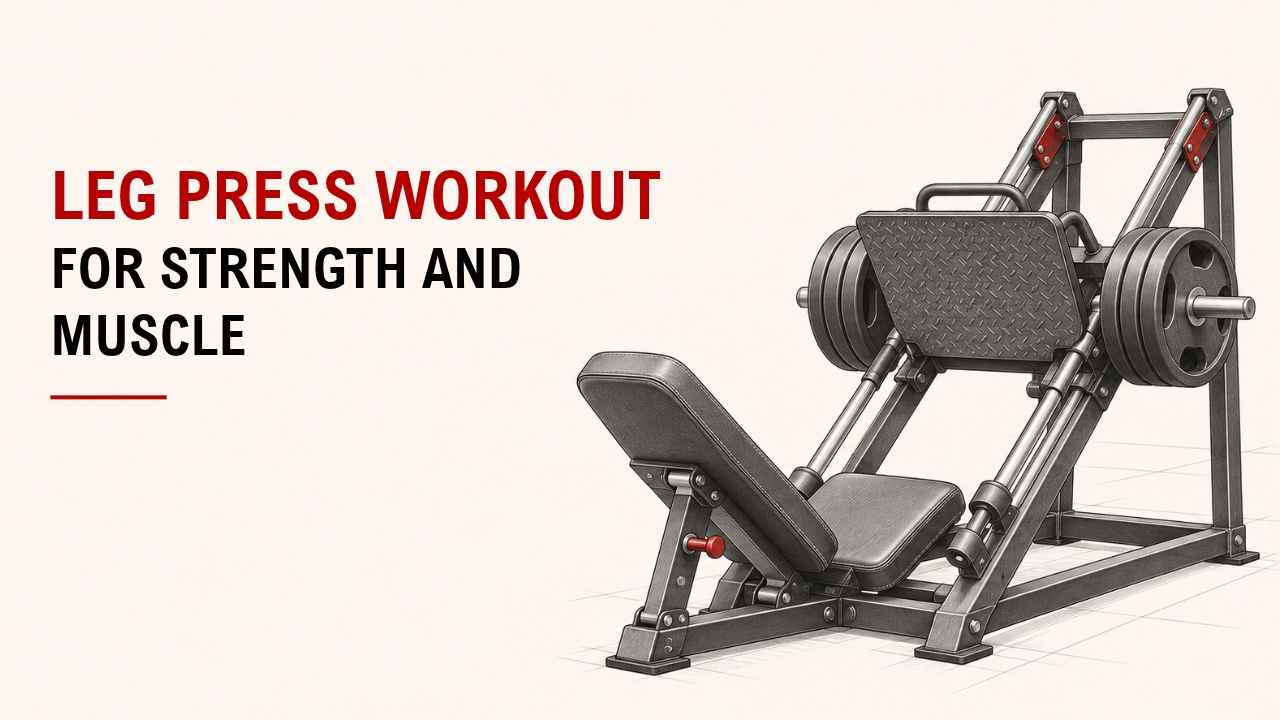

Want stronger legs and bigger muscles? Not sure how much weight to use or how many reps to do on the leg press?
Start with 2 warm-up sets, 3 heavy sets, 3 moderate-weight sets, and 2 lighter finishing sets. This combination helps you train for strength and muscle growth in one workout.
As an Exercise Physiology and Biomechanics Expert working with YR Fitness, I understand how proper movement and training intensity affect muscle development. I often see people lift too heavy before learning how to control the movement.
In this guide, you’ll learn a simple leg press workout with clear sets, reps, and rest times. Follow each step to build stronger legs while keeping your movements controlled.
Leg Press Workout at a Glance
Workout | Sets | Reps | Rest |
Warm-Up Leg Press | 2 | 12–15 | 60 seconds |
Heavy Leg Press | 3 | 6–8 | 2–3 minutes |
Moderate-Weight Leg Press | 3 | 10–12 | 90 seconds |
High-Rep Leg Press Finisher | 2 | 15–20 | 60 seconds |
This workout includes 2 warm-up sets and 8 working sets. If you’re a beginner, start with fewer working sets and build up gradually.
1. Warm-Up Leg Press – 2 Sets of 12–15 Reps
Start with a light weight to prepare your legs for heavier sets. The goal is to get your muscles moving without tiring them out.
Workout Details:
- Sets: 2
- Reps: 12–15
- Weight: Light
- Rest: 60 seconds
How to Do It:
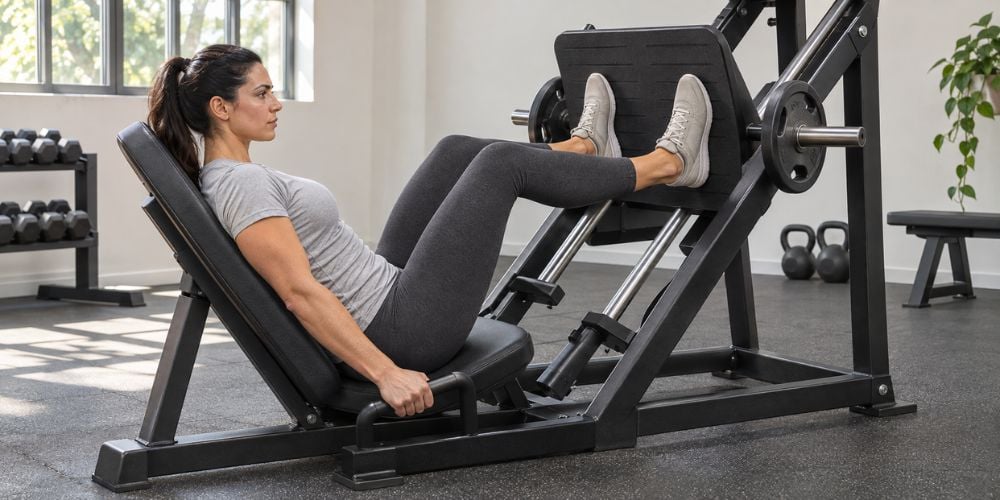
- Sit with your back against the pad.
- Place your feet shoulder-width apart.
- Lower the weight slowly by bending your knees.
- Push through your feet to return to the starting position.
- Complete 12–15 controlled reps.
This warm-up gets your quadriceps, glutes, and supporting leg muscles working.
How heavy should you go?
Keep it light enough that you could easily complete a few more reps. You should feel ready for your next sets, not tired.
New to machine-based leg exercises? This leg press vs. hack squat comparison explains how the two movements differ.
2. Heavy Leg Press for Strength – 3 Sets of 6–8 Reps
Now it’s time to challenge your legs with heavier weights.
Workout Details:
- Sets: 3
- Reps: 6–8
- Weight: Heavy but manageable
- Rest: 2–3 minutes
How to Do It:
- Increase the weight of your warm-up.
- Keep your back and hips against the seat.
- Lower the platform to a comfortable depth.
- Push through your whole foot to extend your legs.
- Avoid forcefully locking your knees.
Choose a weight that makes the last two reps challenging without affecting your form.
I always remind lifters that heavier doesn’t automatically mean better. If your hips lift off the seat or your lower back rounds, reduce the weight or adjust your depth.
Why use heavier weights?
Heavier resistance helps develop maximum strength. The American College of Sports Medicine’s resistance training guidelines also recommend heavier loads when strength is the main goal.
But good form still comes first.
If your back starts rounding during the movement, follow these leg press lower-back positioning tips before adding more weight.
3. Moderate-Weight Leg Press for Muscle Growth – 3 Sets of 10–12 Reps
After your heavy sets, lower the weight and focus on controlled repetitions.
Workout Details:
- Sets: 3
- Reps: 10–12
- Weight: Moderate
- Rest: 90 seconds
How to Do It:
- Reduce weight from your strength sets.
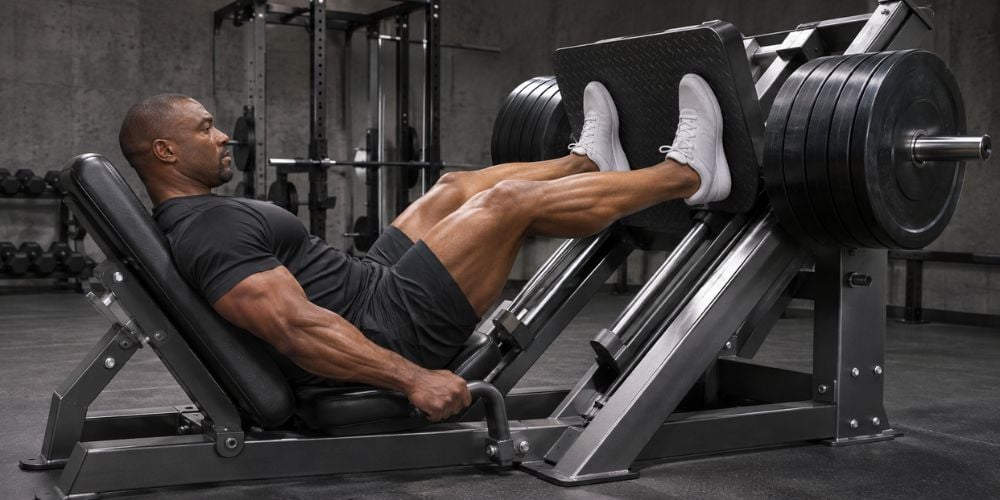
- Keep your feet flat on the platform.
- Lower the weight slowly for about 2–3 seconds.
- Press upward without bouncing.
- Complete 10–12 controlled reps.
This part of the workout targets your quadriceps and glutes while adding more training volume for muscle growth.
Should you train until you can’t do another rep?
Not necessarily. Choose a weight that leaves you with about 1–2 good reps before reaching your limit.
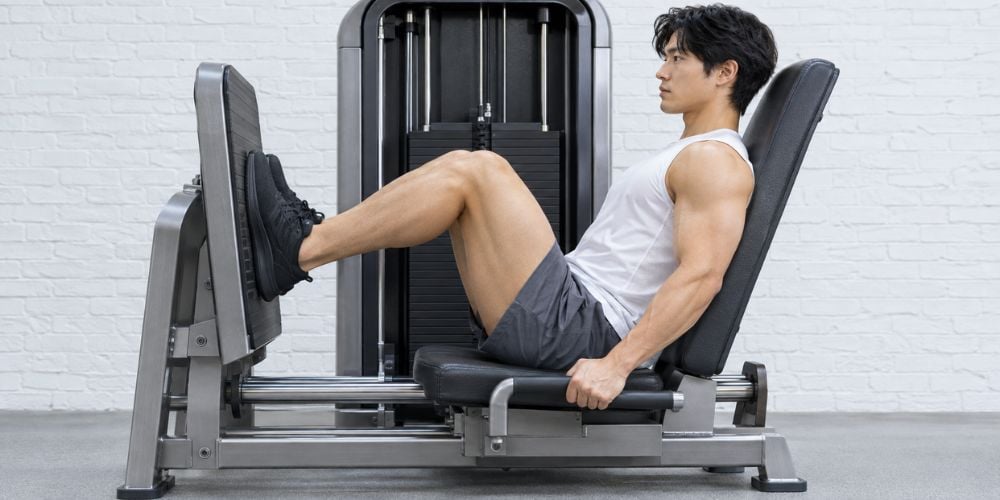
A smooth movement also makes it easier to focus on each repetition. For example, this 45-degree leg press machine with linear bearings uses a guided system designed for stable leg training.
At YR Fitness, we design commercial leg press machines with stable frames, comfortable support, and controlled movement paths. Our goal is to help users train comfortably and maintain consistent form during regular strength workouts.
Want to see how different leg press designs support your training? Explore our seated leg press machine to learn more about its movement and support features.
4. High-Rep Leg Press Finisher – 2 Sets of 15–20 Reps
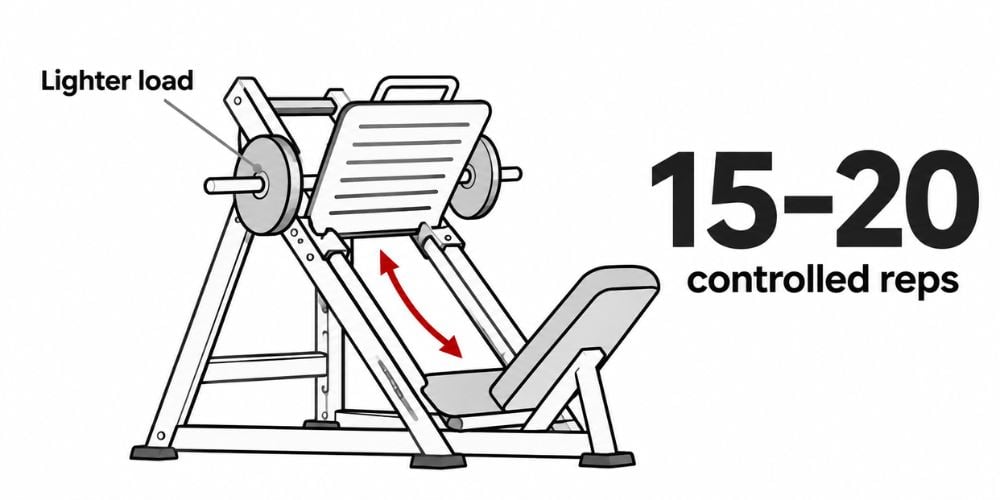
Finish your workout with lighter weights and higher repetitions.
Workout Details:
- Sets: 2
- Reps: 15–20
- Weight: Light to moderate
- Rest: 60 seconds
How to Do It:
- Reduce the weight again.
- Keep your feet shoulder-width apart.
- Lower the platform with control.
- Push upward at a steady pace.
- Complete 15–20 reps without rushing.
Your legs may start to burn during these final sets. That’s normal when your muscles are working hard, but stop if you feel sharp pain.
What if you can’t finish 20 reps?
Don’t force it. Reduce the weight or stop the set when you can no longer maintain proper form.
Avoid bouncing at the bottom or shortening your movement just to finish more reps.
These sets add extra training volume to your workout. If your legs are already too tired, you can skip the finisher.
5. How to Progress Your Leg Press Workout
Getting stronger takes time, but small improvements can make a big difference.
Here are five ways to keep progressing:
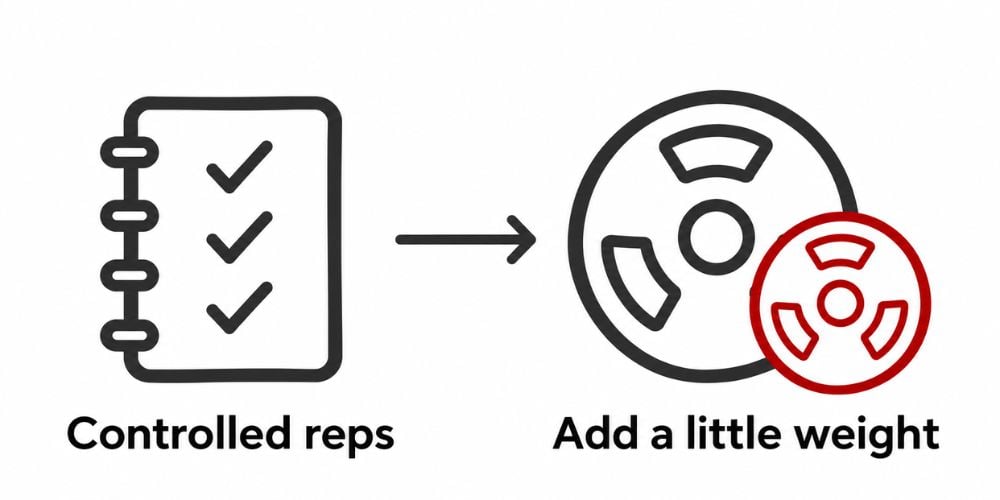
- Increase weight gradually: Add a little more resistance once you can complete every rep with good form.
- Track your progress: Record your weights, sets, and reps after each workout.
- Control every rep: Lower and press the weight without rushing.
- Train consistently: Include leg presses 1–2 times per week, depending on your routine.
- Allow recovery: Give your legs around 48 hours between hard workouts, or longer if needed.
The U.S. Physical Activity Guidelines recommend muscle-strengthening activities at least twice a week for adults. Your leg press sessions can contribute to that goal alongside other strength exercises.
When Should You Increase the Weight?
Use this quick guide to decide what to do next.
What Happens During Your Workout | What to Do |
All reps feel easy | Increase the weight slightly next time |
Last 1–2 reps feel challenging | Keep the same weight |
You cannot finish your target reps | Reduce the weight |
Your hips lift or your back rounds | Adjust your form and lower the weight |
You feel too tired to complete the sets safely | Reduce the number of sets or rest longer |
For beginners: You don’t need to complete all eight working sets immediately. Start with fewer sets and increase them as your strength and recovery improve.
One thing I’ve noticed is that people often measure progress only by how much weight they lift. But better control, more reps, and a consistent range of motion are also signs of improvement.
Using the same machine settings each session can make your progress easier to track.
Conclusion
A good leg press workout combines heavy sets for strength with moderate and higher-repetition sets for muscle growth.
Start with a light warm-up, choose manageable weights, and focus on proper form. As your legs get stronger, gradually increase the resistance.
You don’t need to lift the heaviest weight in the gym to see results. Consistent training and controlled movements matter more.
Want to see different leg press machines and how they’re designed for regular training? Explore the YR Fitness leg press equipment collection to compare available designs and find one that suits your workout.
Related articles: