




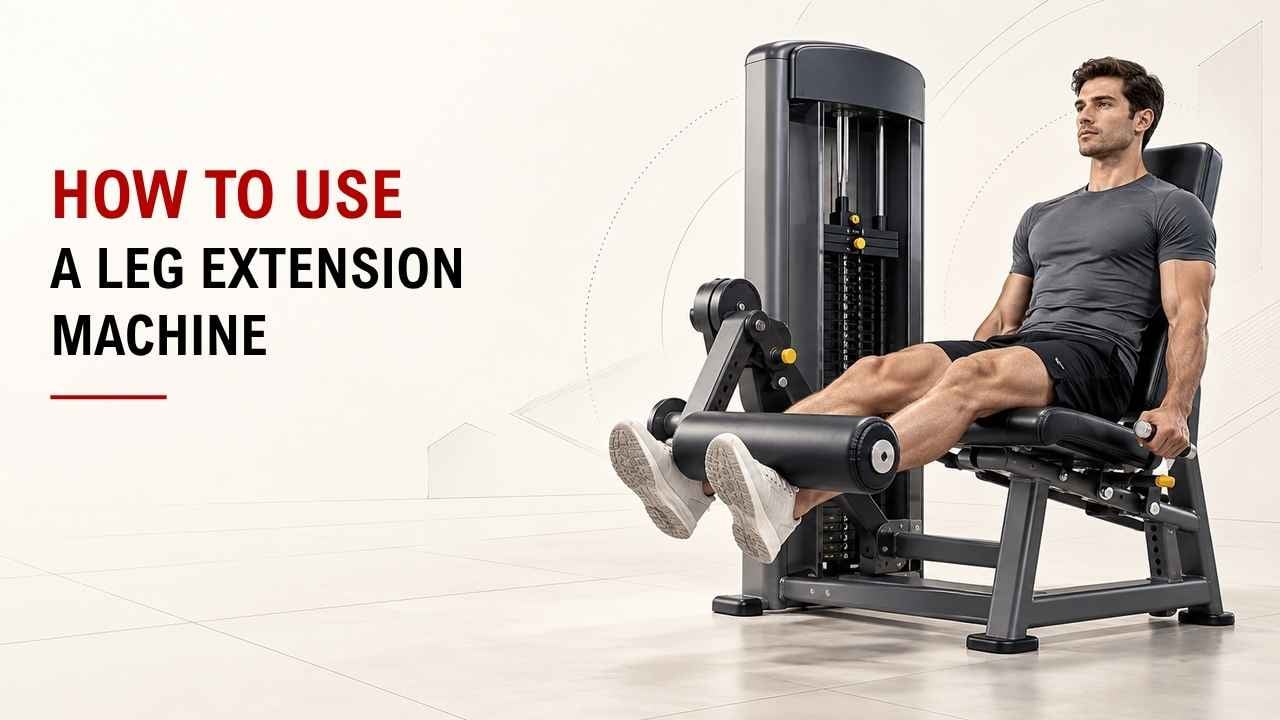

Have you ever sat on a leg extension machine and wondered if the setup was right? A poor seat or roller position can make the exercise feel awkward.
The basic method is simple: adjust the machine to your body, choose a manageable weight, extend your legs smoothly, and lower with control.
At YR Fitness, I have spent more than 30 years designing and studying fitness equipment. That experience has shown me how small setup details can make a big difference in comfort and movement quality.
This guide walks you through the process one step at a time. By the end, you should be able to sit down, set up the machine, and start your set without second-guessing yourself.
1. Adjust the Seat and Backrest
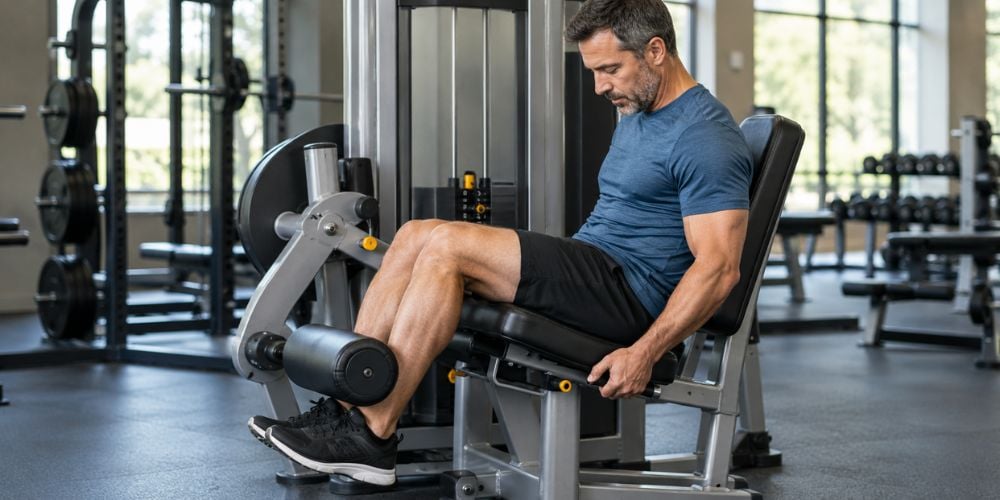
Start by sitting with your back firmly against the backrest.
Now look at your knees. They should sit close to the machine’s pivot point, which is the point where the movement arm rotates.
If your knees are noticeably in front of or behind it, adjust the seat or backrest.
Quick Setup Check
Check | What You Want |
Back | Supported by the backrest |
Hips | Firmly on the seat |
Knees | Close to the machine pivot |
Legs | Able to bend and straighten comfortably |
Why does this matter?
A good position lets the machine move with your knee instead of making your body fight against the machine’s movement path.
The American Council on Exercise lists the seated leg extension as a beginner-level selectorized machine exercise, which is one reason it is easy to learn once the setup is right.
Quick tip: Try one or two reps with very little resistance before adding weight.
If the movement feels strange, adjust your position first.
In my experience, people often change the weight when the seat is actually the problem. Fixing the position first usually makes the next rep feel much more natural.
2. Adjust the Leg Roller
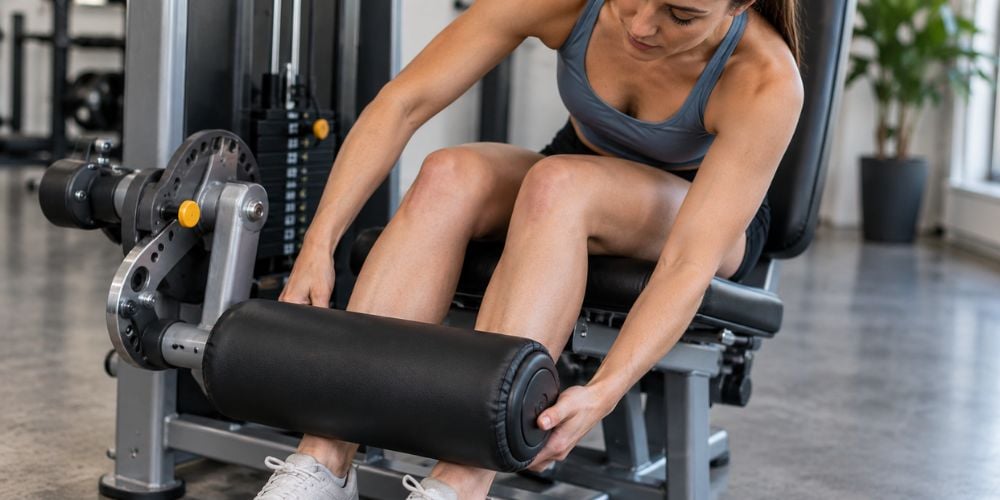
Next, position the roller against your lower shins.
It should sit just above your ankles, rather than directly on your feet or high near your knees.
You want the pad to feel secure without digging into your legs.
Why is the roller adjustable?
Because people have different lower-leg lengths. A position that fits one person may be uncomfortable for someone else.
At YR Fitness, we use adjustable rollers for exactly this reason. For example, our 61A24 leg extension has an adjustable foam roller, five starting positions, and an adjustable backrest so users can change the setup to better match their body.
Take a few seconds here.
That is easier than trying to fix your position halfway through a set.
3. Choose the Right Weight
Now choose your resistance.
How heavy should you go?
There is no single number that works for everyone. Your weight should be light enough that you can control both the lifting and lowering parts of every repetition.
Ask yourself:
- Can I raise the weight without kicking?
- Can I pause near the top?
- Can I lower it without the stack crashing?
- Can I keep my hips on the seat?
If not, reduce the weight.
The American College of Sports Medicine’s resistance-training guidance also stresses matching resistance training to the individual and the training goal rather than treating one method as ideal for everyone.
So there is no need to copy the person using the machine before you.
Control your weight first. Add more later.
A leg extension machine should be easy to adjust to your body, not the other way around. At YR Fitness, we design our commercial leg extension machines with adjustable rollers, starting positions, and seating so different users can find a comfortable setup. See our leg extension machines to compare these adjustment features.
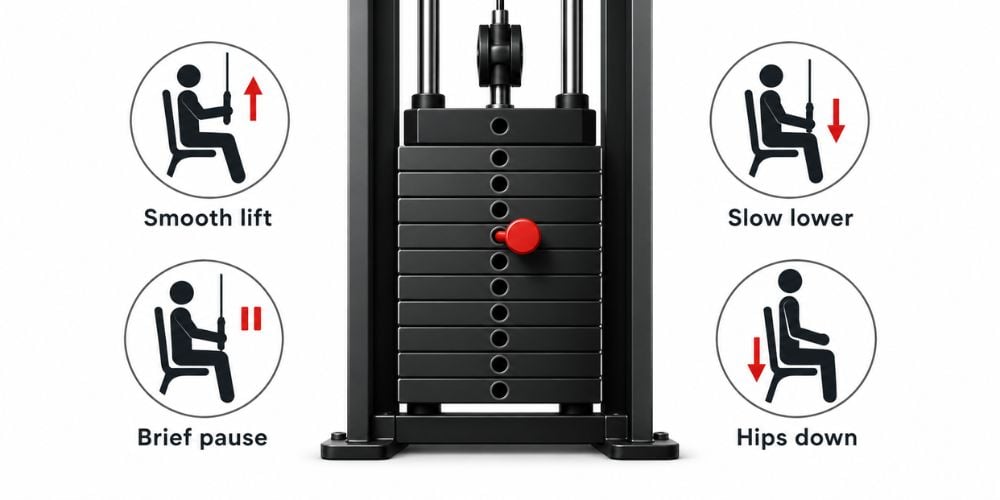
4. Sit in the Starting Position
Once the machine is adjusted, get ready for your first repetition.
- Sit firmly against the backrest.
- Keep your hips on the seat.
- Put your lower legs behind the roller.
- Hold the handles if the machine has them.
- Keep your feet in a comfortable, natural position.
Take one second to check your knees again.
Are they still close to the pivot?
Good. You are ready to move.
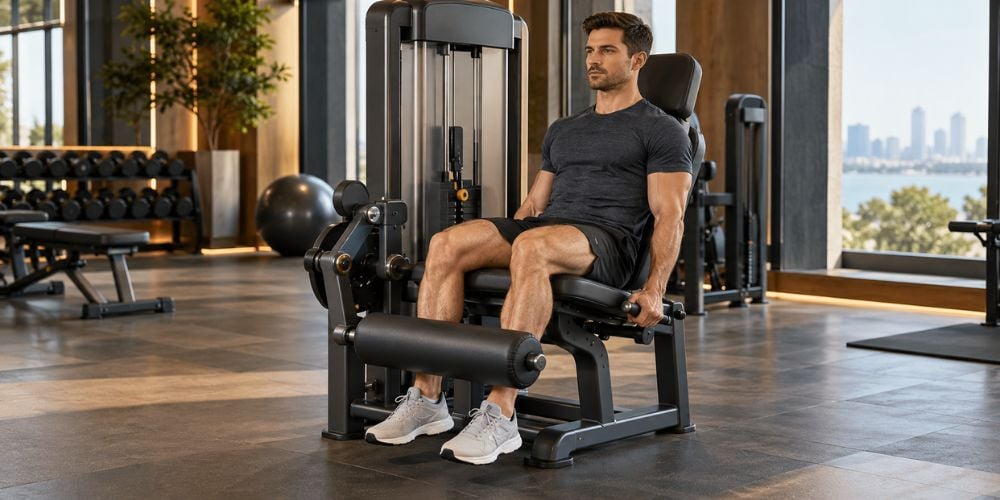
5. Extend Your Legs
Straighten your knees and push the roller upward.
Do it smoothly.
The biggest mistake here is trying to kick the weight up. That uses momentum and usually happens when the weight is too heavy.
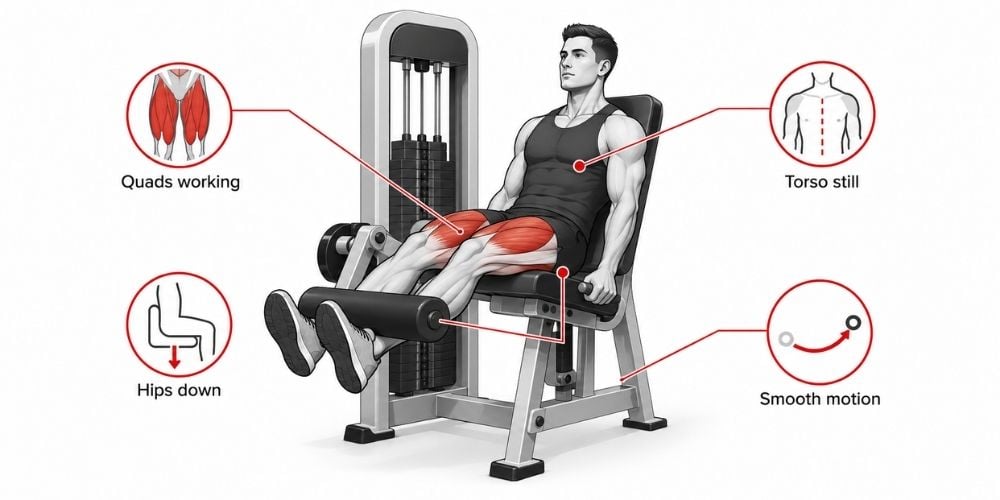
Instead, think about your quadriceps, the muscles at the front of your thighs, doing the work.
A simple cue helps:
Lift with your quads, not momentum.
The seated leg extension is used specifically as a thigh-focused machine exercise in the ACE Exercise Library.
What Should the Rep Feel Like?
You should feel:
- Your quads working
- Your torso is still
- Your hips are on the seat
- The weight moves smoothly
You should not need to rock your body backward to finish the rep.
Visual reference: ACE’s seated leg extension exercise guide also includes demonstration images you can use to compare your position.
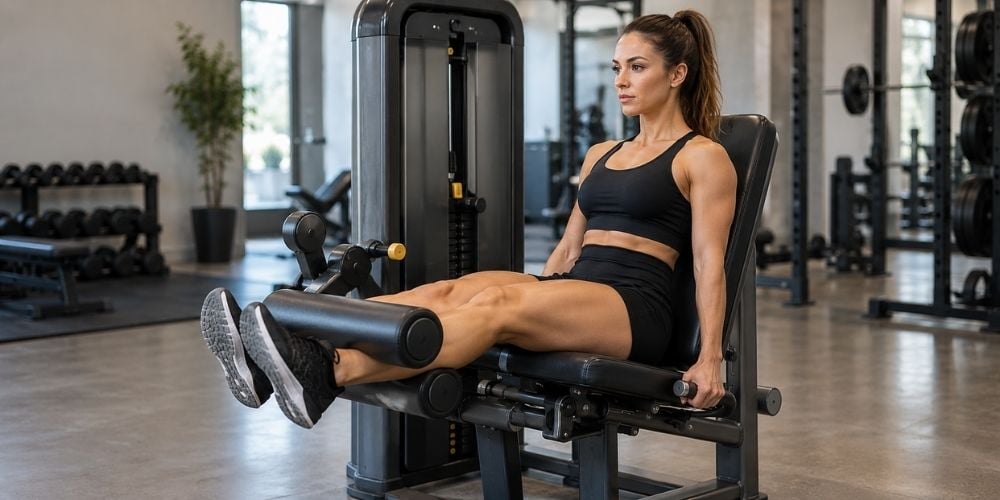
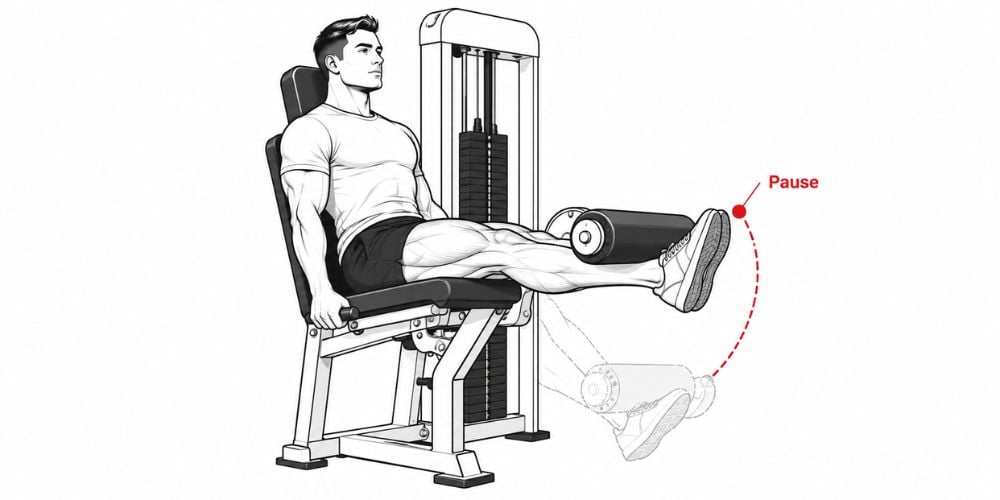
6. Pause Near the Top
As your legs reach a comfortable extended position, pause briefly.
You should feel your quadriceps contract.
There is no need to snap your knees aggressively into a locked position. Reach a comfortable extension and stay in control.
Think smoothly, not fast.
A short pause is enough.
Then start lowering the weight.
7. Lower Weight Slowly
Bend your knees and bring the roller back toward the starting position.
Do not just let it fall.
The lowering phase is still part of the repetition, so keep control until you reach the bottom.
What if the weight stack crashes after every rep?
That is a useful sign.
Either you are lowering too quickly or the weight is heavier than you can currently control.
Reduce the load if needed and try again.
Then repeat the movement:
Extend → pause → lower → repeat.
8. Common Leg Extension Mistakes to Avoid
The exercise itself is simple.
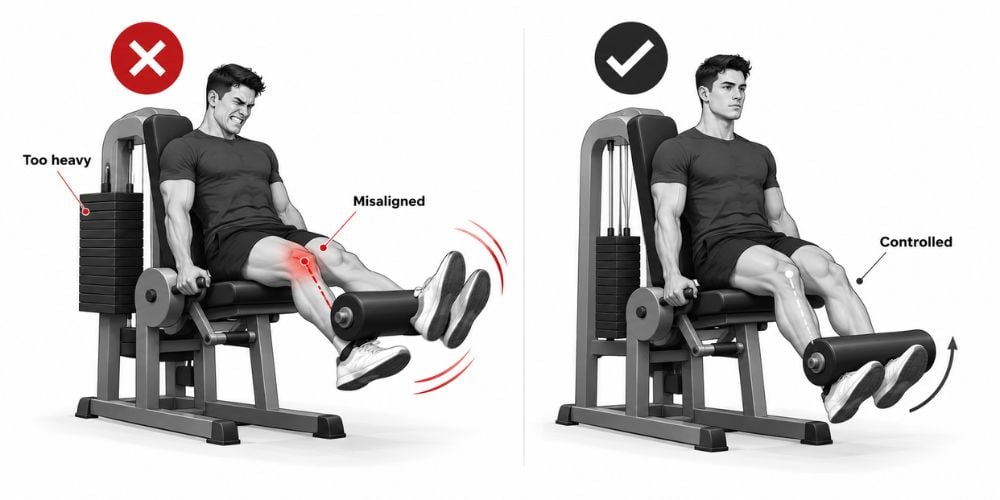
Most problems come from rushing the setup or using more resistance than you can control.
Mistake | What to Do Instead |
Using too much weight | Reduce the load and control each rep |
Kicking the weight upward | Extend your knees smoothly |
Roller positioned too high | Move it toward the lower shin |
Hips lifting from the seat | Reduce the weight and check the seat |
Moving too fast | Slow down both directions |
Weight stack crashing | Control the lowering phase |
Training through knee pain | Stop and check your setup or seek professional advice |
Which mistake should you fix first?
Start with the setup.
If your seat and roller position are good, check the weight next.
I often see people trying harder when something feels wrong. Sometimes the smarter move is simply to stop for ten seconds, move the seat or roller, and try again.
If you feel sharp or persistent knee pain, stop the exercise rather than pushing through it. Knee loading can change with joint angle and exercise setup, and research on knee-extension exercises shows that these forces are not the same throughout the entire range of motion.
Conclusion
Using a leg extension machine comes down to five basics: adjust the seat, position the roller, choose a manageable weight, extend smoothly, and lower with control.
At YR Fitness, we build adjustable commercial strength machines around those same practical principles. If you want to see how different setups work, you can explore our leg extension machines here.
Related articles: