
Do you struggle to squat without losing your balance or lifting your heels? Does going into a full squat feel too difficult?
You can make squats easier by using a chair, holding onto support, or reducing your squat depth. These simple changes help you build strength, balance, and control before trying a full squat.
As an Exercise Physiology and Biomechanics Expert at YR Fitness, I often see beginners struggle because they try to squat too deep too soon. Starting with an easier variation helps you learn proper technique without forcing movement.
In this guide, you’ll learn five easy squat regressions and how to perform each one correctly. You’ll also find out which variation works best for your current ability.
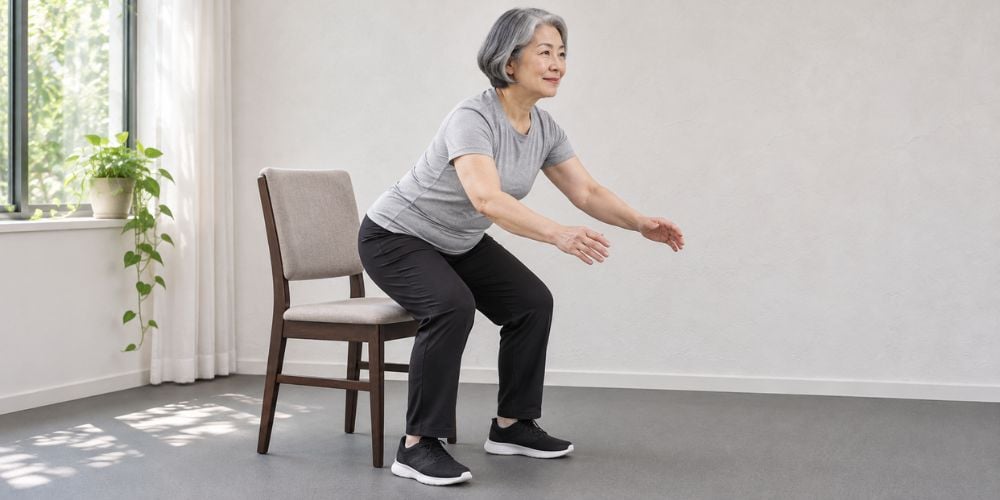
1. Sit-to-Stand Squat
The sit-to-stand squat is a great starting point if regular squats feel too difficult. A chair supports you at the bottom, making the movement easier to control.
How to do it:
- Sit on a sturdy chair with your feet flat on the floor.
- Keep your feet shoulder-width apart.
- Lean forward slightly and push through your feet.
- Stand up without using your hands if possible.
- Slowly lower yourself back onto the chair.
Recommended: 2–3 sets of 8–12 reps.
Best for: Complete beginners with weak legs or poor balance.
My tip: Use a higher chair if standing feels difficult. Once you get stronger, try a slightly lower seat.
The NHS strength exercise guide also recommends sit-to-stand exercises and using a sturdy, non-slip chair. You can start with fewer repetitions if 8–12 feels too difficult.
2. Supported Squat
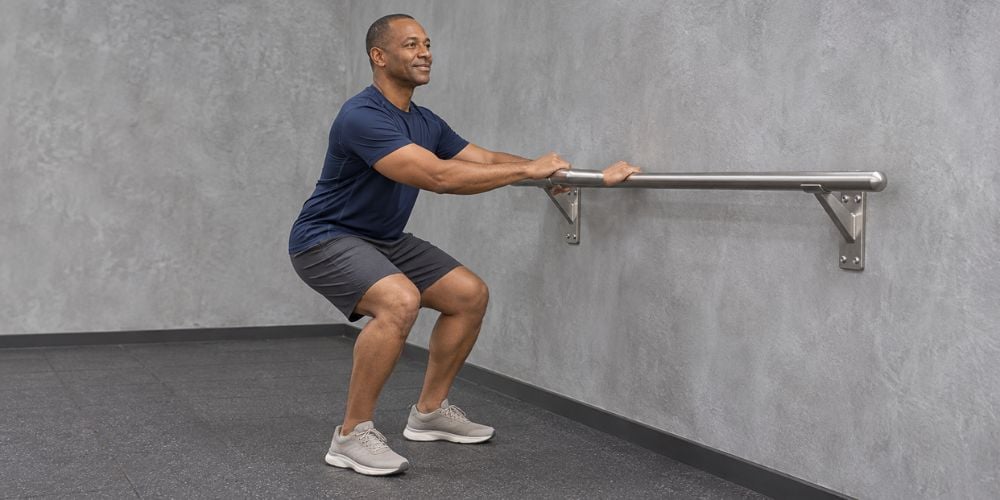
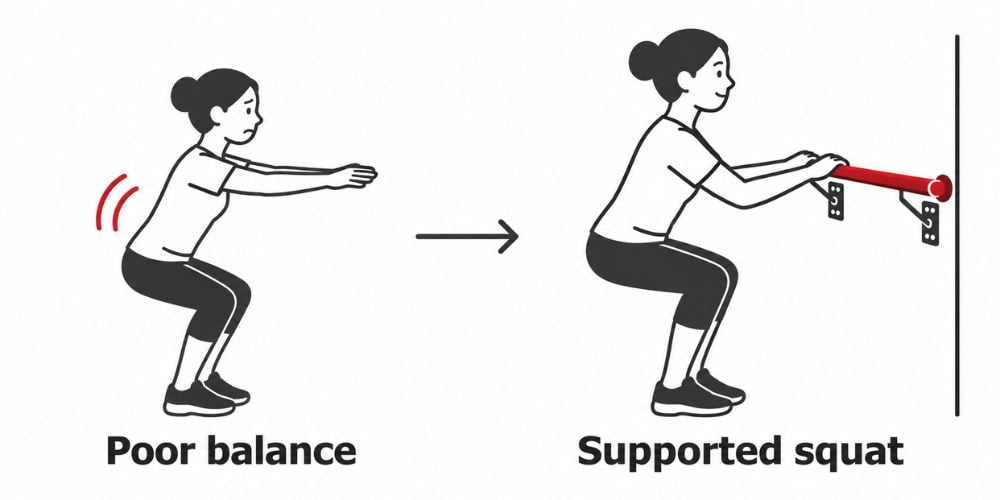
If you feel unsteady when squatting, holding onto a stable support can help.
This variation lets you focus on your leg movement without worrying too much about falling.
How to do it:
- Stand in front of a sturdy rail or fixed support.
- Hold the support with both hands.
- Place your feet about shoulder-width apart.
- Bend your knees and push your hips back.
- Lower yourself to a comfortable depth.
- Push through your feet to stand again.
Recommended: 2–3 sets of 8–12 reps.
Best for: Beginners who struggle with balance.
Quick tip: Use your hands only as much as needed. Gradually reduce your support as your balance improves.
Can you complete your reps without pulling hard on the support? That’s a good sign that your balance is improving.
3. Box Squat
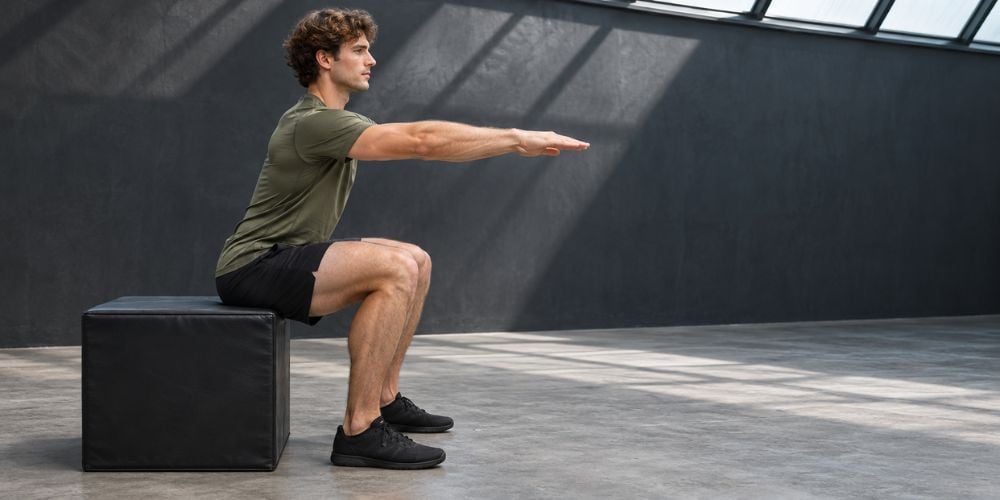
A box squat helps you control how deep you squat. Instead of guessing how far to lower yourself, you use a box or bench as a guide.
How to do it:
- Place a sturdy box or flat bench behind you.
- Stand with your feet shoulder-width apart.
- Push your hips back and bend your knees.
- Slowly lower until your hips lightly touch the box.
- Push through your feet to stand back up.
Recommended: 2–3 sets of 8–10 reps.
Best for: Beginners who struggle with squat depth and control.
Start with a higher box if deep squats feel difficult. Lower the height gradually as your strength improves.
A stable multifunctional flat bench can also provide a clear target for practicing controlled squats, provided its height and design are suitable.
Remember: Don’t drop your weight onto the box. Lower yourself slowly and stay in control.
At YR Fitness, we know that learning a squat is easier when you have a stable setup. Our commercial benches and strength equipment are designed for reliable daily training, so you can focus on improving your movement.
If you’re practicing at a gym, explore our benches and racks to see equipment options that can support your strength training.
Always check that your chosen bench is stable, won’t slide, and can safely support your weight.
4. Partial-Range Squat
You don’t need to squat all the way down to start building leg strength.
A partial-range squat lets you practice a smaller movement until you’re ready to go deeper.
How to do it:
- Stand with your feet about shoulder-width apart.
- Keep your chest comfortably upright.
- Bend your knees and push your hips back.
- Lower yourself only as far as you can control.
- Push through your feet to stand again.
Recommended: 2–3 sets of 10–12 reps.
Best for: Beginners who cannot comfortably squat deep.
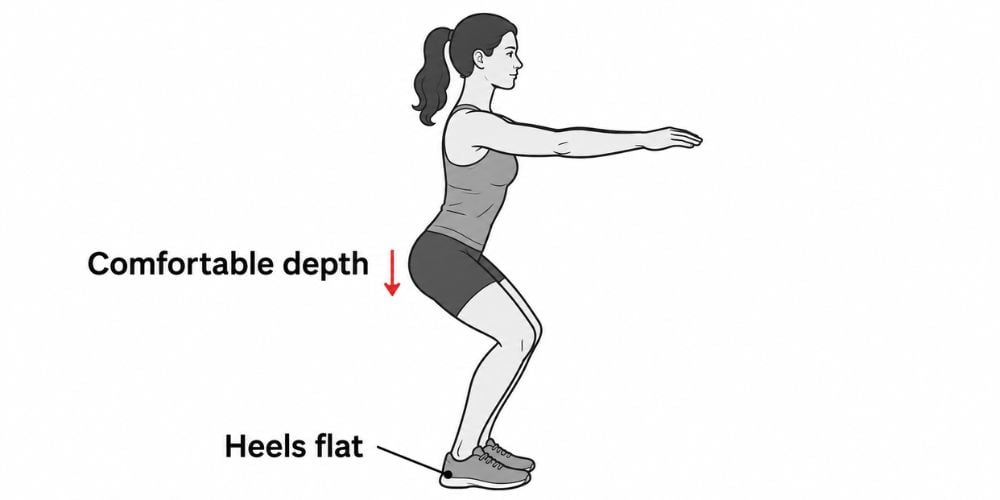
My tip: Don’t force yourself to squat lower than your body allows. Keep your heels flat and increase your depth gradually.
How deep should you go?
Only as deep as you can while keeping your balance and moving without pain.
A small, controlled squat is more useful than a deep squat that causes you to lose balance.
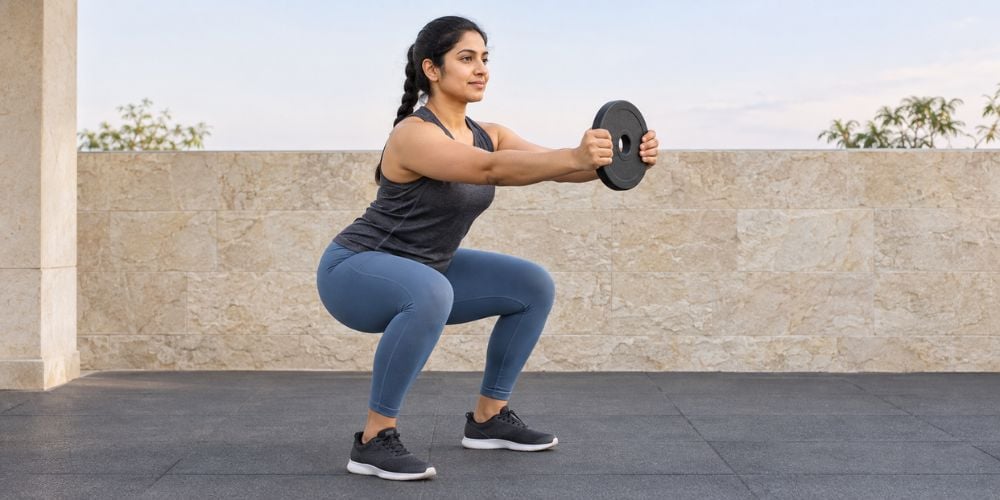
5. Counterbalance Squat
Do you feel like you’re falling backward when squatting?
A counterbalance squat can help you stay balanced by holding a light weight in front of your body.
How to do it:
- Stand with your feet shoulder-width apart.
- Hold a light weight with both hands.
- Extend your arms slightly forward.
- Bend your knees and lower them into a squat.
- Keep your feet flat and your movement controlled.
- Stand up slowly and repeat.
Recommended: 2–3 sets of 8–10 reps.
Best for: Beginners who tend to fall backward during squats.
Start with a very light weight. If holding it makes the exercise harder or uncomfortable, switch to a supported squat.
Want to try another squat variation with a weight? This goblet squat technique guide explains how to position your feet, hold the weight, and move with control.
Remember: The weight in a counterbalance squat is there to help you balance, not to make the exercise harder.
6. How to Choose the Right Squat Regression
The best squat regression depends on what you’re struggling with.
Some beginners need more leg strength. Others need help with balance or squat depth.
Use this table to find the right starting point.
Your Problem | Best Squat Regression |
Weak legs or difficulty standing | Sit-to-stand squat |
Poor balance | Supported squat |
Difficulty controlling squat depth | Box squat |
Cannot comfortably squat deep | Partial-range squat |
Falling backward during squats | Counterbalance squat |
How to Make Each Squat Regression Harder
Once a variation feels comfortable, you can slowly make it more challenging.
Here’s how to progress without rushing.
Squat Regression | How to Progress |
Sit-to-stand squat | Use a slightly lower chair |
Supported squat | Reduce how much you hold the support |
Box squat | Lower the box height gradually |
Partial-range squat | Increase your squat depth |
Counterbalance squat | Gradually reduce the weight used for balance |
Quick tip: Change only one thing at a time. This makes it easier to notice whether your balance and technique are improving.
Conclusion
Squat regressions are a simple way to make squatting easier for beginners. They help you improve leg strength, balance, and control without forcing a full squat too soon.
Start with sit-to-stand, supported, box, partial-range, or counterbalance squats. Choose the variation that feels comfortable and gradually work toward a regular bodyweight squat.
At YR Fitness, we believe good training starts with movements you can perform safely and confidently. If you later want to explore, take a look at our standing squat trainer and see how it supports controlled squat movements.
Related articles: