








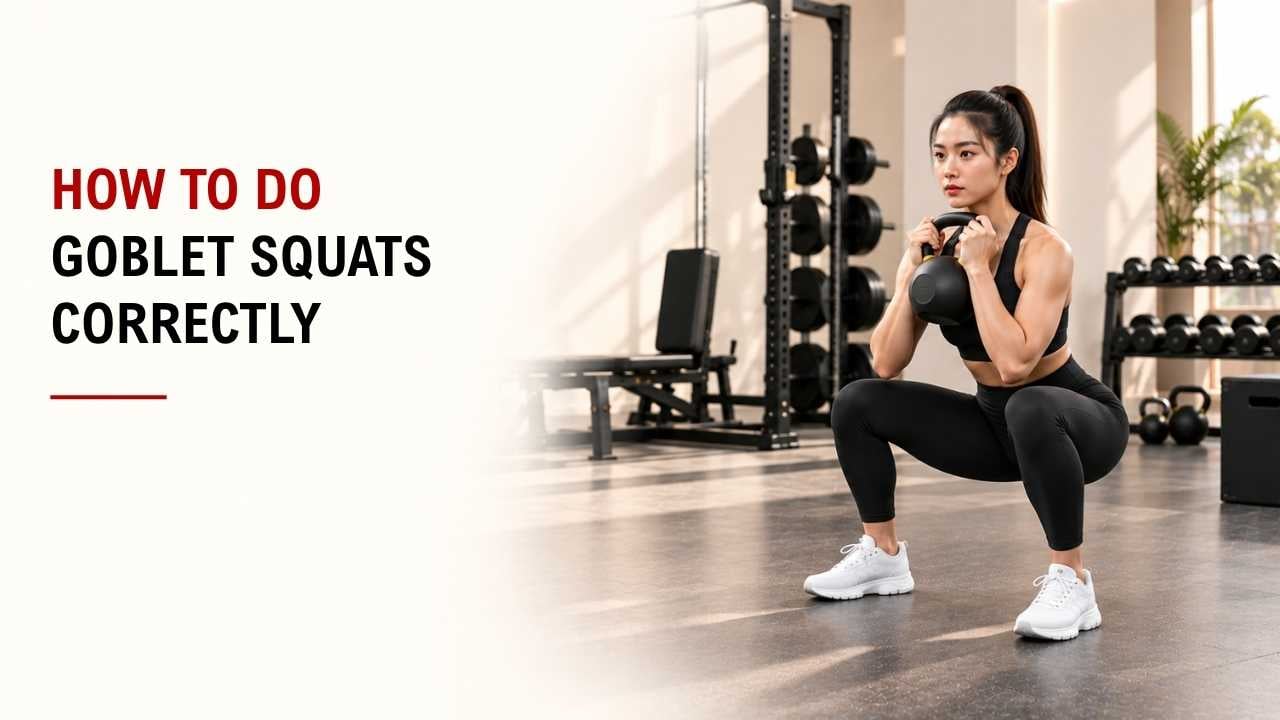

Want to do goblet squats without losing balance or letting your form break down? The exercise is simple, but a few setup details make a big difference.
The short answer is: hold a manageable dumbbell or kettlebell at your chest, brace your core, squat down with control, and stand back up through your feet. Keep each rep smooth before you think about adding more weight.
As an Exercise Physiology & Biomechanics Expert at YR Fitness, I study how resistance, joint position, and body mechanics affect exercise technique. I often see small changes in foot position or weight placement make squats much easier to control.
Below, I’ll walk you through seven simple steps for getting your goblet squat right. Follow them in order, and you can fix most common form problems quickly.
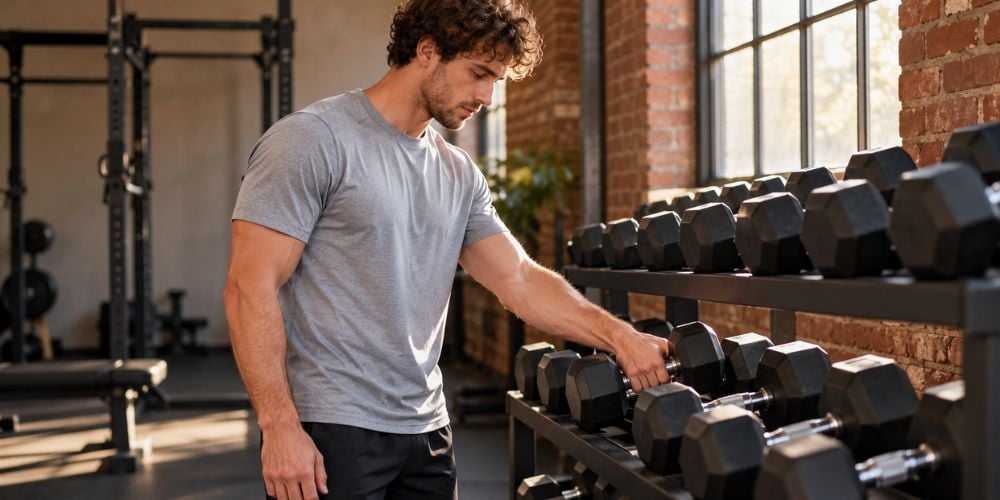
1. Choose a Manageable Weight
Start with a dumbbell or kettlebell you can control comfortably.
You should be able to finish every rep without losing balance, rounding your back, or rushing to stand. The ACE goblet squat technique guide also recommends keeping the load directly in front of the chest while maintaining a straight back through the squat.
Not sure if the weight is too heavy?
Ask yourself whether your last rep looks similar to your first.
If your form changes noticeably, reduce the weight. I would rather see 10 clean reps with a lighter load than five heavy reps with poor control.
2. Hold the Weight at Your Chest
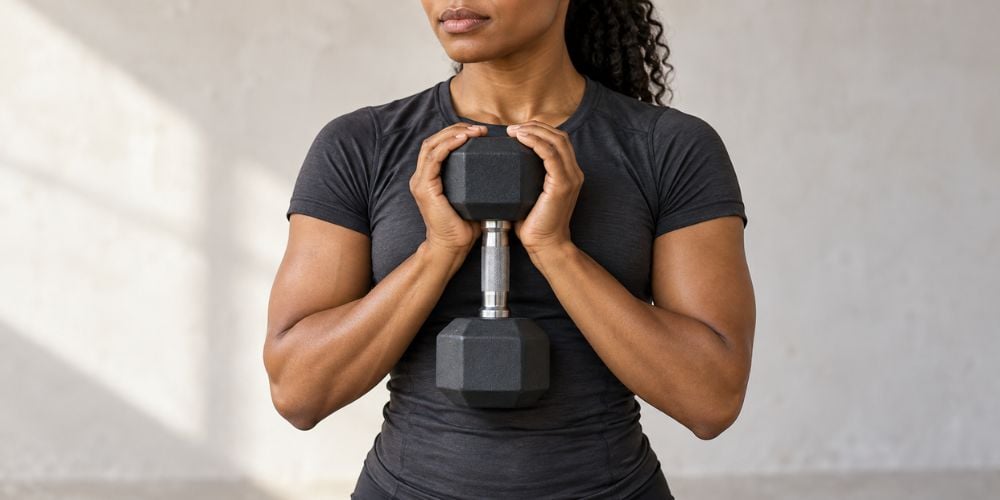
Keep the weight close to the center of your chest.
With a dumbbell, hold it vertically with both hands supporting one end. With a kettlebell, hold the sides of the handle.
Keep your elbows pointing slightly downward.
Why keep it close?
Holding the load near your body makes it easier to stay balanced and upright. Letting it drift forward makes your upper body work harder to control the position.
3. Set Your Feet
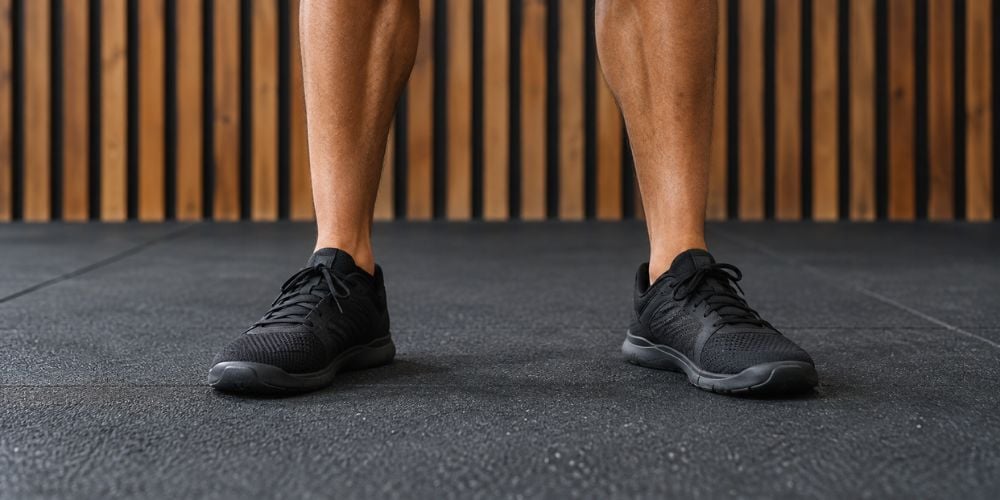
Stand with your feet around shoulder-width apart.
Your toes can point slightly outward if that feels natural. Hip structure and mobility differ from person to person, so there is no single perfect foot angle or squat depth for everyone. NASM’s squat biomechanics guidance also notes that anatomy, mobility, and individual structure can affect squat depth.
Keep three areas of each foot connected to the floor:
- Heel
- Base of the big toe
- Base of the little toe
Here is a quick setup check before your first rep:
Setup Point | What to Aim For |
Weight | Manageable and easy to control |
Grip | Weight close to your chest |
Feet | Around shoulder-width |
Toes | Forward or slightly outward |
Foot pressure | Heel, big toe base, little toe base |
Posture | Chest comfortable and back neutral |
A stable base makes the rest of the squat much easier.
4. Brace Your Core
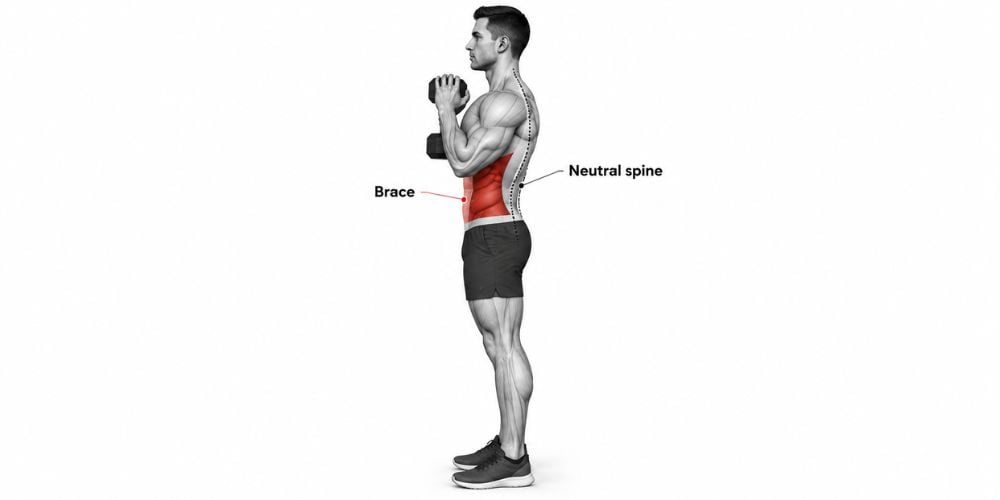
Tighten your midsection before you start moving.
Think about preparing your stomach for a gentle push. You do not need to pull your stomach inward.
Keep your chest comfortably upright and your spine neutral.
I often tell exercisers not to overthink this step. Brace, stay steady, and let your hips and knees do the movement.
Avoid:
- Overarching your lower back
- Letting your chest collapse forward
- Relaxing your core at the bottom
If you combine goblet squats with machine-based strength exercises, look for equipment that gives you a stable setup and a controlled movement path. We design our YR Fitness strength equipment around practical daily training, so you can compare different resistance options as your workouts progress.
5. Squat Down With Control
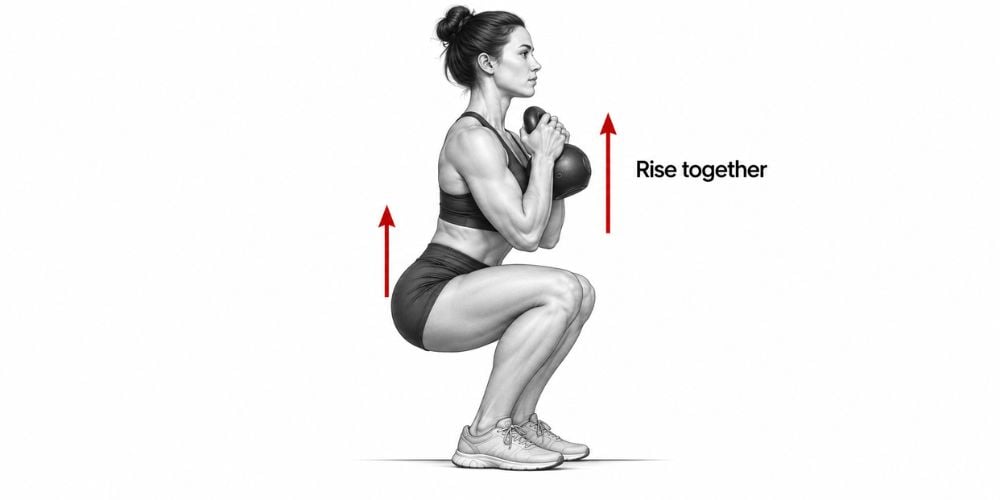
Bend your hips and knees together.
Let your knees move in the same general direction as your toes while your hips lower toward the floor. Do not force your knees straight ahead if your feet naturally point slightly outward.
The Hospital for Special Surgery squat guidance recommends allowing the knees to move naturally over the toes when comfortable while keeping the chest upright.
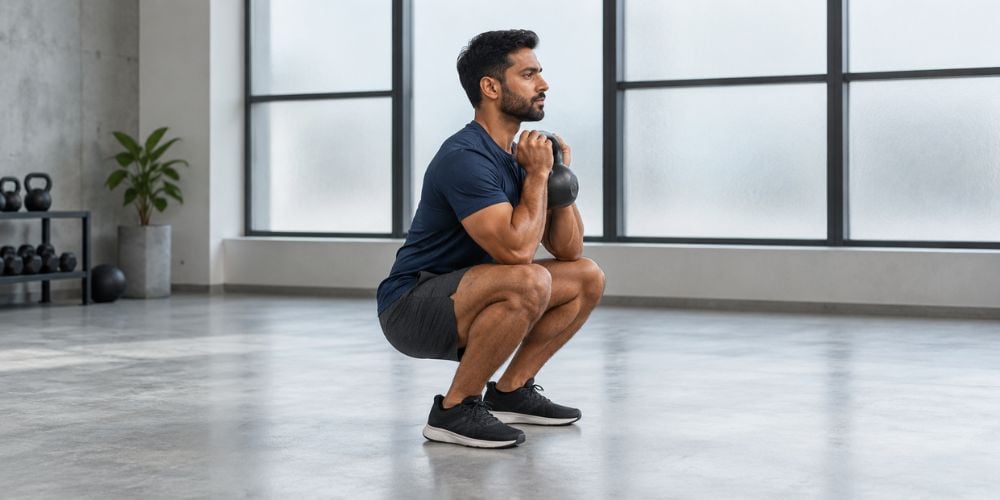
Lower yourself slowly until you reach a comfortable depth.
How deep should you squat?
Go as low as you can while keeping:
- Your feet flat
- Your knees controlled
- The weight close to your chest
- Your back in a comfortable position
You do not need to force a deep squat immediately. Your comfortable range may improve as your strength and mobility improve.
6. Stand Back Up
Push the floor away through your feet.
Straighten your hips and knees together as you return to the starting position. Keep the weight close and your upper body steady.
Try not to:
- Push only through your toes
- Let your knees collapse inward
- Raise your hips before your chest
- Lean backward at the top
Finish standing tall.
I like to think of the upward phase as simply reversing the way down. If your descent is controlled, the path back up should look very similar.
7. Keep Every Rep Smooth
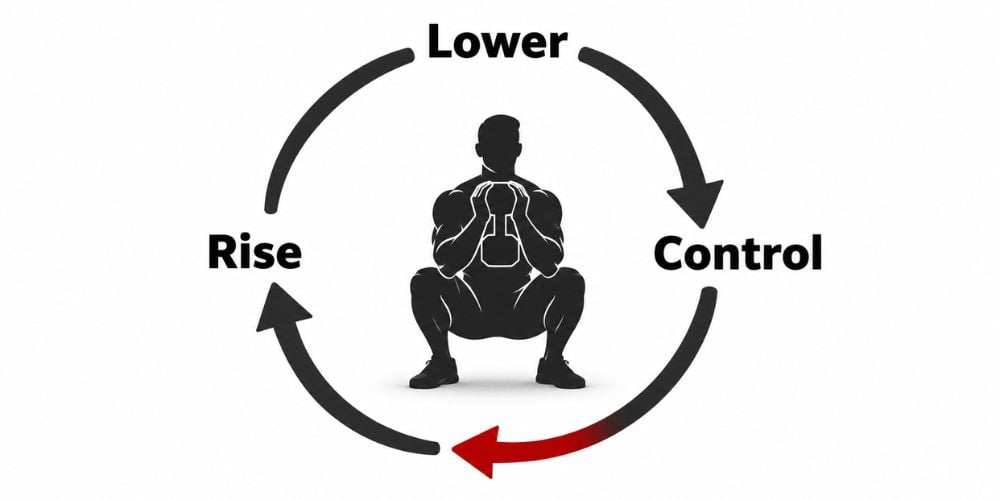
Do not drop quickly to the bottom and bounce back up.
Lower yourself steadily, stay controlled at the bottom, and then stand. Reset your balance before starting the next rep.
Part of the Rep | What to Do | Watch For |
Start | Brace and balance | Weight drifting forward |
Lowering | Move down slowly | Knees collapsing inward |
Bottom | Stay controlled | Back rounding |
Standing | Push through the whole foot | Hips rising too early |
Top | Stand tall and reset | Leaning backward |
Beginners can usually start with 2–3 sets of 8–12 controlled reps.
The exact number matters less than your form. If your technique starts changing noticeably, stop the set or reduce the weight.
Quick Goblet Squat Checklist
Before each set, remember:
Weight close. Feet stable. Core braced. Knees controlled. Move smoothly.
If one part starts breaking down, do not force the next rep. Reduce the weight, shorten the set, or adjust your squat depth.
Conclusion
Goblet squats are simple when you focus on the basics. Choose a manageable weight, hold it close to your chest, set your feet, brace your core, squat with control, and stand through your whole foot.
Get the movement right before adding heavier resistance. Clean and repeatable reps give you a better foundation for progressing to other squat variations.
If you want to add more strength exercises around your squat training, explore YR Fitness commercial strength equipment for more training options. Choose exercises and equipment that help you keep your movement stable, controlled, and easy to progress.
Related articles:



