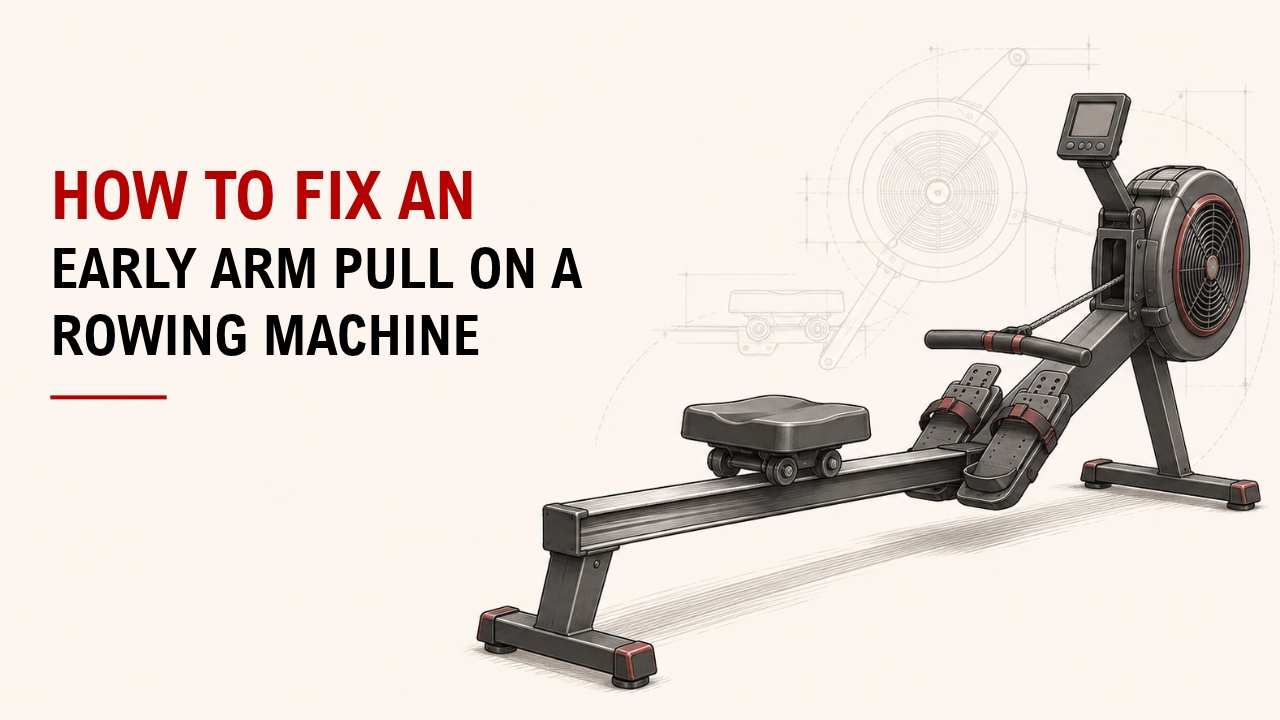

Do your arms get tired quickly when using a rowing machine? You might be pulling the handle too early instead of letting your legs do the work.
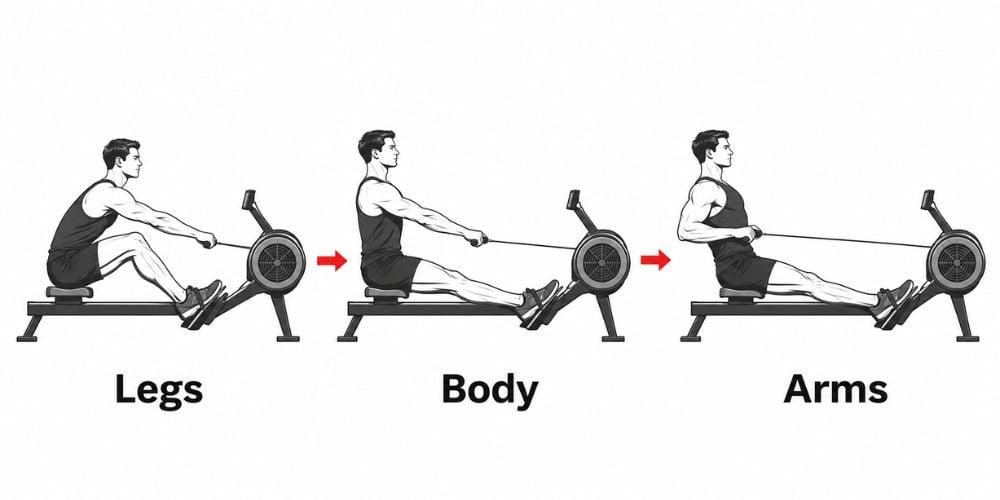
To fix an early arm pull, keep your arms straight during the initial leg drive and pull only when your legs are nearly extended. Remember the correct rowing sequence: legs, body, then arms.
As an Exercise Physiology & Biomechanics Expert writing for YR Fitness, I understand how movement timing affects rowing performance. I often see beginners improve once they stop relying too much on their arms and focus on proper rowing form.
The good news is that you can correct this habit with a few simple adjustments. Below, I’ll walk you through six practical steps and drills to help you row more smoothly.
1. Keep Your Arms Straight at the Start
The first step is simple: stop bending your elbows too early.
Your arms should stay long and relaxed when you begin rowing. This allows your legs to generate power without your arms taking over.
Here’s how to fix it:
- Hold the handle with a light, comfortable grip.
- Keep your elbows extended but not stiff or locked.
- Relax your shoulders and keep your wrists straight.
- Avoid pulling the handle toward your chest immediately.
Quick Tip: Imagine your arms are ropes connecting your hands to your shoulders. They transfer power without pulling too early.
What if your elbows bend as soon as the seat moves?
Slow down and try again. If your starting position still feels awkward, check this rowing machine setup guide before your next stroke.
2. Push With Your Legs Before Pulling
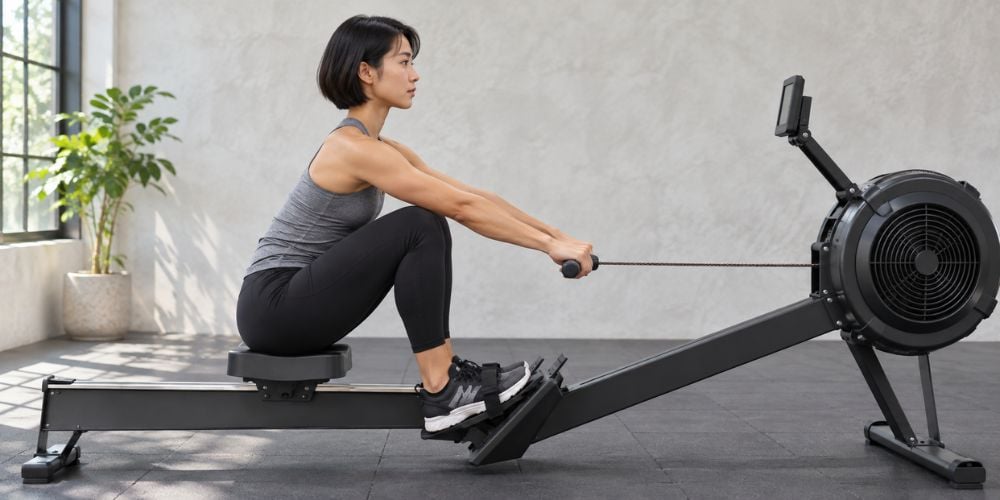
Your legs should start every rowing stroke.
Many beginners focus too much on pulling the handle. But your legs have larger muscles that help generate the initial power.
Follow these steps:
- Start with your knees bent and arms straight.
- Push firmly through your feet.
- Let your seat move backward as your legs extend.
- Keep your arms straight during the initial push.
- Prepare to use your upper body as your legs approach extension.
I often remind beginners to think “push first, pull later.” It’s an easy way to remember the correct timing.
According to British Rowing’s technique guide, the proper rowing sequence is legs, body, then arms.
Why does this matter?
Starting with your legs helps you use stronger muscle groups instead of tiring your arms too quickly.
3. Control Your Upper Body Movement
Your upper body also affects your arm-pull timing.
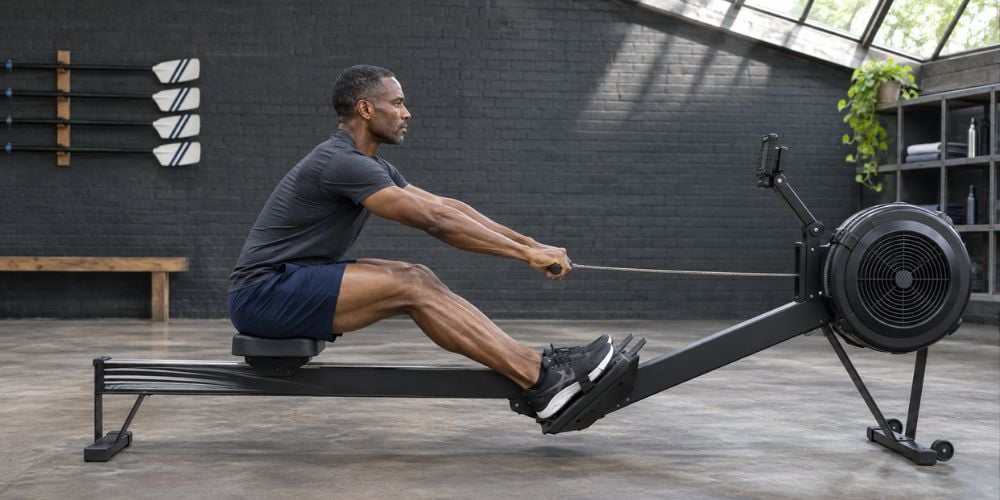
Leaning backward too early can interrupt your rowing sequence. Instead, keep your torso stable during the initial leg push.
Here’s what to do:
- Keep your core engaged as you begin pushing.
- Maintain a neutral spine.
- Let your shoulders move backward with your seat at the start.
- Swing your torso slightly backward from your hips as your legs approach full extension.
- Avoid leaning too far backward.
Quick Tip: Think of your torso as a strong connection between your legs and arms. You don’t need to throw your body backward to generate power.
The Rowing Canada indoor rowing guide also recommends using your legs before your trunk and arms while keeping the movement connected.
I recommend recording yourself from the side. It’s one of the easiest ways to spot early upper-body movement.
Still struggling to keep your strokes smooth? Check that your rowing machine has a stable frame, a smoothly moving seat, and resistance you can control.
At YR Fitness, we focus on durable commercial cardio equipment that supports consistent daily training. Explore our commercial cardio equipment guide to learn which machine features can help you maintain a more comfortable workout.
Good equipment supports your practice, but correct technique still comes first.
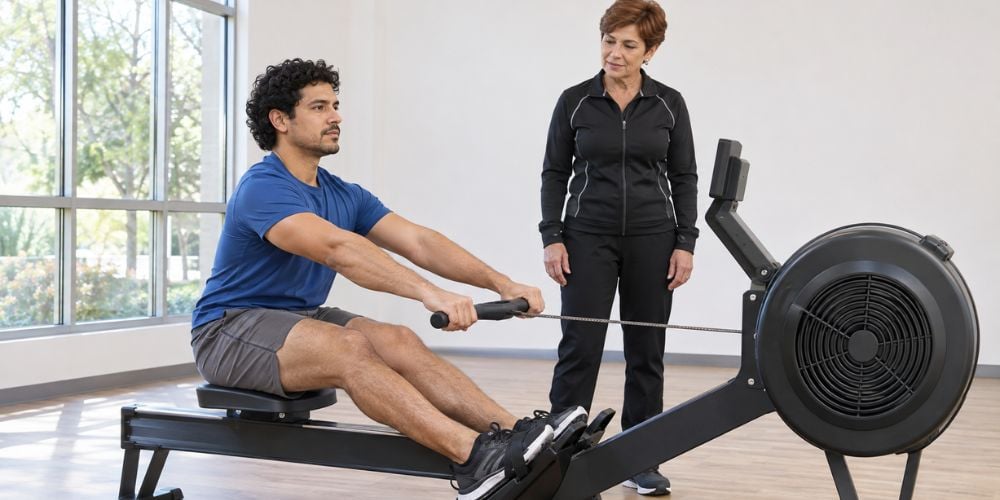
4. Pull the Handle Only After the Leg Drive
Now it’s time to use your arms.
Once your legs are nearly extended and your torso begins swinging backward, finish the stroke by pulling the handle toward your body.
Follow these steps:
- Keep your arms long during the initial leg push.
- Begin opening your hips as your legs approach extension.
- Bend your elbows near the end of the drive.
- Pull the handle toward your lower ribs.
- Keep your shoulders relaxed and wrists straight.
Avoid pulling the handle toward your neck or lifting it too high.
Should you pull the handle as hard as possible?
No. A firm, controlled pull is better than jerking the handle toward your chest.
Remember: Your arms finish the stroke. They shouldn’t start it.
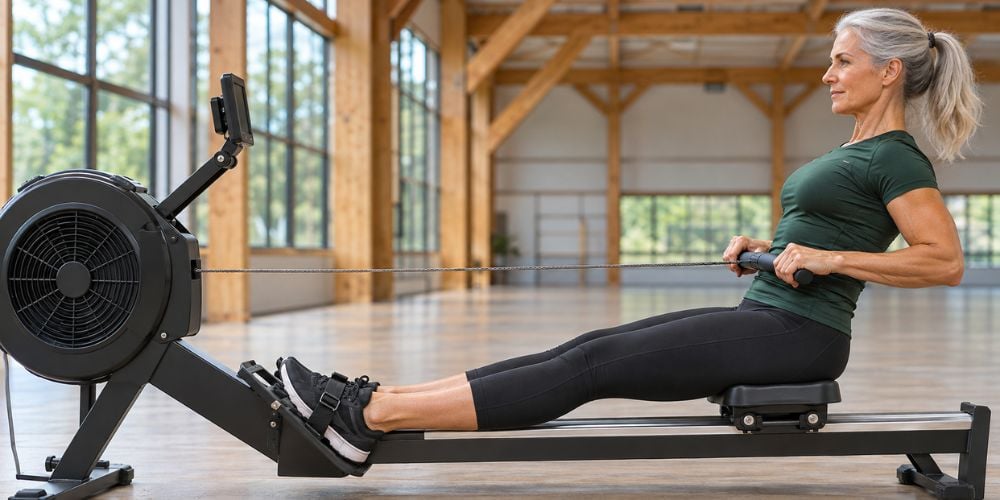
5. Fix Your Recovery Timing
Your recovery movement matters just as much as your pull.
If you rush back to the starting position, you may lose control and repeat the same mistake on your next stroke.
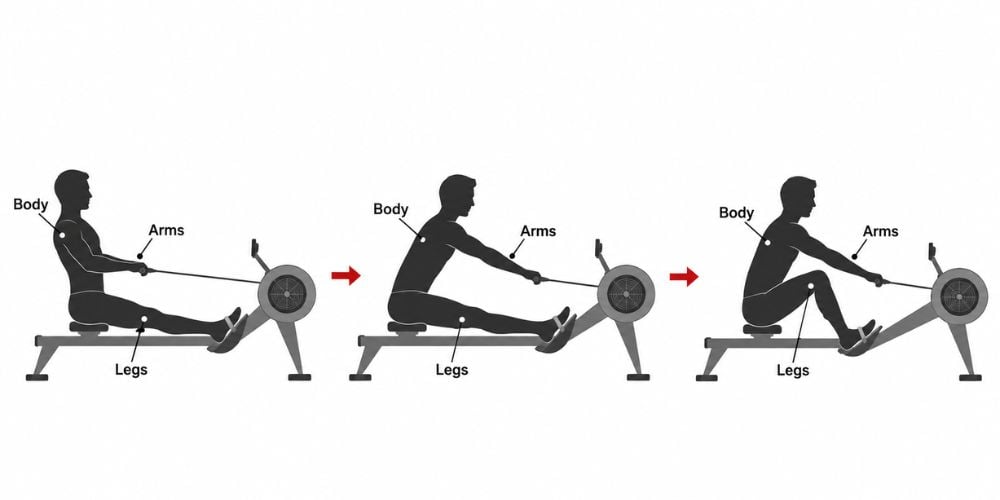
Use this sequence:
- Arms: Extend your arms away from your body first.
- Body: Lean forward slightly from your hips.
- Legs: Bend your knees and slide forward after the handle clears them.
The correct recovery sequence is Arms → Body → Legs.
Keep your movement smooth and controlled. You should feel ready to push with your legs when you return to the starting position.
Quick Tip: Take a little more time during recovery than during the drive. This gives you enough time to reset your technique.
Common Rowing Mistakes and How to Fix Them
Still having trouble with your timing? Use this table to check what might be going wrong.
Common Mistake | How to Fix It |
Bending elbows too early | Keep arms straight during the initial leg push |
Pulling with shoulders | Relax shoulders and let legs start the stroke |
Leaning back too soon | Keep torso steady during the initial drive |
Pulling handle too high | Aim for the lower ribs |
Bending knees too early | Extend arms and hinge forward before sliding |
Rushing recovery | Slow down and reset before the next stroke |
You don’t need to fix everything at once. Start with your arm timing, then work on the other movements.
6. Practice These 3 Drills to Fix Early Arm Pulling
Knowing the correct technique is one thing. Practicing it regularly helps you build better habits.
I suggest starting with these three simple drills before your regular rowing workout.
Drill | Main Focus | Practice |
Legs-Only Rowing | Starting with leg power | 5–10 reps |
Pause Drill | Correcting arm-pull timing | 5–8 reps |
Slow Rowing | Improving stroke coordination | 2–3 minutes |
Don’t worry if your timing isn’t perfect right away. Focus on getting the movement order right before increasing your speed.
Conclusion
Fixing an early arm pull comes down to one simple habit: push with your legs before pulling with your arms.
Keep your arms straight during the initial drive, control your upper body, and pull the handle near the end of the stroke. Practice the three drills regularly until the movement feels natural.
For more ways to improve your cardio workouts, explore the rowing machine vs. treadmill guide from YR Fitness and see how different machines can support your fitness goals.
Most importantly, don’t rush your strokes. Focus on smooth, controlled movements, and better timing will follow.
Related articles: