








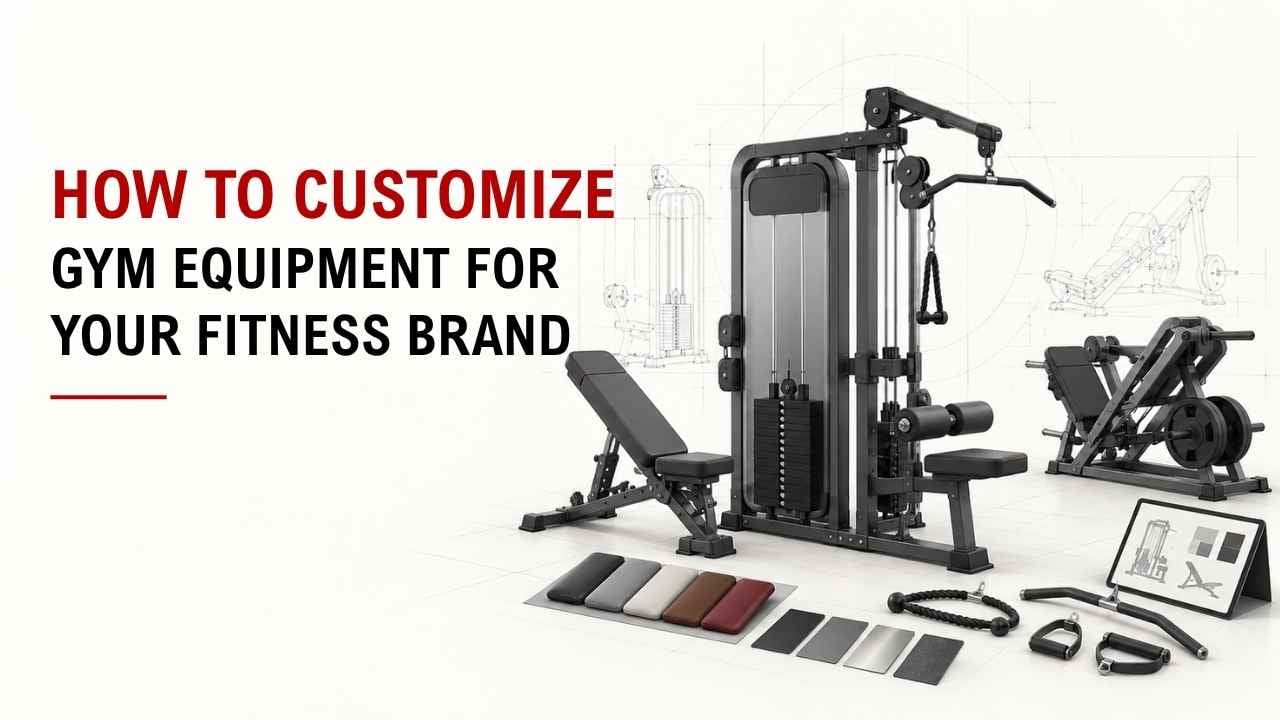

Want your gym equipment to look like it truly belongs to your brand? Not just with a logo, but with the right colors, layout, training feel, and member experience.
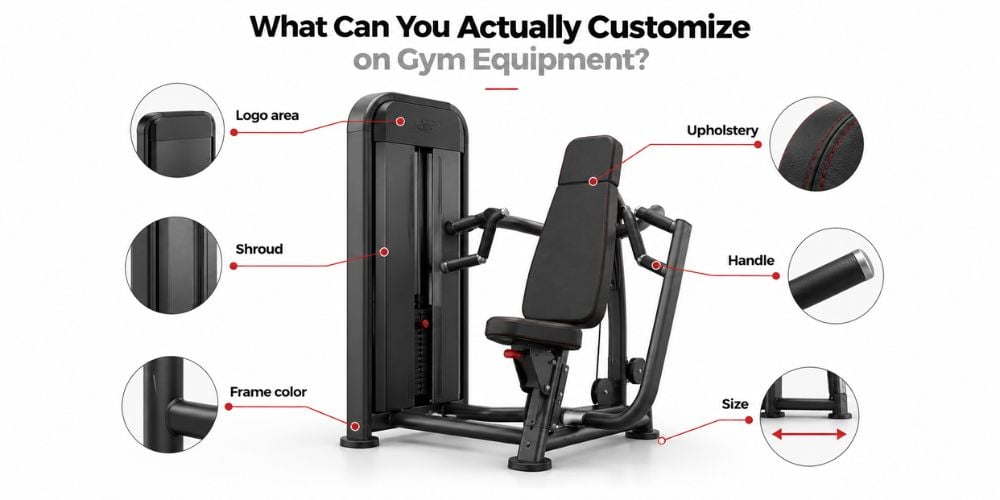
Custom gym equipment helps your gym look more professional and stand out faster. It can include frame color, upholstery, logo placement, labels, packaging, size changes, and even full OEM or ODM development.
I spent decades designing commercial gym equipment and studying how people move during training. As the Founder and Chief Designer of YR Fitness, I bring design experience and real manufacturing knowledge to this topic.
In this guide, you will learn what can be customized, what affects the cost, and how to choose the right manufacturer. Keep reading so you can plan your custom gym equipment with fewer mistakes and better results.
- 1. What Can You Actually Customize on Gym Equipment?
- 2. Which Custom Options Fit My Gym Business Type?
- 3. Should I Choose OEM or ODM Custom Gym Equipment?
- 4. What Should I Think About Before Customizing?
- 5. How Much Does Custom Gym Equipment Cost?
- 6. What Branding Elements Can I Add to Gym Equipment?
- 7. Will Customization Affect Safety?
- 8. How Do I Choose the Right Custom Gym Equipment Manufacturer?
- Conclusion
1. What Can You Actually Customize on Gym Equipment?
Most gym owners start with one question: “Can I make the equipment match my brand?”
Yes, you can. But don’t stop at color and logo. The best customization usually integrates brand image, user comfort, and daily operations.
At YR Fitness, we usually tell gym owners to start with the simple things first: frame color, upholstery, logo placement, and labels. These changes are easier to control, faster to produce, and still make the gym look much more professional.
Here’s a quick way to see your options.
What You Can Customize | What It Means | Best For | What To Watch |
Frame Color | Change the steel frame color | Commercial gyms, boutique studios, chains | Dark colors hide scratches better than very light colors |
Upholstery Color | Change seat pads, back pads, and cushions | Strength areas, PT zones, premium gyms | Choose sweat-resistant and easy-clean materials |
Logo Placement | Add your logo to covers, pads, labels, or packaging | Gym chains, distributors, private-label buyers | Keep it clean; too many logos can look cheap |
Shroud Color | Customize the protective cover around weight stacks | Selectorized machines, premium gyms | Good for a polished look and better brand consistency |
Weight Stack | Adjust the weight range or increments | Beginner gyms, strength gyms, hotel gyms | Match your user level, not only your strongest members |
Handles And Grips | Change grip size, material, or handle angle | Strength clubs, performance gyms, PT studios | Small handle changes can affect training comfort |
Machine Size | Adjust height, width, or footprint | Small gyms, hotels, studios | Check ceiling height, walkways, and delivery access first |
Instruction Labels | Add custom diagrams, languages, QR codes, or warnings | Hotels, apartments, international markets | Safety text must stay easy to read |
Packaging | Add branded cartons, manuals, barcodes, or labels | Dealers, distributors, wholesalers | Strong export packaging matters for sea freight |
Function Design | Change movement path, loading angle, or structure | ODM brands, sports centers, large projects | Needs engineering review and safety testing |
Want a simple rule?
Customize what members notice first. Then customize what they feel during training.
That means:
- First: color, upholstery, logo, shroud, labels
- Next: handles, weight stack, grip feel, machine size
- Later: movement design, structure, full ODM changes
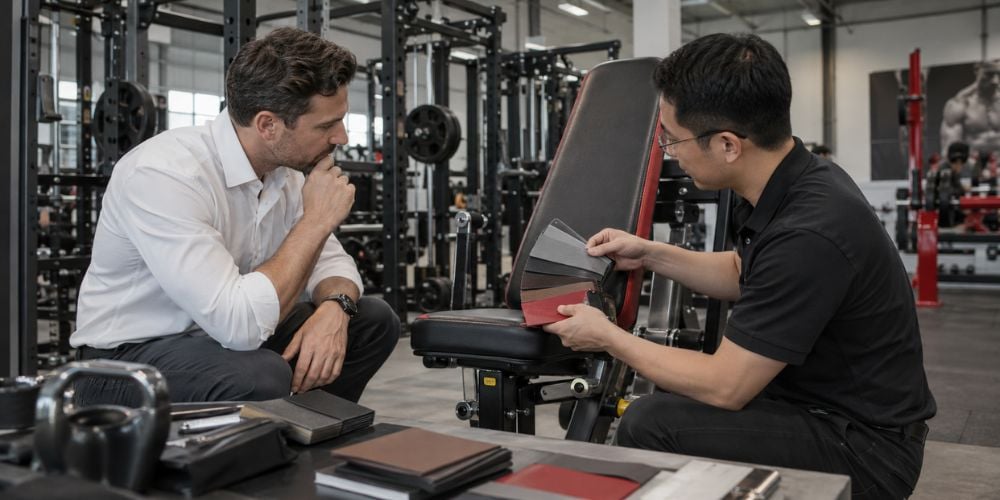
The custom gym equipment options page shows frame, upholstery, and shroud color options, including black, grey, red, blue, orange, yellow, white, and other finishes.
2. Which Custom Options Fit My Gym Business Type?
Not every gym needs the same custom equipment.
A big commercial gym has different needs from a boutique studio. A hotel gym has different users from a hardcore strength club.
So before you ask for a quote, ask this:
“Who will use this equipment every day?”
That answer should guide your custom plan.
I Own a Commercial Gym. What Should I Focus On?
For a commercial gym, durability comes first.
Your equipment will be used all day by many users. Some are careful. Some are not. So custom equipment should focus on strong frames, durable padding, easy maintenance, and clean brand consistency.
Commercial gym equipment is normally built more heavy-duty than home-use equipment, with features like heavier frames, larger weight stacks, thicker padding, and stronger materials for high-traffic use.
Here’s what usually matters most:
Priority | Best Custom Choice | Why It Helps |
1 | Strong frame series | Handles heavy daily use |
2 | Dark or neutral frame color | Looks clean longer |
3 | Durable upholstery | Reduces replacement problems |
4 | Clear logo placement | Builds gym identity |
5 | Spare parts support | Helps long-term operation |
A commercial gym does not need to look fancy just for photos.
It needs to look good after 2 years of use. That is the real test.
I Run a Boutique Studio. How Can I Make Equipment Match My Concept?
Boutique studios often sell a feeling.
Clean. Premium. Energetic. Calm. Female-friendly. Athletic. Private.
So your equipment should support that feeling.
A smaller studio may choose:
- Softer upholstery colors
- Compact machines
- Light or matte frames
- Matching storage racks
- Minimal logo placement
- QR labels for exercise videos
Here is the catch.
A machine can look perfect online, but feel too large in the real studio. So layout should come first.
Measure the room before choosing the design.
I Manage a Hotel or Apartment Gym. What Customization Is Worth It?
Hotel and apartment gyms usually serve mixed users.
Some are beginners. Some only train once a week. Some may use the gym without any coach nearby.
So the equipment should feel simple.
Your best custom options are:
Custom Need | Why It Matters |
Clear instruction labels | Users may train alone |
Compact footprint | Space is often limited |
Quiet movement | Better for hotels and residential buildings |
Premium finish | Matches the property image |
Easy adjustments | Reduces confusion for beginners |
For U.S. projects, layout planning should also consider accessibility. The U.S. Access Board notes that accessible routes generally need a minimum 36-inch continuous clear width, with limited reductions to 32 inches at short points such as doorways.
Simple is not boring here.
Simple is safer.
I’m a Distributor or Private-Label Buyer. What Should I Customize?
If you sell equipment under your own brand, customization is part of your product strategy.
You are not only buying machines. You are building something your customers can remember and reorder.
Focus on:
- Logo placement
- Product series names
- Branded manuals
- Carton labels
- Barcodes
- Model stickers
- Spare parts packaging
- Consistent colors across product lines
Packaging matters more than many buyers think.
A clean carton, clear model label, and well-organized manual can make the product feel more professional before the customer even sees the machine.
3. Should I Choose OEM or ODM Custom Gym Equipment?
This is where many buyers get confused.
OEM and ODM sound technical, but the idea is simple.
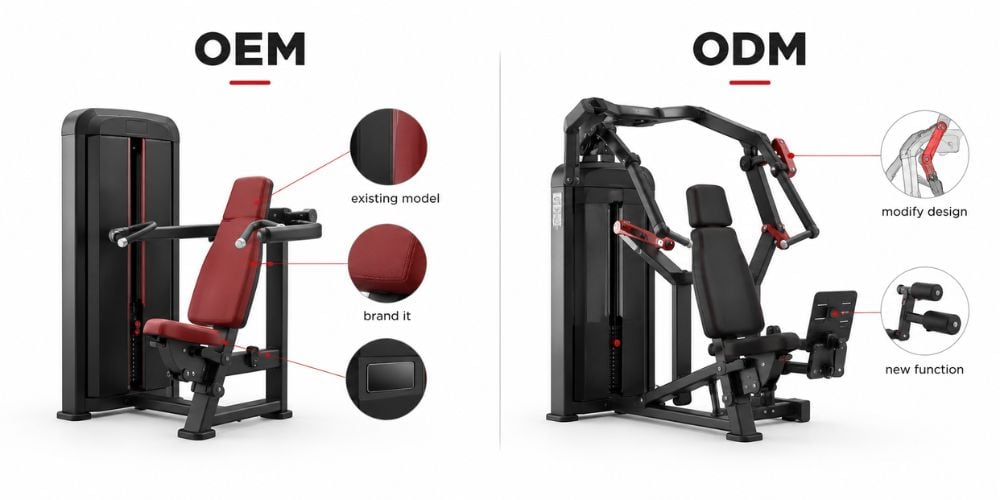
OEM means you brand an existing product. ODM means you develop or modify the product itself.
Should I Choose OEM If I Just Want My Logo and Color?
Yes, usually.
OEM is best when you want to use an existing model and customize the outside details. This may include logo, frame color, upholstery, labels, manuals, and packaging.
It is usually faster and more cost-friendly because the product design already exists.
Good for:
- Gym owners
- Dealers
- Distributors
- Wholesalers
- First private-label orders
- Buyers who want faster production
Should I Choose ODM If I Want Something More Unique?
Yes, if you need deeper product changes.
ODM may include a new movement angle, new frame structure, new machine function, or a special product appearance. It gives you more uniqueness, but it also needs more time, budget, testing, and technical discussion.
At YR Fitness, we treat ODM work as a design and engineering project, not just a production order. A change in movement path or structure can affect training feel, safety, stability, and long-term maintenance.
Here is a simple comparison:
Question In Your Mind | OEM | ODM |
“Can I add my logo?” | Yes | Yes |
“Can I change colors?” | Yes | Yes |
“Can I change packaging?” | Yes | Yes |
“Can I change the machine structure?” | Usually limited | Yes |
“Can I create a unique product line?” | Somewhat | Much more |
“Is it faster?” | Usually yes | Usually no |
“Is it cheaper?” | Usually yes | Usually no |
“Does it need testing?” | Basic checking | More serious testing |
“Best for my first order?” | Often yes | Only if you have a clear design need |
My advice? Start with OEM if this is your first custom order. Move to ODM when you already know your market and have repeat demand.
4. What Should I Think About Before Customizing?
Before you choose colors or approve a logo mockup, slow down.
Custom gym equipment is not only a design choice. It affects delivery, layout, safety, member experience, and future maintenance.
Here are the things to check first:
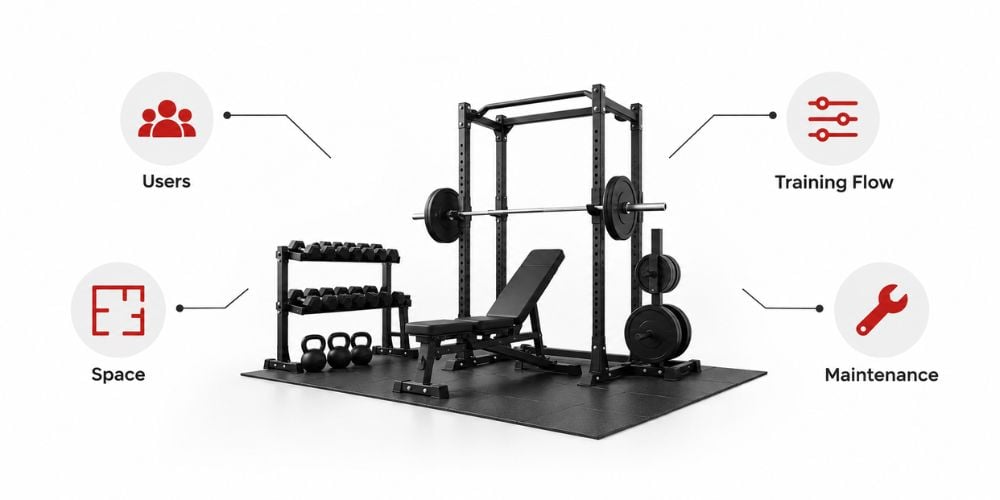
- Who Is My Target User?
- Beginners need simple adjustments and clear instructions. Advanced lifters may need heavier loading, stronger grips, and more stable machines.
What Does My Brand Promise?
- A luxury gym should not look like a budget club. A hardcore strength gym should not look like a wellness lounge unless that is your concept.
Will This Fit My Actual Space?
- Do not rely only on product photos. Check floor plan, ceiling height, walkway space, door width, elevator size, and unloading access.
How Will Members Move Around the Gym?
- Equipment layout affects traffic flow. If machines are too close, members may feel crowded even if the machines look good.
What Training Style Am I Selling?
- Strength gyms, PT studios, hotel gyms, and wellness clubs need different equipment. Your custom choices should support your training model.
Will This Be Easy to Maintain?
- Custom parts should not create repair problems. Ask if pads, cables, pulleys, grips, and labels can be replaced later.
Can I Keep the Same Look When I Expand?
- Your first order should match your future order. Keep color codes, logo files, and product series names organized.
Will the Quote Include All Custom Details?
- Do not accept vague words like “customized as discussed.” Write down colors, logo size, placement, material, quantity, packaging, and sample approval.
You do not need a perfect plan. A rough plan is enough to start.
But a clear rough plan is much better than saying, “Please send all prices.”
5. How Much Does Custom Gym Equipment Cost?
This is the question everyone asks. And honestly, it depends.
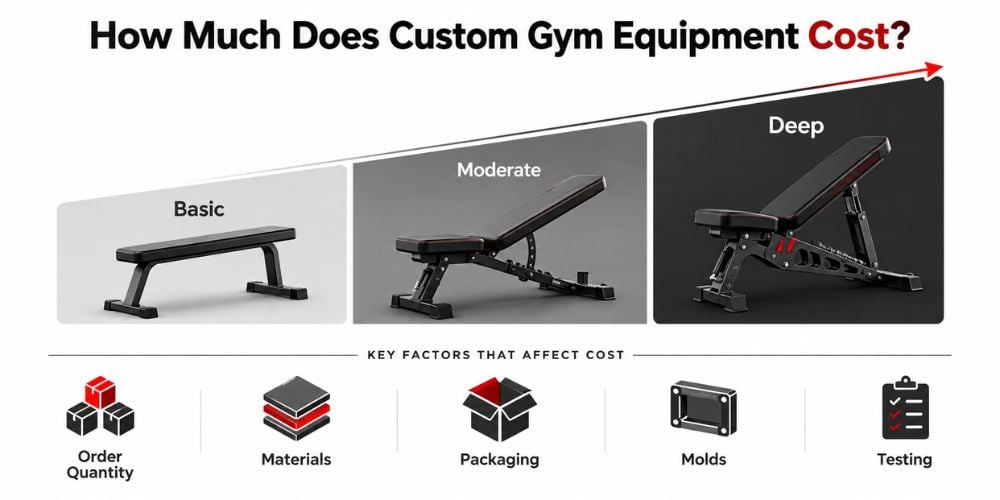
Basic customization is usually not expensive. Deep customization can cost much more because it may involve design work, samples, testing, molds, and production setup.
As a planning range:
Custom Level | Examples | Possible Added Cost | Best For |
Basic Customization | Logo, frame color, upholstery color | 2%–8% per unit | Most gyms and studios |
Medium Customization | Handles, labels, weight stack, minor size changes | 5%–15% per unit | Gym chains, hotels, private-label buyers |
Advanced Customization | New movement, new structure, ODM development, molds | $2,000–$20,000+ project cost | Large brands and unique product lines |
Sample Or Setup Cost | Logo sample, color sample, product proofing | $50–$500+ per model for simple work | First custom orders |
Prototype Cost | New function or new structure sample | $300–$2,000+ per model for medium work | Larger custom projects |
These are planning ranges, not fixed prices.
The real price depends on:
- Order quantity
- Product type
- Material upgrade
- Logo method
- Color complexity
- Packaging design
- Mold requirements
- Sample approval
- Testing needs
- Factory workload
Want a reality check?
Public retail listings show how wide commercial equipment pricing can be. Fitness Direct lists commercial functional trainers from around $995 to over $8,000, and Total Body Experts lists a Life Fitness Integrity Commercial Series treadmill at $3,785.
So when you customize, do not look only at the added cost.
Look at the full value.
A small custom cost may be worth it if it helps your gym look more professional, improves user comfort, or supports your resale brand.
6. What Branding Elements Can I Add to Gym Equipment?
Branding should feel clean.
Not loud. Not everywhere. Just clear enough that members know the equipment belongs to your gym.
Think of branding in layers.
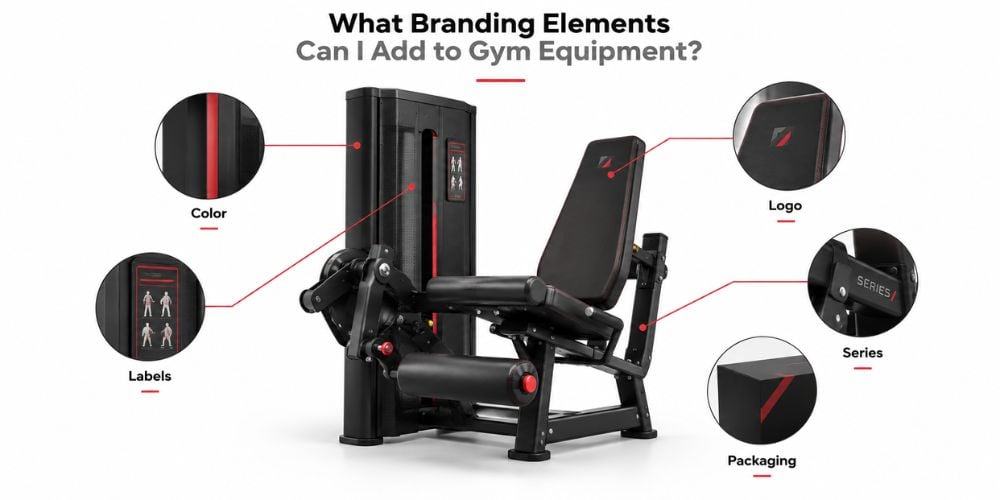
First, the overall color. Then the logo. Then the small details: labels, QR codes, manuals, packaging, and series names.
Where Should I Put My Logo?
Use logo placement where it feels natural. Good places include:
Logo Position | Best Use | Advice |
Weight stack shroud | Selectorized machines | Very visible and clean |
Frame side | Strength machines | Good for brand recognition |
Back pad | Benches and seats | Works if logo is not too large |
End caps | Small branding detail | Good for premium finishing |
Instruction label | Product identity | Keep safety info readable |
Packaging | Distributors and private labels | Helps resale and delivery presentation |
Manual cover | Dealers and wholesalers | Makes the brand look organized |
Do not put the logo everywhere. Too much branding can make the equipment feel cheap.
A clean logo in the right place looks more premium than a large logo in every place.
Can I Use My Brand Colors?
Yes. But keep it controlled.
A simple color system is easier to manage:
Color Role | Example | Where To Use |
Main Color | Black, dark grey, white | Main frame |
Brand Accent | Red, blue, orange, green | Logo, small parts, shroud detail |
Neutral Color | Grey, silver, black | Upholstery or support parts |
For most gyms, 2 to 3 colors are enough. If you use too many colors, the gym can look busy fast.
Can I Add QR Codes or Custom Labels?
Yes, and this can be very useful.
QR codes can link to:
- Exercise videos
- App pages
- Member onboarding
- Usage instructions
- Maintenance guides
- Brand website
- Safety reminders
This is especially helpful for hotel gyms, apartment gyms, and beginner-friendly clubs.
But keep labels clear.
The user should understand the machine in a few seconds.
Can I Name My Own Product Series?
Yes. This works well for gym chains and private-label brands.
Examples:
Series Name Style | Example |
Premium | Signature Series |
Performance | Pro Strength Line |
Budget-Friendly | Essential Series |
Heavy-Duty | Iron Series |
Boutique | Studio Series |
Hotel / Wellness | Comfort Series |
Product names make your equipment easier to sell, explain, and reorder. For distributors, this can also help build a clear product catalog.
7. Will Customization Affect Safety?
It can.
That is why you should separate visual customization from structural customization.
Changing colors or logos is usually simple. Changing frame size, movement angle, loading point, cable route, or structure is much more serious.
Can Custom Design Make the Machine Less Stable?
Yes, if it is done carelessly.
A machine should not become less stable just to look more unique. Frame changes, size changes, and loading changes should be reviewed before production.
The ISO 20957-1:2024 standard specifies general safety requirements and test methods for indoor stationary training equipment, so it is a useful reference when discussing commercial fitness equipment safety.
Ask your supplier:
- Will this change affect stability?
- Will this change affect load capacity?
- Will the machine still be tested?
- Will warranty be affected?
- Can you show testing or inspection details?
Do not skip this.
A visual mistake is annoying. A safety mistake is serious.
Do Movement Angles Really Matter?
Yes.
A machine can be strong but still feel wrong.
Poor movement angles can make the exercise feel awkward. Bad handle position can affect shoulder comfort. Wrong seat alignment can make the user adjust too much just to find a good posture.
From my design experience, this is where many machines fail. They look fine when empty. But once a real person trains on them, the problem appears.
The NSCA strength and conditioning professional standards and guidelines are designed to help identify risk exposure, increase safety, reduce injury-related claims, and improve standard of care. That is why safety and movement quality should stay part of any gym equipment discussion.
Can I Customize Safety Labels?
Yes, but carefully.
You can customize language, layout, diagrams, QR codes, and brand style. But you should not hide warning labels or make them hard to read.
The ASTM F1749 standard establishes requirements for safety signage and labels for fitness equipment and facilities, including hazard classifications and signal words such as danger, warning, and caution.
Good safety labels should be:
Label Feature | Why It Matters |
Easy to see | Users notice it before training |
Easy to read | Beginners understand it quickly |
In the right language | Important for export markets |
Not covered by branding | Safety comes before logo |
Close to the adjustment point | Helps users use the machine correctly |
Durable | Labels should not peel off quickly |
At YR Fitness, we focus on self-designed movement angles, solid materials, advanced production processes, and commercial-grade durability. The internal training file also notes ISO20957 alignment, over 40 patents, and a focus on balancing price, quality, and brand value for gym owners.
8. How Do I Choose the Right Custom Gym Equipment Manufacturer?
This is the part you should not rush.
A custom order has more details than a standard order. If the supplier is unclear before payment, it usually does not get clearer after payment.
So ask better questions early.
Is This a Real Manufacturer or Just a Trader?
A real manufacturer should understand production details.
That means:
- Welding
- Cutting
- Powder coating
- Assembly
- Testing
- Quality inspection
- Packing
- Spare parts
A trader may still be helpful, but they usually have less control over custom details.
Ask:
Question | What A Good Answer Sounds Like |
Do you control production? | They can explain where and how machines are made |
Can you show factory photos or videos? | They can provide real production proof |
Can you show past custom projects? | They have experience, not only promises |
Can you confirm colors before production? | They offer samples or mockups |
Can you inspect before shipment? | They have a clear checking process |
Do They Understand Design, Not Just Logo Printing?
This is important. Custom gym equipment is not only about printing your logo.
A good manufacturer should understand:
- Movement path
- Seat position
- Handle angle
- Frame stability
- Cable route
- Weight stack feel
- User adjustment
- Maintenance access
If a supplier cannot explain these points clearly, be careful. Good equipment design should help users train naturally.
The YR design page highlights details such as dynamic weighting, pulley output ratio, and easier adjustment systems, including a butterfly machine example where a 2:1 pulley ratio means a 70kg weight selection gives a 35kg training load.
What Support Should I Expect Before and After Production?
A good custom order should not depend on memory. Write the details down.
Before production, confirm:
- Product models
- Quantity
- Frame color
- Upholstery color
- Logo size
- Logo position
- Label design
- Packaging
- Sample approval
- Production time
- Warranty terms
- Inspection method
Before shipment, ask for:
- Finished product photos
- Logo close-ups
- Color confirmation
- Upholstery photos
- Movement test videos
- Packing photos
- Spare parts list
- Loading photos, if needed
The internal training file notes support areas such as experienced shipping help, assured after-sales service, quick response, and 90% of orders delivered on time or in advance.
At YR Fitness, we support gym owners who need commercial-grade strength equipment, cardio machines, and accessories built for heavy daily use. If you are comparing custom options, you can start with our custom gym equipment page and use it to organize your color, logo, and branding ideas.
Conclusion
Custom gym equipment should make your gym easier to recognize, easier to use, and easier to manage.
That is the real goal.
Start with the basics: frame color, upholstery, logo, labels, and packaging. Then consider deeper changes like handles, weight stacks, size, movement, or ODM design only when they solve a real problem.
Before you approve anything, ask yourself: Will this help my members train better? Or Will this make my gym look more professional?
If the answer is yes, customization is worth it.
To plan your next branded training space, review the available custom gym equipment options at YR Fitness and compare them to determine which fit your gym layout, user type, and budget.
Related articles:



