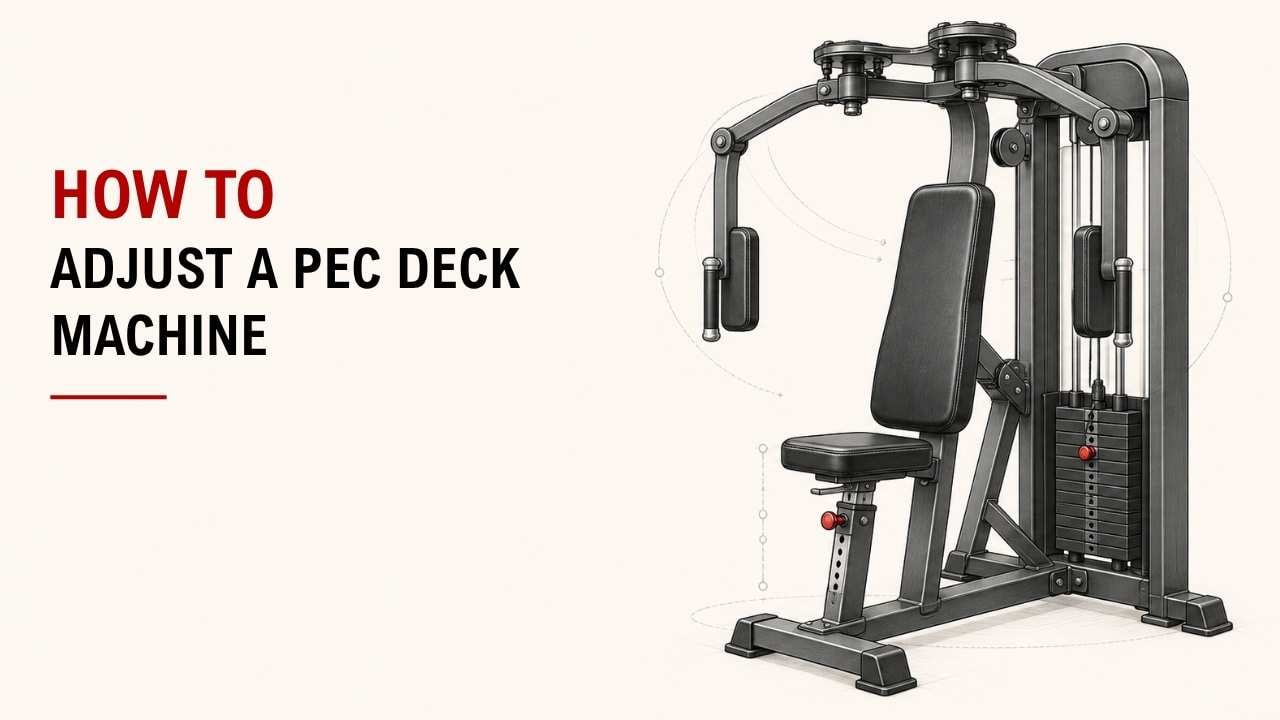

Not sure how to adjust a pec deck machine? A poor setup can make your chest workout uncomfortable.
The fix is simple: adjust the seat, arm position, backrest, and weight. This helps you train your chest comfortably and with better control.
As an Exercise Physiology & Biomechanics Expert at YR Fitness, I focus on proper body positioning and exercise technique. I’ve seen how simple machine adjustments can improve workout comfort and form.
Below are six easy steps to adjust your pec deck machine. Follow them before your next chest workout.
1. Adjust the Seat Height
Start by adjusting the seat so your arms line up with the machine. The right height helps you move comfortably without putting unnecessary stress on your shoulders.
Here’s how to adjust it:
- Sit with your back against the backrest.
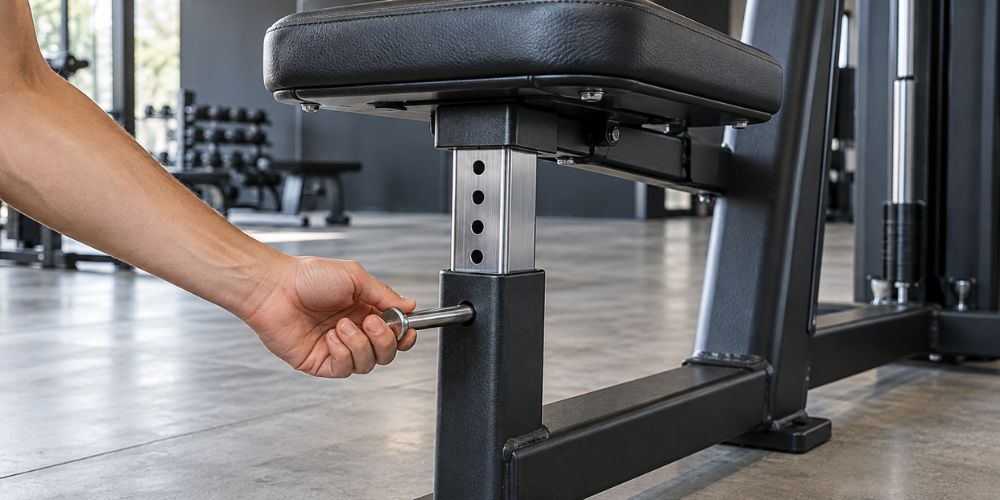
- Find the seat adjustment lever or pin.
- Raise or lower the seat until the handles or arm pads are around chest level.
- Keep your feet flat on the floor.
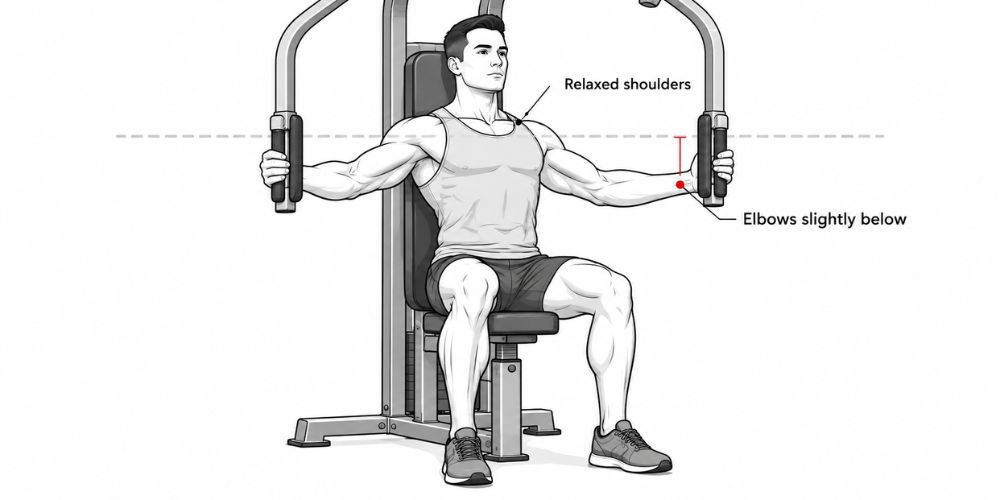
- Relax your shoulders instead of lifting them.
How do you know the seat height is correct?
Your elbows should sit around shoulder height or slightly below, depending on the machine. You should be able to move your arms without shrugging or leaning forward.
I often see people skip this adjustment and start lifting immediately. Even a small change in seat height can move and feel more natural.
2. Set the Starting Arm Position
Next, adjust how far back your arms start. This controls the chest stretch and prevents your shoulders from moving too far backward.
Follow these steps:
- Find the starting-position adjustment lever or pin.
- Set both arms to a comfortable starting position.
- Keep your arms in line with or slightly behind your shoulders, depending on your comfort and the machine design.
- Avoid pulling your arms too far backward.
- Make sure you can reach the handles or pads comfortably.
Should you start with your arms as far back as possible?
No. Start with a comfortable range that gives your chest a slight stretch without shoulder discomfort.
If you’re new to the pec deck, begin with a shorter range. You can increase it gradually as your mobility and control improve.
For more setup guidance, see this pec deck machine adjustment guide, which explains seat alignment and starting positions.
3. Position Your Elbows Correctly
Your elbow position affects how smoothly you can bring your arms together. Keeping them comfortable helps you focus on your chest without unnecessary shoulder strain.
Here’s what to check:
- Place your forearms against the pads if your machine has them.
- Keep your elbows around shoulder height or slightly below.
- Maintain a slight elbow bend when using handles.
- Keep your wrists in a natural position.
- Avoid raising your shoulders toward your ears.
What if your elbows feel too high?
Adjust the seat height or arm position until your shoulders feel relaxed.
In my experience, a comfortable elbow position makes it easier to control each repetition.
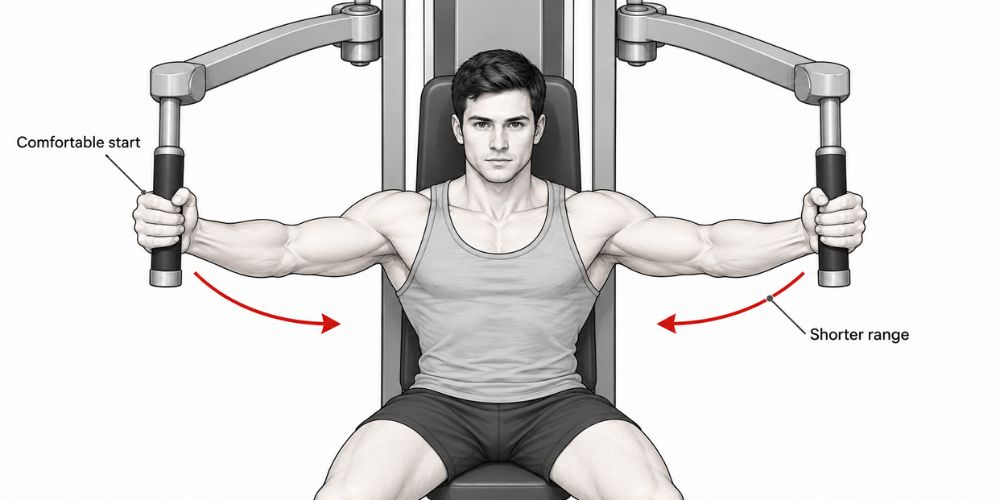
Here is a quick way to check your setup.
Body Part | Correct Position | What to Avoid |
Back | Supported against the pad | Leaning forward |
Shoulders | Relaxed and comfortable | Shrugging upward |
Elbows | Around shoulder height or slightly below | Raising them too high |
Wrists | Natural, relaxed position | Excessive bending |
Feet | Flat on the floor or supported by footrests | Unstable foot placement |
4. Adjust the Backrest if Available
Some pec deck machines have adjustable backrests. If yours does, use it to keep your upper body supported throughout the exercise.
Here’s how:
- Sit upright with your back against the pad.
- Adjust the backrest until you can reach the handles comfortably.
- Keep your chest naturally lifted.
- Avoid leaning forward to reach the handles.
- Check that your shoulders can move without discomfort.
What if the backrest doesn’t adjust?
That’s fine. Focus on adjusting the seat height and starting arm position instead.
At YR Fitness, we design commercial strength equipment with carefully planned movement angles and practical adjustments for different users. Our goal is to help make daily workouts comfortable, controlled, and easy to perform.
Explore our commercial strength equipment to see how machine design and user positioning work together.
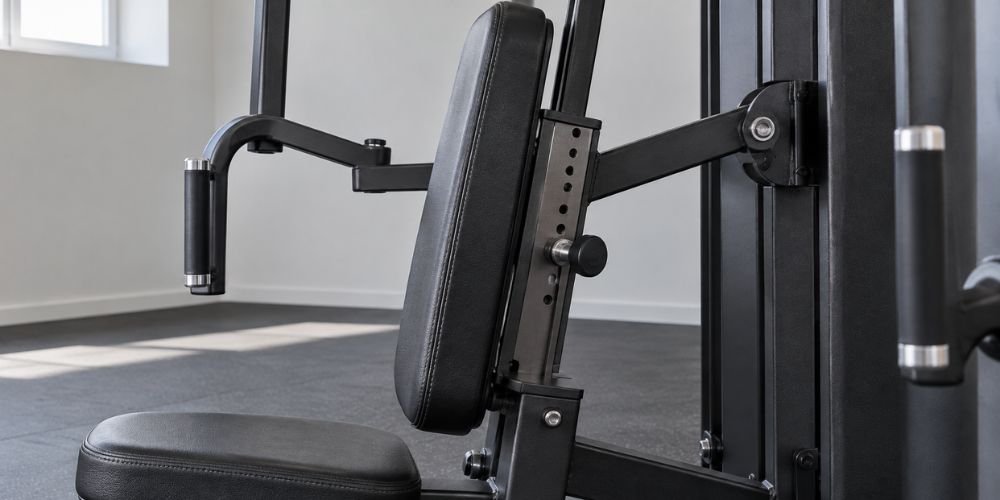
5. Select the Right Weight
Once you’re comfortable, choose a weight you can control. Going too heavy can make your shoulders roll forward or cause you to use momentum.
Here’s how to choose:
- Start with a light weight.
- Perform a few slow repetitions.
- Check that your arms move together smoothly.
- Keep your back against the pad.
- Increase the weight gradually when you can maintain good form.
How heavy should you go?
Choose a weight that allows around 10–15 controlled repetitions without losing your form. If you need to swing your arms or lift your shoulders, reduce the weight.
The American College of Sports Medicine’s resistance training guidance also emphasizes good form, controlled movement, and gradually increasing resistance.
I recommend focusing on smooth movement before adding more weight. Good control matters more than lifting the heaviest weight on the stack.
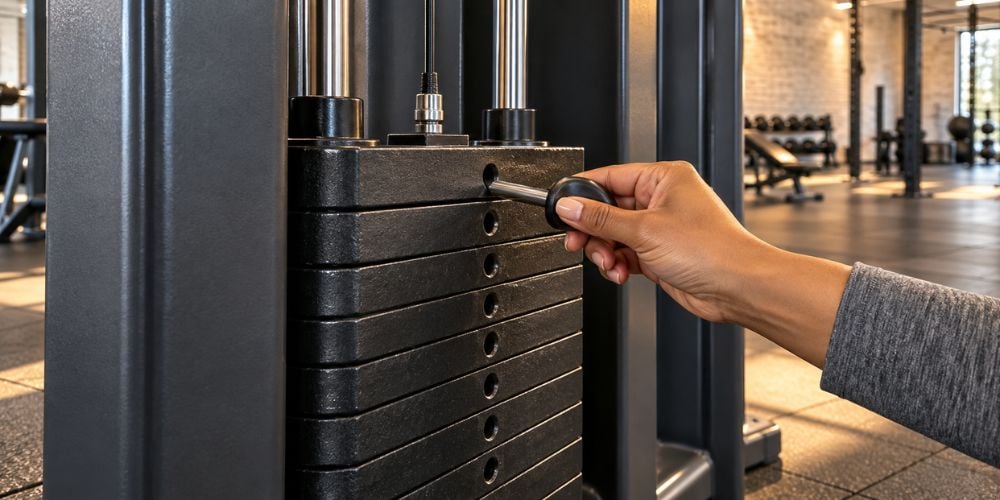
6. Test the Movement Before Starting
Before your working sets, test the machine with a light weight. This helps you check whether your adjustments feel right.
Follow these steps:
- Sit upright with your back supported.
- Hold the handles or place your forearms against the pads.
- Bring your arms together slowly.
- Keep your shoulders relaxed without shrugging.
- Pause briefly when your arms come together.
- Return slowly without overstretching your shoulders.
What if the movement feels uncomfortable?
Stop and check your setup. You may need to adjust the seat, shorten the starting range, or reduce the weight.
Your chest should do most of the work, and the movement should feel smooth. If you feel sharp pain or pinching your shoulders, stop instead of pushing through it.
For more technique tips, the ACE Fitness chest fly exercise guide explains the same basic principles of keeping a slight elbow bend and moving with control, using cables rather than a pec deck.
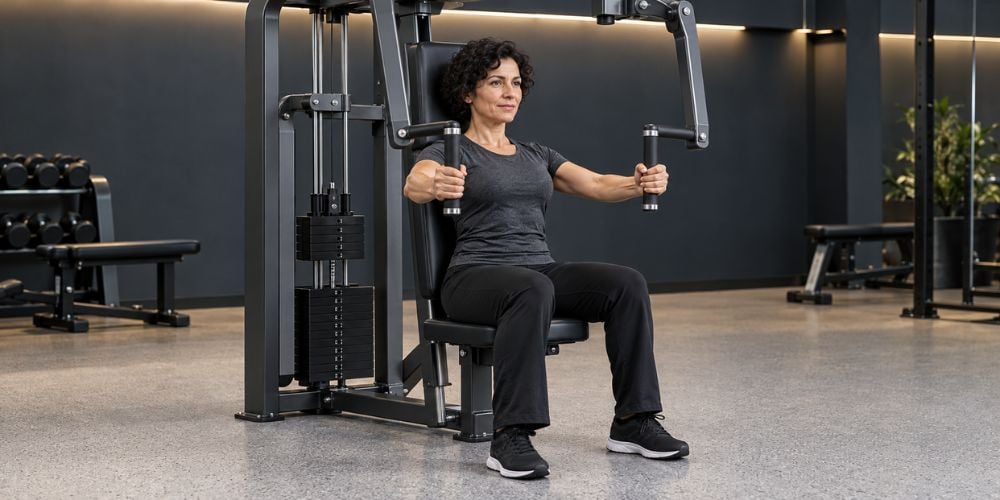
Quick Pec Deck Adjustment Troubleshooting
Still having trouble getting comfortable? Use this table to find what might need to change.
Problem | Possible Cause | What to Do |
Shoulders keep shrugging | Seat height is incorrect | Readjust the seat |
Arms stretch too far back | Starting position is too wide | Shorten the starting range |
Elbows feel too high | Poor seat or arm alignment | Adjust the seat height |
Back moves away from the pad | Poor backrest position or heavy weight | Adjust the backrest or reduce weight |
Movement feels jerky | Weight is too heavy | Lower the resistance |
Shoulder feels pinched | Uncomfortable setup or excessive range | Stop and readjust; don’t push through pain |
Conclusion
Adjusting a pec deck machine is simple. Set the seat height, arm position, elbows, backrest, and weight, then test the movement before training.
The right setup helps you train your chest comfortably and maintain better form.
At YR Fitness, we focus on strength equipment with practical adjustments and carefully designed movement angles. Explore our commercial gym equipment to discover machines designed for comfortable, consistent chest workouts.
Related articles: