








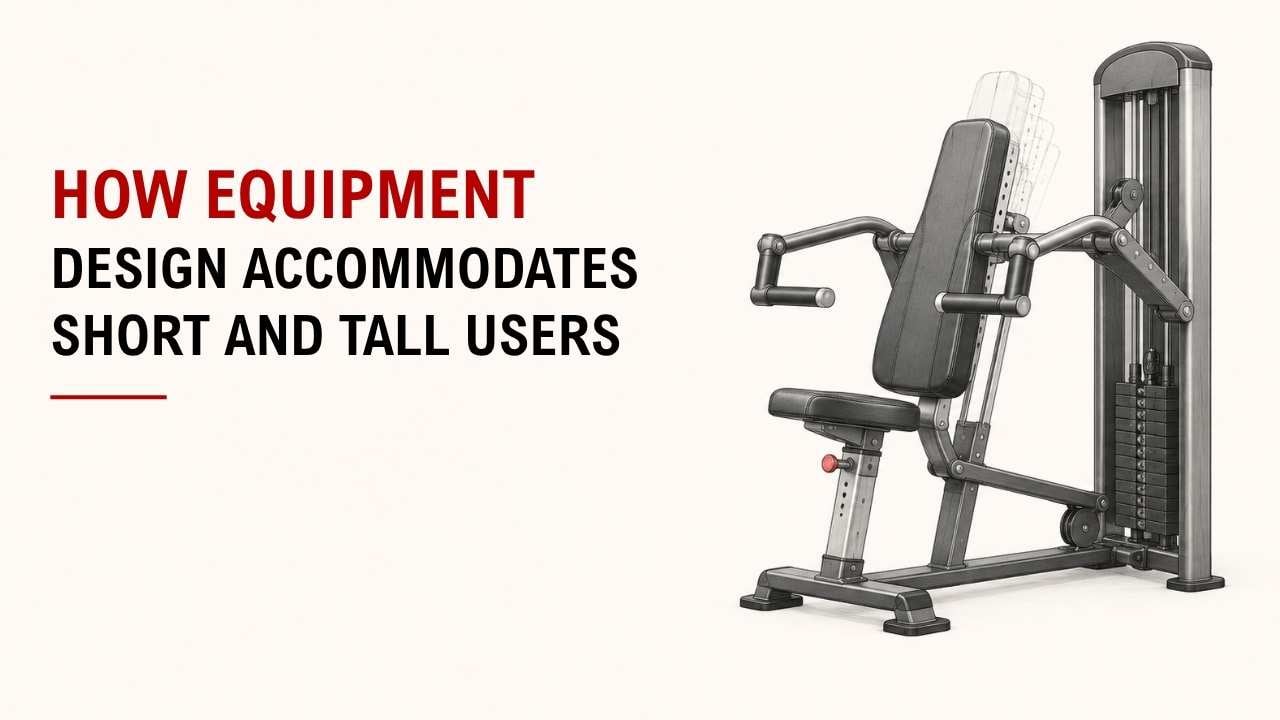

Have you ever used a gym machine that felt too cramped or too far away? The problem may not be your form—it may simply be the machine setup.
The quick answer is simple: adjustable seats, backrests, pads, handles, and starting positions help equipment fit both shorter and taller users. These features let you train in a more natural and comfortable position.
As an Ergonomics Engineer at YR Fitness, I study how people of different heights interact with gym equipment. I often see one small adjustment make a big difference in comfort and control.
Below, I’ll show you the six design features that matter most. Check them before you start your next workout.
1. Adjustable Seat Height
Seat height is usually the first thing to check.
A good adjustable seat helps line up your body with the machine’s handles, pads, and pivot points. This matters because ergonomic equipment design needs to consider differences in body dimensions and anthropometry.
For shorter users, raising the seat can make the handles easier to reach. For taller users, lowering it can create more room for the torso, shoulders, and legs.
For example, on a chest press, the handles should generally sit around chest level instead of too high or too low.
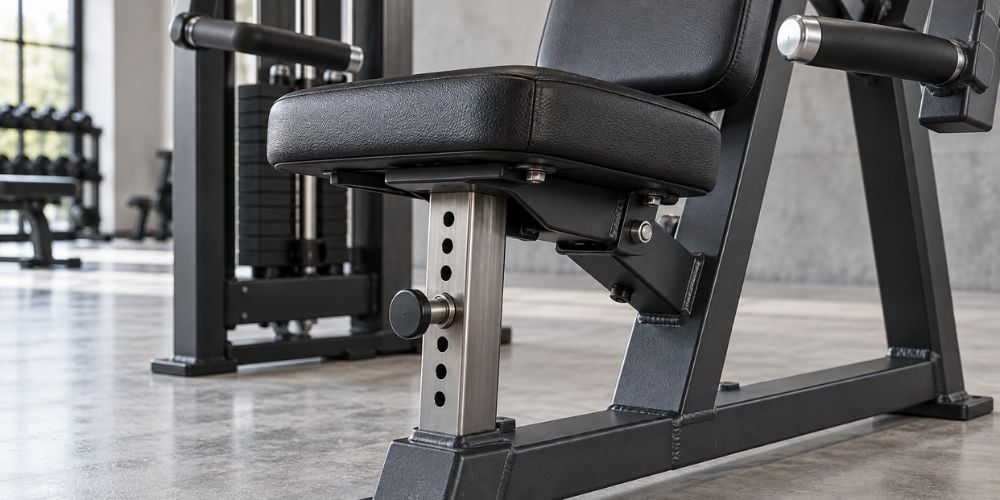
What should you do?
Sit down first, then adjust the seat before choosing your weight. I often see people skip this step and then wonder why the movement feels awkward.
Seat Feels Like This | What to Try |
Handles are too high | Raise or lower the seat until they line up closer to your chest |
Handles are too far away | Check the backrest position |
Knees feel cramped | Lower the seat or increase available space |
You have to stretch to reach | Move the seat or backrest closer |
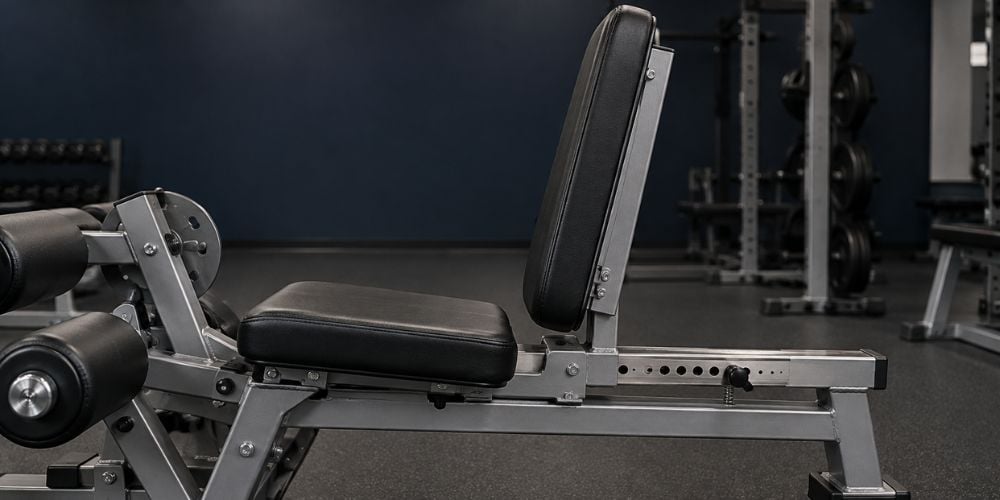
2. Adjustable Backrest Position
Height is not the only thing that matters. Two people of the same height can still have different torso and arm lengths.
That is why adjustable backrests are useful.
Moving the backrest forward can help shorter users reach the handles without stretching. Moving it backward can give taller users more room for their shoulders and elbows.
Quick check: Can you reach the handles while keeping your back comfortably against the pad?
If not, adjust the backrest before you start. Research on ergonomic design also supports the basic idea that adjustability helps equipment accommodate differences in body size and posture.
3. Multiple Starting Positions
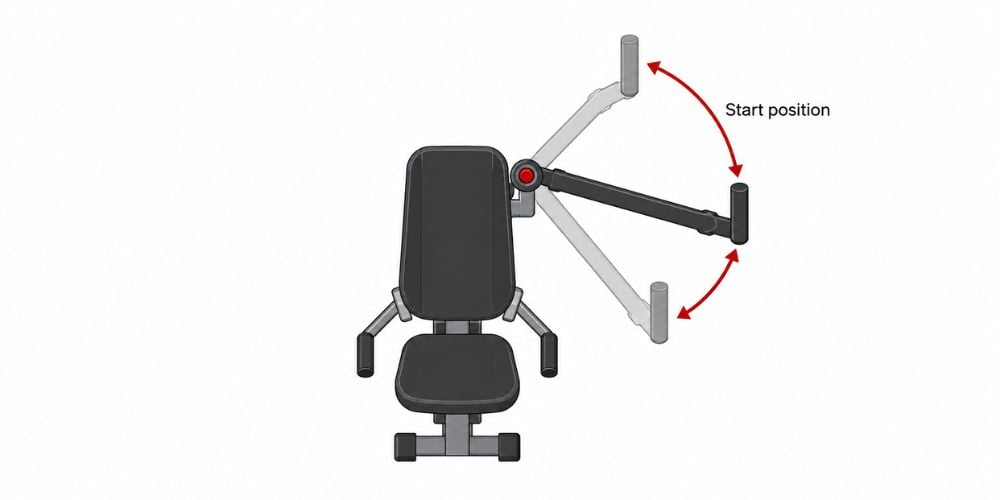
Some machines let you change where the exercise begins.
Why does this matter?
Shorter users may struggle to reach a handle or lever that starts too far away. Taller users may feel cramped if the starting position is too close.
Multiple starting positions help solve both problems.
You commonly see this feature on:
- Pec fly machines
- Rear delt machines
- Leg extension machines
- Leg curl machines
- Shoulder machines
- Pressing machines
Choose a starting position that lets you begin without twisting, overstretching, or forcing your joints into an uncomfortable angle.
I usually recommend starting with a slightly shorter range first. You can increase it once the movement feels comfortable.
Want to see how these adjustment points appear on commercial strength machines? At YR Fitness, we design equipment with practical seat, pad, handle, and starting-position adjustments so users with different body sizes can set up more comfortably. You can explore our commercial gym equipment and compare the adjustment features yourself.
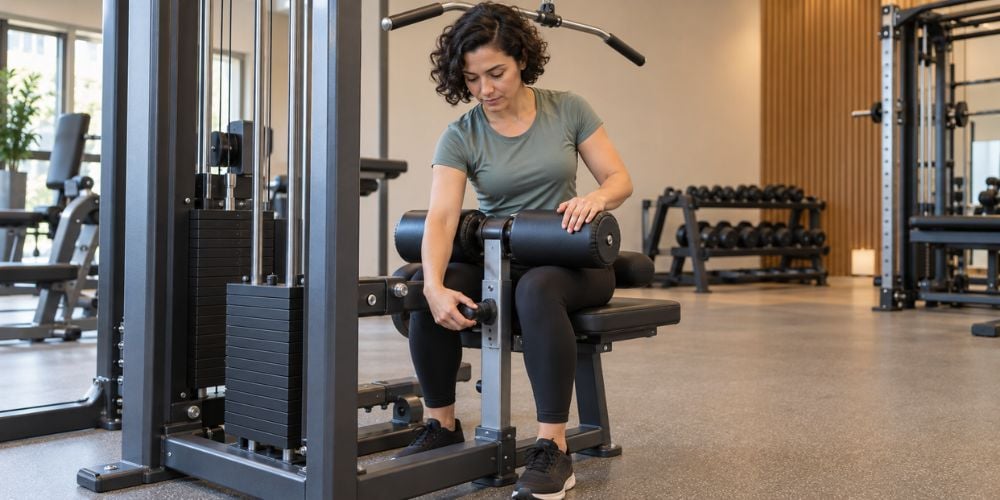
4. Adjustable Pads and Supports
Pads do more than add comfort. They help keep your body stable during the exercise.
Common examples include:
- Thigh pads
- Knee pads
- Chest pads
- Ankle rollers
- Shoulder pads
- Hip supports
Take a lat pulldown as an example.
A shorter user may need to lower the thigh pad so it holds the legs securely. A taller user may need more space between the seat and the pad.
The same idea applies to leg extensions. The ankle roller should sit comfortably near the lower part of the shin instead of pressing in the wrong place.
Simple rule: If a support pad is adjustable, use it. Do not assume the default setting is right for you.
Studies examining exercise equipment have also found that body proportions can affect posture when equipment cannot be adjusted to the individual. Research on fitness equipment and anthropometric differences has specifically highlighted the importance of designing equipment around different user dimensions.
5. Handle Placement and Multiple Grips
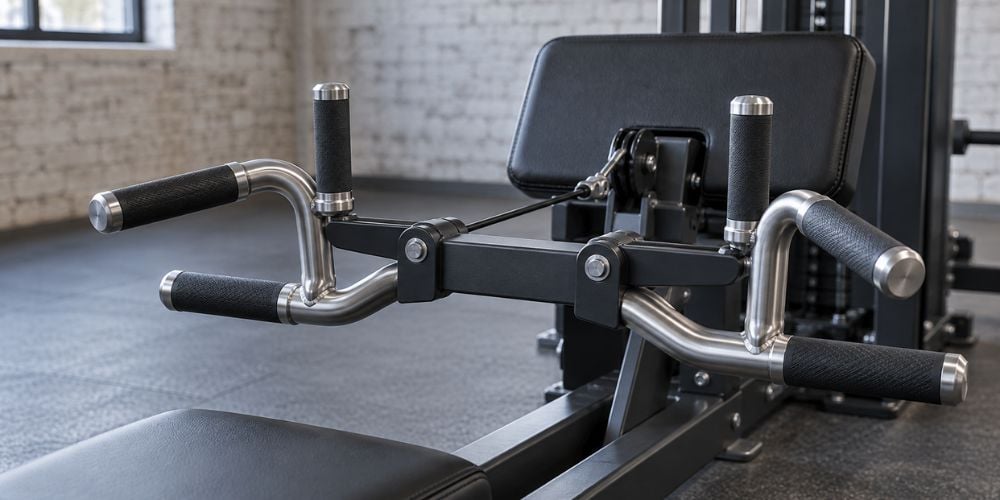
Handle design also helps equipment fit different users.
Longer handles or multiple grip positions give you more freedom to place your hands naturally.
This helps with differences in:
- Arm length
- Shoulder width
- Wrist position
- Upper-body size
For example, someone with broader shoulders may prefer a wider grip. A smaller user may feel better using a narrower position.
Rotating or angled handles can also help keep the wrists in a more comfortable position.
From an ergonomics point of view, I prefer handles that let the user adapt. The machine should not force everyone into exactly the same grip.
The goal? You should be able to hold the handles without stretching, twisting, or squeezing yourself into position.
6. Enough Space for Longer Limbs
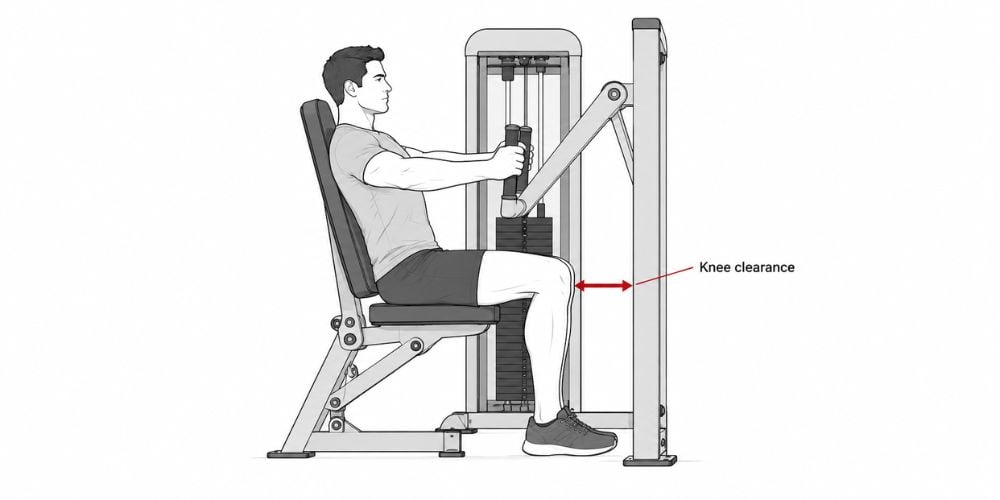
Adjustments alone are not enough. The machine also needs enough space around your body.
Tall users especially need room for their:
- Knees
- Elbows
- Feet
- Shoulders
- Head
- Longer arms and legs
A tall person may hit the frame with their knees or run out of movement on a poorly designed machine.
Shorter users have the opposite concern. Handles, controls, and foot platforms still need to be easy to reach.
Here is why this matters: a machine can have plenty of adjustment settings and still feel wrong if the frame itself restricts your movement.
Quick Fit Check
Feature | Shorter Users | Taller Users |
Seat height | Helps reach handles | Creates more body space |
Backrest | Reduces excessive reach | Gives more torso room |
Starting position | Brings movement closer | Prevents cramped starts |
Adjustable pads | Fits shorter limbs | Fits longer limbs |
Multiple grips | Provides easier reach | Allows wider positioning |
Frame space | Keeps controls accessible | Provides limb clearance |
Before adding weight, perform one or two light repetitions. If you have to stretch for the handles, tuck your knees awkwardly, or move away from the support pads, adjust the machine again.
Conclusion
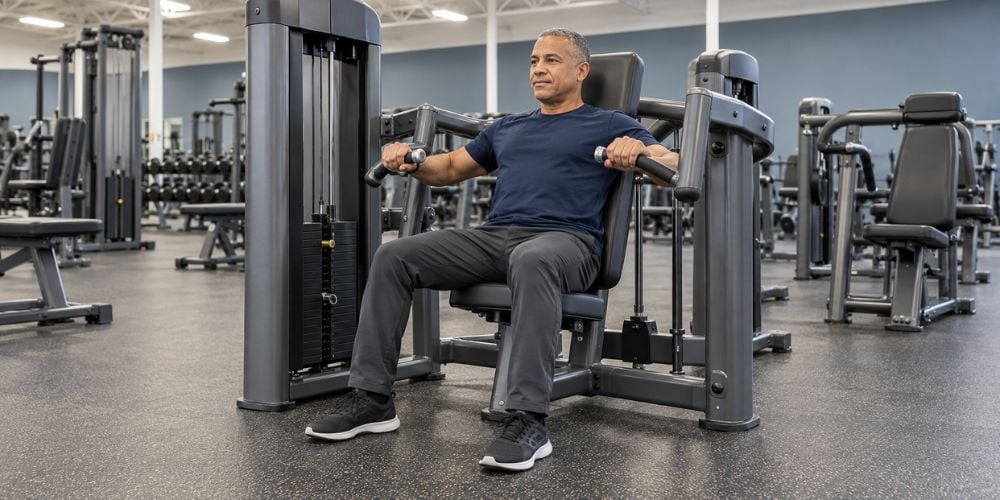
Good gym equipment adjusts to your body instead of forcing your body to fit the machine. Look for adjustable seats, backrests, starting positions, pads, multiple grips, and enough space for your limbs.
Before each exercise, spend a few seconds setting the machine correctly.
If you want to compare how these features are built into different strength machines, explore the commercial equipment range from YR Fitness and look closely at the available adjustment points.
Related articles:



