








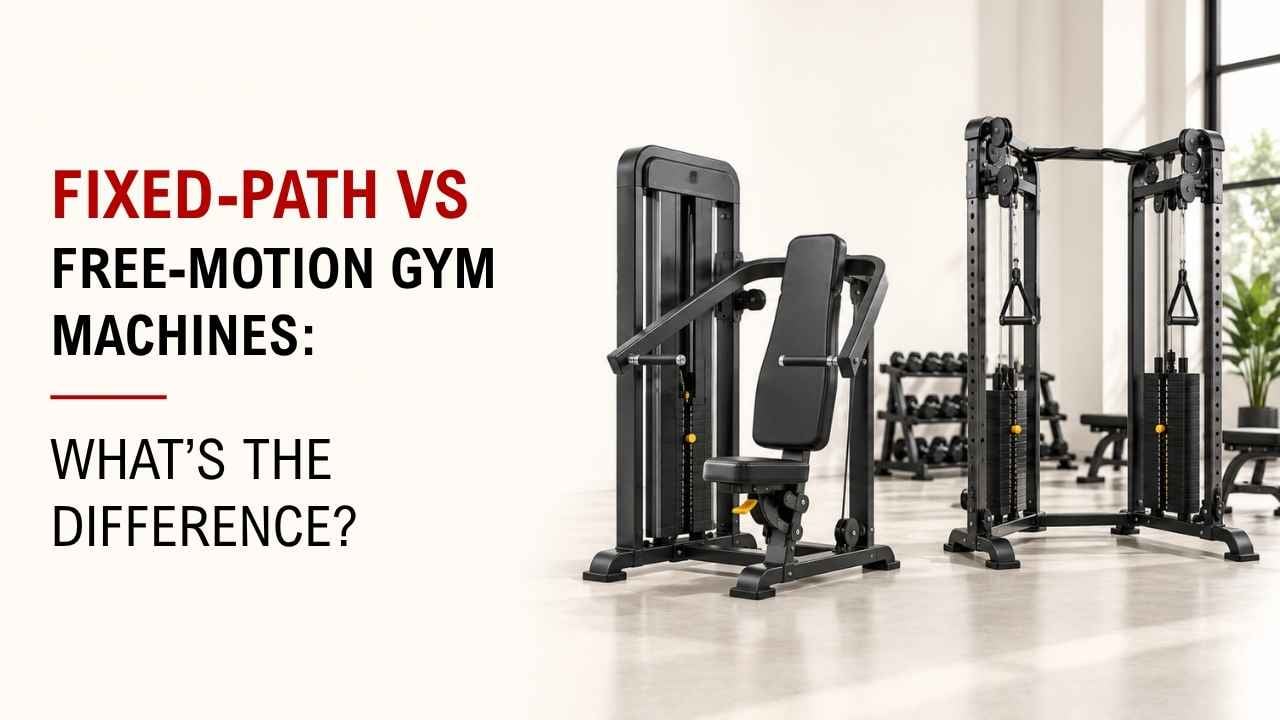

Why do some machines guide your movement while others let you move more freely? The main difference is the machine’s movement path.
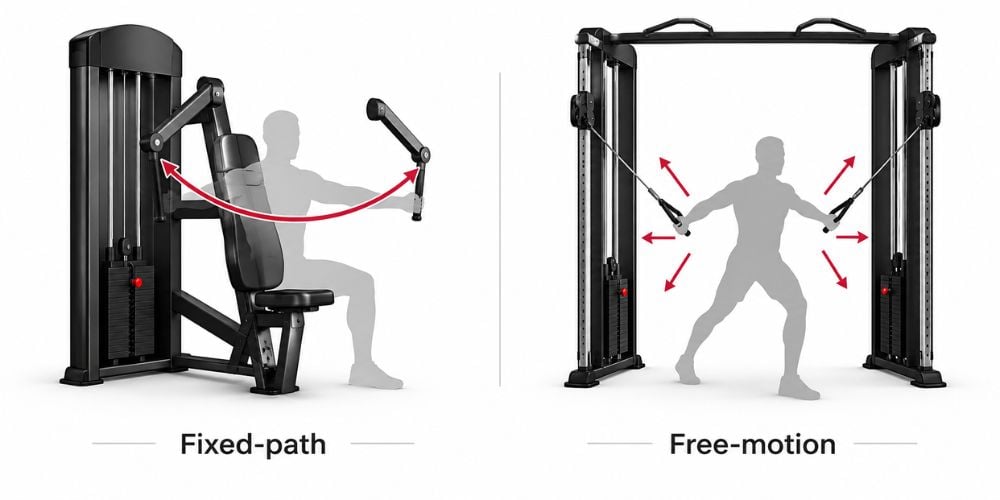
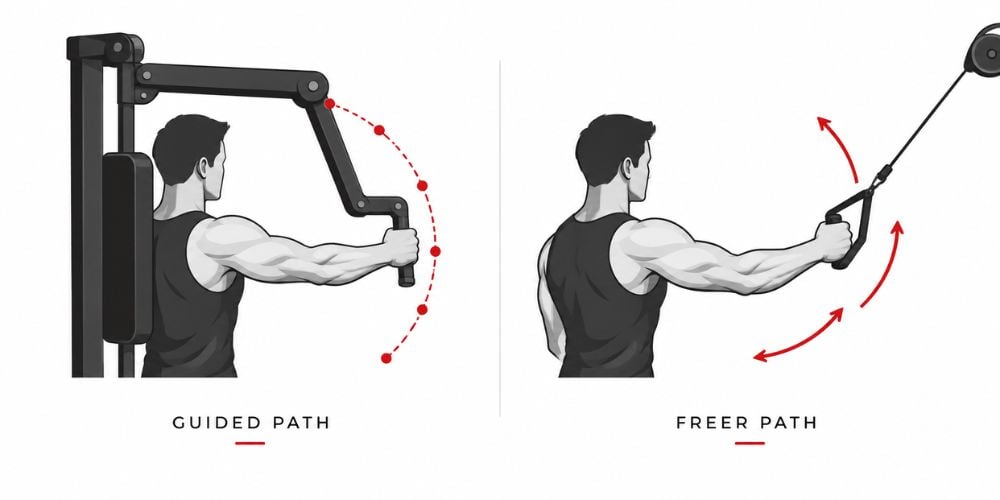
Fixed-path machines guide you through a set motion, while free-motion machines give you more control over the direction. Fixed paths offer more stability, while free motion gives you more movement freedom.
As the founder and chief designer of YR Fitness, I have spent decades designing and working with commercial strength equipment. That experience has shown me how movement-path design can directly change the way an exercise feels and performs.
Below, I’ll compare both types for beginners, muscle growth, and movement freedom. You’ll quickly see where each type fits best.
1. What Is a Fixed-Path Gym Machine?
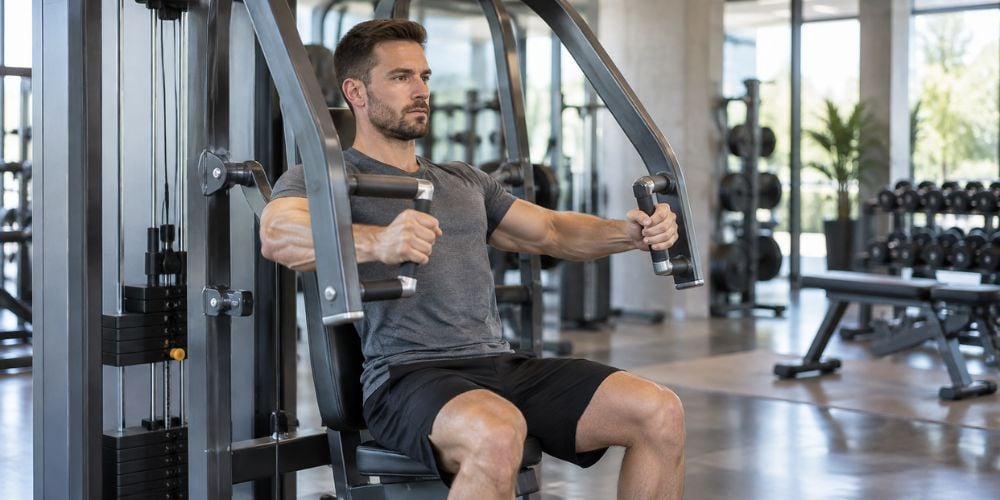
A fixed-path machine guides your body through a set movement. The handles, pads, or platform follow a predetermined path.
Common examples include:
- Leg extension machines
- Seated chest press machines
- Shoulder press machines
- Hack squat machines
- Leg curl machines
Take a chest press as an example. You push the handles forward, but the machine largely decides where those handles travel.
Why does that matter?
You have less movement to control. That can make it easier to focus on pushing, pulling, or working the target muscle.
The ACE selectorized-machine exercise library, for example, lists movements such as the seated chest press, lying hamstring curl, and several other machine exercises as beginner-level options.
Still, not every fixed-path machine feels the same.
Seat position, handle position, pivot points, and movement angles can all change how the exercise feels. If a machine feels awkward, adjust it before assuming the movement itself is wrong.
2. What Is a Free-Motion Gym Machine?
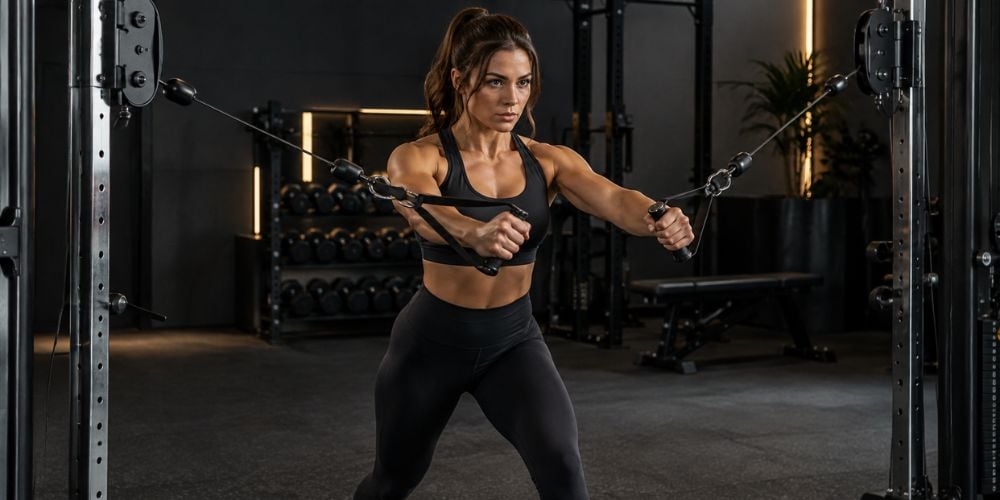
A free-motion machine gives you more control over where your hands or limbs move.
Cable machines and functional trainers are common examples. Instead of following one fixed track, you control more of the direction yourself.
During a cable chest press, for example, your hands may move:
- Straight forward
- Slightly upward
- Slightly downward
- Closer together as you press
That extra freedom also means you need more control.
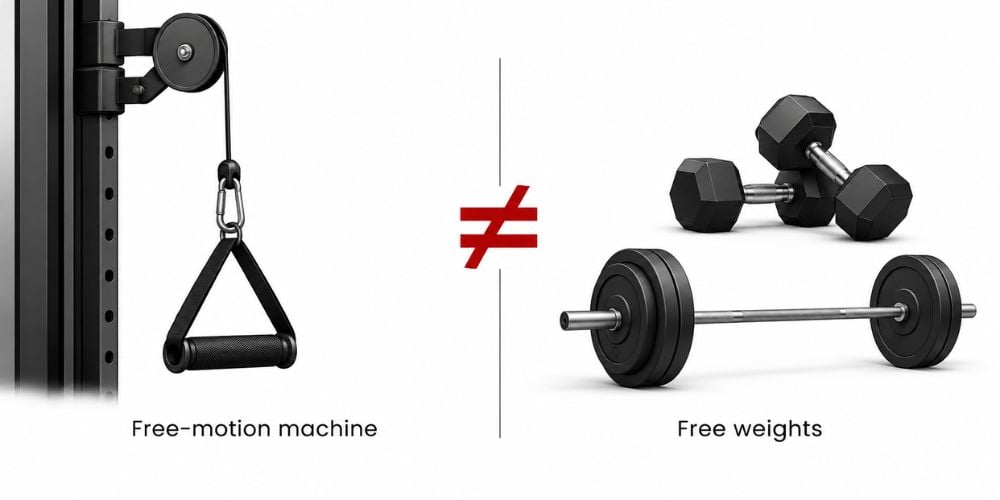
Is free-motion the same as free weights?
No.
Dumbbells and barbells are free weights. Free-motion machines normally still use cables, pulleys, weight stacks, or another resistance system.
The simple difference is this: the machine provides resistance without fully controlling your movement path.
If you want to see how cable movements differ from other exercises, the ACE Exercise Library includes cable, machine, dumbbell, and barbell exercises side by side.
3. Which Is Better for Beginners?
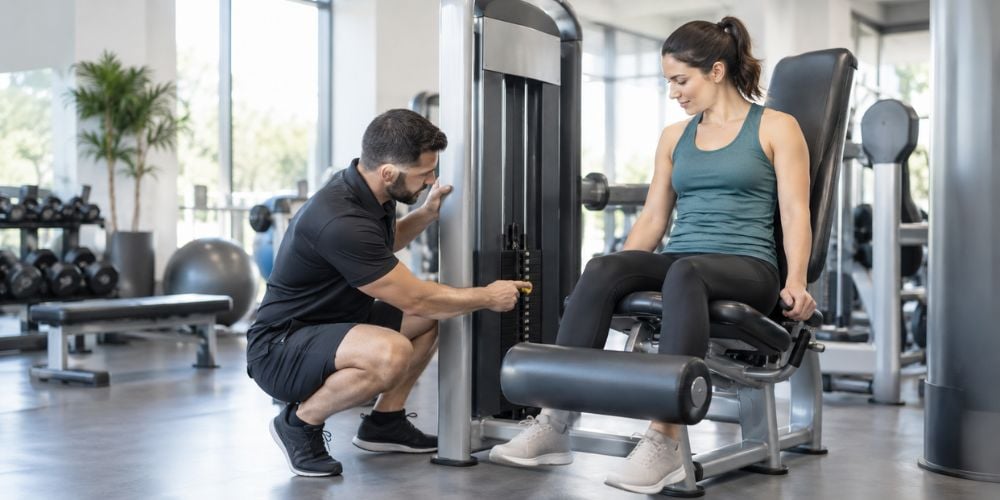
Fixed-path machines are usually easier for beginners.
When you are new to strength training, you already have several things to think about:
- Where to sit
- How much weight to use
- How far to move
- How fast to perform each rep
- How to keep good control
A fixed path removes some of that complexity.
You can adjust the machine, select a manageable resistance, and concentrate on the exercise. You do not have to control the resistance in as many directions.
I often recommend starting lighter than you think you need. Even when the machine guides your movement, good setup and controlled reps still matter.
On the other hand, beginners do not need to avoid cables. Start with simple movements and light resistance until you can control the exercise without swinging or losing your position.
Noticing how different machines can feel from one gym to another? At YR Fitness, we design our strength equipment around precise movement angles and practical adjustment points, so you can explore how different machine layouts affect the training experience.
4. Which Builds More Muscle?
Both can build muscle.
You do not need to avoid one type because you think the other automatically produces more growth.
What matters more is whether you:
- Challenge muscle
- Use a useful range of motion
- Control each repetition
- Gradually progress your training
- Train consistently
There is also useful research here.
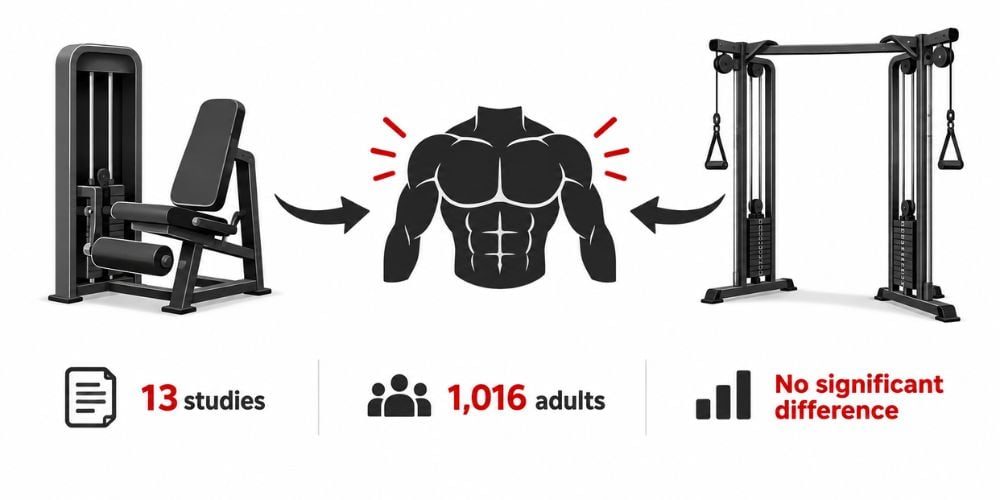
A 2023 systematic review and meta-analysis looked at 13 studies involving 1,016 adults and found no significant difference in muscle hypertrophy when machine-based and free-weight resistance training were compared. The researchers concluded that equipment choice can largely come down to your goals and preferences.
That research does not directly compare every fixed-path machine with every free-motion cable exercise. But it supports a useful point: you do not need to chase one equipment category just because you think it has a special muscle-building advantage.
If a fixed-path chest press lets you train your chest hard and comfortably, use it. If a cable press feels better, that can work too.
The exercise you can perform well and progress consistently is usually the more useful choice.
5. Which Is Better for Natural Movement?
Free-motion machines generally give you more freedom to find your own movement path.
Your joints do not always travel in perfectly straight lines. Cables and independently moving handles can let you make small changes to your hand position and exercise angle.
That can be useful for:
- Cable chest presses
- Rows
- Fly movements
- Lateral raises
- Wood chops
- Single-arm exercises
But here is the important part: more freedom does not automatically mean better.
A well-designed fixed-path machine can also feel smooth and comfortable when its pivot points, handles, seat position, and movement angles suit your body.
In my decades of design experience, one thing becomes obvious quickly: if you constantly feel like you are fighting a machine, something deserves a second look. Sometimes a setup adjustment fixes it, and sometimes another exercise simply suits you better.
So ask yourself one simple question:
Can I move through the exercise comfortably and stay in control?
If yes, you are probably on the right track.
6. Do You Need Both in Your Workout?
No. But using both can give you more options.
You might use a fixed-path machine when you want stability, then add a free-motion exercise when you want more movement freedom.
Goal | Exercise Choice |
Controlled chest work | Fixed-path chest press |
More flexible chest movement | Cable press |
Stable quad training | Leg extension |
Multi-directional upper-body work | Functional trainer |
Easy exercise setup | Fixed-path machine |
More exercise variation | Free-motion machine |
Do you need to add both versions of every exercise?
No.
If a few machines already cover your major muscle groups and feel good to use, that may be enough. Adding more exercises simply because they use a different movement system can make your workout longer without making it better.
Conclusion
The difference is simple: fixed-path machines guide your movement, while free-motion machines give you more control over the path. Fixed-path machines are usually easier and more stable, while free-motion machines give you more movement freedom.
You do not need to choose only one. Use the type that feels comfortable, matches your experience, and helps you train consistently.
If you want to explore strength machines with different movement styles, at YR Fitness we can help you compare guided, cable-based, and plate-loaded options. Take a look at our equipment and find the training setup that best fits the way you want to move.
Related articles:



