








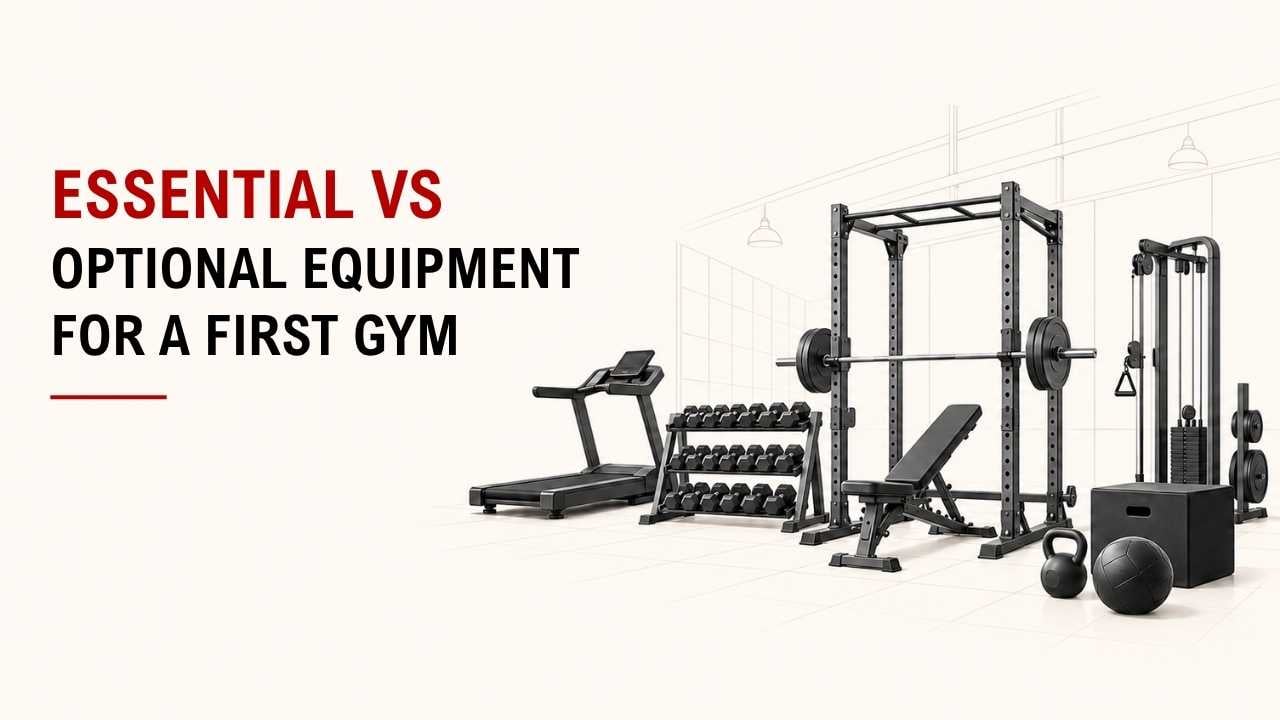

Are you setting up your first gym and unsure what equipment you really need? It is easy to buy too much too soon.
The simple answer is: start with cardio, free weights, versatile strength machines, and basic accessories. Add specialty machines later when you know what you will actually use.
As the founder and chief designer of YR Fitness, I have spent decades working with commercial gym equipment and training setups. In my experience, versatile equipment usually gives you more value than filling your gym with single-purpose machines.
This guide shows you what is essential and what you can wait. Keep reading, and you will have a much clearer buying list.
1. Essential Cardio Equipment
You do not need every type of cardio machine from day one.
Start with:
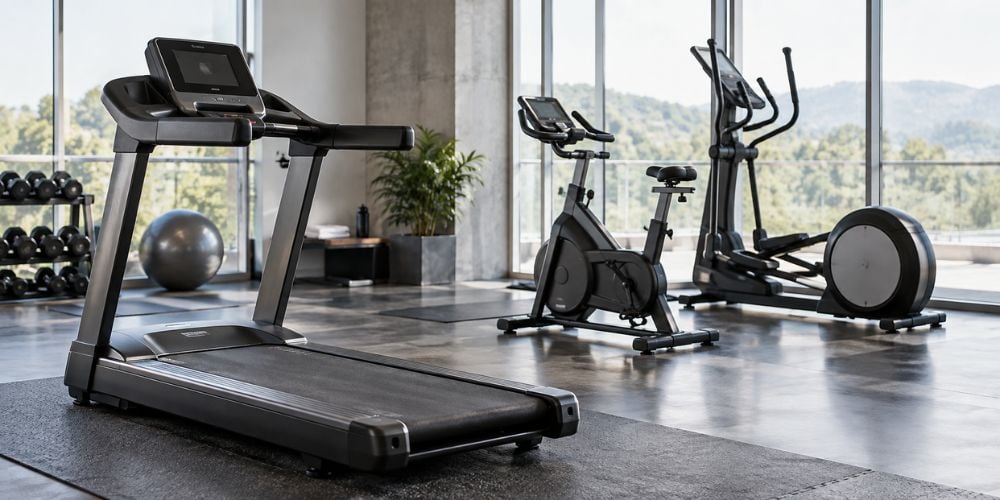
- Treadmill: Good for walking, jogging, and running.
- Exercise Bike: A practical choice for lower-impact cardio.
- Elliptical: Useful when you want full-body, lower-impact exercise.
Do you need all three? Not necessarily.
If space or budget is limited, start with the machine you know you will use regularly. Rowers, stair climbers, air bikes, and similar machines are useful, but they can usually wait.
Here is why cardio deserves a place in the setup. The CDC physical activity guidelines for adults recommend at least 150 minutes of moderate-intensity aerobic activity each week, along with muscle-strengthening activity.
So if your goal is a balanced gym, having at least one practical cardio option makes sense.
2. Essential Free Weight Equipment
Free weights should be near the top of your list because they give you a lot of exercise choices without requiring a separate machine for every movement.
Start with:
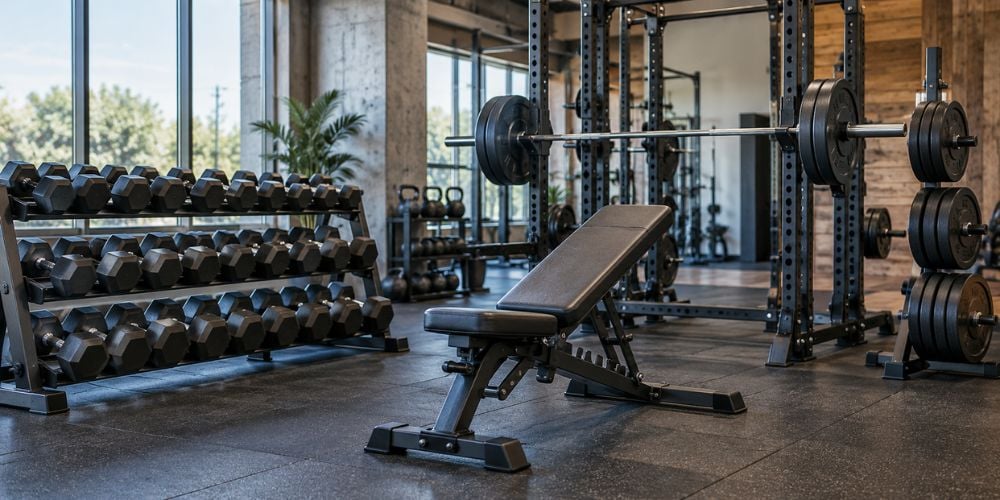
- Dumbbells
- Adjustable bench
- Barbell
- Weight plates
- Squat or power rack
With these basics, you can perform squats, presses, rows, lunges, deadlifts, curls, and shoulder exercises.
The ACE Exercise Library includes exercises using dumbbells, barbells, benches, kettlebells, cables, and other common gym equipment. That variety is one reason basic free weights can cover so much of your training.
If you can only buy a few pieces, what comes first?
I would put dumbbells and an adjustable bench ahead of most single-purpose machines. They take up relatively little room and give you plenty of ways to train.
3. Essential Strength Machines
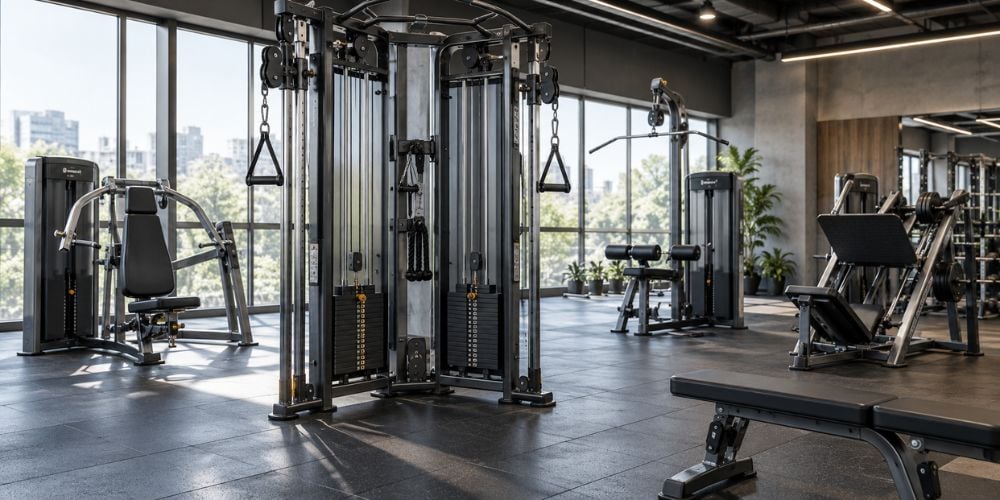
Once your free weights are covered, add machines that train the major muscle groups.
Machine | Main Area Trained | Priority |
Chest Press | Chest, shoulders, triceps | Essential |
Lat Pulldown | Back, arms | Essential |
Seated Row | Back, arms | Essential |
Leg Press | Quads, glutes, hamstrings | Essential |
Leg Curl | Hamstrings | Essential |
Cable Machine | Full body | Essential |
A cable machine is especially useful because one station can support many movements.
Do not choose a machine just because it looks impressive. Smooth movement, easy adjustment, stability, and useful exercise options matter more.
This also helps you cover the major muscle groups recommended in general strength-training guidance, including the legs, hips, back, chest, abdomen, shoulders, and arms. CDC guidance on what counts as muscle-strengthening activity also lists lifting weights and resistance-band exercises as valid strength work.
If you are comparing several machines and are not sure which ones deserve priority, look for equipment that gives you the most useful training options first. At YR Fitness, we design commercial strength and cardio equipment around practical movement, durability, and daily use, so you can compare core equipment before moving into more specialized machines.
4. Essential Small Equipment and Accessories
Do not forget the smaller equipment.
Useful basics include:
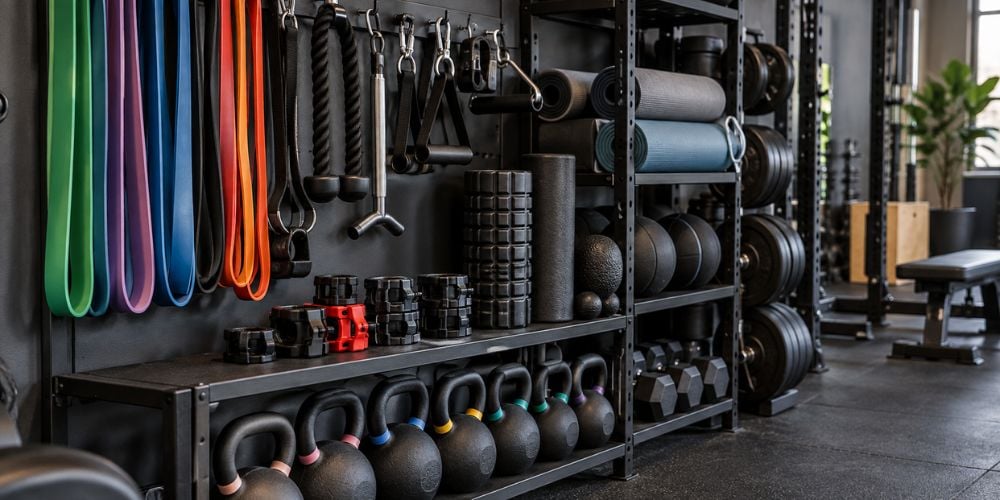
- Resistance bands
- Exercise mats
- Kettlebells
- Cable handles and attachments
- Weight collars
- Foam rollers
- Storage racks
These items can add a lot of variety without taking up much room.
Resistance bands, for example, can be used for warm-ups, mobility work, assistance exercises, and resistance training. Government guidance also recognizes resistance-band exercises as muscle-strengthening activity.
Cable attachments are another simple upgrade. A rope, straight bar, or different handle can turn one cable station into several exercise options.
I often see accessories treated as an afterthought. But if your main equipment is already covered, a few small additions can make the whole setup much more useful.
5. Optional Strength Machines You Can Add Later
Specialized machines can be excellent. You just do not need every one of them at the beginning.
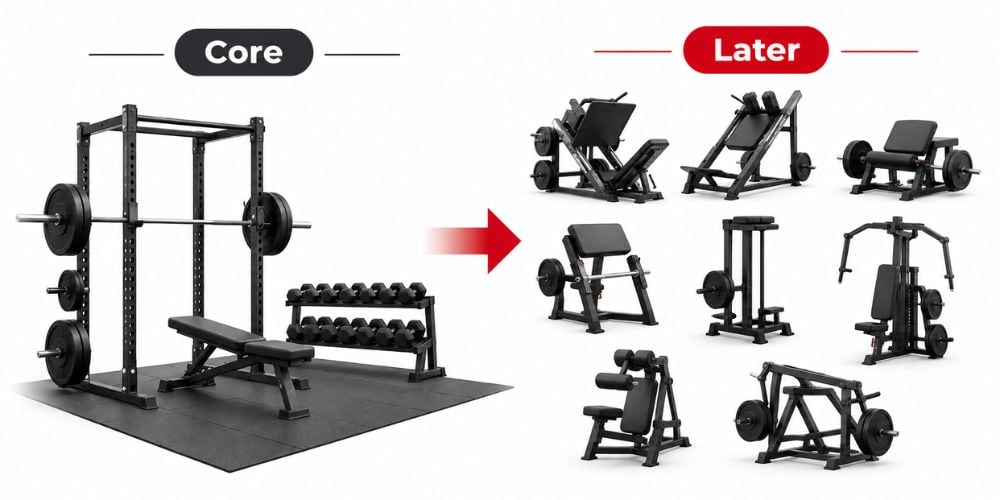
These can usually come later:
- Hack squat
- Pendulum squat
- Hip thrust machine
- Preacher curl
- Calf raise
- Pec fly/rear delt machine
- Abdominal machines
- Plate-loaded isolation machines
Think of these as upgrades rather than starting points.
For example, a hack squat is a useful leg machine. But if you already have a rack and leg press, you can cover plenty of lower-body training before adding one.
The same applies to a preacher curl or calf raise machine. They do their jobs well, but they are much more specialized than dumbbells, cables, or a rack.
When should you add them?
Add a specialty machine when you can clearly say, “I would use this regularly, and my current equipment does not give me the same option.”
That is a much better reason to buy than simply having an empty corner to fill.
6. Optional Equipment Depends on Your Gym Type
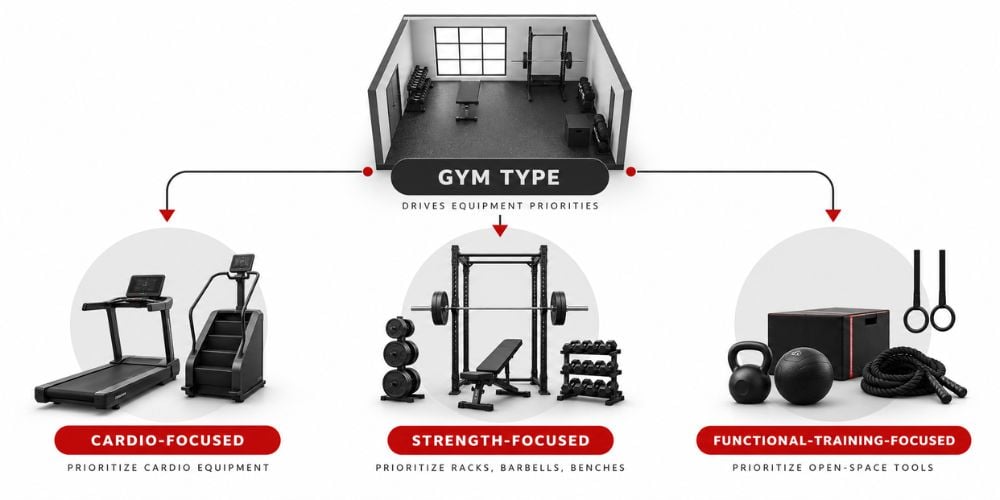
There is no single list of equipment that works for everyone.
Your training style should decide what comes first.
Your Training Style | Prioritize | Add Later |
General Fitness | Cardio, dumbbells, cables | Specialty machines |
Strength Training | Rack, barbell, plates, bench | Extra cardio |
Bodybuilding | Strength machines, cables, free weights | Extra conditioning equipment |
Functional Training | Kettlebells, racks, cables, bands | Isolation machines |
Small Home Gym | Adjustable equipment | Large single-purpose machines |
For example, a stair climber may feel essential if cardio is your main goal. If you focus on powerlifting, a good rack, bench, barbell, and plates will probably matter much more.
If you are still deciding what type of training deserves most of your space, the U.S. Department of Health and Human Services’ Move Your Way activity planner is a simple way to look at how aerobic and muscle-strengthening activities can fit together.
So instead of asking:
“Is this machine good?”
Ask:
“Will I actually use this machine often?”
That one question can help you avoid buying a lot of equipment you do not really need.
Conclusion
For your first gym, focus on equipment that gives you the most training options: basic cardio, free weights, major strength machines, cables, and useful accessories.
Add specialized machines only when you know your current setup cannot give you what you need.
If you want to build a more complete setup without wasting space on the wrong machines, explore the strength, cardio, and accessory options from YR Fitness. You can start with the essentials now and add more specialized equipment as your training needs become clearer.
Related articles:



