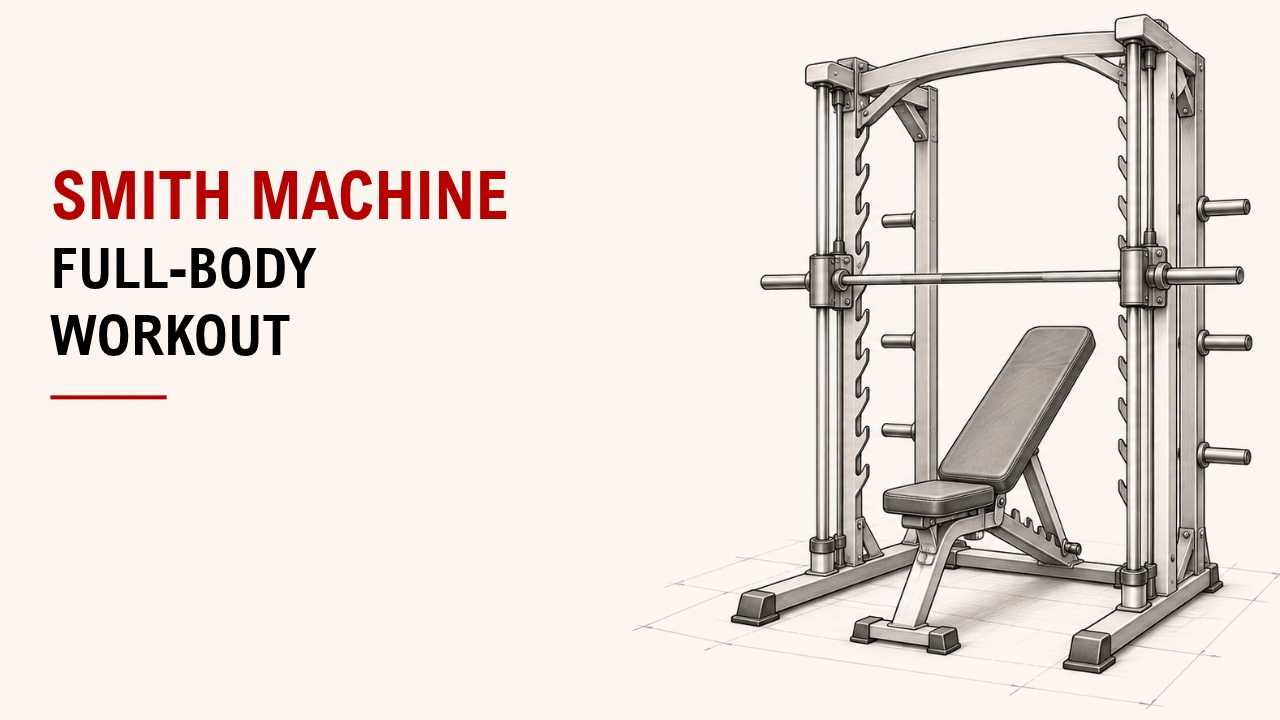

Want to train your whole body without moving between different gym machines? Wondering if a Smith machine is enough for a complete workout?
Yes, you can use a Smith machine to train your legs, chest, back, shoulders, arms, and core. With seven exercises and an adjustable bench, you can complete a full-body strength workout in one spot.
As an Exercise Physiology and Biomechanics Expert at YR Fitness, I focus on helping people train with better form and control. I’ve seen how small adjustments in technique can make exercises more comfortable and effective.
In this guide, you’ll find seven Smith machine exercises with simple steps, sets, and reps. Follow the workout below and start with weights you can control.
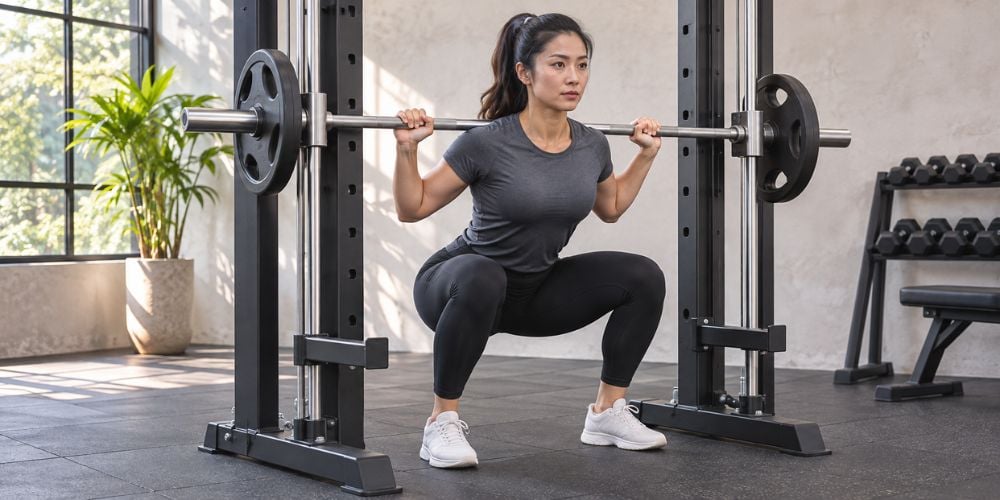
1. Smith Machine Squat
The Smith machine squat mainly works your quadriceps and glutes. Your hamstrings and core also help support the movement.
Unlike a free barbell, the Smith machine bar follows a fixed path. This reduces side-to-side bar movement, so you can focus on your squat technique.
How to Do It:
- Position the bar across your upper back.
- Stand with your feet shoulder-width apart.
- Unlock the bar and tighten your core.
- Bend your knees and hips to lower into a squat.
- Push through your feet to stand back up.
Sets and Reps: 3 sets of 10–12 reps.
Quick Tip: Keep your heels on the floor and your knees aligned with your toes.
I recommend trying a few light reps first. Adjust your foot position until the movement feels comfortable.
Want to understand how guided bar movement changes your workout? Read this comparison of Smith machines vs free weights.
2. Smith Machine Romanian Deadlift
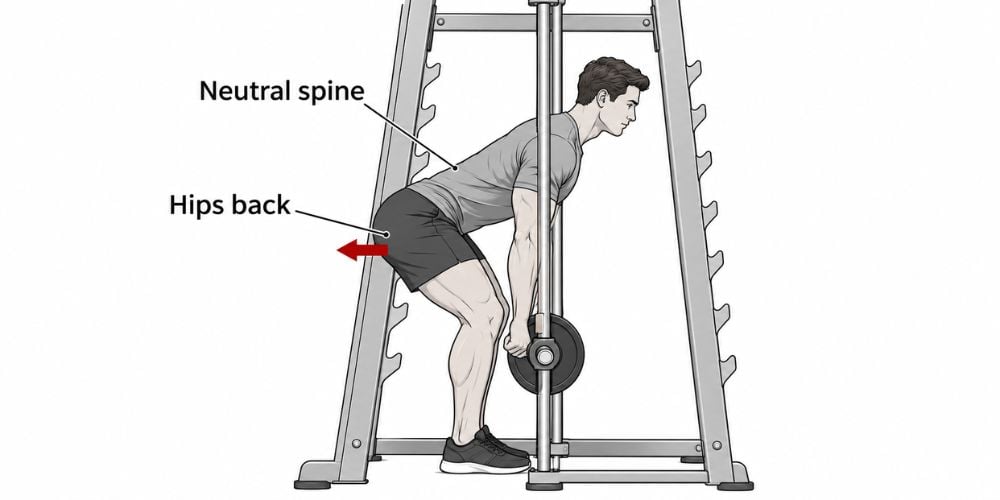
The Romanian deadlift targets your hamstrings and glutes. Your lower back muscles also work to keep your spine stable.
This exercise strengthens the back of your legs and helps you practice proper hip movement.
How to Do It:
- Stand facing the bar with your feet hip-width apart.
- Hold the bar with both hands.
- Unlock the bar and slightly bend your knees.
- Push your hips backward while lowering the bar along your legs.
- Stop when you feel a comfortable hamstring stretch.
- Push your hips forward to stand upright.
Sets and Reps: 3 sets of 10–12 reps.
Quick Tip: Keep your back neutral and the bar close to your legs.
Do you need to lower the bar to the floor? No. Stop when you can no longer push your hips backward without rounding your back.
Focus on your hip movement instead of bending your knees into a squat.
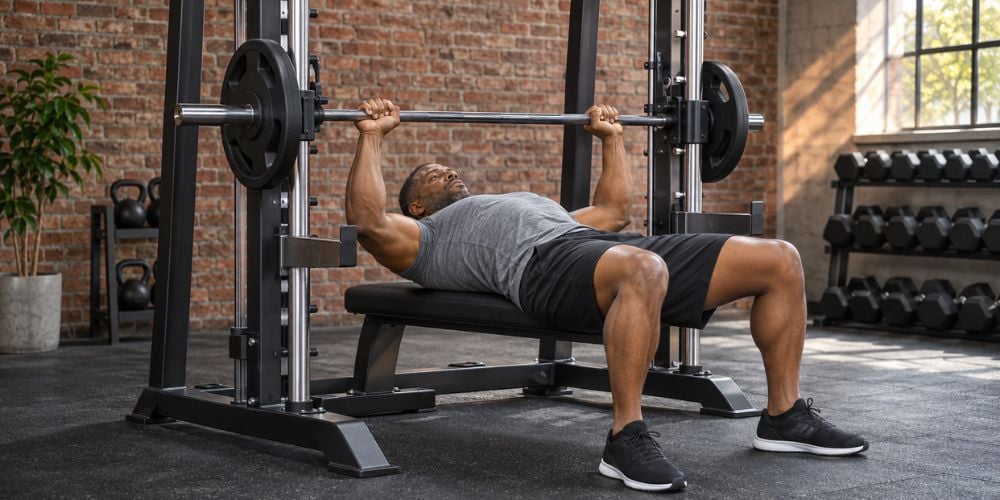
3. Smith Machine Bench Press
The Smith machine bench press trains your chest, shoulders, and triceps.
The fixed bar path reduces the need to control side-to-side movement. This lets you focus more on pressing the weight smoothly.
How to Do It:
- Place a flat bench beneath the Smith machine bar.
- Lie down with your feet firmly on the floor.
- Adjust the bench so the bar reaches your mid-chest comfortably.
- Grip the bar slightly wider than shoulder-width.
- Unlock the bar and lower it slowly toward your chest.
- Press upward without bouncing the bar.
Sets and Reps: 3 sets of 8–12 reps.
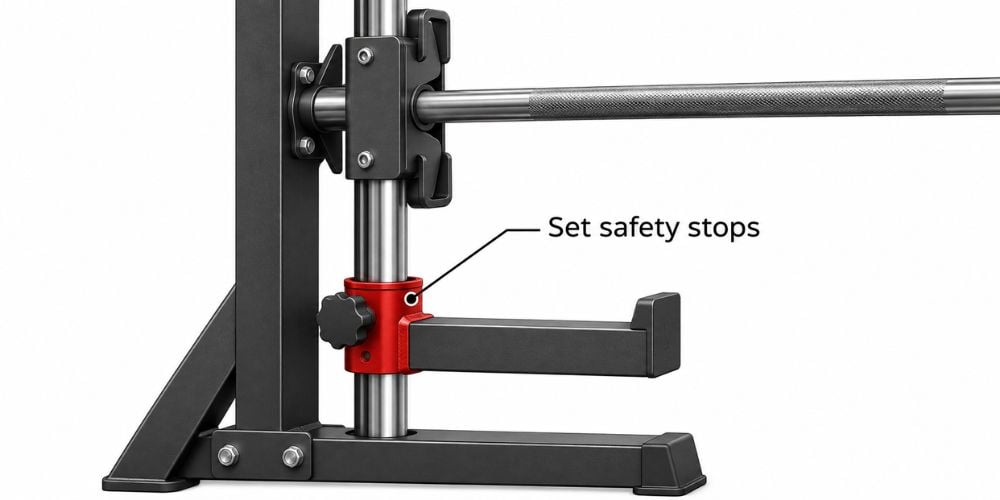
Quick Tip: Keep your shoulder blades stable against the bench and set the safety stops before lifting.
If you’re training alone, take extra care when setting the bar height and safety catches.
A stable bench also helps you maintain a comfortable pressing position. You can see how different adjustments work on this multifunction adjustable bench.
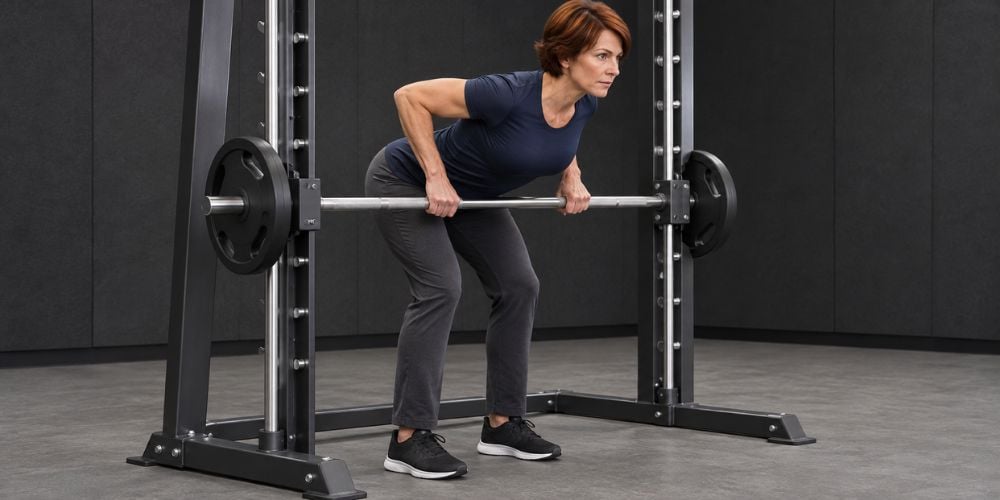
4. Smith Machine Bent-Over Row
The bent-over row targets your lats, rhomboids, and traps. Your biceps also help pull the weight.
This exercise balances the pushing movements in your routine by adding upper-body pulling.
How to Do It:
- Stand facing the bar with your feet hip-width apart.
- Bend your knees slightly and hinge forward at your hips.
- Keep your back neutral and grip the bar.
- Pull the bar toward your lower ribs or upper abdomen.
- Gently squeeze your shoulder blades together.
- Lower the bar slowly.
Sets and Reps: 3 sets of 10–12 reps.
Quick Tip: Keep your torso steady and avoid swinging the weight.
I often see people pulling too quickly during rows. Slowing down makes it easier to maintain your position and focus on your back muscles.
A Smith machine should feel smooth when you move the bar and allow you to lock it securely between sets.
At YR Fitness, we design commercial strength equipment with controlled movement and practical safety features in mind. Our 7333 Smith Machine uses a counterbalanced bar, a patented wrist-turn hook system, and built-in safety features.
Explore the 7333 Smith Machine to see how these features support guided strength exercises like squats, presses, and rows.
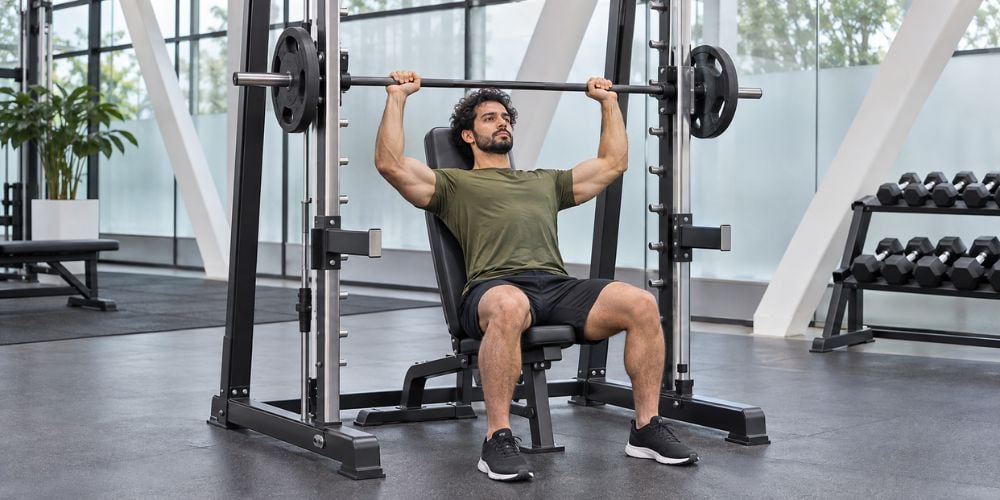
5. Smith Machine Shoulder Press
The Smith machine shoulder press mainly works your front and side deltoids. Your triceps help push the weight overhead.
It’s a good way to add shoulder training to your full-body routine.
How to Do It:
- Place an upright or slightly reclined bench beneath the bar.
- Sit with your back supported and feet flat on the floor.
- Grip the bar slightly wider than shoulder-width.
- Unlock the bar and press upward.
- Lower the bar toward shoulder height as far as feels comfortable.
- Repeat while keeping your core tight.
Sets and Reps: 3 sets of 8–10 reps.
Quick Tip: Adjust the bench so the bar clears your face and follows a comfortable path.
Avoid arching your lower back too much. If the fixed bar path causes shoulder discomfort, stop and adjust your position or choose another exercise.
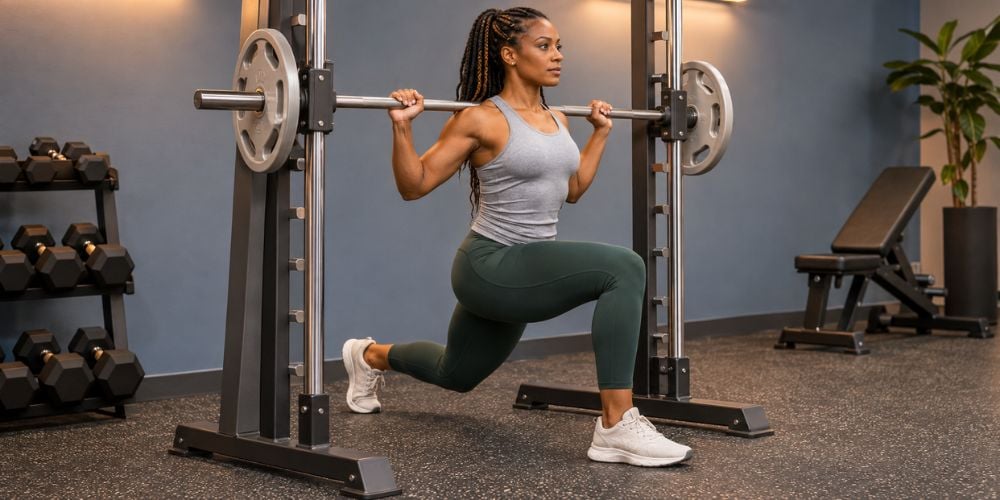
6. Smith Machine Reverse Lunge
The reverse lunge works your quads, glutes, and hamstrings. It also challenges your balance and single-leg control.
Unlike regular squats, lunges let you train each leg separately.
How to Do It:
- Position the bar across your upper back.
- Stand with your feet hip-width apart.
- Unlock the bar and step one leg backward.
- Bend both knees to lower your body.
- Push through your front foot to stand back up.
- Repeat on the other leg.
Sets and Reps: 2 sets of 10 reps per leg.
Quick Tip: Keep your front knee aligned with your toes and take a comfortable step backward.
New to lunges? Practice without added weight first.
Once you can move smoothly and maintain your balance, gradually increase the resistance.
Common Smith Machine Workout Mistakes to Avoid
Even with a guided bar, proper technique still matters.
Here are some common mistakes and simple ways to fix them.
Common Mistake | Why It Matters | What to Do Instead |
Lifting too heavy | Makes proper form harder to maintain | Start lighter and increase gradually |
Rounding your back | Reduces control during hip-hinge movements | Keep your spine neutral |
Moving too quickly | Makes you rely more on momentum | Lift and lower the weight slowly |
Incorrect foot position | Can make squats and lunges uncomfortable | Adjust your stance before lifting |
Arching during shoulder presses | Places unnecessary stress on your lower back | Tighten your core and adjust the bench |
Ignoring safety stops | Leaves less protection if you cannot complete a rep | Set the stops before each exercise |
What matters most? Control your movements instead of focusing only on how much weight you lift.
The Mayo Clinic’s weight-training guidelines also recommend using proper technique, warming up, increasing weights gradually, and stopping exercises that cause pain.
A few habits can make your workout more comfortable:
- Start with lighter weights until your technique improves.
- Adjust the bench and bar height for each exercise.
- Use safety stops when lifting.
- Rest between sets instead of rushing.
- Stop if you feel sharp pain or unusual discomfort.
- Increase resistance gradually as you get stronger.
You don’t need to push every set to exhaustion. Good form and consistent training matter more than lifting the heaviest weight possible.
Conclusion
A Smith machine full-body workout is a practical way to train your major muscle groups without switching between several machines. These seven exercises cover your legs, chest, back, shoulders, arms, and core.
I suggest doing this routine two or three times per week, with rest days between sessions. Keep your movements controlled, choose manageable weights, and focus on gradual improvement.
At YR Fitness, we believe well-designed equipment should support comfortable and consistent strength training. If you want to learn more about the equipment used for these exercises, explore our commercial Smith machine collection and compare the available designs and features.
Related articles: