
Are you over 40 and unsure which gym machines to use first?
Start with five basic strength machines and a stationary bike to build strength, improve fitness, and feel more confident at the gym.
As an Exercise Physiology and Biomechanics Expert at YR Fitness, I recommend starting with light weights and simple, controlled movements. Proper technique and steady progress are more important than lifting heavy.
In this guide, you’ll learn which six machines to use, how to perform each exercise, and how many sets and reps to do. You’ll also get a simple workout plan and practical tips to help you train safely and confidently.
1. Leg Press – Strengthen Your Legs
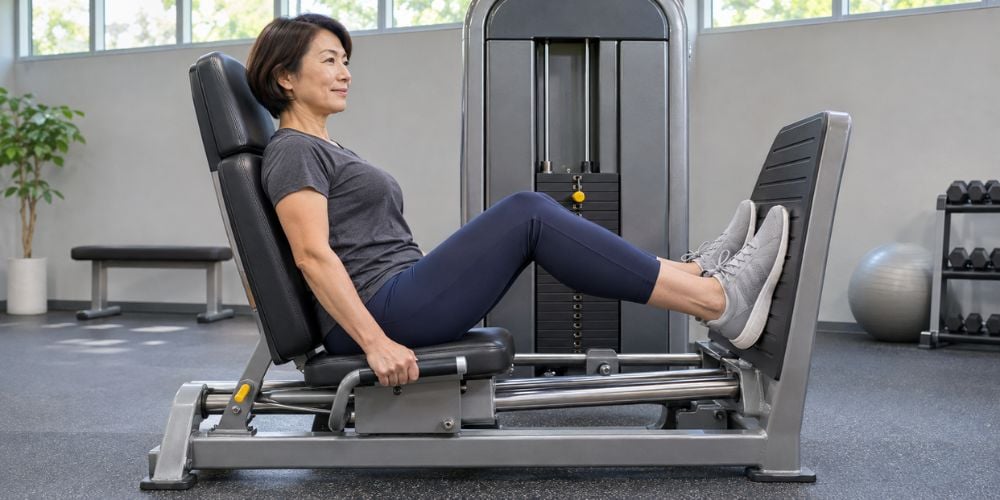
The leg press is a good starting point if you’re new to strength training. It works your quadriceps, glutes, and hamstrings while keeping your back supported.
Unlike standing squats, the seated leg press gives you a stable position. This can make the movement easier to learn.
How to use it:
- Sit with your back resting against the pad.
- Place your feet about shoulder-width apart on the platform.
- Push the platform away until your legs are nearly straight.
- Slowly bend your knees to return to the starting position.
- Keep your knees aligned with your feet throughout the movement.
Recommended workout:
- Sets: 1–2
- Reps: 10–12
- Rest: 60–90 seconds
Beginner tip: Don’t lock your knees or lower the platform so far that your lower back lifts from the seat.
At YR Fitness, we design leg machines with adjustable seating to accommodate different body sizes. For example, this seated leg press has an adjustable seat and moving footplate that support controlled leg movements.
2. Chest Press – Build Upper Body Strength
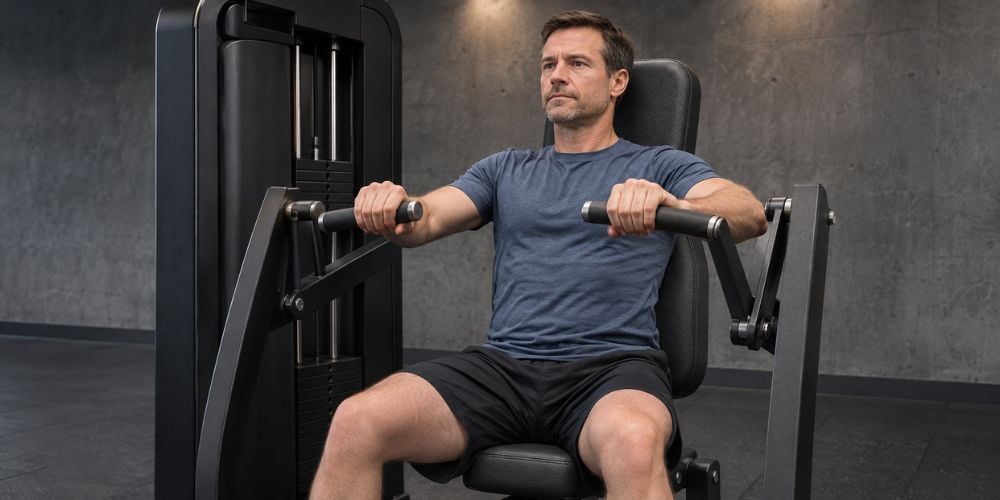
The chest press works your chest, shoulders, and triceps. These muscles help with everyday movements like pushing heavy doors or moving objects away from your body.
It’s also a good choice for beginners because the machine guides your movement and supports your back. An adjustable chest press machine can help you find a comfortable starting position.
How to use it:
- Adjust the seat until the handles are around mid-chest height.
- Sit with your back against the pad.
- Hold the handles while keeping your wrists straight.
- Push forward without locking your elbows.
- Slowly bring the handles back to the starting position.
Recommended workout:
- Sets: 1–2
- Reps: 10–12
- Rest: 60–90 seconds
Beginner tip: Start with a light weight. Keep your back against the pad, and avoid pushing your shoulders forward or arching your lower back.
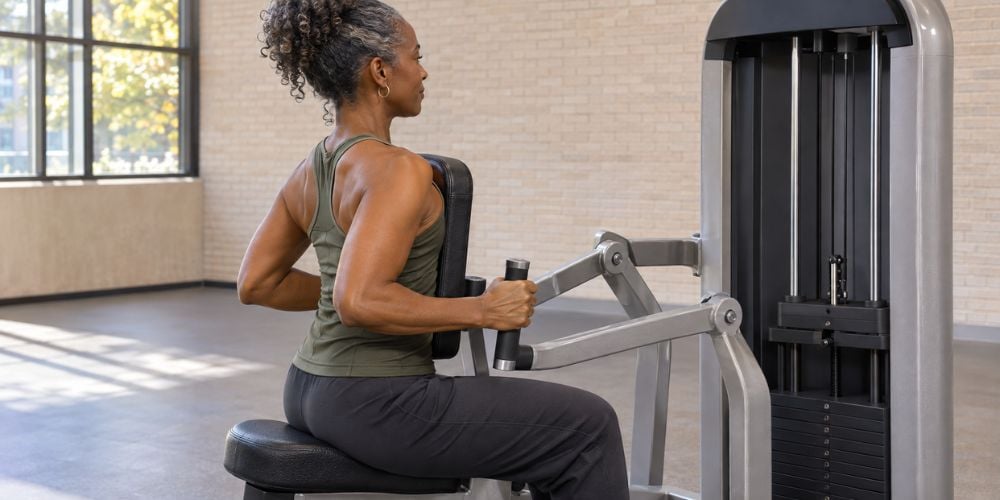
3. Seated Row – Strengthen Your Back
The seated row strengthens your upper back, middle back, and biceps. These muscles help you pull objects toward your body and support good posture.
If you spend a lot of time sitting, this exercise can be a useful addition to your routine.
How to use it:
- Sit on the machine and adjust the seat or chest support if available.
- Hold the handles with your arms extended.
- Keep your chest lifted and shoulders relaxed.
- Pull the handles toward your lower ribs.
- Slowly extend your arms to return to the starting position.
Recommended workout:
- Sets: 1–2
- Reps: 10–12
- Rest: 60–90 seconds
Beginner tip: Don’t lean backward to lift more weight. Keep your body steady and focus on pulling with your back muscles.
4. Leg Curl – Strengthen Your Hamstrings
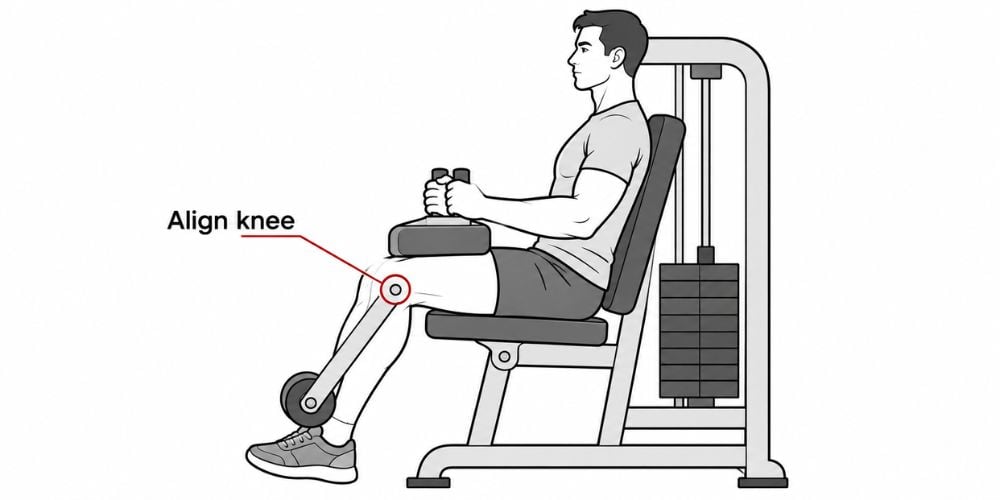
The leg curl works your hamstrings, the muscles at the back of your thighs. These muscles help you bend your knees during activities like walking and climbing stairs.
A seated leg curl is a good option for beginners because it supports your body while you train your legs.
How to use it:
- Sit with your back against the seat.
- Adjust the machine so your knees align with its pivot point.
- Position the lower leg pad just above your heels.
- Secure the thigh pad if the machine has one.
- Bend your knees to move the lower pad downward and backward.
- Slowly return to the starting position.
Recommended workout:
- Sets: 1–2
- Reps: 10–12
- Rest: 60–90 seconds
Beginner tip: Keep your hips against the seat. Move slowly, and don’t force your knees beyond a comfortable range.
5. Lat Pulldown – Improve Upper Back Strength
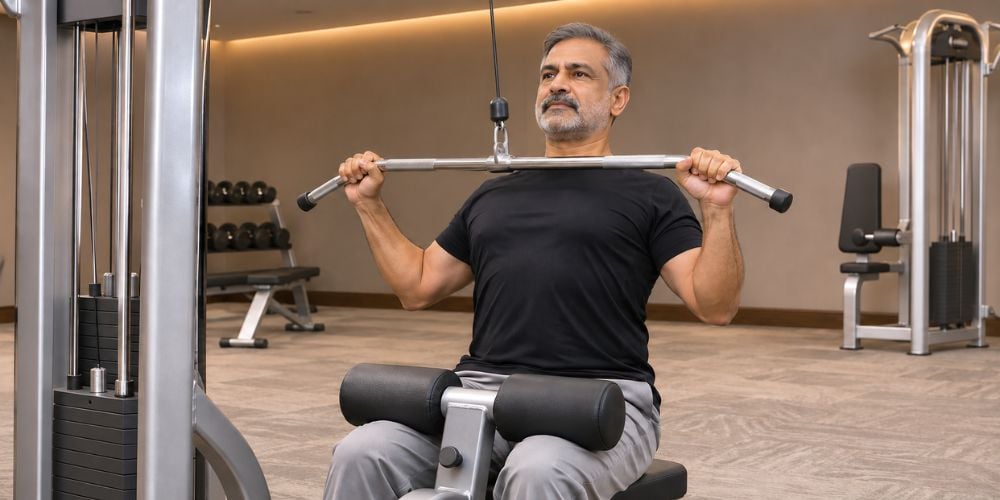
The lat pulldown targets the latissimus dorsi, the large muscles along the sides of your back. It also strengthens your biceps and other upper-back muscles.
If pull-ups feel too difficult, this machine is a good alternative. You can adjust the weight to match your strength.
How to use it:
- Sit on the machine and secure your thighs under the pads.
- Hold the bar slightly wider than shoulder-width.
- Keep your chest lifted and your body steady.
- Pull the bar toward your upper chest.
- Slowly extend your arms as the bar moves back up.
Recommended workout:
- Sets: 1–2
- Reps: 10–12
- Rest: 60–90 seconds
Beginner tip: Avoid pulling the bar behind your neck or swinging backward. Use a comfortable grip and keep the movement controlled.
6. Stationary Bike – Finish With Light Cardio
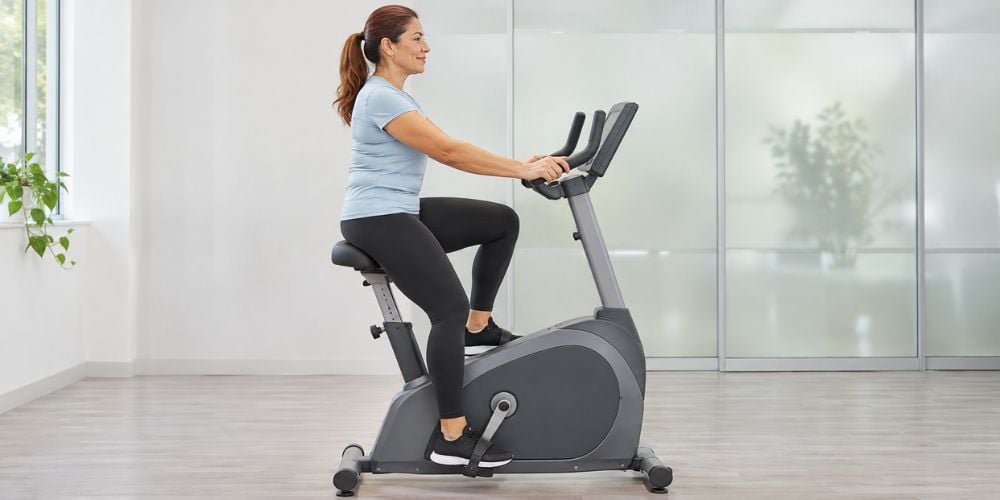
A stationary bike is an easy way to add cardio after your strength workout. It helps improve endurance and works your leg muscles without the impact of running.
You can control the speed and resistance, making it easier to exercise at a comfortable level.
How to use it:
- Adjust the seat so your knee stays slightly bent when the pedal is at its lowest point.
- Sit comfortably and hold the handlebars lightly.
- Start pedaling at a slow pace.
- Increase the resistance slightly if you feel comfortable.
- Keep a steady pace until you finish.
Recommended workout:
- Duration: 5–10 minutes
- Resistance: Low to moderate
- Pace: Comfortable enough to speak in full sentences
Beginner tip: I suggest starting with easy cycling instead of intense intervals. As your fitness improves, you can slowly increase your cycling time.
Not sure if you’re cycling too hard? The CDC’s guide to exercise intensity explains that during moderate cardio, you should still be able to talk, even if your breathing gets faster.
How to Follow This Beginner Workout
You don’t need a long workout to start getting stronger. A simple routine using the same machines each session is enough to get started.
Here’s a full-body workout you can follow.
Exercise | Sets | Repetitions |
Leg Press | 1–2 | 10–12 |
Chest Press | 1–2 | 10–12 |
Seated Row | 1–2 | 10–12 |
Leg Curl | 1–2 | 10–12 |
Lat Pulldown | 1–2 | 10–12 |
Stationary Bike | — | 5–10 minutes |
How to structure your workout:
- Warm-up: Start with 5–10 minutes of easy walking or cycling.
- Strength training: Complete the five strength exercises in order.
- Rest: Take 60–90 seconds between sets, or longer if needed.
- Cardio: Finish with 5–10 minutes on the stationary bike.
- Cool-down: Walk or move slowly for another 3–5 minutes.
If you’re completely new to the gym, start with one set per strength exercise. Add a second set once the movements feel comfortable.
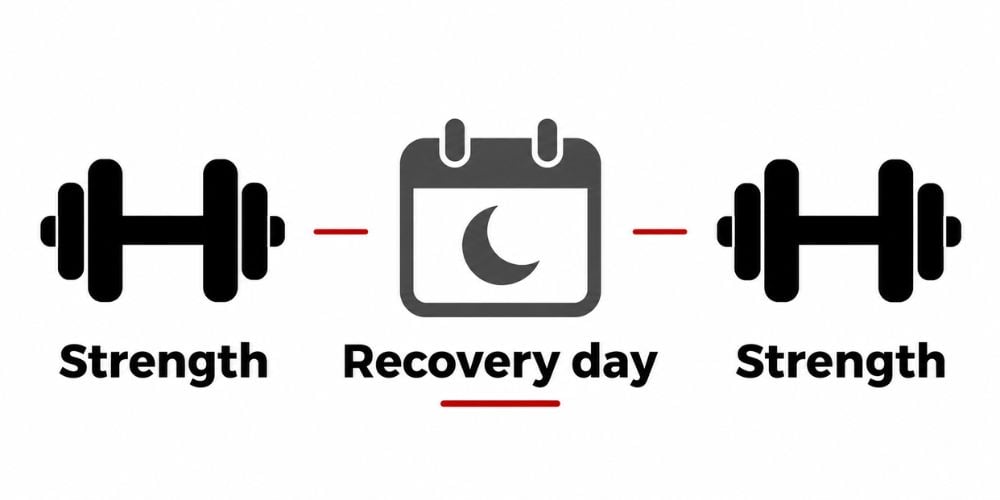
Aim for two or three workouts per week. Leave at least one recovery day between strength sessions so your muscles have time to recover.
According to the CDC’s physical activity guidelines, adults should aim for at least 150 minutes of moderate aerobic activity and two days of muscle-strengthening exercise each week.
Your short bike session is a good starting point. Gradually add more walking, cycling, or other activities throughout the week as your fitness improves.
Conclusion
Starting a gym workout after 40 doesn’t need to be difficult. Five strength machines and a stationary bike can help you build a simple, balanced routine.
Start with light weights, learn proper form, and give yourself time to improve. You can also explore YR Fitness stationary bikes to see different cardio equipment options.
Related articles: