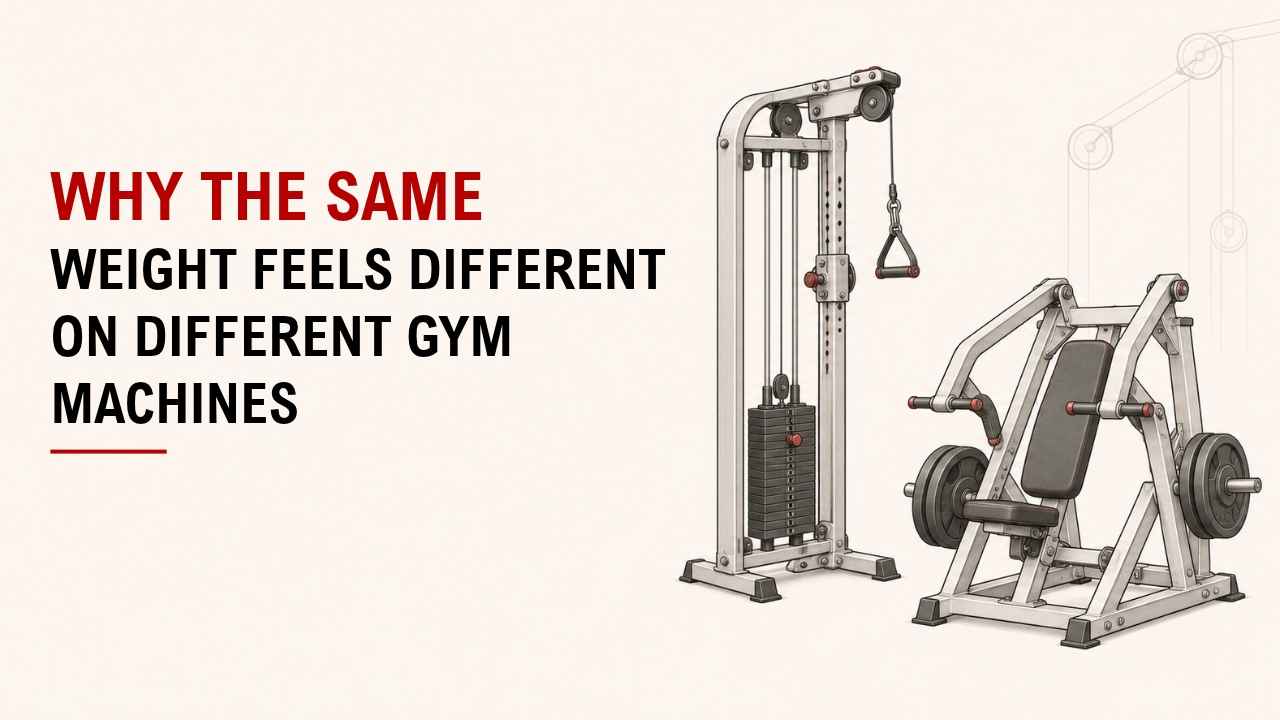

Have you ever used 40 kg on one machine, then moved to another and found the same 40 kg much harder? You are not imagining it.
The short answer is: pulley ratios, leverage, cams, friction, cable routing, and your starting position can all change how heavy a machine feels. The number on the weight stack does not always equal the resistance your body actually experiences.
As an Exercise Physiology & Biomechanics Expert at YR Fitness, I study how machine mechanics affect force, movement, and joint loading. I often see people think they have become weaker when they have simply switched to a machine with different mechanics.
Below, I’ll show you the six main reasons the same weight can feel different. Once you understand them, choosing your training weight becomes much easier.
1. Different Pulley Ratios Change the Resistance
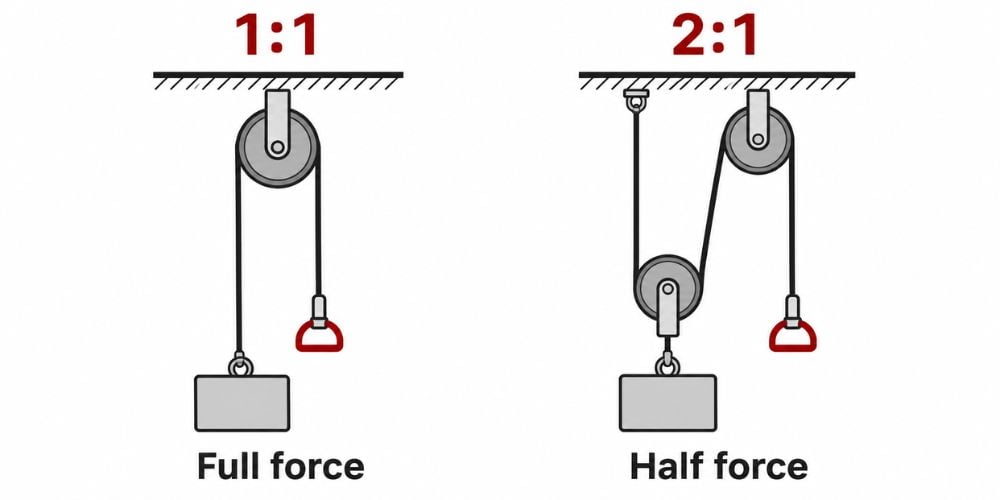
Pulley systems can make a big difference in how heavy a weight feels.
On a 1:1 pulley system, the resistance at the handle is relatively close to the weight being moved.
On a 2:1 pulley system, the handle may require roughly half the force while giving you more cable travel.
Pulley Setup | 40 kg on the Stack | What You May Notice |
1:01 | Close to full resistance | Heavier feel, shorter cable travel |
2:01 | Roughly 20 kg at the handle* | Lighter feel, more cable travel |
*Before considering friction and other machine design factors.
This is common on cable machines and functional trainers.
Should you compare the stack numbers directly?
Not always. I recommend treating each cable station as its own exercise instead of assuming 30 kg on one machine equals 30 kg on another.
2. Machine Leverage Changes How Heavy Weight Feels
Pulley ratios are only part of the story.
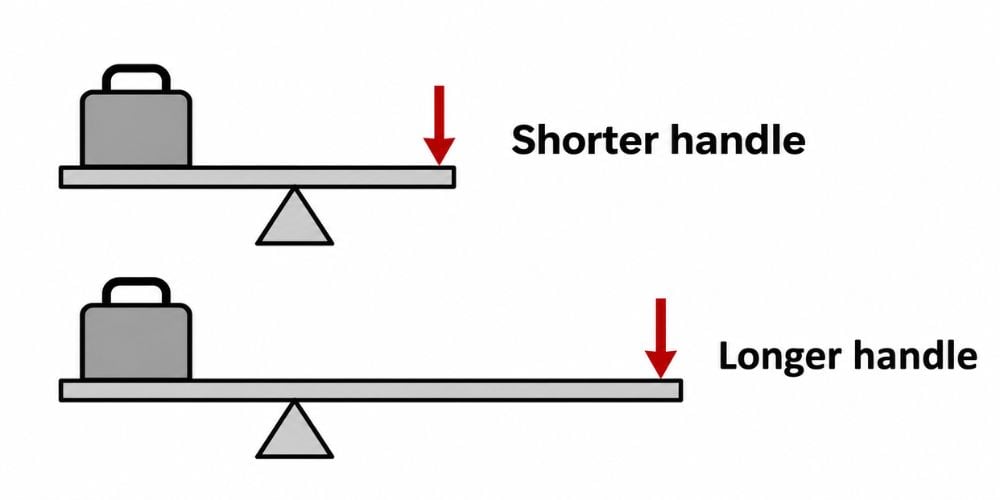
Many strength machines use lever arms that rotate around a pivot point. The distance between the weight, pivot, handles, and your joints affects how much force you need.
Think about opening a door. Pushing near the handle is easier than pushing close to the hinges, even though the door itself has not changed weight.
Gym machines use similar mechanical principles.
Research on selectorized strength-machine biomechanics shows that machine geometry, cams, levers, the weight stack, and the user’s limb movement all affect the force produced during an exercise.
That is why two chest press machines may both be set to 50 kg, yet one can feel noticeably harder.
I pay more attention to how resistance feels through movement than to the number printed on the stack.
3. Cams Can Change Resistance During the Movement
Does a machine feel easy at the start but harder halfway through repetition? A cam may be one reason.
A cam is a specially shaped part that changes the machine’s leverage as it rotates. This can increase or decrease the mechanical demand at different points in the movement.
Here is why this matters.
Your muscles are not equally strong at every joint angle. A cam can be designed to change resistance as you move through exercise.
For example, your muscles may be stronger in one part of a leg extension and weaker in another.
Research comparing cams and pulleys found that changing the resistance moment arm can change torque and movement performance even when the selected load remains the same.
So the same stack weight does not necessarily create the same challenge throughout repetition.
At YR Fitness, we pay attention to movement paths, pulley systems, and resistance mechanics because a good machine should do more than simply feel heavy. You can explore our commercial gym equipment to compare different strength-machine designs and see how their layouts differ.
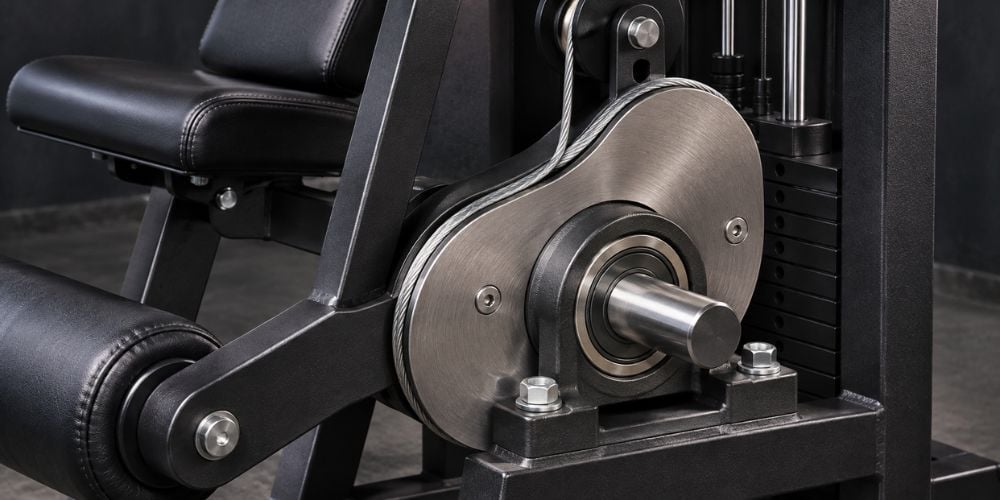
4. Friction Adds Extra Resistance
Not all resistance comes from the weight stack.
Friction can also come from:
- Pulleys
- Bearings
- Guide rods
- Cables
- Bushings
- Moving joints
A clean, well-maintained machine usually moves more smoothly. A machine with worn parts, dirty guide rods, or stiff bearings may require more force.
That means a 40 kg stack on an older machine can sometimes feel harder than 40 kg on a smoother one.
I often notice this when moving between older equipment and newer machines. What feels like “more weight” can sometimes be extra mechanical resistance.
Quick Check
Ask yourself:
Is the weight challenging my muscles, or does the machine simply feel rough and sticky?
Good resistance should usually feel controlled rather than jerky.
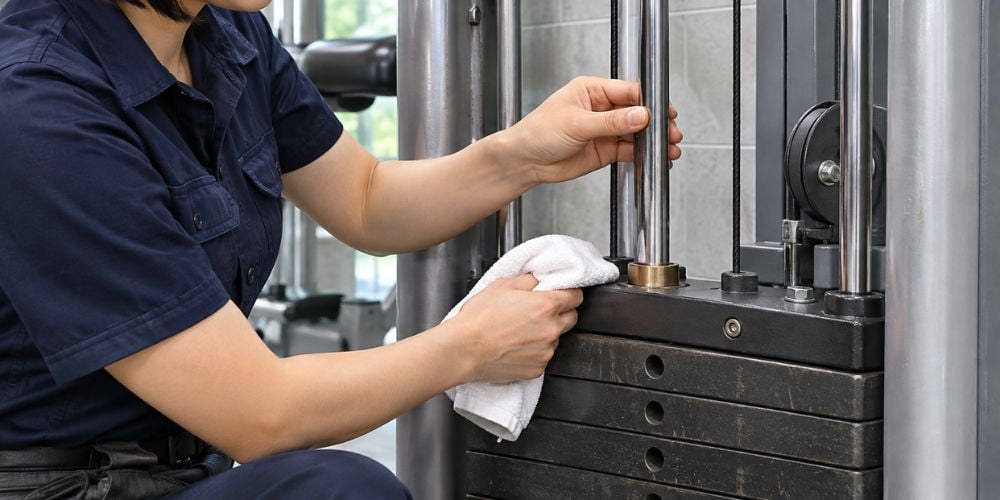
5. Cable Routing and Pulling Angle Matter
The path of the cable also changes how exercise feels.
A cable may pass through several pulleys before reaching the handle. The number of pulleys, their position, and the direction of the cable all affect how resistance reaches you.
The pulling angle matters too.
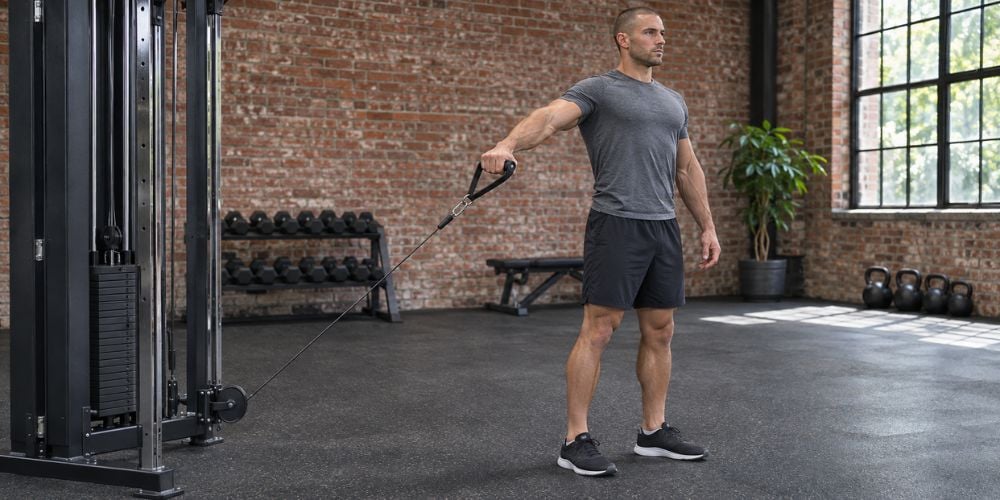
For example, compare a cable lateral raise with the cable coming directly from your side versus slightly behind you. The weight stack may stay the same, but the direction of force at your shoulder changes.
That can affect:
- Where exercise feels hardest
- Which muscles contribute most
- How much torque reaches the joint
- How stable you feel
This is why two cable stations can feel different even at the same weight.
What Changes? | Why It Matters | What You May Feel |
Pulley ratio | Changes force at the handle | Weight feels lighter or heavier |
Lever length | Changes mechanical advantage | Different effort at the same stack weight |
Cam shape | Changes resistance through the rep | Harder and easier points shift |
Friction | Adds mechanical resistance | Machine feels heavier or less smooth |
Cable angle | Changes force direction | Exercise feels different at the joint |
Machine setup | Changes your leverage | Same weight becomes easier or harder |
6. The Machine’s Starting Position Changes Exercise
Sometimes the machine itself is not the main reason the weight feels harder.
Your setup can change it too.
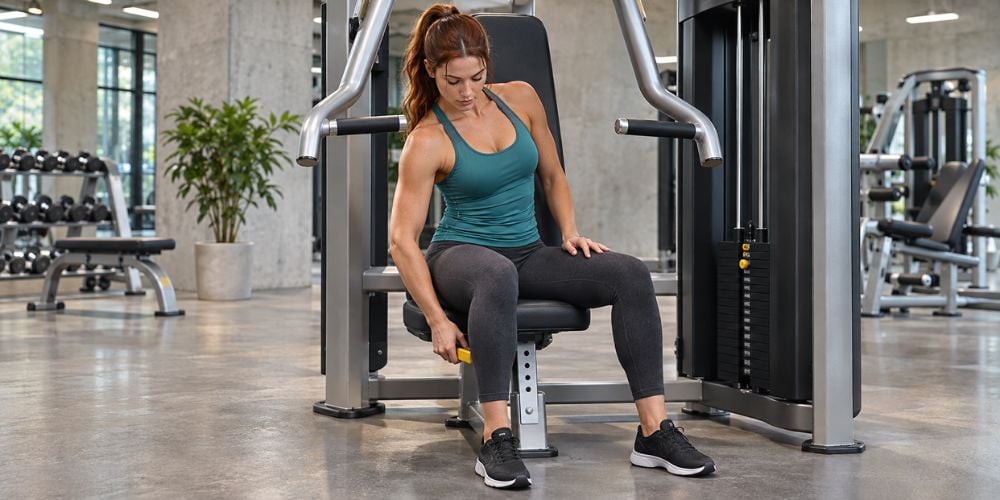
Seat height, handle position, pad position, and starting angle can all change your leverage before you begin the first repetition.
Take a chest press.
If the handles start too far behind your body, your shoulders may begin in a weaker position. The same weight can immediately feel harder.
Adjust the seat, and the resistance may become much easier to control.
Biomechanical research on lever-machine geometry and joint loading also shows that the relative positions of the joint, resistance pad, and machine pivot can affect muscle torque and joint loading.
The same basic idea applies to:
- Leg presses
- Shoulder presses
- Rows
- Leg extensions
- Leg curls
- Pec deck machines
Before reducing weight, I usually check the setup first.
Conclusion
Why does the same weight feel different on different gym machines? Pulley ratios, leverage, cams, friction, cable routing, and your starting position all change how resistance reaches your body.
Do not judge your progress only by the number on the stack. I find it more useful to compare your repetitions, technique, control, and progress on the same machine over time.
At YR Fitness, we design commercial strength equipment with movement paths and resistance mechanics in mind so training feels controlled and consistent. If you want to compare different machine layouts for yourself, browse the YR Fitness equipment range and look at how the pulley systems, pivots, and movement paths differ.
Related articles: