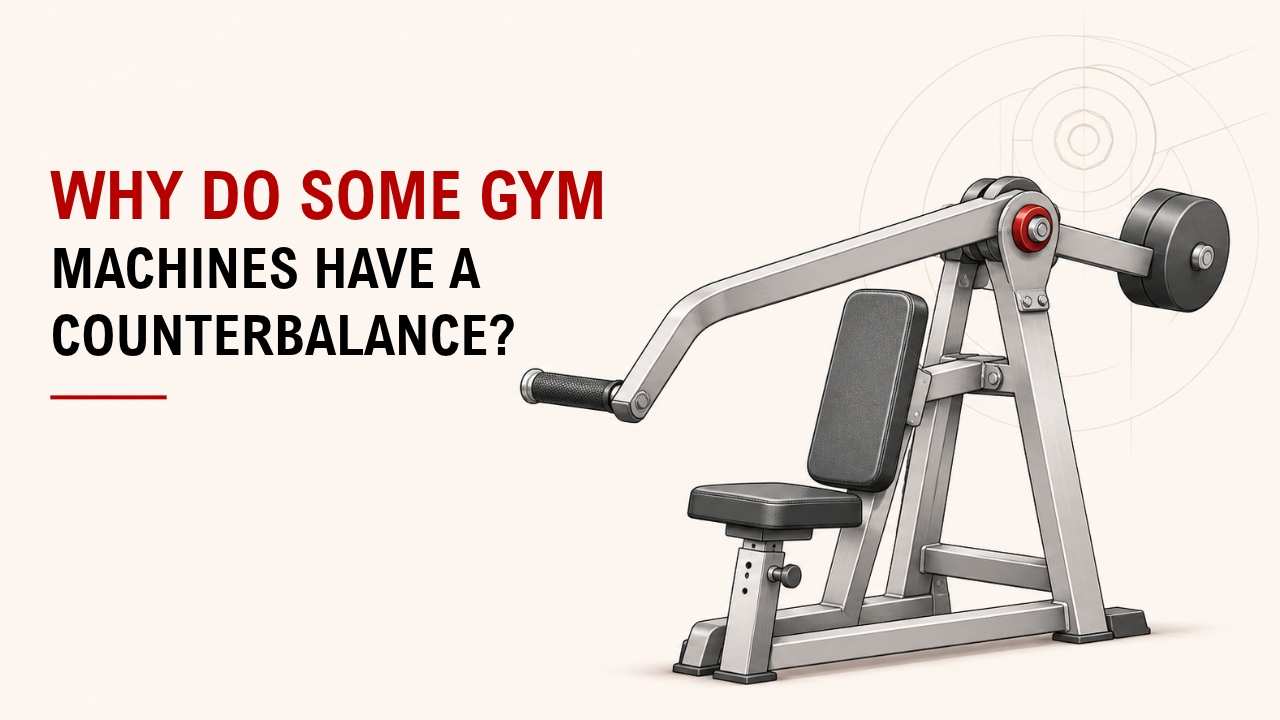

Have you ever moved the arm of a gym machine and wondered why it feels much lighter than it looks? That lighter feel may come from a counterbalance hidden inside the machine.
The short answer is: a counterbalance offsets part of the machine arm’s weight, reduces starting resistance, and helps the movement feel smoother. It can also make the machine easier to position and control.
As a Machinery & Structural Engineer at YR Fitness, I work with pivots, lever arms, moving parts, and resistance systems that affect how strength equipment feels. I often see small mechanical details make a surprisingly noticeable difference during a workout.
Below, I’ll explain the six main reasons manufacturers use counterbalances. Keep scrolling, and you’ll quickly understand what this feature is doing while you train.
1. To Reduce the Weight of the Machine Arm
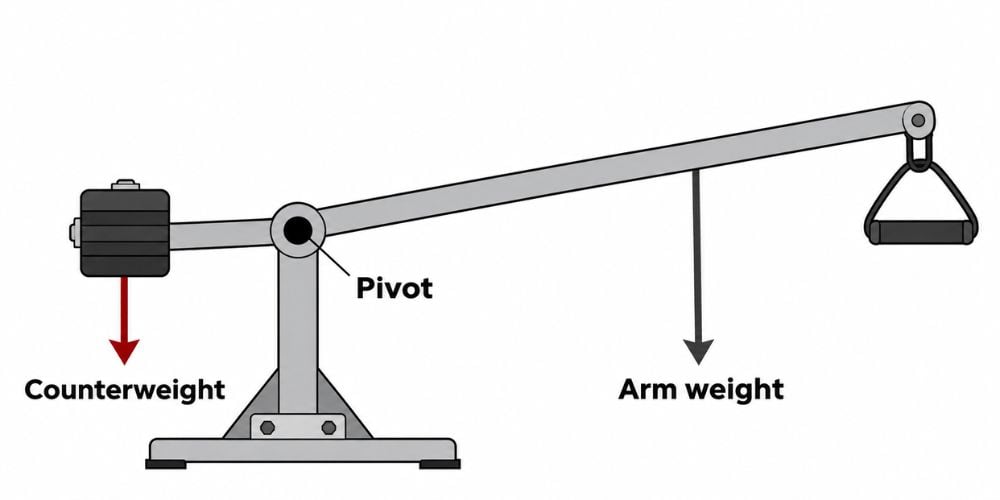
Machine arms, handles, and pads have their own weight before you add any training resistance.
A counterbalance offsets part of that weight.
For example, imagine a machine’s arm naturally weighs 15 kg. Without counterbalancing, you would need to move that 15 kg before even considering the resistance you selected.
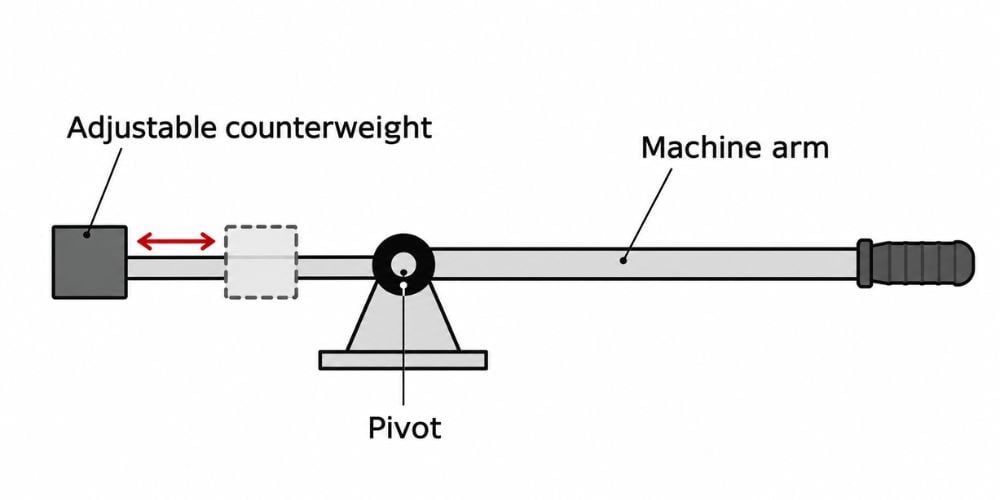
This is not just theory. One documented chest press counterweight system uses counterweights to overcome the weight of the exercise arms and keep the handles in their starting position.
I notice this effect most on machines with long lever arms. Without some balancing, the machine can feel unnecessarily heavy from the first centimeter.
Why does this matter?
You can focus more on exercise instead of fighting the weight of the machine itself.
2. To Make the Starting Resistance Lighter
Some exercises begin where your muscles have less mechanical advantage.
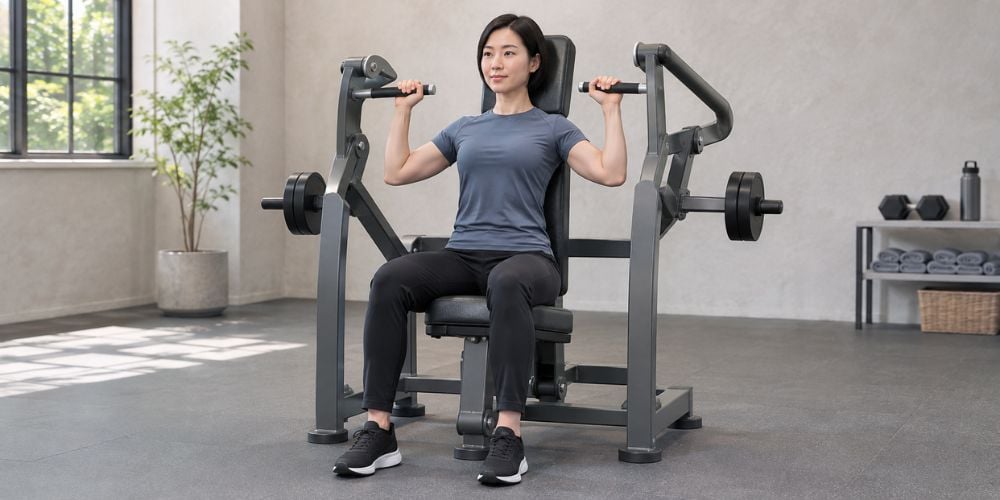
Think about the bottom of a shoulder press or the starting position of some chest press machines. If the machine arm is already heavy, that first push can feel much harder than the rest of the repetition.
A counterbalance can reduce that initial load.
What You Notice | Why It Helps |
Light settings actually feel light | Better for lighter training loads |
Warm-ups feel easier | Less extra arm weight to overcome |
Starting the rep feels smoother | Less abrupt initial resistance |
Beginners can control the machine more easily | Lower unnecessary starting load |
It does not remove the resistance you selected. It mainly reduces the extra resistance coming from the machine’s moving parts.
3. To Make the Movement Feel Smoother
A strength machine should not feel like you are suddenly pushing a heavy metal arm before the exercise really begins.
Counterbalancing helps manage the weight of those moving components. The transition into the main part of repetition can then feel smoother.
I usually explain it this way: you should feel the training resistance, not the machine structure getting in your way.
But counterbalance is only one part of the system. Machine feel can also depend on:
- Pivot location
- Lever length
- Pulley systems
- Cams
- Bearings
- Counterbalances
Research on variable-cam resistance machines also shows that machine design can change the torque applied across different joint angles. That helps explain why two machines for the same exercise may feel quite different.
At YR Fitness, we look at movement angles, lever systems, pivots, and resistance design together rather than focusing only on the weight stack. If you want to compare how different strength-machine layouts are built, explore our commercial gym equipment range.
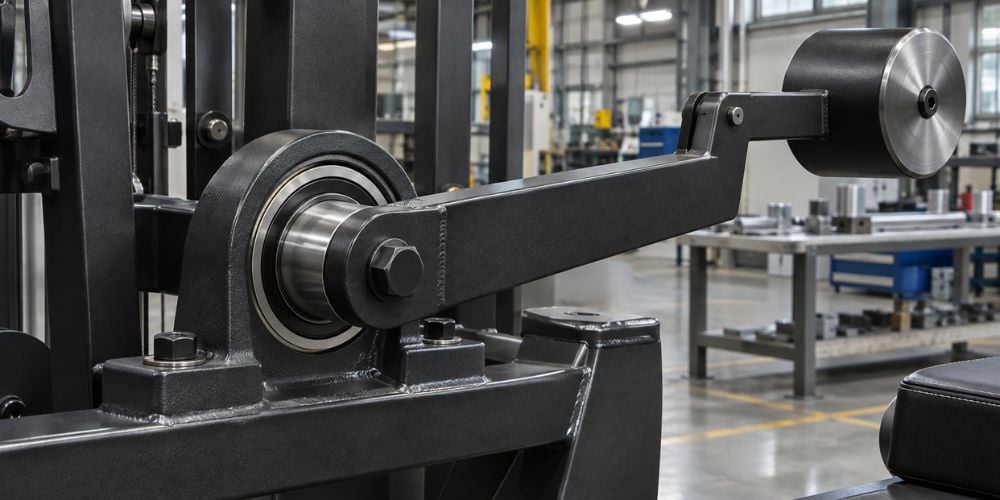
4. To Help Users Get Into Position
Have you ever had to wrestle with a heavy handle or lever before you could even start your set?
Some machines require you to move a pad, handle, or arm into position first. A counterbalance makes those moving parts easier to handle.
It can help when:
- Moving handles into the starting position
- Adjusting a lever before sitting down
- Getting under a shoulder or pressing pad
- Returning the machine to its resting position
I often see people notice this benefit without knowing what causes it. The machine simply feels easier to set up.
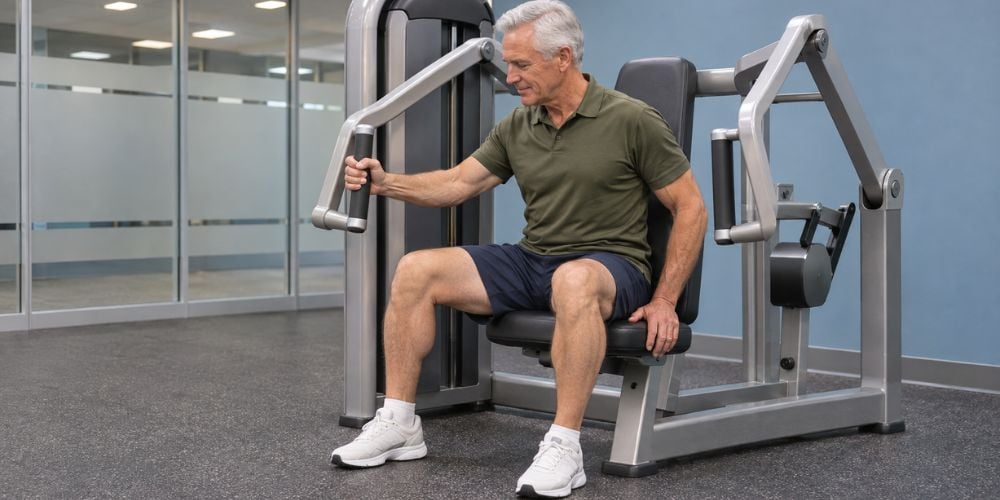
5. To Improve Control When Returning Weight
Counterbalances also affect the lowering phase.
Without balancing, gravity can pull a heavy machine arm back toward its resting position more strongly. That can make the return feel less controlled.
A counterbalance reduces some of that effect.
A documented adjustable exercise-machine counterweight system, for example, changes how strongly an arm drops toward its resting position. Moving the counterweight can reduce downward force and make the return slower and easier to control.
Can you relax on the way down?
No. You should still control resistance through full repetition.
When I assess machine movement, I always pay attention to both directions. A machine should feel controlled when you push or pull and when you return to the starting position.
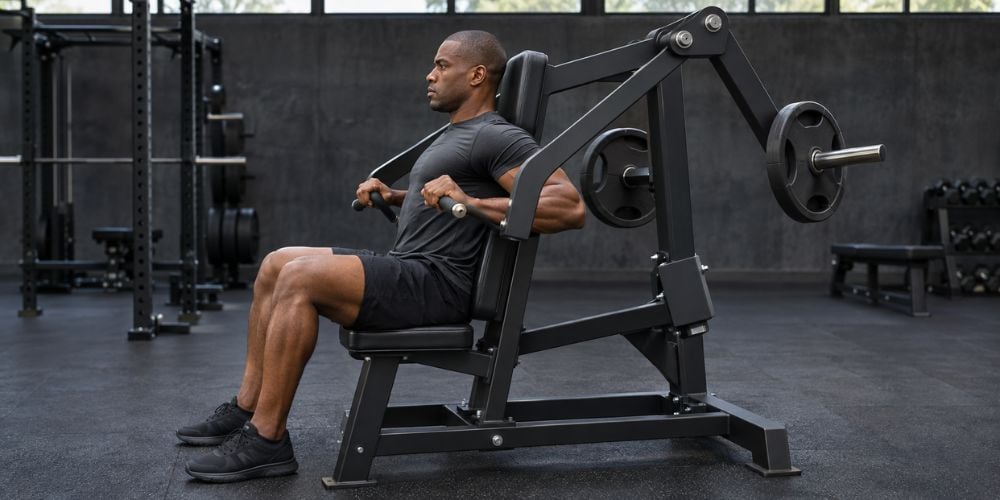
6. To Give the Manufacturer More Control Over Resistance
The number printed on the weight stack is not the only thing deciding how heavy a machine feels.
Several mechanical factors work together:
Design Factor | What It Changes |
Lever length | How much force you need |
Pivot position | Mechanical advantage |
Cam shape | Resistance through the movement |
Pulley ratio | Effective resistance |
Machine arm weight | Starting resistance |
Counterbalance | How much arm weight you actually feel |
By adjusting these parts together, engineers can create a more specific resistance curve.
For example, a machine can use a large, strong steel arm for durability while still offering a light starting resistance. A properly designed counterbalance helps make that possible.
This is also why 50 kg on one machine may not feel exactly like 50 kg on another. The number on the weight stack is only one part of the system.
So when you try a new machine, notice three things:
How does the first repetition feel?
It should not be unexpectedly heavy just because of the machine arm.
Does resistance change smoothly?
Sudden changes can make one part of the movement feel very different from another.
Can you control the return?
The arm should not feel like it is pulling you rapidly back toward the starting position.
Conclusion
A counterbalance mainly offsets the weight of moving machine parts, reduces unnecessary starting resistance, and gives engineers more control over movement feel. That can make the machine easier to set up, smoother to use, and easier to control.
From my experience with gym equipment mechanics, small features like this can make a big difference in how natural a machine feels.
If you want to compare different strength-machine designs, browse YR Fitness commercial equipment and look closely at how each machine handles movement, resistance, and user setup.
Related articles: