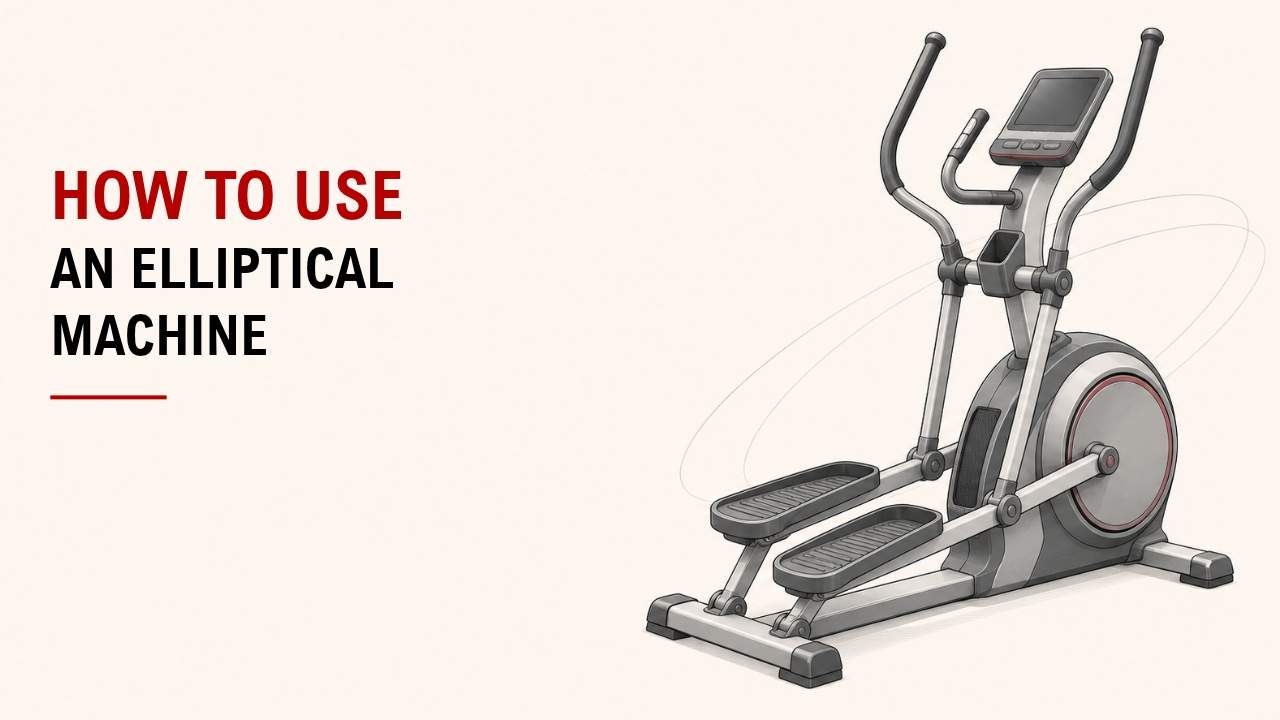

Not sure how to use an elliptical correctly? The key is to stay balanced, start slowly, and keep your movement smooth.
The short answer is simple: step on carefully, stand tall, use light resistance, and increase the challenge gradually. Good control matters more than speed.
As an Exercise Physiology & Biomechanics Expert at YR Fitness, I work closely with cardio movement, posture, and how the body interacts with exercise equipment. I often see beginners feel much more comfortable once they fix a few simple form mistakes.
Below, I’ll show you the basic steps to use an elliptical safely and comfortably.
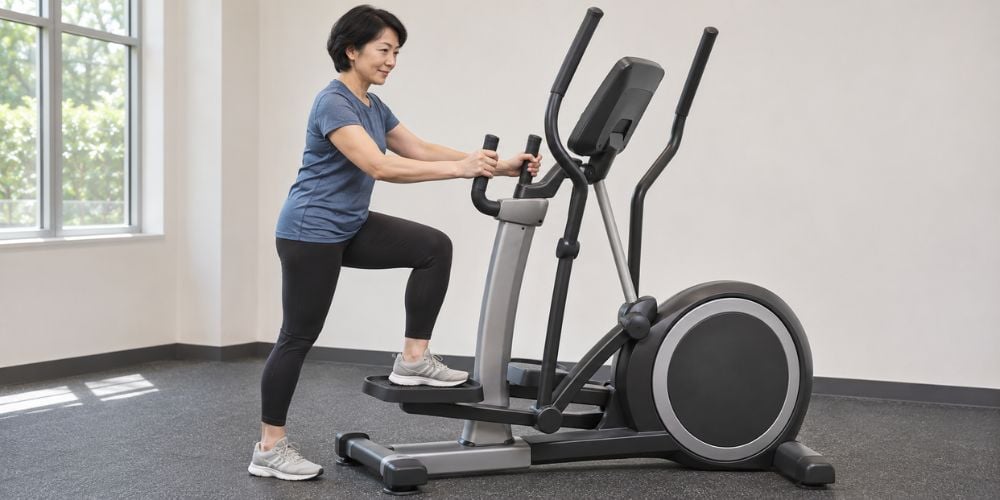
1. Step Onto the Elliptical Carefully
Start by holding the stationary handles.
Place one foot on the lower pedal, then step onto the other pedal. Keep both feet centered before you start moving.
Why take it slowly? The pedals can move as soon as you put your weight on them.
I always suggest taking an extra second here instead of rushing. The American Council on Exercise also recommends holding the non-moving handrails while getting onto an elliptical because the pedals or handles may begin moving under your body weight.
2. Set Your Starting Position
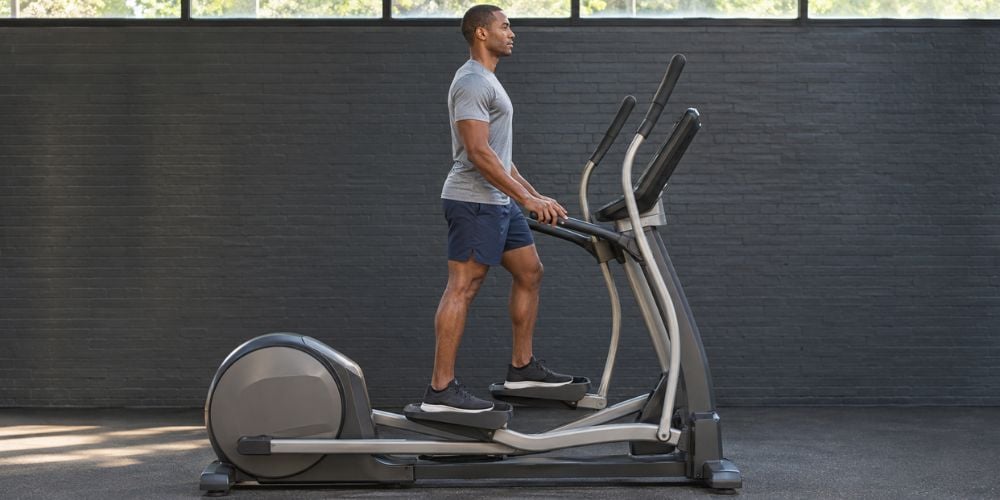
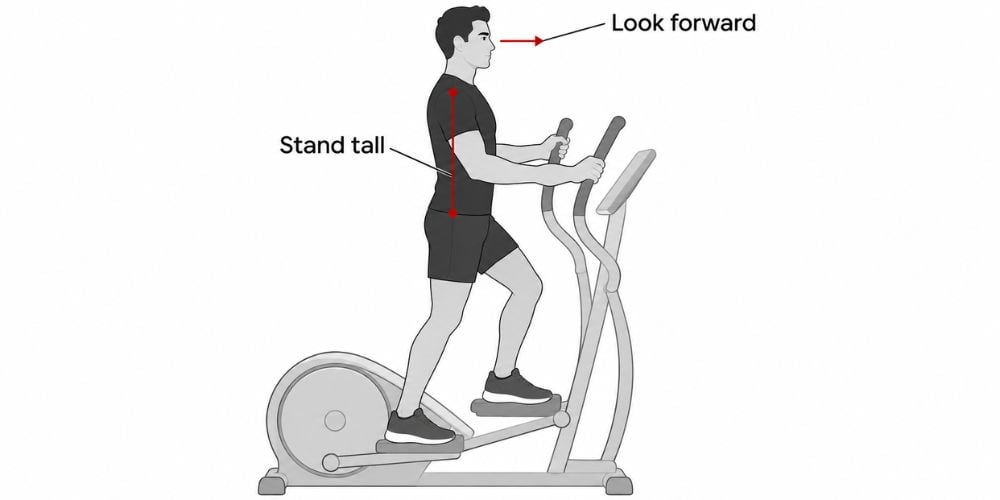
Before you start pedaling, check your posture.
- Stand tall.
- Look straight ahead.
- Relax your shoulders.
- Keep a slight bend in your knees.
- Place your hands lightly on the handles.
Your body should feel balanced, not supported by the machine.
Avoid leaning your full weight onto the handles. Harvard Health also recommends staying upright, keeping the feet flat, and avoiding an overly tight grip on the handles.
Quick Elliptical Form Check
Body Part | What to Do | What to Avoid |
Head | Look forward | Looking down constantly |
Shoulders | Keep relaxed | Shrugging upward |
Hands | Use a light grip | Squeezing tightly |
Core | Keep slightly engaged | Slouching |
Knees | Keep softly bent | Locking the knees |
Feet | Keep stable on pedals | Rising onto your toes |
3. Start Pedaling Slowly
Begin with a slow forward motion.
Do not worry about speed yet. Focus on making each stride smooth and continuous.
Keep your feet in contact with the pedals and let your body settle into the movement.
I usually suggest spending the first 2–5 minutes at an easy pace. It gives you time to warm up and find a natural rhythm before increasing the workload.
Feel unsteady? Slow down rather than trying to fight the machine.
The goal is control first. Speed comes later.
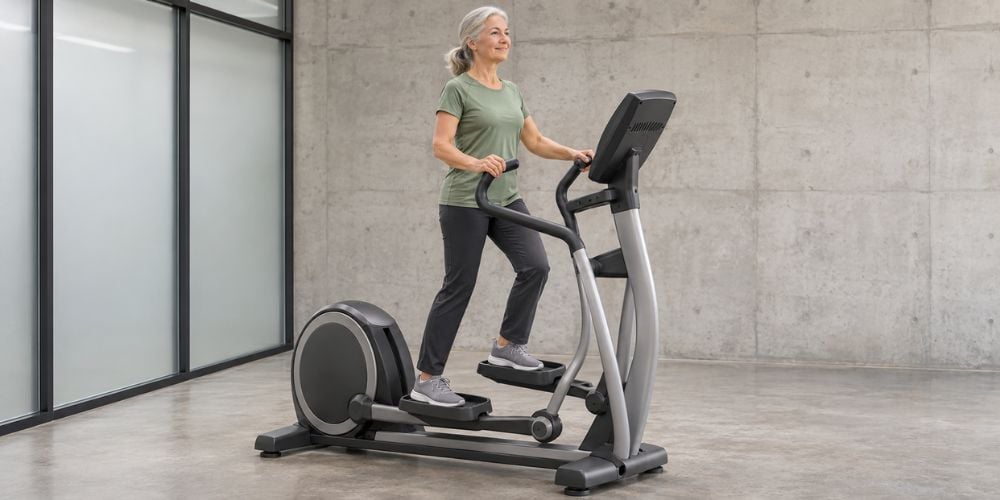
4. Use the Moving Handles
Once your legs feel comfortable, add the moving handles.
Push one handle forward while pulling the other one back. Your arms and legs should work together in a steady rhythm.
Keep your grip relaxed.
Think of your arms as helping the movement rather than controlling the entire machine.
What if coordinating everything feels difficult?
Start with your legs first. Once that feels natural, add your arms.
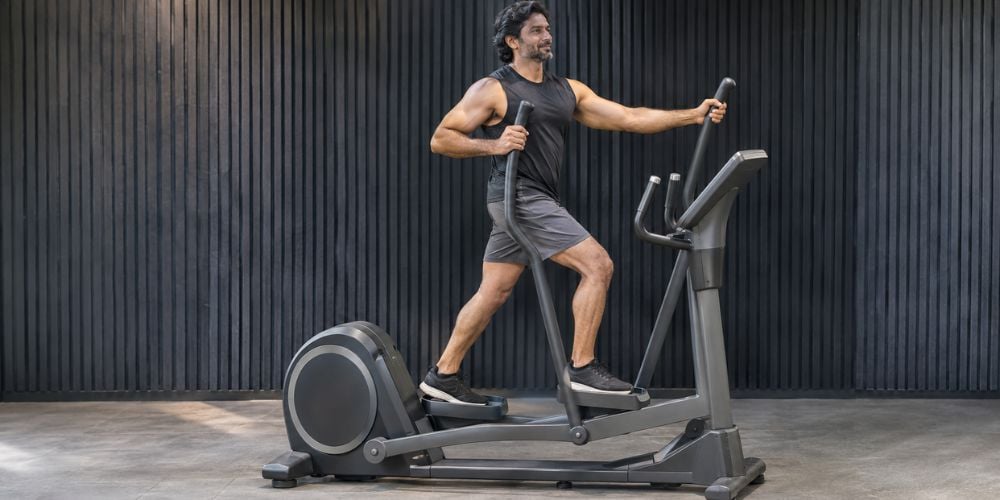
5. Choose Your Resistance
Start with low resistance.
Once your movement feels comfortable, increase it gradually.
The right resistance should make your muscles work while still allowing you to maintain good posture and control.
Simple Resistance Guide
Resistance | Best For | How It Should Feel |
Low | Warm-up or beginners | Easy and smooth |
Moderate | Regular cardio | Challenging but controlled |
High | Short harder intervals | Difficult but still controlled |
Are you pedaling very fast with almost no resistance?
Add a little resistance. Each stride should feel controlled instead of loose.
The CDC describes moderate-intensity aerobic activity as exercise that makes you breathe harder and raises your heart rate. Adults can work toward 150 minutes of moderate-intensity activity per week, but you can spread that time across several sessions.
Smooth resistance and a stable frame can make cardio training feel much more controlled, especially during longer sessions. At YR Fitness, we design commercial cardio equipment for stable movement and repeated daily use, so you can explore our equipment if you want to compare how professional machines are built.
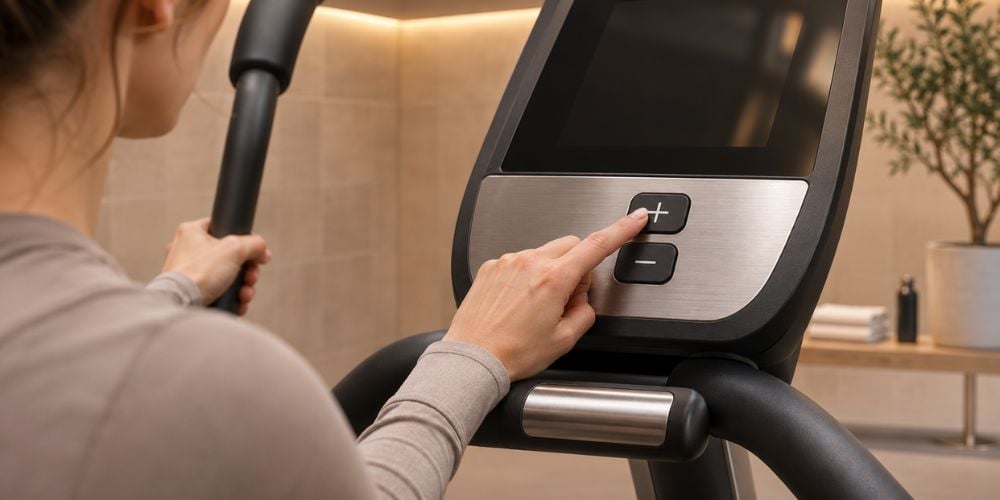
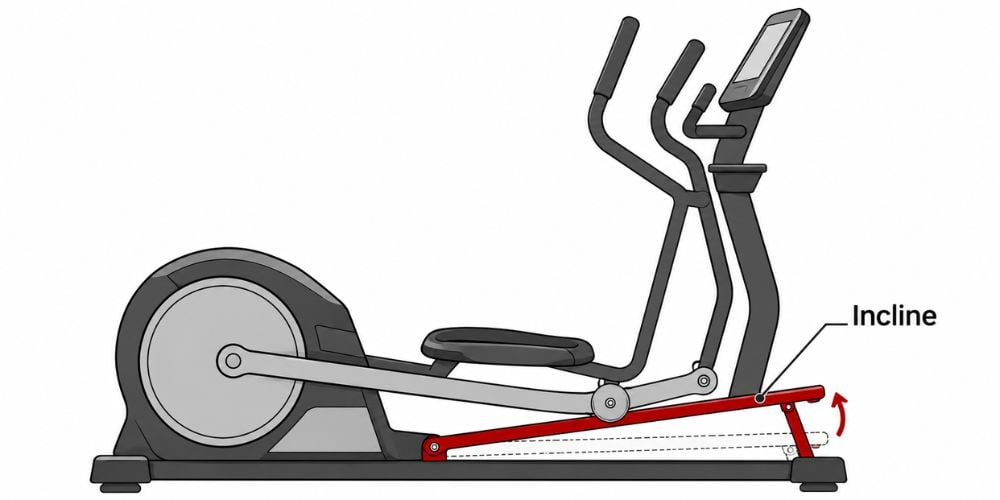
6. Adjust the Incline If Available
Some elliptical machines let you change the incline.
If you are new to the machine, start with a lower incline.
Increase it gradually when you want more challenge. A higher incline can change how the movement feels through your legs and hips.
Here is why this matters: increasing resistance and incline together can make the workout much harder very quickly.
Change one setting at a time, then see how your body responds.
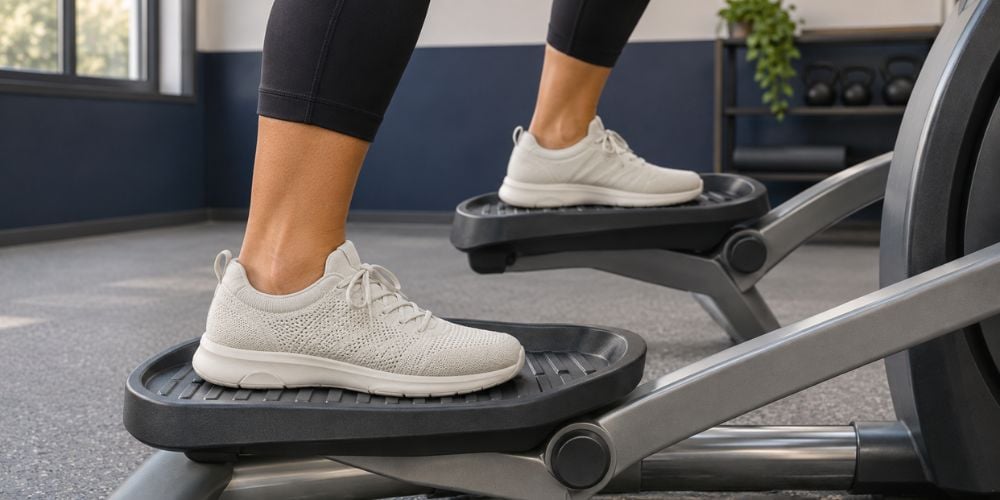
7. Keep Your Feet Flat
Keep most of your feet in contact with the pedal.
Try not to stay up on your toes throughout every stride.
Your heels may lift slightly depending on the machine and your natural movement, but your feet should still feel stable.
Also watch your knees.
They should generally track in the same direction as your feet instead of collapsing inward.
I often see this small adjustment make the entire stride feel smoother.
8. Maintain Good Posture
Keep your chest up and look forward.
Try to avoid:
- Rounding your back
- Looking down constantly
- Leaning heavily on the handles
- Locking your knees
- Rocking from side to side
Your movement should feel smooth from your upper body down to your feet.
What if your form starts falling apart?
Reduce your speed or resistance. Good form matters more than making the numbers on the console higher.
Final Thoughts
Using an elliptical does not need to be complicated. Step on carefully, stand tall, start slowly, use the handles naturally, and add resistance only when you feel in control.
At YR Fitness, we focus on commercial cardio equipment designed for smooth movement, stable daily use, and comfortable training. If you want to compare professional cardio equipment, explore our options and find a setup that fits how you want to train.
Related articles: