


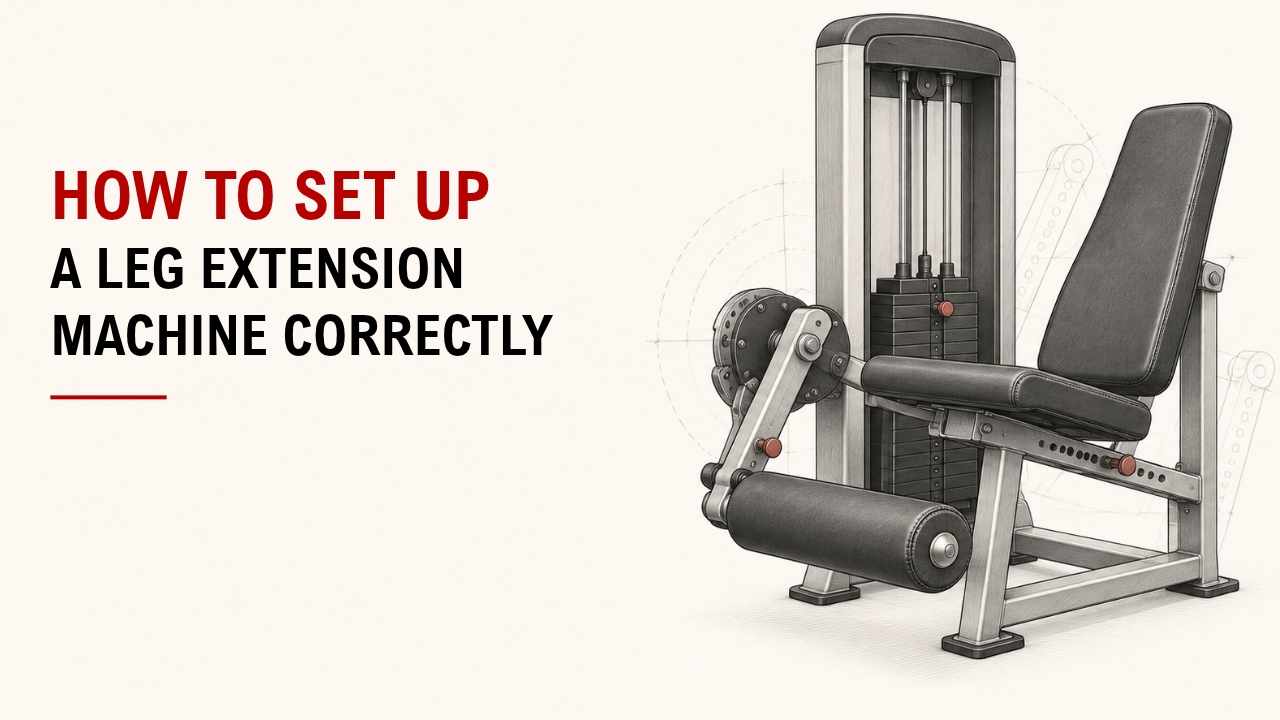

Does the leg extension machine feel awkward on your knees? The setup may simply be wrong for your body.
The quick fix is simple: adjust the backrest, align your knees with the pivot, set the roller above your ankles, and start with a light weight. A few small changes can make the movement feel much better.
As an Ergonomics Engineer at YR Fitness, I study how seats, pads, handles, and adjustment points fit different users. I often see discomfort improve quickly once the machine is matched properly to the person using it.
Below, I’ll show you the six setup steps to check before your first working set. Follow them in order and keep the process simple.
Leg Extension Setup at a Glance
Use this as your quick reference before getting into the details.
Adjustment | What You Want |
Backrest | Back supported, knees near seat edge |
Knee position | Knee joint roughly aligned with pivot |
Roller pad | Just above the ankles |
Starting angle | Comfortable knee bend |
Body position | Hips and back stay against pads |
Weight | Light enough for controlled reps |
1. Adjust the Backrest First
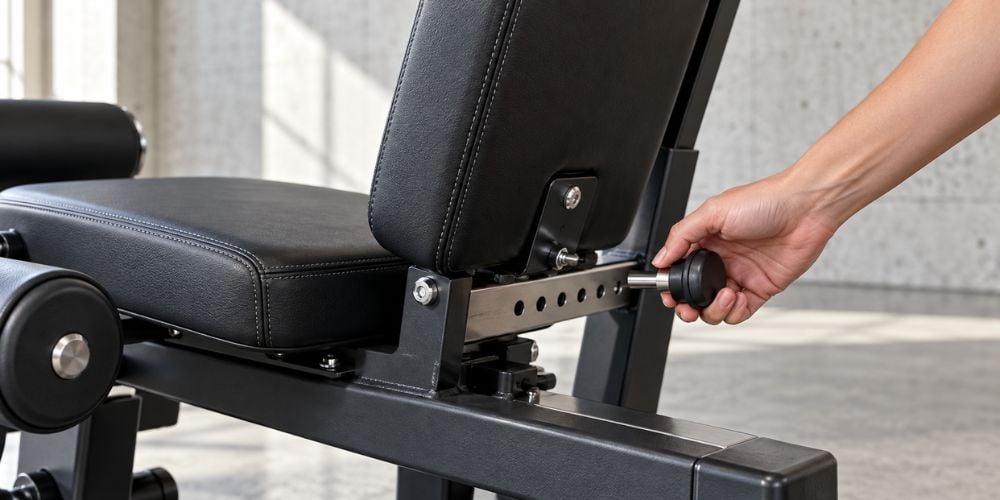
Sit down and place your back firmly against the backrest.
Move the backrest forward or backward until your knees sit close to the edge of the seat. Your thighs should stay supported without the seat pressing hard into the back of your knees.
Why start here? Because your backrest position affects nearly every adjustment that follows.
I always check this first. Your lower back should feel supported, and you should not need to slide forward just to reach the roller.
This type of adjustment is not unusual on commercial machines. For example, Precor uses an adjustable back pad to help align the knee with the machine pivot on its Vitality leg extension.
Quick check: Can you bend your knees comfortably while keeping your back against the pad? If yes, move on.
2. Line Up Your Knees With the Machine Pivot
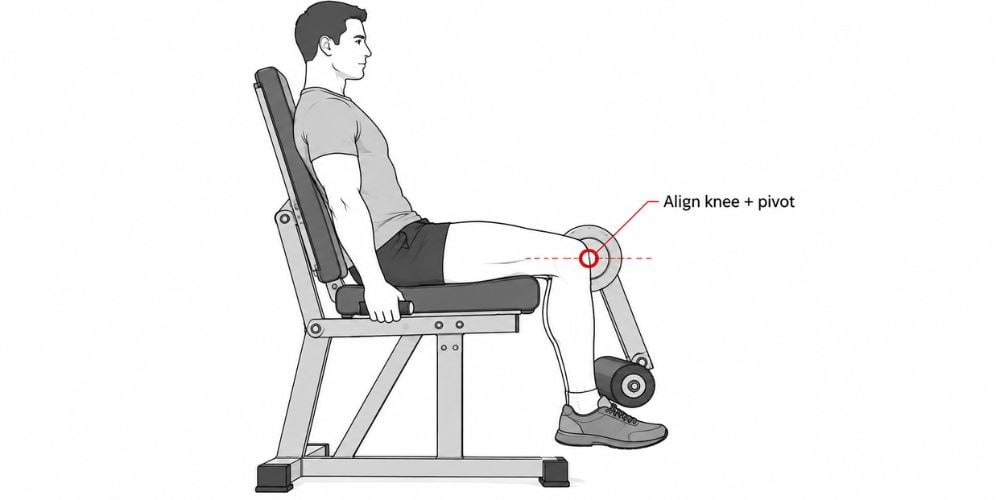
Next, look beside your knee for the machine’s pivot or rotation point.
Your knee joint should sit roughly in line with that pivot.
Why does this matter?
The machine’s movement arm rotates around this point. If your knees sit too far forward or backward, the movement can feel awkward and may create unnecessary pressure.
Some machines even mark the axis of rotation to make this easier. Hammer Strength, for example, uses a marked axis of rotation to help users find the correct alignment.
Before adding a lot of weight, slowly straighten and bend your legs once or twice.
Does it feel smooth? Good. If it feels as though the machine is pulling your knees into an unnatural path, recheck the backrest and knee position.
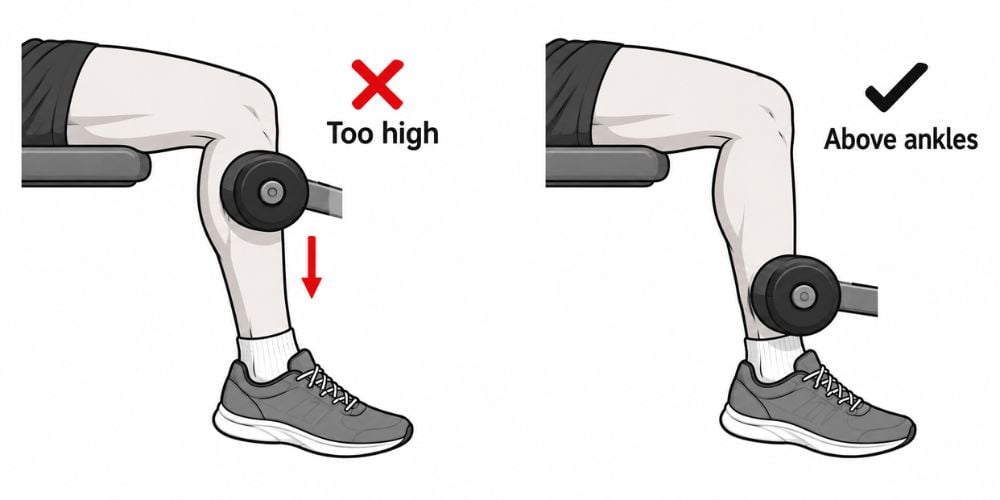
3. Position the Roller Pad Above Your Ankles
Now adjust the lower roller.
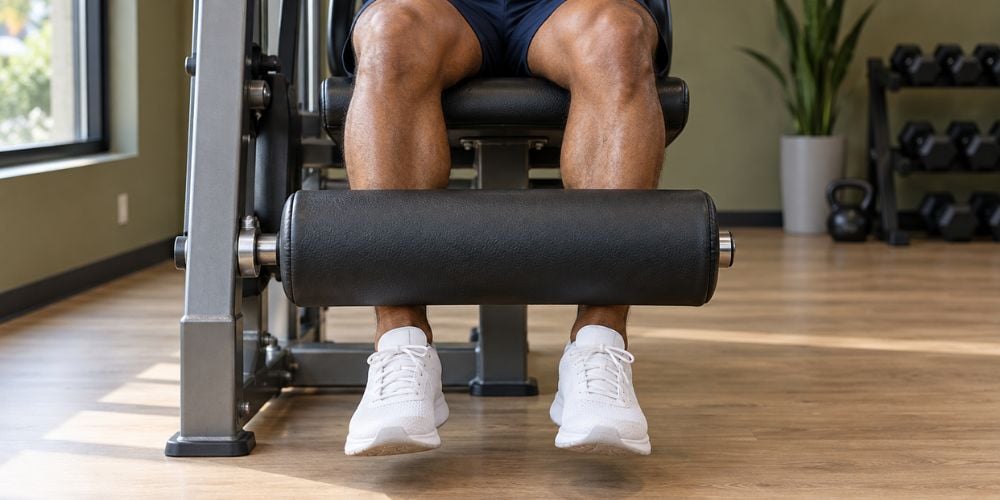
It should rest against the front of your lower legs, just above your ankles. Both legs should contact the roller evenly.
Avoid placing it unnecessarily high on your shins. Moving the pad changes leverage and can make the exercise feel different.
Adjustable roller pads are specifically used to fit different lower-leg lengths. Life Fitness, for example, provides four roller-pad positions for different tibia lengths.
I like to perform one unloaded repetition at this point. If the pad stays comfortable against my lower legs through the movement, I know I am close.
A machine that is easy to adjust makes finding the right training position much simpler. If you want to see how we approach adjustable pads, seating, and commercial strength-machine design, explore our strength equipment.
4. Set the Starting Position
Some leg extension machines let you change how deeply your knees are bent at the beginning of the exercise.
Choose a comfortable starting position rather than forcing yourself into the deepest setting.
Precor’s Resolute leg extension, for example, allows the starting position, roller pad, and back pad to be adjusted from the seated position to create a more personalized fit.
Do you need maximum knee bend? No.
If a deeper position feels uncomfortable, reduce the range slightly and test again.
You should be able to begin each rep without:
- Your hips lifting
- Your back moving away from the pad
- Your knees feeling pinched
- Having to force yourself into position
Comfort matters here. Your range should match what you can control.
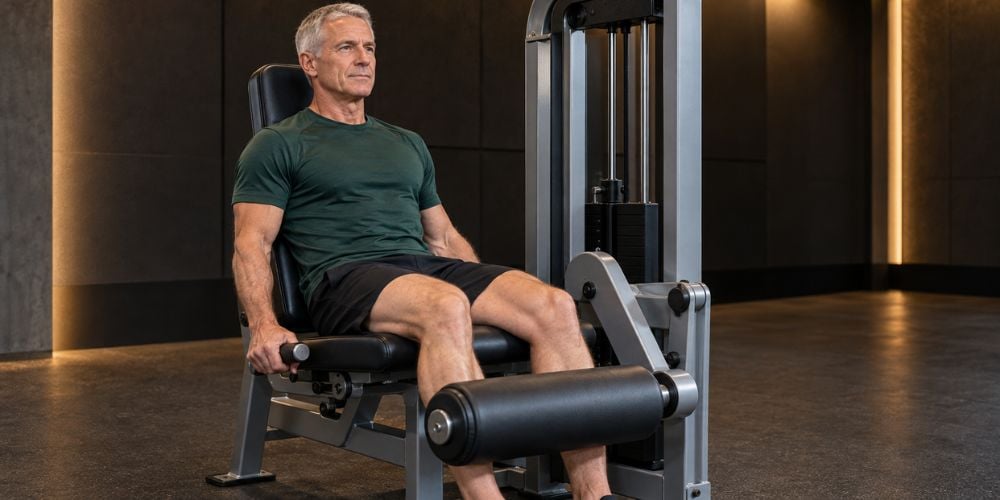
5. Adjust the Seat and Handles for Stability
Once the major adjustments are set, check your whole body.
Keep your:
- Back against the backrest
- Hips firmly on the seat
- Thighs supported
- Hands lightly holding the handles
- Feet relaxed in front of the roller
The handles are there to help stabilize you. You should not need to pull hard on them.
I often see people grip the handles aggressively and lift their hips as the weight gets heavier. That is usually a sign to reduce the load or check the setup again.
Here is a simple way to spot the difference:
During the Rep | Good Sign | Time to Recheck |
Back | Stays against pad | Lifts away |
Hips | Stay on seat | Rise during extension |
Hands | Light grip | Pulling hard |
Knees | Smooth movement | Feel pinched or awkward |
Roller | Stays comfortably placed | Slides too high |
Tempo | Controlled | Weight swings |
A good setup lets you concentrate on your quadriceps rather than fighting to stay in the seat.
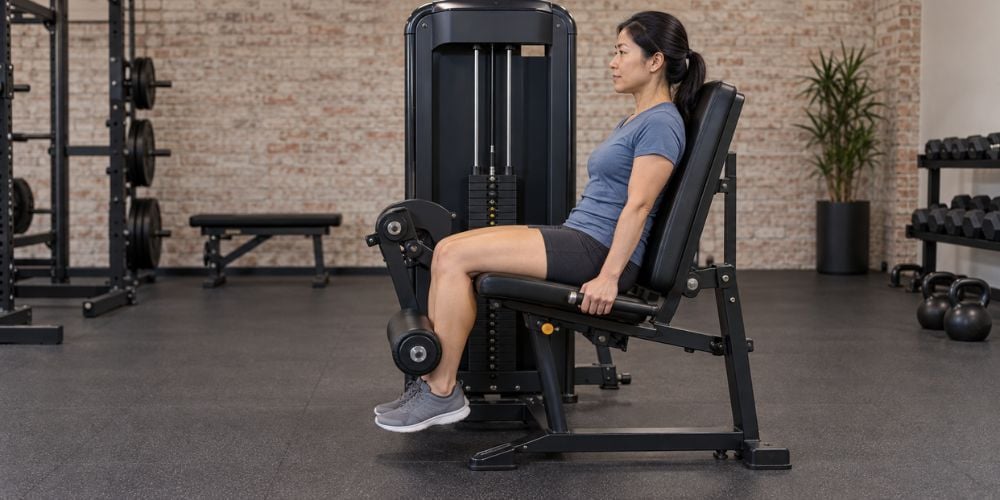
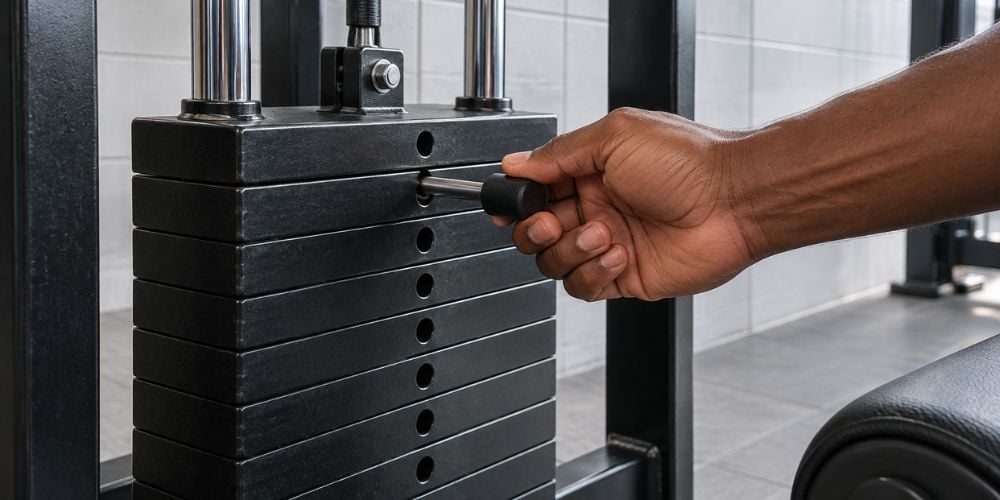
6. Choose a Light Starting Weight
Do not jump straight to your normal working weight.
Start light and perform two or three slow test repetitions.
Ask yourself:
- Does the roller stay in place?
- Do my knees feel comfortable?
- Does my back stay against the pad?
- Can I control movement?
- Does the machine move smoothly?
If everything feels good, gradually increase the weight.
I prefer this approach because it gives you a chance to catch a setup problem before the load becomes challenging.
Control matters too. The American Council on Exercise recommends controlled knee extension within a comfortable range rather than allowing body position to change just to gain more movement. You can see the same basic principle in its knee-extension exercise guidance.
Common Setup Mistakes
Still uncomfortable? Check these before giving up on exercise.
- Sitting too far forward
- Sitting too far back
- Misaligning your knees with the pivot
- Placing the roller too high
- Starting from an uncomfortable knee angle
- Using too much weight immediately
- Allowing your hips to lift from the seat
Something feels wrong? Go back through the setup one adjustment at a time.
You may only need to move the backrest one position or lower the roller slightly.
Conclusion
Setting up a leg extension machine does not need to be complicated. Get the backrest, knee alignment, roller pad, starting angle, body position, and weight right before your working sets.
At YR Fitness, we design commercial strength equipment with practical adjustment and movement considerations in mind.
If you want to explore more strength-machine designs, visit YR Fitness and compare the options that fit your training needs.
Related articles:



